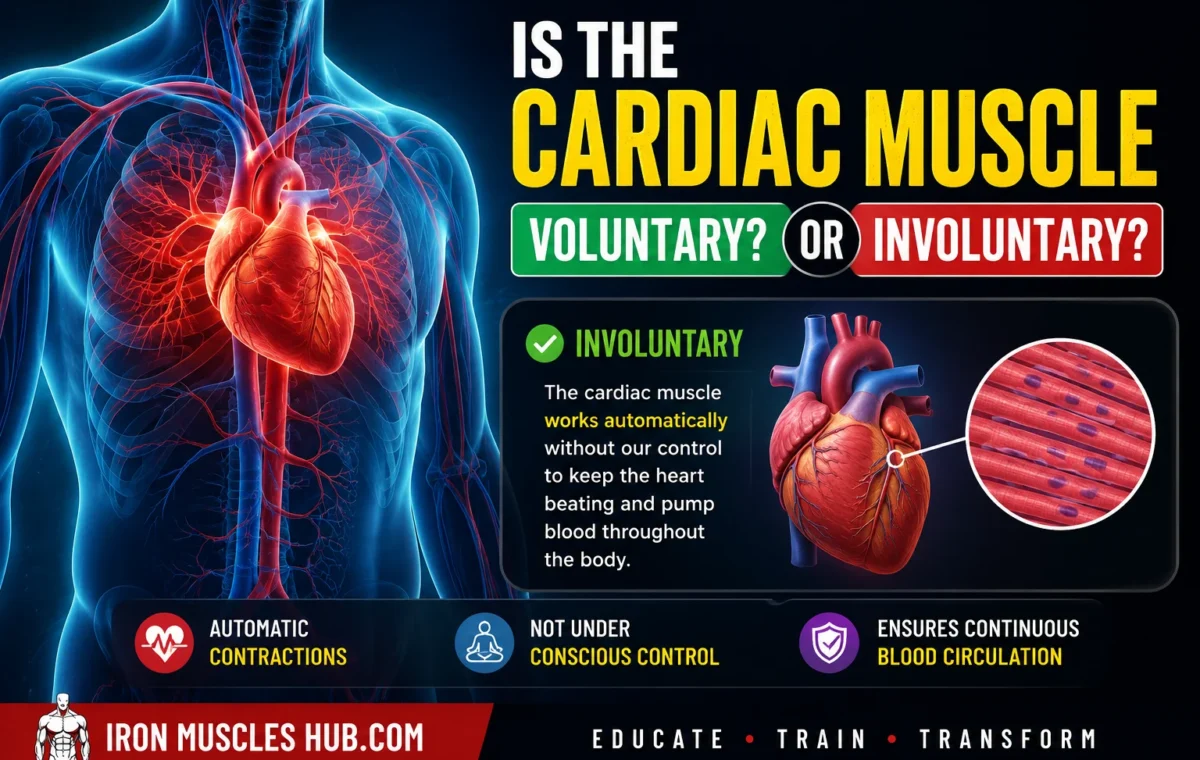
If you’ve ever wondered is the cardiac muscle voluntary or involuntary, the short answer is involuntary. Your heart beats automatically without you having to think about it. Unlike the muscles that move your arms or legs, cardiac muscle contracts on its own while its speed and strength are adjusted by your nervous system and hormones.
- Quick Answer
- What Is Cardiac Muscle?
- Why Is Cardiac Muscle Involuntary?
- How Is Cardiac Muscle Different from Other Muscle Types?
- What Controls Cardiac Muscle?
- 1. The SA Node
- 2. Autonomic Nervous System
- 3. Hormones
- A Simple Everyday Example
- Unique Features of Cardiac Muscle
- It Beats Automatically
- It Works Continuously
- Cells Work Together
- It Resists Fatigue
- Common Misunderstandings
- Why This Matters
- Frequently Asked Questions
- Is the cardiac muscle voluntary or involuntary?
- Why can't humans control their heartbeat?
- Is cardiac muscle the same as skeletal muscle?
- What are the three types of muscle tissue?
- What is the function of cardiac muscle?
- Does the brain control the heart?
- The Bottom Line
- How Does Cardiac Muscle Keep Beating Without You Thinking?
- 1. The SA Node Starts the Heartbeat
- 2. Electrical Signals Travel Through the Heart
- 3. The Autonomic Nervous System Fine-Tunes the Heart
- Skeletal Muscle
- Cardiac Muscle
- Branched Cells
- Intercalated Discs
- Rich Supply of Mitochondria
- Exercise
- Deep Breathing
- Stress
- Meditation
- Correct Answer
- Why?
- Easy Way to Remember
- Is the cardiac muscle voluntary or involuntary?
- Why is cardiac muscle called involuntary?
- Can you consciously stop your heart from beating?
- Is cardiac muscle stronger than skeletal muscle?
- What makes cardiac muscle unique?
- What are the three types of muscle tissue?
- Does exercise strengthen cardiac muscle?
- What happens if cardiac muscle is damaged?
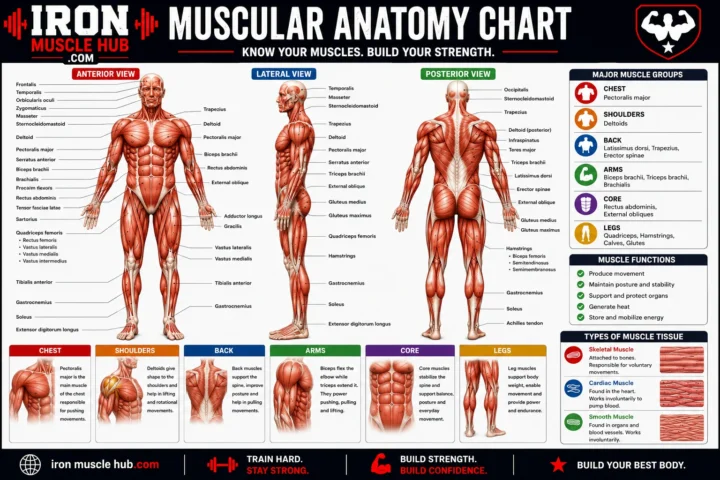
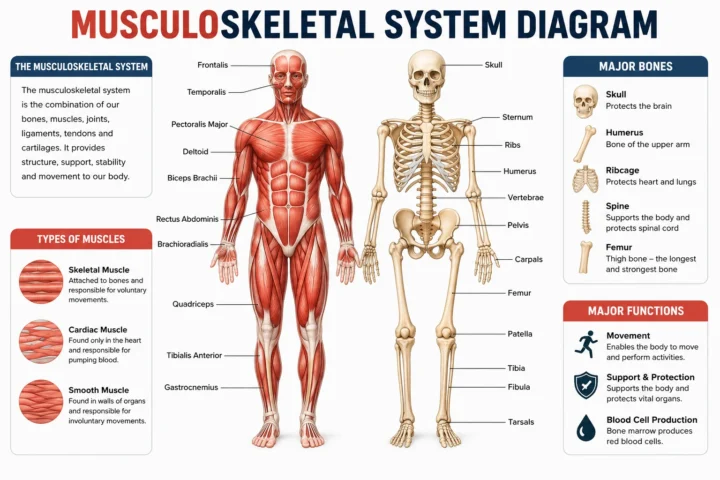
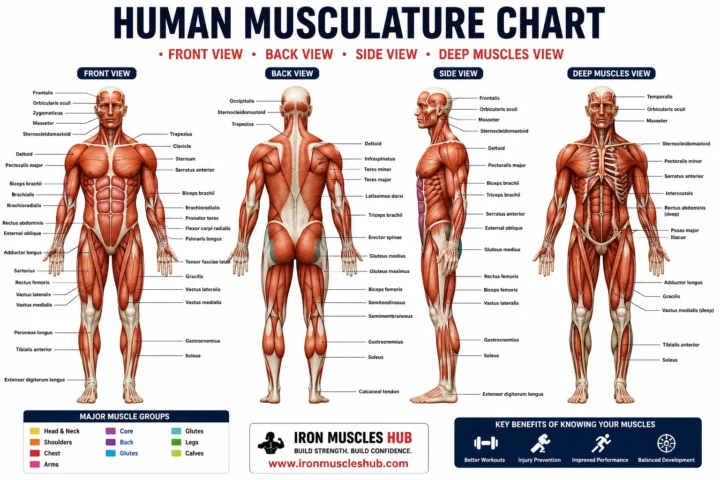
That automatic beating is one of the reasons your heart can keep pumping blood day and night—even while you’re sleeping. Understanding how cardiac muscle works also makes it easier to see why it’s different from the other two muscle types in the human body. For more insights read here:- are muscles organs and muscular system.
Quick Answer
| Question | Answer |
|---|---|
| Is the cardiac muscle voluntary or involuntary? | Involuntary |
| Where is cardiac muscle found? | Only in the heart (myocardium) |
| Can you consciously control it? | No |
| What controls it? | Its natural pacemaker plus the autonomic nervous system |
| Is it striated? | Yes |
| Main job | Pump blood throughout the body |
What Is Cardiac Muscle?
Cardiac muscle is the specialized muscle tissue that forms the walls of your heart. It is often called the myocardium.
Like skeletal muscle, it has a striped (striated) appearance under a microscope. However, it behaves very differently because it works automatically rather than waiting for conscious commands from your brain.
Its primary job is simple:
- Pump oxygen-rich blood to the body
- Send oxygen-poor blood to the lungs
- Maintain continuous circulation throughout your lifetime
Without this automatic pumping action, the body’s organs would quickly stop receiving oxygen and nutrients.
Why Is Cardiac Muscle Involuntary?
Cardiac muscle is considered involuntary because you do not consciously decide when it contracts.
Instead, each heartbeat begins with electrical signals generated by specialized pacemaker cells in the sinoatrial (SA) node, often called the heart’s natural pacemaker. These signals spread across the heart muscle, causing it to contract in a coordinated rhythm. The autonomic nervous system can speed up or slow down the heart depending on your body’s needs, but you still cannot consciously command each heartbeat.
For example:
- When you’re running, your heart beats faster.
- During sleep, it slows down.
- During stress, hormones and nerves increase your heart rate.
All of this happens automatically.
How Is Cardiac Muscle Different from Other Muscle Types?
The human body has three types of muscle tissue.
| Feature | Skeletal Muscle | Cardiac Muscle | Smooth Muscle |
|---|---|---|---|
| Control | Voluntary | Involuntary | Involuntary |
| Appearance | Striated | Striated | Non-striated |
| Location | Attached to bones | Heart only | Internal organs and blood vessels |
| Main Function | Body movement | Pump blood | Move substances through organs |
This comparison helps explain why cardiac muscle is unique. Although it looks similar to skeletal muscle, its control system is completely different.
What Controls Cardiac Muscle?
Several systems work together to regulate your heartbeat.
1. The SA Node
The sinoatrial node naturally produces electrical impulses that trigger each heartbeat.
2. Autonomic Nervous System
This system automatically adjusts heart activity.
- Sympathetic nerves increase heart rate.
- Parasympathetic nerves slow heart rate.
3. Hormones
Hormones such as adrenaline help the heart respond during exercise, excitement, or stressful situations.
Even though these systems influence the heart, you cannot consciously switch your heartbeat on or off.
A Simple Everyday Example
Imagine you’re walking upstairs.
Without thinking:
- Your muscles begin working harder.
- Your lungs breathe faster.
- Your heart beats more quickly.
You never have to tell your heart to speed up. Your body senses increased oxygen demand and automatically adjusts your heart rate.
That’s exactly why cardiac muscle is classified as involuntary.
Unique Features of Cardiac Muscle
Cardiac muscle has several characteristics that make it different from other muscles.
It Beats Automatically
Specialized pacemaker cells generate electrical impulses even without signals from the brain.
It Works Continuously
Unlike skeletal muscles, which rest between movements, the heart keeps working throughout your life.
Cells Work Together
Cardiac muscle cells connect through structures called intercalated discs, allowing electrical signals to move rapidly across the heart for coordinated contractions.
It Resists Fatigue
Healthy cardiac muscle is highly resistant to fatigue because it contains many mitochondria, helping produce the energy needed for constant pumping.
Common Misunderstandings
Many beginners confuse cardiac muscle with skeletal muscle because both are striated.
Here are the facts:
| Myth | Reality |
|---|---|
| Cardiac muscle is voluntary because it’s striated. | False. It is involuntary. |
| You can consciously stop your heart. | False. Heartbeats occur automatically. |
| Only smooth muscle is involuntary. | False. Both smooth and cardiac muscles are involuntary. |
| The brain starts every heartbeat. | False. The SA node generates the heartbeat, while nerves modify its rate. |
Why This Matters
Knowing that cardiac muscle is involuntary helps explain:
- why your heart keeps beating while you sleep
- why exercise automatically raises your heart rate
- why emotions can affect your heartbeat
- how doctors understand heart rhythm disorders
This basic concept is taught in biology, anatomy, nursing, and medical courses because it explains one of the body’s most important survival mechanisms.
Frequently Asked Questions
Is the cardiac muscle voluntary or involuntary?
Cardiac muscle is involuntary. It contracts automatically without conscious effort, allowing the heart to pump blood continuously throughout your life.
Why can’t humans control their heartbeat?
Your heartbeat is generated by specialized pacemaker cells and regulated by the autonomic nervous system. While emotions and breathing may influence heart rate indirectly, you cannot consciously start or stop individual heartbeats.
Is cardiac muscle the same as skeletal muscle?
No. Both are striated, but skeletal muscle is voluntary and attached to bones, while cardiac muscle exists only in the heart and works automatically.
What are the three types of muscle tissue?
The three muscle types are:
- Skeletal muscle
- Cardiac muscle
- Smooth muscle
Only skeletal muscle is under voluntary control. Cardiac and smooth muscles are involuntary.
What is the function of cardiac muscle?
Cardiac muscle generates the force needed to pump blood through the heart and around the entire body. This continuous circulation supplies oxygen and nutrients to every organ.
Does the brain control the heart?
The brain does not initiate every heartbeat. The heart’s natural pacemaker starts each beat, while the autonomic nervous system adjusts the heart rate based on the body’s needs.
The Bottom Line
So, is the cardiac muscle voluntary or involuntary? The answer is clear: it is involuntary. Cardiac muscle is specially designed to keep your heart beating automatically from before birth until the end of life. Although your nervous system and hormones can speed up or slow down the heartbeat, you never have to consciously control it. This automatic function is one of the body’s most remarkable survival features. Understanding this difference also makes it easier to distinguish cardiac muscle from skeletal and smooth muscle, whether you’re studying biology, preparing for an exam, or simply learning how your body works.
How Does Cardiac Muscle Keep Beating Without You Thinking?
One of the most fascinating facts about the heart is that it doesn’t need conscious commands to keep beating. If cardiac muscle were voluntary, you’d have to remember to make your heart contract every second—even while sleeping. Fortunately, the body has a built-in system that does this automatically.
Here’s how the process works:
1. The SA Node Starts the Heartbeat
Inside the upper right chamber of the heart is a group of specialized cells called the sinoatrial (SA) node. This natural pacemaker generates tiny electrical impulses that begin each heartbeat.
Every impulse causes the heart muscle to contract in a coordinated pattern, ensuring blood is pumped efficiently.
2. Electrical Signals Travel Through the Heart
After the SA node fires, the electrical signal spreads through the atria and then reaches the ventricles through specialized pathways.
This sequence allows the:
- Atria to contract first
- Ventricles to contract immediately afterward
- Heart to pump blood smoothly without interruption
Because this system is automatic, your heart continues beating whether you’re awake, asleep, exercising, or resting.
3. The Autonomic Nervous System Fine-Tunes the Heart
Although you can’t consciously control your heart, your nervous system constantly adjusts it.
There are two main branches:
| Nervous System | Effect on the Heart |
|---|---|
| Sympathetic nervous system | Increases heart rate and contraction strength |
| Parasympathetic nervous system | Slows the heart rate and promotes relaxation |
For example:
- During exercise, your sympathetic nervous system speeds up your heartbeat.
- While sleeping, your parasympathetic nervous system helps slow it down.
This happens automatically based on your body’s oxygen and energy needs.
Why Cardiac Muscle Is Different from Skeletal Muscle
Many students ask why cardiac muscle is involuntary even though it looks similar to skeletal muscle under a microscope.
The answer lies in function, not appearance.
Skeletal Muscle
Skeletal muscles attach to bones and allow you to perform intentional movements like:
- Walking
- Running
- Smiling
- Lifting weights
- Writing
You decide when these muscles contract.
Cardiac Muscle
Cardiac muscle performs one essential task:
Pumping blood continuously throughout your life.
Stopping between contractions isn’t an option, which is why nature designed it to work automatically.
Cardiac Muscle vs Smooth Muscle
Both cardiac and smooth muscles are involuntary, but they serve different purposes.
| Feature | Cardiac Muscle | Smooth Muscle |
|---|---|---|
| Location | Heart | Stomach, intestines, bladder, blood vessels |
| Appearance | Striated | Non-striated |
| Main Job | Pump blood | Move food, fluids, and waste |
| Speed | Fast, rhythmic contractions | Slow, steady contractions |
| Control | Automatic | Automatic |
Smooth muscle helps digest food, control blood vessel diameter, and move substances through internal organs.
The Structure of Cardiac Muscle Cells
Cardiac muscle cells are unlike any other cells in the body.
They have several unique characteristics that allow the heart to beat efficiently for decades.
Branched Cells
Unlike skeletal muscle fibers, cardiac muscle cells branch out and connect with neighboring cells.
This creates a strong network that contracts as one unit.
Intercalated Discs
Where cardiac muscle cells meet, they form special junctions called intercalated discs.
These structures allow:
- Electrical signals to pass quickly
- Cells to stay firmly connected
- The heart to contract in perfect coordination
Without intercalated discs, the heart would not pump blood efficiently.
Rich Supply of Mitochondria
Cardiac muscle contains a very high number of mitochondria.
These tiny structures produce energy (ATP), allowing the heart to:
- Beat continuously
- Resist fatigue
- Recover rapidly after increased activity
Because the heart never truly rests, it requires a constant energy supply.
Can You Ever Control Cardiac Muscle?
The simple answer is no.
You cannot decide:
- When your heart beats
- How many times it beats each minute
- When it stops
However, some activities can influence your heart rate indirectly.
For example:
Exercise
Physical activity increases oxygen demand, causing your heart rate to rise automatically.
Deep Breathing
Slow breathing may slightly reduce heart rate because it activates the parasympathetic nervous system.
Stress
Fear, excitement, or anxiety releases adrenaline, making your heart beat faster.
Meditation
Relaxation techniques can lower heart rate over time by reducing stress hormones.
Even in these situations, you are not directly controlling the cardiac muscle. Your body is simply responding to changing conditions.
Common Exam Question: Is Cardiac Muscle Voluntary or Involuntary?
This is one of the most frequently asked biology questions.
Correct Answer
✅ Cardiac muscle is involuntary.
Why?
Because it contracts automatically through electrical impulses generated by the heart’s natural pacemaker.
Easy Way to Remember
Think of the three muscle types like this:
| Muscle Type | Memory Trick |
|---|---|
| Skeletal | You choose to move it. |
| Smooth | Your organs choose automatically. |
| Cardiac | Your heart chooses automatically. |
This simple comparison helps many students remember the difference during exams.
Real-Life Example
Imagine you’re watching a scary movie.
Suddenly:
- Your palms sweat.
- Your breathing speeds up.
- Your heart starts racing.
Did you tell your heart to beat faster?
No.
Your sympathetic nervous system automatically responded to stress by increasing your heart rate.
Later, when you calm down, your heartbeat gradually returns to normal without you giving it any instructions.
This is one of the clearest real-world examples showing that cardiac muscle is involuntary.
Is the cardiac muscle voluntary or involuntary?
Cardiac muscle is involuntary. It contracts automatically without conscious control. Each heartbeat begins with electrical signals from the heart’s natural pacemaker (the sinoatrial or SA node), while the autonomic nervous system adjusts the heart rate to meet your body’s needs.
Why is cardiac muscle called involuntary?
Cardiac muscle is called involuntary because you don’t have to think about making it work. Unlike skeletal muscles, which move when you choose to move them, cardiac muscle contracts automatically throughout your entire life, even while you’re asleep or unconscious.
Can you consciously stop your heart from beating?
No. Healthy people cannot voluntarily stop their hearts from beating. While breathing exercises, meditation, and relaxation techniques may slow your heart rate slightly, they do not give you direct control over the heart muscle itself.
Is cardiac muscle stronger than skeletal muscle?
Cardiac muscle is not necessarily stronger than skeletal muscle, but it is far more endurance-focused. It is specially designed to contract continuously without tiring, allowing your heart to pump blood every minute of every day throughout your lifetime.
What makes cardiac muscle unique?
Cardiac muscle has several unique features:
- It exists only in the heart.
- It is involuntary.
- It is striated like skeletal muscle.
- Its cells are connected by intercalated discs for synchronized contractions.
- It contains many mitochondria to produce the energy needed for nonstop activity.
These characteristics make cardiac muscle different from both skeletal and smooth muscle.
What are the three types of muscle tissue?
The human body contains three major muscle types:
| Muscle Type | Control | Location |
|---|---|---|
| Skeletal Muscle | Voluntary | Attached to bones |
| Cardiac Muscle | Involuntary | Heart |
| Smooth Muscle | Involuntary | Internal organs and blood vessels |
Among these, cardiac muscle is the only muscle found exclusively in the heart.
Does exercise strengthen cardiac muscle?
Yes. Regular aerobic exercise, such as brisk walking, swimming, cycling, or jogging, can improve the efficiency of your heart. A stronger heart pumps more blood with each beat, which may lower your resting heart rate over time. However, exercise should always match your fitness level and any medical advice you’ve received.
What happens if cardiac muscle is damaged?
Cardiac muscle can be damaged by conditions such as a heart attack, where part of the heart loses its blood supply. Unlike skeletal muscle, damaged cardiac muscle has only a limited ability to regenerate. Early diagnosis and prompt medical treatment are important for protecting heart function.
Key Takeaways
If you only remember a few things from this guide, make them these:
- Cardiac muscle is involuntary, meaning it works without conscious control.
- It is found only in the heart.
- The SA node acts as the heart’s natural pacemaker.
- The autonomic nervous system speeds up or slows down your heartbeat automatically.
- Cardiac muscle is striated, but unlike skeletal muscle, you cannot control it voluntarily.
- Intercalated discs help heart muscle cells contract together as one coordinated unit.
- Cardiac muscle is built for endurance and can function continuously throughout a person’s life.
Final Thoughts
The answer to “is the cardiac muscle voluntary or involuntary” is simple: cardiac muscle is involuntary. Your heart is designed to beat automatically, ensuring a constant flow of oxygen-rich blood to every part of your body without requiring conscious effort.
Although cardiac muscle shares a striped appearance with skeletal muscle, it functions very differently. Its built-in electrical system, specialized muscle cells, and automatic regulation by the autonomic nervous system allow it to work continuously—even while you sleep. That’s what makes it one of the most remarkable tissues in the human body.
Whether you’re studying for a biology exam, learning about human anatomy, or simply curious about how your body works, understanding the difference between voluntary and involuntary muscles provides an important foundation. Remember this simple rule: skeletal muscle is voluntary, while cardiac and smooth muscles are involuntary.