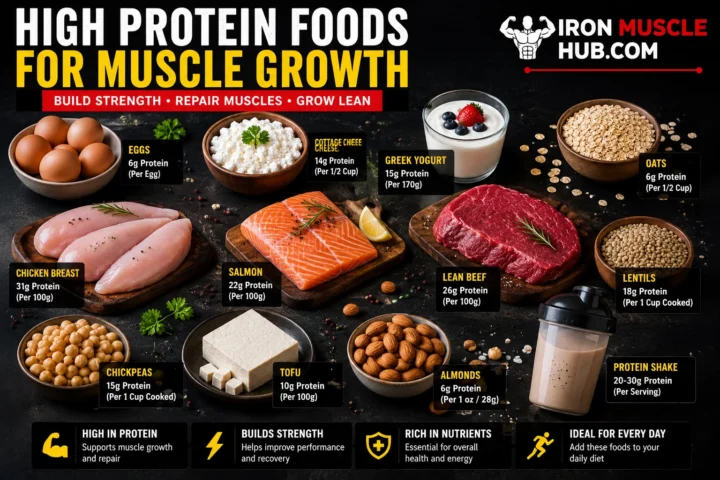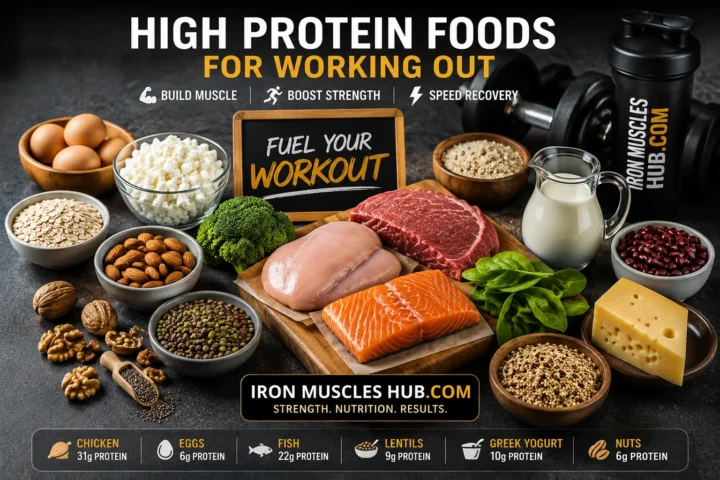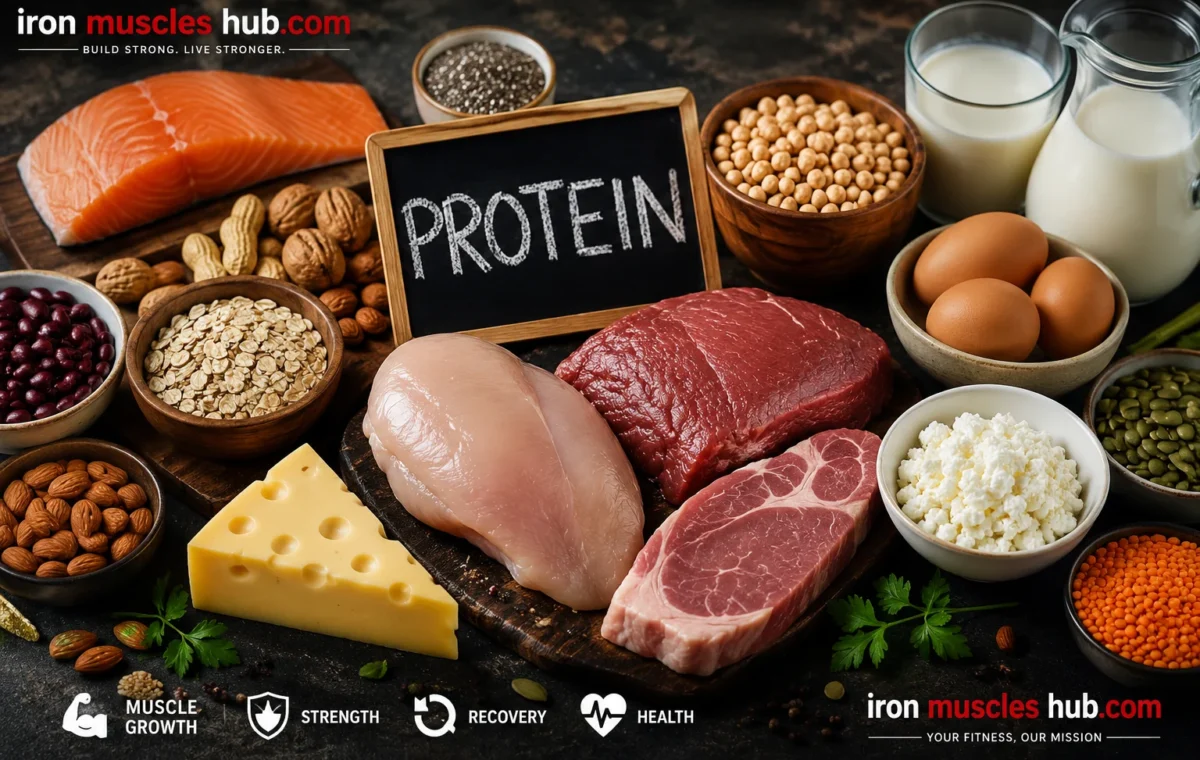
If you’re searching for protein pictures, you probably want something more useful than a long food list. You want to see what protein foods actually look like, understand sensible portions, and know which options work for building meals.
- Quick Answer
- What Do Protein Pictures Show?
- 25 Protein Foods to Recognize From Pictures
- 1. Chicken Breast
- 2. Eggs
- 3. Greek Yogurt
- 4. Cottage Cheese
- 5. Salmon
- 6. Tuna
- 7. Lean Beef
- 8. Turkey Breast
- 9. Shrimp
- 10. Cod
- Plant-Based Protein Pictures
- 11. Tofu
- 12. Tempeh
- 13. Lentils
- 14. Edamame
- 15. Black Beans
- 16. Peanuts
- 17. Pumpkin Seeds
- 18. Soybeans
- Dairy and Other Protein Pictures
- 19. Milk
- 20. Cheese
- 21. Protein Powder
- Protein Pictures Comparison Table
- How Much Protein Do You Need?
- Worked Example: 70 kg / 154 lb
- How to Build a Protein Plate From Pictures
- Meal 1
- Meal 2
- Meal 3
- Meal 4
- Meal 5
- Common Mistakes → Why → Fix
- Mistake 1: Assuming every protein picture represents the same serving
- Mistake 2: Treating protein powder as necessary
- Mistake 3: Eating huge amounts of one protein food
- Mistake 4: Ignoring plant proteins
- Mistake 5: Focusing on protein while ignoring the whole diet
- A 30-Second Protein Picture Self-Test
- Who Is This Not For?
- How to Create a Useful Protein Food Chart
- Protein Pictures: Animal vs Plant Sources
- Animal protein examples
- Plant protein examples
- Protein Timing: Does It Need to Be Immediately After Training?
- Do You Need 20–40 g at Every Meal?
- Why Protein Pictures Are Useful for Beginners
- What are the best protein foods?
- What foods are high in protein?
- How much protein should I eat for muscle growth?
- Do I need protein powder to build muscle?
- Is plant protein good for muscle building?
- Final Takeaway
Protein pictures can make food choices easier because you can quickly compare animal and plant sources, serving sizes, and everyday options such as eggs, chicken, Greek yogurt, fish, beans, tofu, and lentils.
This guide uses simple visual categories so beginners can recognize protein-rich foods and turn them into practical meals. The protein amounts shown are examples, because exact values can change with brand, preparation method, and portion size. For more insights read here :- lean muscle female and lean exercises .
Quick Answer
- Protein foods include meat, fish, eggs, dairy, soy foods, beans, lentils, nuts, and seeds.
- A 70 kg (154 lb) person using 1.6 g/kg/day as a practical training example would get 112 g of protein per day. Research in resistance-trained adults suggests that going above about 1.6 g/kg/day does not generally provide additional fat-free-mass gains from protein supplementation.
- A useful meal target can be around 20–40 g of protein, depending on body size, the food source, and the rest of your day’s intake.
- You don’t need protein powder to eat a high-protein diet. Whole foods can provide plenty of protein.
What Do Protein Pictures Show?
Protein pictures are visual guides showing foods that provide meaningful amounts of dietary protein. A good protein-food image should show more than the food itself.
It should ideally help you answer three questions:
- What food is this?
- How much of it am I looking at?
- How can I use it in a meal?
That’s important because a photograph of a huge steak, for example, doesn’t automatically tell you how much protein you’re eating.
A better visual chart pairs the picture with a realistic serving.
For example:
- Chicken breast — show the food and serving weight.
- Eggs — show the number of eggs.
- Greek yogurt — show the container or measured portion.
- Lentils — show a cup or bowl.
- Tofu — show a measured block or portion.
- Fish — show the cooked portion.
This approach is more useful for beginners than simply labeling every food as “high protein.”
Protein is an essential nutrient involved in building and maintaining body tissues, including muscle. The amount a person needs varies according to factors such as body size, age, activity, and overall diet.
25 Protein Foods to Recognize From Pictures
The following categories make it easier to build your own protein food chart.
1. Chicken Breast
Chicken breast is one of the easiest protein foods to recognize and use.
A 3 oz (85 g) cooked portion provides roughly 26 g of protein according to USDA-based food data. Exact numbers vary with preparation and the particular cut.
Easy meal: chicken + rice + vegetables.
For beginners, chicken is useful because it works in sandwiches, wraps, salads, rice bowls, pasta dishes, and meal-prep containers.
2. Eggs
Eggs are a convenient animal protein that can be eaten at breakfast, lunch, or dinner.
Two large eggs provide about 13 g of protein in the USDA-based serving data used by MyPlate.food.
Easy meal: eggs + whole-grain toast + fruit.
Don’t assume that one food needs to supply your entire protein target. Combining eggs with Greek yogurt, milk, cottage cheese, beans, or another protein source can make the meal more substantial.
3. Greek Yogurt
Plain Greek yogurt is one of the easiest dairy foods to add to a high-protein meal.
A 1-cup (245 g) serving of plain nonfat Greek yogurt provides about 25 g of protein in the USDA-derived data shown by MyPlate.food.
Easy meal: Greek yogurt + berries + oats.
Check the nutrition label when buying flavored varieties because protein, sugar, and calorie content can differ between products.
4. Cottage Cheese
Cottage cheese is another dairy-based protein option.
A 1/2-cup (113 g) serving of low-fat cottage cheese provides around 12 g of protein in the same USDA-based dataset.
Try it with:
- Fruit
- Whole-grain toast
- Tomatoes
- Cucumber
- Oats
- Crackers
5. Salmon
Salmon provides protein while also supplying dietary fat.
A 3 oz (85 g) cooked portion contains about 19 g of protein in the USDA-based list.
Easy meal: salmon + potatoes + vegetables.
If you’re making protein pictures for a website, salmon is visually useful because its appearance is immediately different from chicken, beef, and plant-based proteins.
6. Tuna
Canned tuna can be a convenient protein choice.
A 3 oz (85 g) serving of tuna canned in water contains around 22 g of protein in the USDA-derived list.
Use it in:
- Sandwiches
- Salads
- Wraps
- Rice bowls
For canned seafood, follow local food-safety guidance and vary your seafood choices rather than relying on one type every day.
7. Lean Beef
Lean beef can provide a substantial amount of protein in a relatively small serving.
A 3 oz (85 g) serving of cooked beef sirloin provides around 26 g of protein in the USDA-based data.
Easy meal: lean beef + potatoes + vegetables.
The cut and fat percentage matter, so compare nutrition labels or food-data entries rather than assuming every beef product contains the same amount of protein.
8. Turkey Breast
Turkey breast is another lean animal protein.
A 3 oz (85 g) cooked serving provides approximately 26 g of protein in the USDA-derived serving list.
It works well in:
- Sandwiches
- Wraps
- Salads
- Rice bowls
- Meal-prep boxes
9. Shrimp
Shrimp provides protein without requiring a large portion.
A 3 oz (85 g) cooked serving contains about 19 g of protein in the USDA-based data.
Try shrimp with rice, noodles, vegetables, or tacos.
10. Cod
Cod is a lean fish that can be used in many simple meals.
A 3 oz (85 g) cooked serving provides about 19 g of protein.
Its mild flavor makes it useful for beginners who aren’t used to eating fish.
Plant-Based Protein Pictures
Protein pictures shouldn’t focus only on meat.
Plant foods can contribute significant amounts of protein, and combining different foods can help you build varied meals.
11. Tofu
Firm tofu is a versatile soy food.
A 1/2-cup (126 g) serving is listed at approximately 22 g of protein in the USDA-derived data used by MyPlate.food.
Try tofu:
- Stir-fried
- Baked
- In noodle dishes
- In rice bowls
- In curries
12. Tempeh
Tempeh is another soy-based food with a firm texture.
A 3 oz (85 g) cooked portion provides about 17 g of protein in the USDA-based list.
Tempeh can be sliced, pan-cooked, baked, or added to sandwiches and bowls.
13. Lentils
Lentils are a useful combination of protein and carbohydrate.
One cup of cooked lentils, about 198 g, provides approximately 18 g of protein in the USDA-derived data.
They’re easy to add to:
- Soups
- Curries
- Salads
- Rice dishes
- Grain bowls
14. Edamame
Edamame is young soybeans and can be used as a snack or meal ingredient.
One cup of cooked edamame, around 155 g, provides about 18 g of protein in the USDA-based serving data.
15. Black Beans
Beans can be a practical way to increase protein without relying entirely on animal foods.
A 1/2-cup serving of black beans is listed at around 7 g of protein in Virginia Cooperative Extension’s educational material.
Add them to tacos, burritos, rice bowls, soups, or salads.
16. Peanuts
Peanuts contain protein, but they’re also energy-dense because they contain substantial dietary fat.
That doesn’t make them “bad.”
It simply means portion size matters if you’re managing total calorie intake.
Use them as part of a balanced meal or snack rather than assuming a handful is equivalent to a serving of lean meat.
17. Pumpkin Seeds
Pumpkin seeds are another plant food that contributes protein.
They’re particularly useful as an addition to meals rather than as your only protein source.
Sprinkle them over:
- Yogurt
- Oatmeal
- Salads
- Grain bowls
18. Soybeans
Whole soybeans are relatively protein-dense compared with many other plant foods.
They can be eaten cooked or used in different soy-based foods.
Soy also gives you another option if you want to reduce how frequently you eat meat.
Dairy and Other Protein Pictures
19. Milk
Milk provides protein as well as other nutrients.
Use it with breakfast cereal, oats, smoothies, or alongside a meal.
The exact protein amount depends on the type and serving size, so check the nutrition label on the product you’re buying.
20. Cheese
Cheese contains protein, but different varieties can differ considerably in calories and fat.
Think of cheese as a protein-containing food rather than automatically treating it as your main protein source.
Pairing a smaller amount of cheese with eggs, chicken, beans, or another protein can make a more balanced meal.
21. Protein Powder
Protein powder is optional.
It can be convenient when whole-food options aren’t practical, but it isn’t required for muscle growth.
Mayo Clinic notes that protein powders can come from sources such as whey, egg, soy, rice, pea, and hemp.
The important question isn’t “Which powder builds the most muscle?”
It’s usually:
Does this product help me consistently meet my nutritional needs without unnecessarily adding calories or ingredients I don’t want?
Protein Pictures Comparison Table
Here’s a simple visual-planning chart for beginners.
| Protein food | Example serving | Approx. protein | Type |
|---|---|---|---|
| Chicken breast | 3 oz / 85 g | 26 g | Animal |
| Beef sirloin | 3 oz / 85 g | 26 g | Animal |
| Turkey breast | 3 oz / 85 g | 26 g | Animal |
| Greek yogurt | 1 cup / 245 g | 25 g | Dairy |
| Tofu | 1/2 cup / 126 g | 22 g | Plant |
| Tuna | 3 oz / 85 g | 22 g | Animal |
| Salmon | 3 oz / 85 g | 19 g | Animal |
| Cod | 3 oz / 85 g | 19 g | Animal |
| Shrimp | 3 oz / 85 g | 19 g | Animal |
| Lentils | 1 cup / 198 g | 18 g | Plant |
| Edamame | 1 cup / 155 g | 18 g | Plant |
| Tempeh | 3 oz / 85 g | 17 g | Plant |
| Eggs | 2 large / 100 g | 13 g | Animal |
| Cottage cheese | 1/2 cup / 113 g | 12 g | Dairy |
| Black beans | 1/2 cup | 7 g | Plant |
*Protein values are approximate and can change with brand, preparation, and serving definition. The listed values come from USDA-derived food data and Virginia Cooperative Extension educational material. *
How Much Protein Do You Need?
For general adults, the established protein RDA is 0.8 g per kg of body weight per day. That figure is intended as a population-level minimum rather than a specific muscle-building target.
People who regularly perform resistance training may choose a higher intake.
A large meta-analysis found that, when protein supplementation was combined with resistance training, intakes above approximately 1.6 g/kg/day did not provide additional gains in fat-free mass.
That doesn’t mean everyone needs exactly 1.6 g/kg/day.
Think of it as an evidence-based reference point, not a mandatory prescription.
Worked Example: 70 kg / 154 lb
Suppose a beginner weighs:
70 kg (154 lb)
Using an example target of:
1.6 g protein × 70 kg = 112 g protein/day
So the person could aim for roughly 112 g of protein across the day.
One simple way to distribute that could be:
- Breakfast: 25 g
- Lunch: 30 g
- Snack: 20 g
- Dinner: 37 g
Total = 112 g
The purpose of this example isn’t to tell every 70 kg person to eat exactly 112 g.
It’s to show how protein pictures can become practical. Instead of looking at an image of chicken and thinking “that’s protein,” you can connect the food with a realistic portion and your overall daily intake.
How to Build a Protein Plate From Pictures
You can make this very simple.
Choose:
1 protein source + 1 carbohydrate source + vegetables or fruit + optional fat
For example:
Meal 1
Eggs + toast + fruit
The eggs provide protein while toast and fruit contribute carbohydrate and other nutrients.
Meal 2
Chicken + rice + vegetables
This is a simple training-friendly meal because it combines protein and carbohydrate with vegetables.
Meal 3
Tofu + noodles + vegetables
A useful plant-based option.
Meal 4
Greek yogurt + oats + berries
This works well for breakfast or a snack.
Meal 5
Lentils + rice + vegetables
An inexpensive plant-based meal that can contribute substantial protein.
The goal isn’t to make every meal perfect.
The goal is to make protein easy to recognize and consistently include.
Common Mistakes → Why → Fix
Mistake 1: Assuming every protein picture represents the same serving
Why: A photograph doesn’t show weight accurately.
One picture of chicken could represent 50 g, 100 g, or 250 g.
Fix: Put the serving weight beside the image.
Use both systems for US/UK readers where practical, such as 85 g / 3 oz.
Mistake 2: Treating protein powder as necessary
Why: Fitness marketing can make supplements look like the foundation of muscle-building nutrition.
Fix: Build your diet around regular foods first. Use a protein powder only when it makes meeting your nutritional needs more convenient.
Protein supplementation can help during resistance training, but research also shows that the training stimulus itself is a major factor in muscle development.
Mistake 3: Eating huge amounts of one protein food
Why: More protein isn’t automatically better.
Fix: Spread protein across different meals and use different food sources.
A sports-nutrition position stand describes individual protein servings around 20–40 g as a general range for active people, while noting that needs vary with body size and other factors.
Mistake 4: Ignoring plant proteins
Why: Beginners often think “protein” means chicken, steak, eggs, or whey.
Fix: Include beans, lentils, tofu, tempeh, edamame, nuts, and seeds.
Plant-based eating can still provide protein-rich meals when foods are selected and combined thoughtfully.
Mistake 5: Focusing on protein while ignoring the whole diet
Why: Protein gets a lot of attention in fitness, but carbohydrates, fats, vitamins, minerals, fiber, and total energy intake also matter.
Fix: Build balanced meals instead of trying to turn every meal into a protein challenge.
A 30-Second Protein Picture Self-Test
Look at your meal and ask:
“Can I point to the main protein source?”
If yes, ask:
“Do I know roughly how much I’m eating?”
Then ask:
“Have I included other foods that make this a balanced meal?”
If you can answer all three, you’re already using protein pictures in a practical way.
You don’t need to calculate every gram of food for the rest of your life.
Use visual portions, food labels, and occasional weighing when you need more accuracy.
Who Is This Not For?
A basic protein-picture guide is useful for healthy adults learning about food choices.
It is not a substitute for individualized nutrition care if you have a medical condition that affects diet, have been prescribed a specific diet, have significant kidney or liver disease, are pregnant, or have another reason to need specialized nutrition guidance.
In those cases, speak with a qualified healthcare professional or registered dietitian.
How to Create a Useful Protein Food Chart
If you’re creating protein pictures for a fitness website, don’t just put 25 random food photos on one page.
Make the visual information easy to scan.
A strong chart can contain:
| Image element | What to show |
|---|---|
| Food photo | Clear, recognizable food |
| Food name | Simple English name |
| Serving | Grams + ounces when useful |
| Protein | Approximate grams |
| Category | Animal, dairy, plant, seafood |
| Meal idea | One simple use |
| Alt text | Descriptive, natural wording |
For example, an image card could say:
Chicken Breast
85 g / 3 oz cooked
About 26 g protein
Animal protein
Great for rice bowls, salads, and wraps.
For a website image, consistent sizing also helps. A visual card around 10 cm (4 in) wide can work well in a printable or educational layout, although the actual website dimensions should be chosen based on the site’s design and mobile display.
The key is that the picture should support understanding rather than simply decorate the page.
Protein Pictures: Animal vs Plant Sources
Both categories can have a place in a balanced diet.
Animal protein examples
- Chicken
- Turkey
- Beef
- Fish
- Shrimp
- Eggs
- Milk
- Greek yogurt
- Cottage cheese
- Cheese
Plant protein examples
- Lentils
- Black beans
- Edamame
- Tofu
- Tempeh
- Soybeans
- Peanuts
- Pumpkin seeds
- Other beans and legumes
The best choice depends on your preferences, budget, cooking skills, dietary pattern, and nutritional needs.
A mixed diet can include both.
A vegetarian or vegan diet can also include meaningful protein sources when meals are planned appropriately.
Protein Timing: Does It Need to Be Immediately After Training?
Beginners often worry that missing a post-workout protein shake means they’ve wasted their workout.
That’s not how the evidence should be interpreted.
Research indicates that resistance exercise makes muscle responsive to protein for an extended period, and total daily protein intake is an important consideration.
A sports-nutrition position stand also describes distributing protein feedings across the day rather than relying on one enormous serving.
So if you finish training at 6:00 PM and don’t eat until 7:00 PM, there’s no reason to panic.
Have a normal protein-containing meal when practical.
Do You Need 20–40 g at Every Meal?
Not necessarily.
The 20–40 g range is a useful general reference for individual protein feedings in active people, but it isn’t a magic cutoff. Body size, age, protein quality, total daily intake, and the rest of the meal all matter.
For example, a smaller snack might contain less protein while a main meal contains more.
Think about your whole day, not one isolated meal.
Why Protein Pictures Are Useful for Beginners
Nutrition terminology can become confusing quickly.
Someone may understand the word “protein” but still struggle to recognize practical protein foods.
Pictures solve part of that problem.
A beginner can immediately recognize:
Eggs → protein
Chicken → protein
Greek yogurt → protein
Lentils → protein
Tofu → protein
That visual connection can make grocery shopping and meal planning easier.
For a fitness website, protein pictures can also support readers who are learning English, younger readers, visual learners, and people who simply prefer quick information over long lists.
FAQ: Protein Pictures and Protein Foods
What are the best protein foods?
There isn’t one best protein food for everyone. Useful choices include chicken, fish, eggs, Greek yogurt, cottage cheese, lean beef, turkey, tofu, tempeh, lentils, beans, and edamame. Your best choices are foods you enjoy, can afford, can prepare consistently, and that fit your overall diet. Variety also makes meals easier to sustain.
What foods are high in protein?
High-protein foods include chicken breast, lean beef, turkey, fish, shrimp, Greek yogurt, tofu, tempeh, lentils, edamame, eggs, and cottage cheese. Exact protein amounts depend on the serving and preparation method. For example, USDA-derived data lists about 26 g in 3 oz (85 g) of cooked chicken breast and about 25 g in 1 cup (245 g) of plain nonfat Greek yogurt.
How much protein should I eat for muscle growth?
Your protein needs depend on body weight, training, age, energy intake, and other factors. The adult RDA is 0.8 g/kg/day, while research in people performing resistance training supports higher intakes for maximizing training-related adaptations. A major meta-analysis found no additional fat-free-mass benefit beyond approximately 1.6 g/kg/day when protein supplementation was added to resistance training.
Do I need protein powder to build muscle?
No. Protein powder is a convenience food, not a requirement. You can get protein from chicken, fish, eggs, dairy, tofu, beans, lentils, and other foods. Protein supplements may be useful when normal meals make it difficult to reach your desired intake, but resistance training, sufficient overall nutrition, and consistency remain important.
Is plant protein good for muscle building?
Yes. Plant foods such as soy, tofu, tempeh, edamame, beans, and lentils can contribute meaningful protein. Soy foods are particularly convenient because several provide substantial protein per serving. If you follow a fully plant-based diet, use a variety of protein foods and make sure your overall diet meets your nutritional needs rather than relying on a single food.
Final Takeaway
Protein pictures are most useful when they connect the food you see with a realistic serving and a simple meal idea.
For beginners, start with familiar options such as eggs, chicken, fish, Greek yogurt, cottage cheese, tofu, lentils, beans, and edamame. You don’t need an enormous supplement routine or a complicated meal plan.
If you’re resistance training, think about your total daily protein first, then spread it across normal meals. A 70 kg (154 lb) person, for example, would reach 112 g at 1.6 g/kg/day, but individual needs can differ.
Use protein pictures as a learning tool—not as a reason to obsess over every gram. Build balanced meals, train consistently, recover properly, and let your nutrition support the work you’re doing in the gym.
Explore more: pair this guide with your site’s protein breakfast, high-protein food, and protein-shake resources for readers who want practical meal ideas.