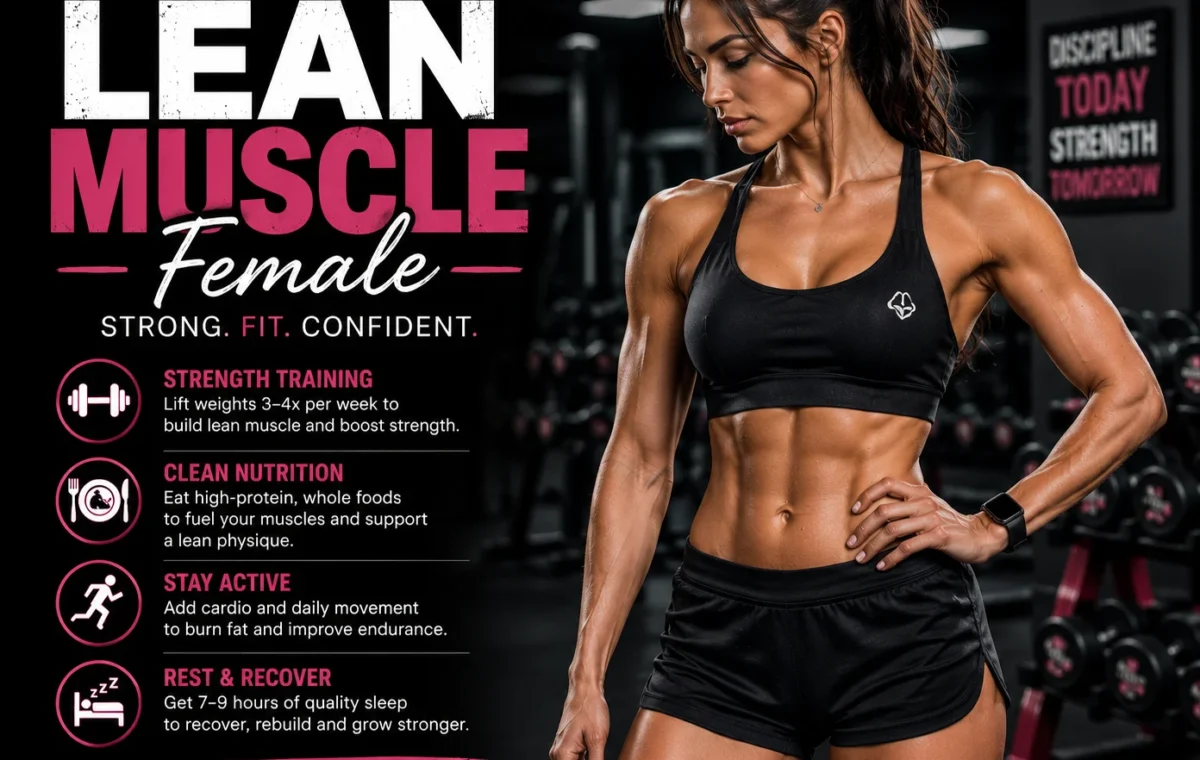
If you’re searching for lean muscle female, you probably want a body that looks toned, strong, and athletic without becoming bulky. The good news is that building lean muscle is exactly what helps many women achieve that look. It improves body composition, boosts metabolism, increases strength, and often makes clothes fit better.
- Quick Answer: How Do Women Build Lean Muscle?
- Key Takeaways
- What Is Lean Muscle?
- Why Strength Training Is Essential for a Lean Muscle Female Physique
- Best Exercises for Women
- How Often Should a Woman Train?
- Nutrition for Lean Muscle Women
- Protein
- Carbohydrates
- Healthy Fats
- Sample Day of Eating (Lean Muscle Female)
- Should You Be in a Calorie Surplus?
- Progressive Overload: The Secret Most Beginners Miss
- What About Cardio?
- Common Mistakes Women Make When Trying to Get Lean Muscle
- 1. Only Doing Cardio
- 2. Eating Too Little
- 3. Avoiding Heavy Weights
- 4. Expecting Results in Two Weeks
- 5. Skipping Recovery
- How Long Does It Take to Look Lean and Toned?
- Build a Beginner-Friendly Lean Muscle Workout Plan
- Day 1 – Lower Body
- Day 2 – Upper Body
- Day 3 – Active Recovery
- Day 4 – Lower Body
- Day 5 – Upper Body
- High-Protein Foods
- Whey Protein
- Creatine Monohydrate
- Vitamin D
- Omega-3 Fish Oil
- Weekly
- Monthly
- Every Workout
- Eating Too Little Protein
- Skipping Breakfast After Morning Training
- Cutting Out Carbohydrates
- Fear of Healthy Fats
- Frequently Changing Workout Plans
- Is it harder for women to build lean muscle?
- Can I lose fat and build lean muscle at the same time?
- How much protein should a woman eat to build lean muscle?
- Do I need a gym to build lean muscle?
- Will cardio stop muscle growth?
- What is the best age to start building lean muscle?
The biggest misconception is that women who lift weights automatically become bulky. In reality, most women do not produce enough testosterone to gain large amounts of muscle easily. Instead, consistent strength training combined with proper nutrition usually leads to a firmer, more defined appearance.
This guide explains how lean muscle works, how women can build it safely, and what to eat and do each week to see real results. For more insight read here:- lean body women and lean muscular body female.
Quick Answer: How Do Women Build Lean Muscle?
Women build lean muscle by:
- Strength training 3–5 times per week
- Eating enough protein
- Maintaining a slight calorie surplus (or eating at maintenance if fat loss is also a goal)
- Sleeping 7–9 hours per night
- Progressively increasing weights or repetitions over time
A beginner can often notice improved muscle tone and strength within 6–12 weeks of consistent training.
Key Takeaways
| Goal | What to Do |
|---|---|
| Build lean muscle | Lift weights regularly |
| Stay toned | Combine strength training with a balanced diet |
| Avoid looking bulky | Don’t worry—muscle gain is gradual for most women |
| Improve body composition | Eat enough protein and train consistently |
| See results faster | Track workouts and increase resistance gradually |
What Is Lean Muscle?
Lean muscle refers to muscle tissue with relatively low surrounding body fat. When people say someone has a “lean” physique, they usually mean the muscles are visible and defined rather than hidden under higher body fat levels.
For women, building lean muscle typically means:
- More visible shoulders, arms, and legs
- A firmer waist and hips
- Better posture
- Increased strength for daily activities
- Improved athletic performance
It does not mean becoming extremely muscular or looking like a bodybuilder.
Why Strength Training Is Essential for a Lean Muscle Female Physique
Cardio burns calories, but strength training builds the muscle that creates the toned look. Resistance training also helps preserve muscle during fat loss, which is important if your goal is a leaner body rather than simply a lower number on the scale.
Benefits include:
- Increased resting calorie expenditure
- Stronger bones and joints
- Better insulin sensitivity
- Reduced risk of age-related muscle loss
- Greater confidence and functional strength
Best Exercises for Women
Focus on compound movements that train multiple muscles at once:
- Squats
- Romanian deadlifts
- Lunges
- Hip thrusts
- Push-ups
- Dumbbell rows
- Shoulder presses
- Lat pulldowns or assisted pull-ups
These exercises provide the most return for your time.
How Often Should a Woman Train?
A simple beginner schedule is:
| Day | Workout |
| Monday | Lower body |
| Tuesday | Upper body |
| Wednesday | Rest or light walking |
| Thursday | Lower body |
| Friday | Upper body |
| Saturday | Optional cardio or mobility |
| Sunday | Rest |
Aim for 45–60 minutes per session. Consistency matters far more than doing complicated workouts.
Nutrition for Lean Muscle Women
Exercise stimulates muscle growth, but nutrition provides the building blocks. Many women unintentionally eat too little protein, which can make muscle gain slower.
Protein
A practical target for active women is 1.6–2.2 g of protein per kilogram of body weight per day. For example, a woman weighing 65 kg (143 lb) would aim for roughly 104–143 g of protein daily.
Good protein sources:
- Chicken breast
- Turkey
- Fish
- Eggs
- Greek yogurt
- Cottage cheese
- Tofu and tempeh
- Lentils and beans
- Whey or plant protein powder
Carbohydrates
Carbs are not the enemy. They help fuel workouts and support recovery. Choose mostly:
- Oats
- Rice
- Potatoes
- Whole-grain bread
- Fruit
- Vegetables
Healthy Fats
Include moderate amounts of:
- Avocado
- Nuts
- Seeds
- Olive oil
- Fatty fish
Sample Day of Eating (Lean Muscle Female)
| Meal | Example |
| Breakfast | Greek yogurt, berries, oats |
| Snack | Protein shake and a banana |
| Lunch | Chicken, rice, vegetables |
| Snack | Apple and almonds |
| Dinner | Salmon, potatoes, salad |
| Evening | Cottage cheese or tofu snack |
This is only an example; adjust portions based on your body size and activity level.
Should You Be in a Calorie Surplus?
It depends on your goal.
- Build muscle as quickly as possible: Eat a small surplus of 200–300 calories/day.
- Lose fat while gaining some muscle: Eat at maintenance calories or a slight deficit.
- Already lean and want more definition: Stay near maintenance and focus on progressive training.
Beginners often experience body recomposition, meaning they gain muscle and lose fat at the same time, especially during the first several months of training. Also explore :- how to become lean.
Progressive Overload: The Secret Most Beginners Miss
To keep building lean muscle, your body needs a reason to adapt. This is called progressive overload. Each week, try to improve one of these:
- Add 2.5–5 lb (1–2 kg) to an exercise
- Perform 1–2 more repetitions
- Add an extra set
- Improve exercise technique or range of motion
Example:
- Week 1: Goblet squat 20 lb × 10 reps
- Week 2: Goblet squat 20 lb × 12 reps
- Week 3: Goblet squat 25 lb × 10 reps
These small improvements add up dramatically over months.
What About Cardio?
Cardio is great for heart health and calorie expenditure, but excessive cardio can interfere with recovery if you’re trying to build muscle. A balanced approach is:
- 2–3 sessions per week
- 20–30 minutes each
- Brisk walking, cycling, swimming, or light jogging
Think of cardio as a supplement to strength training, not the main tool for getting toned.
Common Mistakes Women Make When Trying to Get Lean Muscle
1. Only Doing Cardio
Hours on the treadmill won’t build much muscle definition. Include resistance training.
2. Eating Too Little
Severely restricting calories can make workouts feel harder and slow muscle growth.
3. Avoiding Heavy Weights
Lifting challenging weights is what stimulates muscle. “Light weights for toning” is an outdated idea.
4. Expecting Results in Two Weeks
Muscle gain is gradual. Take progress photos every 4 weeks instead of judging day to day.
5. Skipping Recovery
Muscles grow during recovery, not during the workout itself. Prioritize sleep and rest days.
How Long Does It Take to Look Lean and Toned?
A realistic timeline for a beginner woman is:
- 2–4 weeks: Better energy and workout confidence
- 6–12 weeks: Noticeable muscle tone and strength gains
- 3–6 months: Visible changes in body shape
- 6–12 months: Significant transformation in muscle definition and overall physique
Genetics, age, training intensity, and nutrition all influence the speed of results, but consistency is the biggest factor you can control.
Build a Beginner-Friendly Lean Muscle Workout Plan
If you’re new to strength training, keep your workouts simple and focus on mastering good form. You don’t need dozens of exercises to build lean muscle. A few effective movements performed consistently will produce better results than constantly changing your routine.
Day 1 – Lower Body
| Exercise | Sets | Reps |
|---|---|---|
| Goblet Squat | 3 | 10–12 |
| Romanian Deadlift | 3 | 10 |
| Walking Lunges | 3 | 12 each leg |
| Hip Thrust | 3 | 12 |
| Standing Calf Raise | 3 | 15 |
| Plank | 3 | 30–45 sec |
Day 2 – Upper Body
| Exercise | Sets | Reps |
|---|---|---|
| Dumbbell Bench Press | 3 | 10 |
| One-Arm Dumbbell Row | 3 | 10 |
| Shoulder Press | 3 | 10 |
| Lat Pulldown | 3 | 12 |
| Dumbbell Biceps Curl | 2 | 12 |
| Triceps Pushdown | 2 | 12 |
Day 3 – Active Recovery
Choose one activity:
- 30-minute walk
- Easy cycling
- Swimming
- Yoga
- Stretching
- Foam rolling
Recovery helps your muscles repair and grow.
Day 4 – Lower Body
Repeat Day 1 while trying to:
- Add one extra rep
- Increase the weight slightly
- Improve your technique
Day 5 – Upper Body
Repeat Day 2 and continue tracking your progress.
Best Foods for Lean Muscle Female Goals
Nutrition is just as important as your workouts. Think of training as the signal to build muscle, while food provides the materials needed for growth.
High-Protein Foods
| Food | Protein (Approx.) |
|---|---|
| Chicken Breast (100 g) | 31 g |
| Salmon (100 g) | 22 g |
| Lean Beef (100 g) | 26 g |
| Eggs (2 large) | 12 g |
| Greek Yogurt (1 cup) | 20 g |
| Cottage Cheese (1 cup) | 25 g |
| Tofu (100 g) | 15 g |
| Lentils (1 cup cooked) | 18 g |
Aim to include protein with every meal to support muscle recovery throughout the day.
Hydration Matters More Than You Think
Water plays an important role in:
- Muscle recovery
- Workout performance
- Digestion
- Joint health
- Energy levels
A simple goal is to drink enough water so your urine stays pale yellow. Increase your intake during hot weather or after intense exercise.
Supplements That May Help
Supplements are optional. They can support your diet but won’t replace consistent training and nutritious meals.
Whey Protein
Useful if you struggle to meet your daily protein target.
Creatine Monohydrate
One of the most researched sports supplements. It can help improve strength and training performance when used consistently.
Vitamin D
Some people may benefit if they have low vitamin D levels. Speak with a healthcare professional before starting supplementation.
Omega-3 Fish Oil
May support overall health, especially if you rarely eat oily fish.
Remember: supplements work best alongside a balanced diet—not instead of one.
Can Women Build Muscle Without Becoming Bulky?
Yes.
This is one of the biggest concerns beginners have, but it’s largely a myth.
Women naturally produce much lower testosterone levels than men, making it much harder to gain large amounts of muscle. Building a visibly muscular physique usually requires years of focused training, specific nutrition, and often competitive bodybuilding practices.
For most women, strength training leads to:
- Firmer legs
- More defined arms
- Stronger glutes
- Better posture
- Improved confidence
- A healthier body composition
Rather than looking bulky, many women notice they look leaner because muscle takes up less space than body fat.
Signs Your Lean Muscle Program Is Working
Progress isn’t measured only by the scale.
Watch for these positive changes:
- You lift heavier weights than before.
- Exercises feel easier.
- Clothes fit differently.
- Your waist appears smaller.
- Your legs and arms feel firmer.
- Recovery improves.
- Energy levels increase.
- Daily activities become easier.
These are often better indicators than body weight alone.
Tracking Your Progress
Use several methods instead of relying on one.
Weekly
- Body weight
- Waist measurement
- Hip measurement
- Thigh measurement
Monthly
- Front photo
- Side photo
- Back photo
Every Workout
Record:
- Exercise
- Weight lifted
- Sets
- Repetitions
A workout journal makes progressive overload much easier.
Common Nutrition Mistakes
Eating Too Little Protein
Without enough protein, your muscles have fewer building blocks for growth.
Skipping Breakfast After Morning Training
Including protein and carbohydrates after a workout supports recovery.
Cutting Out Carbohydrates
Carbs provide energy for resistance training. Eliminating them completely often reduces workout performance.
Fear of Healthy Fats
Healthy fats support hormone production and overall health. Include foods like nuts, seeds, olive oil, and avocados in moderation.
Frequently Changing Workout Plans
Switching routines every week makes it difficult to measure progress. Stick with a structured program for at least 8–12 weeks before making major changes.
Expert Tips for Faster Results
- Prioritize compound exercises.
- Sleep 7–9 hours every night.
- Eat protein at every meal.
- Warm up before lifting.
- Focus on proper form before increasing weight.
- Track every workout.
- Be patient—muscle growth takes time.
- Stay consistent even when progress feels slow.
- Manage stress to support recovery.
- Celebrate small improvements along the way.
Is it harder for women to build lean muscle?
Building lean muscle takes time for everyone, but women generally gain muscle more slowly than men because they have lower testosterone levels. That doesn’t mean you can’t build a strong, defined physique. With regular strength training, enough protein, and proper recovery, most beginners see noticeable progress within a few months.
Can I lose fat and build lean muscle at the same time?
Yes. Many beginners can achieve body recomposition, meaning they lose body fat while gaining muscle. This works best when you:
- Follow a structured strength-training program.
- Eat plenty of protein.
- Stay close to your maintenance calories or maintain only a small calorie deficit.
- Get enough sleep each night.
How much protein should a woman eat to build lean muscle?
A practical guideline is 1.6–2.2 grams of protein per kilogram of body weight each day for active women who want to build muscle. Spread your protein across three to five meals to help support muscle repair and growth.
Do I need a gym to build lean muscle?
No. A gym provides more equipment and makes progressive overload easier, but you can build lean muscle at home using:
- Adjustable dumbbells
- Resistance bands
- A kettlebell
- Your own body weight
Exercises like squats, lunges, push-ups, glute bridges, and rows are excellent home options.
Will cardio stop muscle growth?
Not if you do it in moderation. Two or three sessions of moderate cardio each week can improve heart health and endurance without reducing muscle gains. The key is to prioritize strength training and avoid excessive cardio that leaves you too tired to recover.
What is the best age to start building lean muscle?
There isn’t one perfect age. Adults of nearly any age can improve strength and build muscle through resistance training. Younger adults may progress faster, but beginners in their 30s, 40s, 50s, and beyond can still make significant improvements with a consistent program.
Final Thoughts
Building a lean muscle female physique isn’t about chasing perfection—it’s about becoming stronger, healthier, and more confident over time. You don’t need complicated workouts, expensive supplements, or endless hours of cardio. Focus on lifting weights consistently, eating enough high-quality protein, staying active, and allowing your body to recover.
Remember that meaningful changes don’t happen overnight. Small improvements in your workouts, nutrition, and daily habits add up over weeks and months. Stay patient, track your progress, and celebrate every milestone. A lean, toned, and athletic body is built through consistency—not quick fixes.