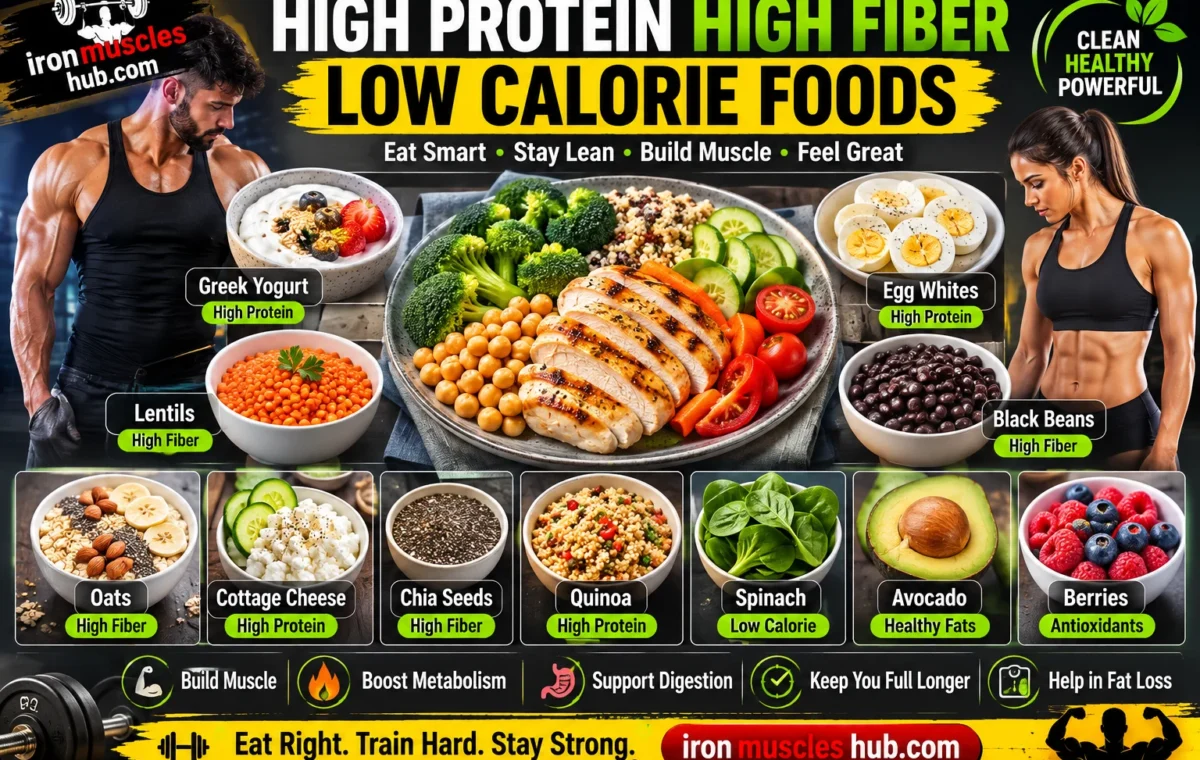
If you want meals that are filling without using a huge calorie budget, high protein high fiber low calorie foods are a strong place to start. The best choices usually combine lean protein with beans, lentils, vegetables, fruit, or another fiber-rich food.
- Quick Answer
- What Are High Protein High Fiber Low Calorie Foods?
- 15 High Protein High Fiber Low Calorie Foods and Combinations
- 1. Lentils
- 2. Black Beans
- 3. Edamame
- 4. Chickpeas
- 5. Nonfat Greek Yogurt + Berries
- 6. Shrimp + Vegetables
- 7. Chicken Breast + Broccoli
- 8. Tuna + Large Salad
- 9. Cottage Cheese + Berries
- 10. Tofu + Vegetables
- 11. Eggs + Vegetables
- 12. White Fish + Peas
- 13. Turkey + Bean Bowl
- 14. Oats + Greek Yogurt + Berries
- 15. Air-Popped Popcorn + Greek Yogurt
- Comparison Table: Which Foods Give You the Best Mix?
- How to Build a High Protein High Fiber Low Calorie Meal
- Step 1: Pick the protein anchor
- Step 2: Add a fiber source
- Step 3: Add food volume
- Step 4: Control calorie-dense extras
- Worked Example: A 180 lb / 82 kg Beginner
- Common Mistakes → Why → Fix
- Mistake 1: Eating only lean protein
- Mistake 2: Treating "healthy" as "low calorie"
- Mistake 3: Increasing fiber too quickly
- Mistake 4: Assuming more protein is always better
- Mistake 5: Choosing foods only by calories
- Mistake 6: Forgetting sauces and cooking oils
- A 30-Second Decision Rule
- 1. Where is my protein?
- 2. Where is my fiber?
- 3. What is adding most of the calories?
- Who This Is NOT For
- Are High Protein High Fiber Foods Good for Weight Loss?
- Are High Protein High Fiber Foods Good for Muscle Building?
- What foods are high in protein and fiber but low in calories?
- What food is highest in protein but lowest in calories?
- What food has the most protein and fiber?
- How much protein should I eat when trying to lose fat?
- How much fiber should I eat each day?
- Simple High Protein High Fiber Meal Ideas
- Breakfast
- Lunch
- Snack
- Dinner
- Vegetarian dinner
- Final Takeaway
The catch is that very few foods are naturally high in all three. Lean chicken and fish are excellent protein sources but contain virtually no fiber. Lentils and beans provide both protein and fiber, but also bring more calories than leafy vegetables. The practical solution is to combine foods instead of searching for one perfect ingredient. For more insights read here :- lean muscle and leaner physique .
Quick Answer
- Best all-around combinations: lentils with lean chicken, Greek yogurt with berries, edamame with vegetables, and beans with lean protein.
- For fewer calories: prioritize lean fish, shrimp, skinless chicken, nonfat Greek yogurt, vegetables, berries, and controlled portions of legumes.
- For fiber: adults generally need roughly 22–34 g of fiber per day, depending on age and sex.
- For lifters: protein needs can be higher than the basic population reference intake. Research in resistance-trained adults has found that around 1.6 g/kg/day is a useful upper point for maximizing additional lean-mass benefits in many healthy adults, although individual needs differ.
What Are High Protein High Fiber Low Calorie Foods?
High protein high fiber low calorie foods are foods or food combinations that give you substantial protein and dietary fiber without requiring a large amount of energy. For beginners, the easiest approach is to pair a lean protein with a naturally fiber-rich plant food.
Examples include:
- Chicken breast + broccoli
- Shrimp + mixed vegetables
- Nonfat Greek yogurt + raspberries
- Lentils + grilled chicken
- Edamame + vegetables
- Black beans + lean turkey
- Cottage cheese + berries
- Tuna + a large salad
- Eggs or egg whites + vegetables
- Tofu + stir-fried vegetables
This matters because protein and fiber solve different nutrition problems.
Protein supplies amino acids needed for maintaining and building body tissues, including muscle. Fiber contributes to normal digestive function and can increase fullness, although its effect on appetite varies by fiber type and person. Research reviews support a relationship between protein intake and satiety, while fiber research shows that some types, particularly certain viscous fibers, can improve fullness more consistently than others.
Think of your plate as a simple three-part system:
Protein anchor + fiber-rich plant food + sensible calorie source.
You don’t need to eliminate carbohydrates or dietary fat. You simply want foods that give you useful nutrition for the calories they contain.
15 High Protein High Fiber Low Calorie Foods and Combinations
A useful distinction first: meat, poultry, seafood, eggs, and dairy can be high in protein but generally don’t provide meaningful amounts of fiber.
That isn’t a problem.
It simply means you pair them with plant foods.
1. Lentils
Lentils are one of the easiest foods for getting both protein and fiber from the same ingredient.
They’re useful in soups, curries, salads, grain bowls, and simple meal-prep dishes.
A cooked cup provides roughly 18 g protein and 15–16 g fiber, with calories generally in the low-to-mid 200s depending on the preparation.
Lentils aren’t as protein-dense per calorie as shrimp or chicken, but they bring something those foods don’t: a significant amount of fiber.
For a beginner, try:
½ cup cooked lentils + 100 g cooked chicken + mixed vegetables.
That gives you a much more balanced meal than eating either food alone.
2. Black Beans
Black beans are another strong combination food.
A cooked cup typically provides around 15 g protein and 15 g fiber, with roughly 200-plus calories depending on the product and preparation.
They’re particularly useful if you’re trying to eat more plant foods without giving up protein.
Use a smaller portion if you’re keeping calories lower:
- ½ cup black beans
- 100 g lean chicken or turkey
- Salsa
- Lettuce
- Tomatoes
- Peppers
That creates a high-volume meal without needing a large amount of oil or cheese.
3. Edamame
Edamame is a particularly useful choice for people who want a plant-based protein source.
A cup of cooked edamame commonly provides around 17–18 g protein and approximately 8 g fiber, with roughly 180–200 calories.
It works well as:
- A snack
- Salad topping
- Stir-fry ingredient
- Bowl ingredient
- Side dish
Frozen edamame is also convenient. USDA FoodData Central includes prepared frozen edamame among its food records, and its database is updated periodically.
4. Chickpeas
Chickpeas provide a useful combination of plant protein, fiber, and carbohydrate.
A cooked cup contains roughly 14–15 g protein and around 12 g fiber, with calories generally around the mid-200s.
If you’re trying to reduce calories, you don’t need to remove chickpeas.
Instead, use a moderate portion.
For example:
½ cup chickpeas + 120 g grilled chicken + cucumber + tomatoes + leafy greens
is usually more calorie-efficient than making chickpeas the entire protein source.
5. Nonfat Greek Yogurt + Berries
Plain nonfat Greek yogurt is naturally high in protein but low in fiber.
Berries solve the missing piece.
Depending on the brand, a serving of nonfat Greek yogurt can provide around 15–20 g protein, while raspberries, blackberries, strawberries, or blueberries add fiber.
A simple bowl:
- 200 g plain nonfat Greek yogurt
- 100 g berries
- Cinnamon
- Optional small amount of oats
The exact nutrition depends on the yogurt and fruit used, so check the label when tracking calories.
USDA FoodData Central contains separate entries for plain nonfat Greek yogurt and other yogurt varieties, illustrating why the specific product matters.
6. Shrimp + Vegetables
Shrimp is extremely protein-dense for its calorie content, but it contains essentially no fiber.
That’s easy to fix.
Combine cooked shrimp with:
- Broccoli
- Peppers
- Mushrooms
- Green beans
- Cabbage
- Cauliflower
A shrimp-and-vegetable stir-fry can therefore deliver a large amount of food volume without requiring much added fat.
The main calorie trap is often the cooking method, not the shrimp itself.
Two tablespoons of oil can change the calorie total of an otherwise lean meal substantially.
7. Chicken Breast + Broccoli
This is a classic for a reason.
Skinless chicken breast gives you a large amount of protein for relatively few calories, while broccoli adds fiber and food volume.
A simple plate could contain:
- 120–150 g cooked chicken breast
- 200 g broccoli
- Small serving of potatoes or rice
- Herbs, spices, lemon, or a measured sauce
Chicken is not a fiber food. Broccoli isn’t a high-protein food.
Together, they cover both bases.
8. Tuna + Large Salad
Tuna packed in water can be a convenient lean protein.
Add:
- Romaine
- Cucumber
- Tomatoes
- Bell peppers
- Carrots
- Beans if desired
The salad provides fiber and volume while the tuna provides the protein anchor.
Watch the dressing.
A salad can remain relatively low in calories until a large amount of oil-based dressing, cheese, croutons, or mayonnaise is added.
9. Cottage Cheese + Berries
Low-fat cottage cheese can provide a substantial amount of protein without being extremely calorie-dense.
Again, cottage cheese itself isn’t a major fiber source.
Add berries, sliced pear, or an apple to bring fiber into the meal.
For a savory version, combine cottage cheese with:
- Tomatoes
- Cucumber
- Black pepper
- Herbs
This is an easy breakfast or snack when you don’t want to cook.
10. Tofu + Vegetables
Tofu provides protein and is also useful for vegetarian and vegan eating patterns.
Pair it with high-volume vegetables such as:
- Cabbage
- Broccoli
- Mushrooms
- Peppers
- Zucchini
- Green beans
Use a measured amount of oil during cooking.
Tofu’s calories can vary considerably by firmness and preparation, so the nutrition label or food database entry is more useful than assuming every block has identical nutrition.
USDA’s Protein Foods guidance includes tofu, tempeh, beans, peas, lentils, nuts, seeds, seafood, meat, poultry, and eggs as protein-food options.
11. Eggs + Vegetables
Whole eggs provide protein and several micronutrients, but they’re not high in fiber.
Add vegetables to the meal:
- Spinach
- Mushrooms
- Peppers
- Tomatoes
- Onions
If you’re trying to increase protein while keeping calories lower, some people use a mixture of whole eggs and egg whites.
The important point is not that egg yolks are “bad.” They’re simply more calorie-dense than egg whites because they contain most of the egg’s fat.
12. White Fish + Peas
Cod, haddock, pollock, and similar white fish can provide substantial protein with relatively few calories.
Green peas bring fiber and carbohydrate.
Try:
150 g cooked white fish + 100 g peas + a large serving of vegetables.
This is a useful dinner when you want plenty of food without relying heavily on added fats.
13. Turkey + Bean Bowl
Lean turkey provides the protein anchor.
Beans provide fiber.
Add vegetables and salsa.
For example:
- 100–120 g cooked lean turkey
- ½ cup black or kidney beans
- Lettuce
- Tomato
- Onion
- Peppers
- Salsa
You can add a small amount of rice or a whole-grain tortilla if it fits your calorie target.
14. Oats + Greek Yogurt + Berries
Oats aren’t a low-calorie food in the same sense as leafy vegetables, but they can be very useful in a controlled portion.
Try:
- 40 g dry oats
- 200 g nonfat Greek yogurt
- 100 g berries
- Cinnamon
You get protein from the yogurt, fiber from oats and berries, and carbohydrate that can work well around training.
15. Air-Popped Popcorn + Greek Yogurt
This combination is useful as a snack rather than a complete meal.
Popcorn contributes volume and fiber while Greek yogurt contributes protein.
The key is choosing plain air-popped popcorn rather than a version heavily coated with butter or oil.
This is an example of a broader rule:
A low-calorie food can become a high-calorie food through preparation.
Comparison Table: Which Foods Give You the Best Mix?
The following figures are approximate reference values, not universal label values. Food variety, cooking method, water content, and brand can change the numbers. USDA FoodData Central reports food composition on a 100 g basis for many foods and provides portion-weight information for converting values to practical servings.
| Food | Typical serving | Protein | Fiber | Calorie profile | Best use |
|---|---|---|---|---|---|
| Lentils, cooked | 1 cup | ~18 g | ~15–16 g | Moderate | Main meal |
| Black beans, cooked | 1 cup | ~15 g | ~15 g | Moderate | Bowls/tacos |
| Chickpeas, cooked | 1 cup | ~14–15 g | ~12 g | Moderate | Salads/curries |
| Edamame | 1 cup | ~17–18 g | ~8 g | Moderate | Snack/bowl |
| Nonfat Greek yogurt | 200 g | ~18–20 g | ~0 g | Low–moderate | Breakfast/snack |
| Shrimp, cooked | 100 g | ~20–24 g | ~0 g | Low | Lean protein |
| Chicken breast, cooked | 100 g | ~30–31 g | ~0 g | Moderate | Meal protein |
| White fish, cooked | 100 g | ~20–25 g | ~0 g | Low–moderate | Dinner |
| Raspberries | 100 g | ~1 g | ~6–7 g | Low | Fiber add-on |
| Broccoli | 100 g | ~3 g | ~2–3 g | Low | Volume/fiber |
| Green peas | 100 g | ~5 g | ~5 g | Low–moderate | Side dish |
| Oats, dry | 40 g | ~5 g | ~4 g | Moderate | Breakfast |
The important pattern: the foods at the top of a “protein per calorie” ranking aren’t necessarily the foods highest in fiber.
That’s why combining foods is usually smarter than trying to find one magical ingredient.
How to Build a High Protein High Fiber Low Calorie Meal
Use this simple four-step method.
Step 1: Pick the protein anchor
Choose one:
- Chicken breast
- Turkey breast
- Shrimp
- White fish
- Tuna
- Nonfat Greek yogurt
- Low-fat cottage cheese
- Tofu
- Edamame
- Lentils
- Beans
For a resistance-training beginner, the meal doesn’t need to contain a huge amount of protein.
Your total daily intake matters more than obsessing over one meal.
Step 2: Add a fiber source
Choose at least one:
- Lentils
- Beans
- Chickpeas
- Berries
- Broccoli
- Green peas
- Brussels sprouts
- Carrots
- Apples
- Pears
- Oats
- Whole grains
NIDDK lists legumes, fruits, vegetables, whole grains, and nuts among good fiber sources. It also recommends increasing fiber gradually and drinking enough fluid.
Step 3: Add food volume
This is where vegetables become extremely useful.
Use:
- Cabbage
- Lettuce
- Cucumber
- Tomatoes
- Mushrooms
- Zucchini
- Broccoli
- Cauliflower
- Peppers
Most vegetables are naturally low in fat and calories while providing fiber and other nutrients.
Step 4: Control calorie-dense extras
This is where beginners often lose control of the meal.
Watch portions of:
- Oils
- Butter
- Mayonnaise
- Cheese
- Nuts
- Nut butter
- Creamy dressings
- Sugary sauces
You don’t have to remove them.
Measure them.
A tablespoon of oil and a tablespoon of vinegar aren’t remotely similar in calorie density. The oil can be useful nutritionally, but it still needs to fit the overall meal.
Worked Example: A 180 lb / 82 kg Beginner
Here’s a practical example rather than a rigid diet prescription.
Imagine a beginner who weighs 180 lb (about 82 kg) and does resistance training three times per week.
Research on resistance training suggests that approximately 1.6 g of protein per kg of body weight per day is around the point beyond which additional protein has not consistently produced further gains in fat-free mass in the available meta-analysis. That’s not a mandatory target for everyone; it’s a research reference point.
At 82 kg:
82 × 1.6 = about 131 g protein/day
That doesn’t mean the person must eat exactly 131 g.
It simply demonstrates how body weight can be used to understand the research.
A simple distribution might look like:
- Breakfast: ~30 g
- Lunch: ~35 g
- Snack: ~20 g
- Dinner: ~35 g
- Flexible remainder: ~10 g
That’s about 130 g.
Now add fiber.
NIDDK gives a general adult range of 22–34 g/day, depending on age and sex.
A practical day could therefore include:
Breakfast: Greek yogurt + oats + berries
Lunch: Chicken + lentils + vegetables
Snack: Cottage cheese + fruit
Dinner: White fish + potatoes + broccoli
This is much easier to sustain than trying to make every meal extremely low calorie.
Common Mistakes → Why → Fix
Mistake 1: Eating only lean protein
Why: Chicken, tuna, shrimp, egg whites, and white fish are excellent protein sources, but they contribute little or no fiber.
Fix: Add vegetables, beans, lentils, berries, oats, or another fiber-rich plant food.
Mistake 2: Treating “healthy” as “low calorie”
Why: Nuts, seeds, nut butter, olive oil, avocado, and some granola products can be nutritious while still being calorie-dense.
Fix: Keep them in your diet if you enjoy them, but measure portions.
Mistake 3: Increasing fiber too quickly
Why: A sudden jump in fiber can cause bloating, gas, or abdominal discomfort.
Fix: Increase fiber gradually and maintain adequate fluid intake. NIDDK specifically recommends adding fiber little by little so your body can adjust.
Mistake 4: Assuming more protein is always better
Why: Protein is important, but more isn’t automatically better. Research in resistance-trained adults found diminishing returns for additional lean-mass gains beyond roughly 1.6 g/kg/day in the studied populations.
Fix: Get enough protein, then make room for carbohydrates, fats, vegetables, fruit, and other foods that support a balanced diet.
Mistake 5: Choosing foods only by calories
Why: Two foods can have similar calories while providing very different amounts of protein, fiber, vitamins, minerals, and satiety.
Fix: Look at the whole nutrition profile.
Mistake 6: Forgetting sauces and cooking oils
Why: A lean food can become a much higher-calorie meal after generous amounts of oil, creamy sauce, cheese, or mayonnaise are added.
Fix: Measure calorie-dense additions, especially during a fat-loss phase.
A 30-Second Decision Rule
When you’re standing in the kitchen or grocery aisle, ask three questions:
1. Where is my protein?
If you can’t identify a clear protein source, add one.
2. Where is my fiber?
If there isn’t a vegetable, fruit, legume, whole grain, or another meaningful fiber source, add one.
3. What is adding most of the calories?
Look at oil, sauces, cheese, nuts, sweets, and large portions of starch.
If your meal has a clear protein source + a fiber-rich plant food + controlled calorie-dense extras, you’re usually moving in the right direction.
This rule is deliberately simple. Beginners don’t need a spreadsheet for every meal.
Who This Is NOT For
This approach isn’t a universal diet prescription.
You should get individualized nutrition guidance if you have a medical condition that affects what or how much you should eat, a history of an eating disorder, significant digestive symptoms, or a medically prescribed diet.
People with kidney disease or other conditions that affect protein, fluid, potassium, phosphorus, or fiber requirements shouldn’t copy a high-protein eating plan from a fitness website without discussing it with their healthcare professional.
The same applies to children, pregnant people, and anyone with specific clinical nutrition requirements.
For healthy adults, the goal is not to make your diet as restrictive as possible.
It’s to make everyday food choices easier.
Are High Protein High Fiber Foods Good for Weight Loss?
They can make a calorie-controlled diet easier to follow, but no individual food causes fat loss by itself.
Protein can increase fullness, and research has found higher-protein diets can influence satiety. Fiber can also improve fullness, although the response depends on the type and amount of fiber.
The practical advantage is simple:
A meal containing lean protein, vegetables, fruit, or legumes may give you more food volume and protein than a meal built mostly around refined, calorie-dense foods.
That can help you manage hunger while maintaining an appropriate calorie intake.
Your overall energy intake, activity, sleep, food preferences, and consistency still matter.
Are High Protein High Fiber Foods Good for Muscle Building?
Yes, they can fit very well into a muscle-building diet.
But don’t make the mistake of thinking fiber itself builds muscle.
Protein provides amino acids. Resistance training provides the stimulus. Adequate energy and overall nutrition support the process.
A large meta-analysis of resistance-training studies found protein supplementation produced small additional improvements in lean mass and strength, with diminishing returns at higher total protein intakes.
For a beginner, the simplest strategy is:
- Train consistently.
- Eat enough total food for your goal.
- Get adequate protein.
- Eat vegetables and fruit regularly.
- Include fiber-rich carbohydrates.
- Sleep enough.
- Adjust based on progress.
You don’t need to live on chicken breast and broccoli.
FAQ
What foods are high in protein and fiber but low in calories?
The strongest options usually come from combinations rather than a single food. Lentils, black beans, chickpeas, and edamame provide both protein and fiber, while foods such as shrimp, chicken, Greek yogurt, and white fish can supply lean protein. Pairing the lean protein with vegetables, berries, or legumes gives you a better overall protein-and-fiber profile without requiring a large calorie intake.
What food is highest in protein but lowest in calories?
Very lean seafood, poultry, and egg whites tend to rank highly for protein relative to calories. Shrimp, white fish, tuna packed in water, skinless chicken breast, and egg whites are common examples. However, these foods generally contain little or no fiber. If your goal is high protein and high fiber, pair them with vegetables, berries, legumes, or whole grains rather than judging foods on protein alone.
What food has the most protein and fiber?
There isn’t one universal winner because the answer changes depending on serving size, preparation, and whether you’re comparing protein, fiber, or calories. Among common whole foods, lentils, black beans, chickpeas, and edamame are particularly useful because they provide meaningful amounts of both protein and fiber. Legumes are also recognized by USDA as part of both the Protein Foods and Vegetable food groups.
How much protein should I eat when trying to lose fat?
Your ideal intake depends on body size, training, age, total calories, and health status. The basic adult protein reference is lower than the intake often used in resistance-training research. A large meta-analysis found that protein intakes around 1.6 g/kg/day were approximately where additional protein stopped producing further gains in fat-free mass during resistance training in the studied healthy adults. This should be viewed as a research reference, not a requirement for every person.
How much fiber should I eat each day?
NIDDK states that adults generally need around 22–34 g of fiber per day, with the appropriate amount depending on age and sex. If your current intake is low, increase fiber gradually rather than jumping to a very high intake overnight. Drinking enough fluid is also important as you increase fiber.
Simple High Protein High Fiber Meal Ideas
If you want to put the information into practice, start with these combinations.
Breakfast
Greek yogurt bowl
- Plain nonfat Greek yogurt
- Berries
- Oats
- Cinnamon
Lunch
Chicken lentil bowl
- Grilled chicken breast
- ½–1 cup lentils
- Cucumber
- Tomatoes
- Leafy greens
- Salsa or a measured dressing
Snack
Cottage cheese and fruit
- Low-fat cottage cheese
- Apple, pear, or berries
Dinner
Shrimp vegetable stir-fry
- Shrimp
- Broccoli
- Mushrooms
- Peppers
- Cabbage
- Small serving of rice if desired
Vegetarian dinner
Tofu and edamame bowl
- Tofu
- Edamame
- Mixed vegetables
- Small serving of rice or another whole grain
These aren’t magic meals.
They’re examples of the basic formula:
Protein + fiber + volume + sensible portions.
Final Takeaway
The best high protein high fiber low calorie foods aren’t necessarily the foods that top a single nutrition ranking. Lean seafood and poultry are excellent for protein per calorie, while lentils, beans, chickpeas, edamame, berries, vegetables, and oats make it easier to raise fiber. The smart beginner move is to combine them.
Build meals around a clear protein source, add a fiber-rich plant food, fill out the plate with vegetables or fruit, and measure calorie-dense extras such as oils, sauces, cheese, and nuts. You don’t need extreme restriction. A consistent, balanced approach is much easier to maintain while supporting training, recovery, and sensible calorie control.
For more beginner-friendly strength and nutrition guides, explore the related articles on Iron Muscle Hub.