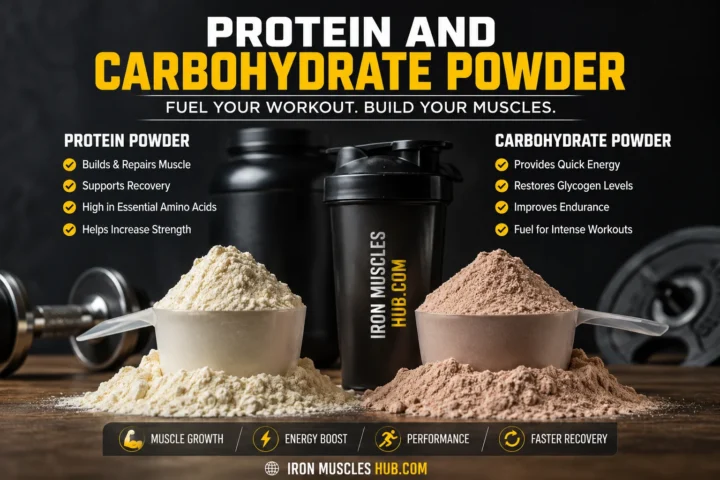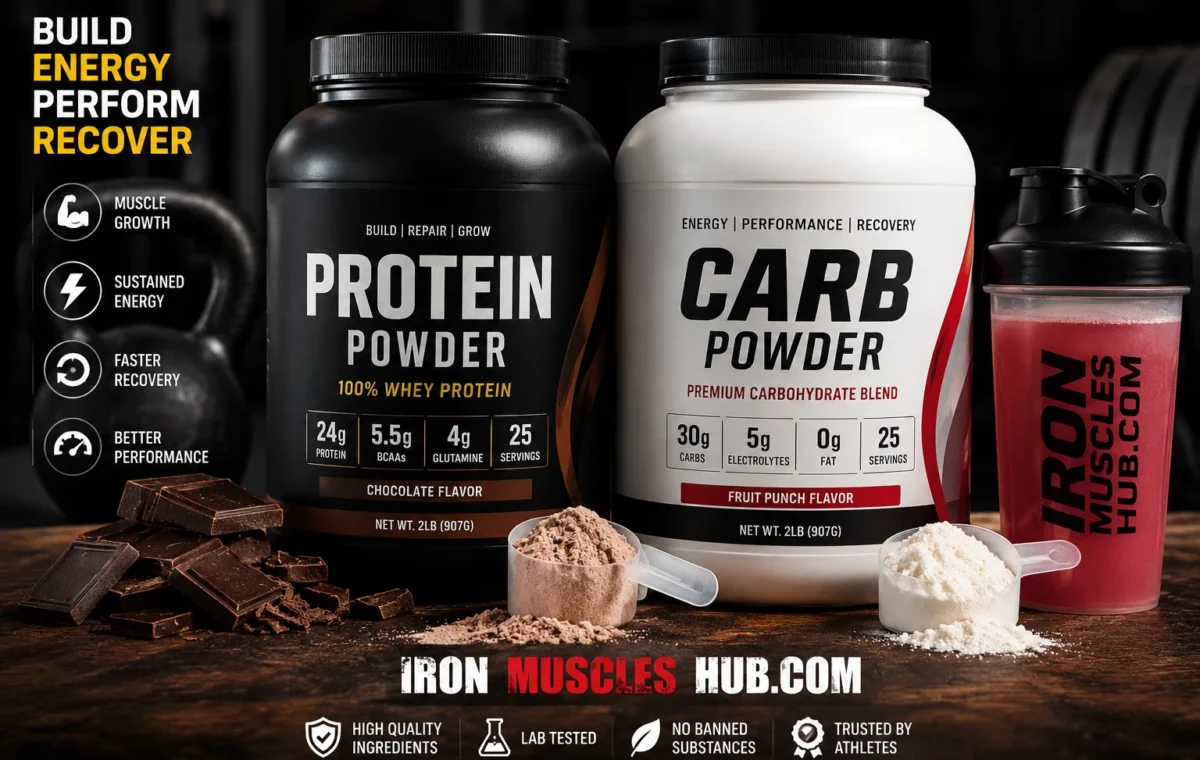
If you’re new to lifting, protein and carb powder is basically a convenient way to get protein and carbohydrate together in one drink. It can be useful when you need extra nutrition around training or struggle to eat enough food, but it isn’t automatically better than ordinary meals or protein powder.
- Quick Answer
- What Is Protein and Carb Powder?
- Why Combine Protein and Carbohydrates?
- Worked Example: 70 kg Beginner
- 1. You Struggle to Eat Enough Calories
- 2. You Train for Long or High-Volume Sessions
- 3. You Have a Short Recovery Window
- 1. Check Protein Per Serving
- 2. Check the Carbohydrate Source
- 3. Check Added Sugar
- 4. Check Serving Size
- 5. Check the Ingredient List
- Option 1: Between Meals
- Option 2: Before Training
- Option 3: After Training
- Option 4: Split the Serving
- Question 1:
- Question 2:
- Question 3:
- Protein
- Carbohydrates
- Calories
- Sugar
- Fibre
- Ingredients
- Serving Size
- What is protein and carb powder used for?
- Is protein and carb powder good for muscle gain?
- Is protein powder better than protein and carb powder?
- Should I take protein and carb powder before or after a workout?
- Can protein and carb powder make you gain fat?
The key is knowing what you actually need first. Protein helps provide amino acids for muscle repair and adaptation, while carbohydrate supplies an important source of fuel and helps restore muscle glycogen. Research shows that combining protein and carbohydrate can be useful in certain recovery situations, particularly when training volume is high or the time between hard sessions is short. For more insights read here :- human muscle chart and torso muscles labeled.
Quick Answer
- Protein and carb powder combines two macronutrients: protein and carbohydrate.
- It can be useful if you need convenient calories, protein, and carbohydrate around training.
- You don’t need it simply because you lift weights.
- If your daily protein intake is already adequate and you eat enough calories and carbohydrates, adding a powder may provide little extra benefit.
- For beginners, food quality, total calories, daily protein, training and sleep matter more than supplement timing.
What Is Protein and Carb Powder?
Protein and carb powder is a powdered supplement that provides both protein and carbohydrate in the same serving. Depending on the product, it may be marketed as a protein-carb blend, recovery shake, weight gainer, or mass gainer.
The important point is that these names don’t guarantee a particular nutritional formula.
One product might contain mostly protein with a moderate amount of carbohydrate. Another might be heavily weighted toward carbohydrates and provide a large number of calories.
That’s why you should ignore the front of the tub for a moment and check the Nutrition Facts or nutrition information panel.
Look for:
- Serving size
- Calories
- Protein per serving
- Total carbohydrate
- Added sugars
- Fat
- Fibre
- Sodium
- Main protein source
- Main carbohydrate sources
A powder isn’t inherently superior because it contains more ingredients.
For a beginner, a simple formula that fits your diet can be more useful than a complicated product with a huge ingredient list.
Why Combine Protein and Carbohydrates?
Protein and carbohydrate perform different jobs.
Protein supplies amino acids, which your body uses to build and repair tissues. Resistance training also increases the demand for adequate dietary protein.
Carbohydrate provides glucose and contributes to muscle glycogen, which is an important fuel reserve for exercise.
That doesn’t mean you must drink protein and carbohydrate together after every workout.
In fact, research on resistance training shows that carbohydrate intake has a more obvious performance role in certain circumstances, such as longer sessions, high training volume or training after a prolonged fast. A systematic review of resistance-training research found that acute carbohydrate intake was more likely to help when sessions lasted more than 45 minutes or followed an 8-hour-or-longer fast.
Another systematic review found that carbohydrate intake alone can improve glycogen restoration, while adding protein to carbohydrate did not consistently increase the rate of glycogen resynthesis compared with carbohydrate alone when carbohydrate intake was already adequate.
So don’t think:
Protein + carbs = automatically better.
Think:
Do I need both nutrients, and is a powder the easiest way for me to get them?
That’s a much better question.
Protein and Carb Powder vs Protein Powder
This is one of the most useful comparisons for beginners.
A normal protein powder is primarily designed to help you increase your protein intake.
A protein-and-carb product gives you protein plus additional carbohydrate and calories.
| Feature | Protein Powder | Protein + Carb Powder |
|---|---|---|
| Main purpose | Increase protein | Increase protein + carbs/calories |
| Protein | Usually high relative to calories | Moderate to high, depending on formula |
| Carbohydrate | Often low to moderate | Usually higher |
| Calories | Usually lower | Usually higher |
| Useful for | Meeting protein needs | Meeting protein + energy needs |
| Best fit | People short on protein | People short on protein and/or calories |
| Can replace food? | No | No |
| Required for muscle growth? | No | No |
The right choice depends on your diet.
If you eat enough calories but struggle to reach your protein target, a basic protein powder may make more sense.
If you already get enough protein but struggle to consume enough food and carbohydrate around demanding training, a protein-and-carb product may be more practical.
How Much Protein Do You Actually Need?
This is where beginners often make the biggest mistake.
They buy a supplement before working out how much protein they already get from food.
For healthy adults, the general protein RDA is 0.8 g/kg of body weight per day. That’s a population-level minimum designed around preventing deficiency, not necessarily a specific target for maximizing resistance-training adaptations.
For people who train regularly, protein requirements can be higher.
ACSM educational material gives a range of approximately 1.2–2.0 g/kg/day for athletes and routinely active adults.
Research specifically examining resistance training found that increases in fat-free mass generally plateaued around 1.6 g/kg/day, although individual needs can vary.
That gives beginners a useful practical framework:
You don’t need to chase extreme protein intake.
Instead, make sure your overall diet provides enough protein consistently.
Worked Example: 70 kg Beginner
Suppose you weigh:
70 kg / 154 lb
Using 1.6 g/kg as an evidence-based reference point:
70 × 1.6 = 112 g protein/day
So your daily target could be around:
112 g protein
You might get that from:
- Breakfast: 25 g
- Lunch: 30 g
- Snack: 15 g
- Dinner: 30 g
- Shake: 12 g
Total:
112 g
The shake isn’t magic.
It’s simply helping you close a nutritional gap.
What About Carbohydrates?
Carbohydrate requirements are much more dependent on the type, duration and frequency of training.
A beginner doing three moderate gym sessions per week doesn’t necessarily need the same carbohydrate strategy as someone doing two demanding training sessions every day.
This distinction matters.
A review of 49 studies on carbohydrate intake and resistance-training performance found that higher carbohydrate intake did not consistently improve performance in normal fed-state resistance training, particularly for sessions involving up to around 10 sets per muscle group. Benefits were more apparent in situations involving higher training demands or depleted glycogen.
Another meta-analysis found that carbohydrate intake could improve total resistance-training session volume, with stronger effects in sessions lasting more than 45 minutes and after longer fasting periods.
So carbohydrate powder can be useful, but more isn’t automatically better.
If you already eat rice, potatoes, oats, bread, fruit, pasta and other carbohydrate-rich foods, you may have little reason to add a large carb supplement.
When Does Protein and Carb Powder Make Sense?
There are several situations where it can be practical.
1. You Struggle to Eat Enough Calories
Some beginners have a small appetite.
Eating another full meal can feel difficult, particularly when you’re trying to increase your calorie intake.
A liquid shake can be easier to consume.
This is one reason protein-and-carbohydrate products are commonly used as weight-gain or mass-gain supplements.
But remember:
The supplement doesn’t guarantee muscle gain.
If your calorie intake increases much faster than your body’s needs, some of the additional weight can be body fat rather than muscle.
Your training program still needs to provide an appropriate resistance-training stimulus.
2. You Train for Long or High-Volume Sessions
Carbohydrate becomes more relevant as training demands increase.
If you’re performing a long workout with substantial volume, carbohydrate intake may help support training performance, especially if you haven’t eaten for several hours beforehand.
Research suggests carbohydrate can be particularly useful in longer resistance-training sessions and after extended fasting.
For a typical beginner doing a short gym session after a normal meal, however, you may not need a carbohydrate powder.
3. You Have a Short Recovery Window
This is a different situation.
Imagine you finish a demanding workout and need to train again later that day or early the next morning.
Rapid recovery of muscle glycogen becomes more important.
Research on recovery from endurance exercise supports combining adequate carbohydrate with protein when rapid recovery is required, particularly when the recovery window is short.
However, research also shows that adding protein to carbohydrate doesn’t necessarily speed glycogen restoration when carbohydrate intake itself is already sufficient.
That distinction is important.
When You Probably Don’t Need It
A protein-and-carb powder may not be necessary if:
- You eat enough calories.
- You’re already meeting your protein needs.
- You get enough carbohydrate from normal foods.
- You have no trouble eating around workouts.
- You only train moderately a few times per week.
- You don’t need the convenience of a liquid meal supplement.
- You’re buying it because the label promises unusually fast muscle growth.
In that situation, spending money on a supplement may not improve your results much.
Your grocery budget may be better spent on normal protein and carbohydrate foods.
How to Choose a Protein and Carb Powder
Don’t choose the tub with the biggest number on the front.
Start with the nutrition panel.
1. Check Protein Per Serving
Look at how much actual protein you get.
For example, a hypothetical serving could contain:
- 25 g protein
- 60 g carbohydrate
- 400 calories
That’s very different from another product containing:
- 10 g protein
- 100 g carbohydrate
- 500 calories
Both are protein-and-carb products, but they’re useful for different diets.
2. Check the Carbohydrate Source
Carbohydrate can come from different ingredients, including:
- Oat flour
- Maltodextrin
- Dextrose
- Rice-based ingredients
- Starches
- Powdered grains
Don’t assume that one carbohydrate source automatically makes a product superior.
Your overall diet matters more.
3. Check Added Sugar
Some products contain substantial amounts of sugar.
Sugar isn’t automatically dangerous, but if you’re drinking a high-calorie shake every day, it can be easy to consume more calories than you intended.
Look at the whole nutrition panel rather than treating “sugar-free” or “high-carb” as automatic signs of quality.
4. Check Serving Size
This is a major beginner trap.
A product may appear to provide a modest number of calories until you realize the listed serving contains several large scoops.
Compare products based on the actual amount you intend to consume, not just the headline serving.
5. Check the Ingredient List
Keep an eye out for ingredients you personally don’t tolerate.
For example, people with lactose intolerance may react differently to whey concentrate, milk solids or other dairy ingredients.
If you have a diagnosed food allergy, don’t rely on marketing language. Check the allergen information carefully.
How to Use Protein and Carb Powder
There’s no single mandatory timing rule.
The easiest approach is to use the powder according to the nutritional gap you’re trying to fill.
Option 1: Between Meals
If you’re struggling to eat enough calories, a shake between meals can add convenient nutrition.
Option 2: Before Training
If you’ve gone several hours without eating and you’re about to perform a demanding workout, a carbohydrate-containing drink can be practical.
Option 3: After Training
A protein-and-carb shake can be convenient after training, especially when your next proper meal isn’t available soon.
Option 4: Split the Serving
You don’t have to consume the entire serving at once.
If a full serving feels heavy, try a smaller amount and adjust based on your total daily intake and digestion.
Common Mistakes → Why → Fix
| Common mistake | Why it can be a problem | Better fix |
|---|---|---|
| Taking huge servings | Adds calories you may not need | Start with a smaller serving |
| Using it instead of all meals | Reduces dietary variety | Use it as a supplement |
| Chasing maximum protein | More isn’t automatically better | Track total daily protein |
| Ignoring calories | Can cause unwanted weight gain | Check total daily intake |
| Taking it only because you lift | A supplement isn’t mandatory | Identify the actual nutrition gap |
| Buying based on marketing | Front labels can hide serving size | Read the full nutrition panel |
| Adding it to an already adequate diet | May provide unnecessary calories | Compare your current intake first |
| Expecting rapid muscle gain | Muscle growth depends on many factors | Focus on training, food and recovery |
A 30-Second Decision Rule
Before buying protein and carb powder, ask yourself these three questions:
Question 1:
Am I consistently reaching my daily protein target?
If no, protein powder may be useful.
Question 2:
Am I consistently eating enough calories and carbohydrate for my training?
If no, a protein-and-carb powder could be useful.
Question 3:
Can I easily solve the problem with normal food?
If yes, you don’t necessarily need the supplement.
This simple test prevents a lot of unnecessary supplement spending.
Worked Example: 70 kg / 154 lb Beginner
Let’s say a beginner weighs:
70 kg / 154 lb
They train four days per week and want to gain muscle.
Their normal diet provides:
- Protein: 90 g/day
- Carbohydrate: adequate
- Calories: slightly below what they need
Their first problem isn’t necessarily carbohydrate.
It’s that their protein intake is relatively low and their total calorie intake isn’t sufficient for their goal.
A reasonable approach could be adding a shake that provides, for example:
25 g protein + 40 g carbohydrate
That would bring their protein intake to:
90 + 25 = 115 g/day
And provide additional calories.
But they shouldn’t automatically double the serving because they’re trying to gain faster.
The goal is to make a small, controlled adjustment, then monitor body weight, gym performance, hunger and digestion.
Protein and Carb Powder vs Food
Whole foods should remain the foundation of your diet.
Here are simple alternatives:
| Powder provides | Food alternative |
|---|---|
| Protein | Eggs, Greek yogurt, chicken, fish, lean meat, tofu, beans |
| Carbohydrate | Rice, oats, potatoes, bread, pasta, fruit |
| Protein + carbs | Milk + oats, yogurt + fruit, eggs + toast |
| Extra calories | Nuts, nut butter, dairy, grains, olive oil |
A shake wins mainly on convenience.
For example, you can drink it at work, after training or while travelling.
That’s useful.
But convenience doesn’t make it nutritionally superior to a balanced meal.
Does Protein and Carb Powder Build Muscle?
It can support a muscle-building diet, but the powder itself doesn’t build muscle independently.
Muscle growth requires an appropriate resistance-training stimulus plus adequate nutrition and recovery.
Protein provides amino acids required for muscle protein synthesis, while sufficient energy and carbohydrate can support training and recovery.
A large meta-analysis found that protein supplementation can increase gains in muscle size and strength during prolonged resistance training, but the benefit levels off as total daily protein intake increases.
This is why I wouldn’t tell a beginner to simply “drink more protein.”
First establish:
- Your training plan
- Your total calorie intake
- Your daily protein
- Your carbohydrate intake
- Your sleep
- Your consistency
Then decide whether the powder solves a real problem.
Does Taking Protein With Carbs Improve Recovery?
Sometimes, but the answer depends on the situation.
Research on endurance recovery indicates that protein plus carbohydrate can be useful when athletes need to restore fuel and support muscle recovery, particularly with short recovery periods.
However, carbohydrate plus protein doesn’t automatically outperform carbohydrate alone for glycogen restoration when carbohydrate intake is already sufficient.
Protein itself can also support recovery from resistance exercise. A systematic review and meta-analysis found that peri-exercise protein consumption could help preserve certain measures of strength following resistance exercise, although it didn’t consistently reduce muscle soreness.
So the practical answer is:
Protein and carbohydrate can complement each other, but the combination isn’t a magic recovery formula.
Should You Take It Before or After a Workout?
For most beginners, the exact minute you drink your shake isn’t the priority.
Your total daily nutrition matters more.
If you haven’t eaten for several hours before training, having carbohydrate and protein beforehand can be practical.
If you’ve already eaten a balanced meal a couple of hours before training, you may not need another large shake immediately before the workout.
After training, a protein-and-carb shake is useful mainly because it’s convenient.
If you’re going home to eat chicken, rice and vegetables shortly after your session, you don’t need to panic about missing a supplement window.
Can You Take Protein and Carb Powder Every Day?
You can use it regularly if it fits your diet and you tolerate the ingredients, but daily use isn’t automatically necessary.
Think of it as a food supplement rather than a required part of training.
If you use it every day, monitor:
- Total calories
- Protein intake
- Carbohydrate intake
- Fibre intake
- Fruit and vegetable intake
- Digestion
- Body-weight trend
If the shake starts replacing too many normal meals, that’s a sign to reconsider how you’re using it.
Who This Is NOT For
Protein and carb powder may not be the best choice if:
- You’re trying to reduce calories and the product is very calorie-dense.
- You already eat enough protein and carbohydrates.
- You don’t tolerate the ingredients.
- You’re relying on shakes instead of eating a varied diet.
- You have a medical condition that affects nutrition, digestion, kidney function or blood glucose regulation without guidance from a qualified healthcare professional.
- You’re a minor and considering a high-calorie supplement without discussing your diet with a parent/guardian and appropriate healthcare professional.
A high-calorie powder isn’t automatically appropriate just because you’re thin or new to the gym.
What Beginners Should Look For on the Label
Use this checklist before buying.
Protein
Ask:
How many grams of protein am I actually getting?
Don’t confuse “protein blend” with a high protein content.
Carbohydrates
Ask:
How many grams of carbohydrate does the serving provide?
Then consider whether you actually need that amount.
Calories
This is especially important for weight-gain products.
A large serving can contain enough calories to significantly change your daily intake.
Sugar
Look at total and added sugars where available.
Fibre
Some products contain very little fibre. That’s another reason not to replace too many meals with shakes.
Ingredients
Make sure you understand the main ingredients and can tolerate them.
Serving Size
Always compare products using the amount you will actually drink.
Protein and Carb Powder: The Bottom Line
Protein and carb powder is best viewed as a convenience tool, not a shortcut to muscle growth.
It can be useful when you need additional protein, carbohydrate or calories and don’t want another full meal.
For a beginner, though, you don’t need to buy it automatically.
If your diet already provides enough protein and energy, a large protein-and-carb shake may simply add calories you don’t need.
If you’re consistently falling short on protein or calories, a well-chosen product can make your diet easier to manage.
Start with the smallest amount that solves the problem.
Then let your training performance, body-weight trend, digestion and overall diet guide the next adjustment.
FAQ
What is protein and carb powder used for?
Protein and carb powder is used to conveniently increase protein and carbohydrate intake. It can be particularly practical when someone needs additional calories, has difficulty eating enough food, or wants a convenient recovery drink. Protein supports muscle protein synthesis and carbohydrate helps provide fuel and restore glycogen. However, the need for a combined supplement depends on your overall diet and training demands.
Is protein and carb powder good for muscle gain?
It can support a muscle-gain diet by making it easier to consume enough protein and calories. But it doesn’t directly guarantee muscle growth. Resistance training provides the stimulus, while adequate nutrition and recovery support adaptation. Research suggests protein supplementation can improve resistance-training gains when total protein intake is otherwise insufficient, with diminishing additional benefit as daily protein intake becomes higher.
Is protein powder better than protein and carb powder?
Neither is universally better. Protein powder makes more sense if you’re short on protein but already eating enough calories and carbohydrate. Protein-and-carb powder can make more sense if you’re short on both protein and energy. If you already meet your nutritional needs through normal food, you may not need either product.
Should I take protein and carb powder before or after a workout?
Either can be practical depending on your schedule and diet. Before training, carbohydrate may be useful when you haven’t eaten for several hours or are preparing for a demanding session. After training, a combined shake can be convenient when your next meal isn’t available soon. There isn’t a universal requirement to consume a powder immediately after every workout.
Can protein and carb powder make you gain fat?
Yes, if it causes your total calorie intake to remain above your body’s needs over time. The powder doesn’t automatically turn into muscle. A high-calorie shake can make gaining weight easier, but the rate and composition of weight gain depend on your overall calorie intake, training, genetics and other factors. Use the smallest serving that helps you meet your nutritional needs rather than automatically taking the largest serving.
Final Takeaway
Protein and carb powder can be useful, but it isn’t essential for beginners. Think of it as a convenient way to fill a nutritional gap.
If you need more protein, choose a product that gives you useful protein without unnecessary calories.
If you need more calories and carbohydrate as well, a combined powder may be more convenient.
For a 70 kg / 154 lb lifter, an evidence-based reference point of around 1.6 g/kg/day would equal about 112 g protein per day, but individual needs vary. Research also shows that carbohydrate benefits are more situation-dependent, particularly with longer, higher-volume or fasted training.
Build your diet around normal foods, train consistently, recover properly, and use supplements only when they make the plan easier to follow.