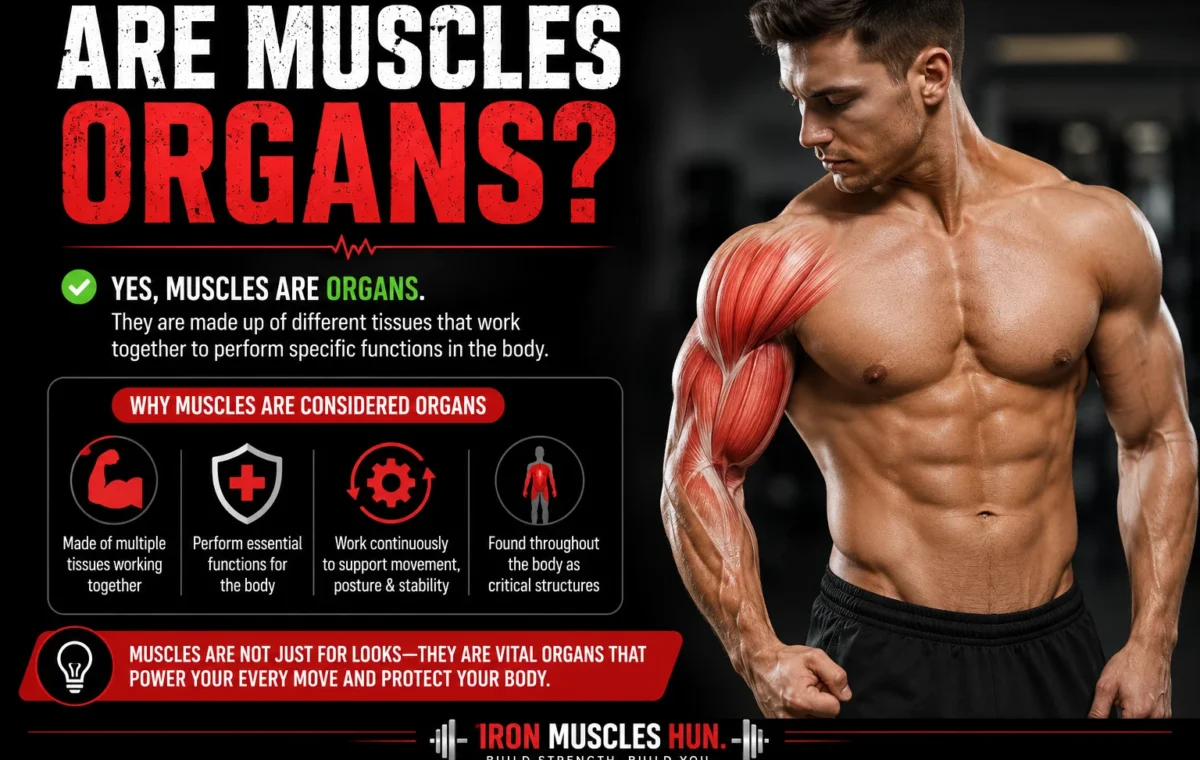
The short answer is yes—most muscles are considered organs. A muscle is more than just muscle tissue. It also contains connective tissue, blood vessels, nerves, and specialized cells that work together to perform specific functions. Because an organ is defined as a structure made of two or more tissue types working together, many muscles meet this definition.
- Quick Answer
- Muscle Fibers
- Connective Tissue
- Blood Vessels
- Nerves
- Tendons
- Skeletal Muscle Organs
- Cardiac Muscle
- Smooth Muscle
- Muscular and Skeletal Systems
- Muscular and Nervous Systems
- Muscular and Circulatory Systems
- Muscular and Respiratory Systems
- Myth: Muscles are only muscle tissue.
- Myth: Muscles only help you move.
- Myth: The heart isn't a muscle.
- Myth: All muscles are voluntary.
- Exercise Regularly
- Eat a Balanced Diet
- Stay Hydrated
- Get Enough Sleep
- Avoid Overtraining
- Are muscles really considered organs?
- Is every muscle an organ?
- Why are muscles classified as organs?
- Are all three types of muscle considered organs?
- What is the difference between muscle tissue and a muscle organ?
- How many muscles are in the human body?
Understanding why muscles are classified as organs helps explain how the muscular system supports movement, posture, circulation, and many automatic body functions. Whether you’re studying anatomy or simply curious about the human body, this guide explains the topic in clear, beginner-friendly language. For more insights read here :- what are the 3 kinds of muscle tissue and what are muscles.
Quick Answer
| Question | Answer |
|---|---|
| Are muscles organs? | Yes. Most individual muscles are considered organs because they contain multiple tissue types. |
| What tissues make up a muscle? | Muscle tissue, connective tissue, nervous tissue, and blood vessels. |
| Why are muscles organs? | They are made of different tissues working together to perform a specific job. |
| Are all muscles organs? | Individual muscles are organs, while muscle tissue itself is not an organ. |
What Is an Organ?
An organ is a body structure made from two or more different types of tissue that work together to perform a specific function.
Examples include:
- Heart
- Brain
- Liver
- Lungs
- Skin
- Stomach
Like these organs, muscles contain multiple tissues that work together, allowing them to qualify as organs in human anatomy.
Why Are Muscles Considered Organs?
Many people think muscles are simply bundles of muscle fibers. In reality, each muscle is a complex structure made up of several different tissues.
A typical skeletal muscle contains:
- Muscle tissue that contracts to create movement.
- Connective tissue that holds the muscle together and connects it to tendons.
- Blood vessels that deliver oxygen and nutrients.
- Nerves that carry signals from the brain and spinal cord.
- Protective coverings that surround and organize muscle fibers.
Because all of these tissues work together toward one purpose—movement and stability—a muscle fits the scientific definition of an organ.
What Makes Up a Muscle Organ?
Each muscle is built from several important components.
Muscle Fibers
Muscle fibers are specialized cells responsible for contracting and relaxing. Millions of these fibers work together to produce force.
Connective Tissue
Strong connective tissue surrounds and supports the muscle.
There are three major layers:
- Endomysium – surrounds individual muscle fibers.
- Perimysium – surrounds bundles of muscle fibers.
- Epimysium – surrounds the entire muscle.
These layers provide strength, protection, and organization.
Blood Vessels
Every muscle requires oxygen and nutrients.
Blood vessels deliver:
- Oxygen
- Glucose
- Amino acids
- Hormones
They also remove waste products such as carbon dioxide.
Nerves
Without nerves, muscles couldn’t move.
Motor nerves send electrical signals that tell muscle fibers exactly when to contract and relax.
This communication happens in milliseconds, allowing smooth, coordinated movement.
Tendons
Although tendons aren’t technically part of the muscle tissue itself, they connect muscles to bones.
When muscles contract, tendons transfer that force to bones, creating movement.
Types of Muscle Organs
The human body contains three kinds of muscle tissue, but they don’t all function in the same way.
Skeletal Muscle Organs
Most muscles people think about are skeletal muscles.
Examples include:
- Biceps
- Triceps
- Quadriceps
- Hamstrings
- Deltoids
- Calves
- Chest muscles
- Abdominal muscles
These muscles attach to bones through tendons and allow voluntary movement.
Cardiac Muscle
The heart is a specialized muscular organ made primarily of cardiac muscle tissue.
Unlike skeletal muscles, the heart contracts automatically throughout life without conscious control.
Its primary function is to pump blood throughout the body.
Smooth Muscle
Smooth muscle forms part of many internal organs, including the:
- Stomach
- Intestines
- Blood vessels
- Bladder
- Uterus
- Airways
These muscles control automatic body functions such as digestion, blood flow, and bladder function.
Muscle Organ vs. Muscle Tissue
Many beginners confuse muscle tissue with a muscle organ, but they are not the same thing.
| Muscle Tissue | Muscle Organ |
|---|---|
| One type of body tissue | A complete body structure |
| Contains muscle cells | Contains muscle tissue plus connective tissue, nerves, and blood vessels |
| Performs contraction | Performs movement and other specialized functions |
| Forms part of an organ | Is an organ itself |
Understanding this difference makes it easier to see why anatomy textbooks classify individual muscles as organs.
Like every other organ in your body, muscles have a specific job. They receive information from the nervous system, use oxygen and nutrients from the blood, and work with other body systems to perform their functions.
Here’s what happens when you lift a heavy object:
- Your brain sends a signal through motor nerves.
- The nerves activate specific muscle fibers.
- The muscle contracts and produces force.
- Tendons pull on bones.
- Your arm moves.
This coordinated process happens in a fraction of a second and involves multiple tissues working together—one of the main reasons muscles are classified as organs.
How Muscles Work with Other Body Systems
Muscles never work alone. They depend on several other body systems to function properly.
Muscular and Skeletal Systems
The muscular and skeletal systems work together to create movement.
- Bones provide support.
- Joints allow movement.
- Tendons connect muscles to bones.
- Muscles pull on bones to move the body.
This partnership is known as the musculoskeletal system.
Muscular and Nervous Systems
Your nervous system controls muscle activity.
The brain and spinal cord send electrical signals that tell muscles:
- When to contract
- How much force to produce
- When to relax
Without these signals, muscles wouldn’t be able to move.
Muscular and Circulatory Systems
Blood vessels inside muscles deliver:
- Oxygen
- Glucose
- Vitamins
- Minerals
- Hormones
They also remove carbon dioxide and other waste products produced during muscle activity.
Muscular and Respiratory Systems
Your lungs provide oxygen that muscles need to create energy.
During exercise:
- Breathing becomes faster.
- More oxygen enters the bloodstream.
- Muscles receive additional oxygen to keep working efficiently.
Muscles vs. Other Organs
Muscles are organs, but they have different roles compared to organs like the heart, liver, or kidneys.
| Organ | Primary Function |
|---|---|
| Muscles | Produce movement, maintain posture, generate heat |
| Heart | Pumps blood throughout the body |
| Liver | Filters blood and processes nutrients |
| Kidneys | Remove waste and regulate fluids |
| Lungs | Exchange oxygen and carbon dioxide |
| Brain | Controls body functions and communication |
Although their functions differ, they all meet the definition of an organ because they contain multiple tissue types working together.
Interesting Facts About Muscle Organs
Here are some fascinating facts about muscles:
- The human body has more than 600 muscles.
- Skeletal muscles make up roughly 40% of an average adult’s body weight, though this varies by age, sex, and fitness level.
- The gluteus maximus is the body’s largest muscle.
- The stapedius in the middle ear is the smallest skeletal muscle.
- The heart is a muscular organ that beats continuously throughout life.
- Muscles generate heat, helping maintain normal body temperature.
Common Misconceptions About Muscle Organs
Many people misunderstand what muscles are. Here are a few common myths.
Myth: Muscles are only muscle tissue.
Fact: A muscle organ contains muscle tissue, connective tissue, nerves, blood vessels, and protective coverings.
Myth: Muscles only help you move.
Fact: Muscles also help you breathe, maintain posture, circulate blood, produce heat, and support many automatic body functions.
Myth: The heart isn’t a muscle.
Fact: The heart is a muscular organ made primarily of cardiac muscle tissue.
Myth: All muscles are voluntary.
Fact: Only skeletal muscles are voluntary. Cardiac and smooth muscles work automatically without conscious control.
How to Keep Your Muscle Organs Healthy
Healthy muscles support strength, balance, mobility, and overall well-being.
Exercise Regularly
Include activities such as:
- Strength training
- Walking
- Swimming
- Cycling
- Stretching
Aim to work all major muscle groups each week.
Eat a Balanced Diet
Muscles need nutrients to repair and function properly.
Focus on foods rich in:
- Protein
- Whole grains
- Fruits
- Vegetables
- Healthy fats
Stay Hydrated
Water helps muscles contract efficiently and supports normal body function.
Drink enough fluids throughout the day, especially during and after exercise.
Get Enough Sleep
Most muscle recovery happens during sleep.
Adults should aim for 7–9 hours of quality sleep each night.
Avoid Overtraining
Muscles need time to recover after intense exercise.
Taking regular rest days helps reduce injury risk and supports healthy muscle growth.
Key Takeaways
- Yes, muscles are organs because they contain multiple tissue types working together.
- A muscle includes muscle fibers, connective tissue, nerves, blood vessels, and protective coverings.
- Muscles interact closely with the skeletal, nervous, circulatory, and respiratory systems.
- Healthy muscles depend on regular exercise, proper nutrition, hydration, and adequate recovery.
- Understanding
Are muscles really considered organs?
Yes. Individual muscles are considered organs because they contain multiple tissue types that work together. A muscle is made up of muscle tissue, connective tissue, blood vessels, nerves, and supporting structures, which meets the biological definition of an organ.
Is every muscle an organ?
Most individual skeletal muscles are classified as organs. The heart is also a muscular organ made primarily of cardiac muscle. Muscle tissue itself is not an organ—it is one type of tissue that helps form muscle organs.
Why are muscles classified as organs?
Organs are structures composed of two or more tissue types working together to perform a specific function. Muscles contain muscle tissue, connective tissue, nervous tissue, and blood vessels, allowing them to produce movement, maintain posture, and support many other body functions.
Are all three types of muscle considered organs?
The three types of muscle tissue are skeletal, cardiac, and smooth muscle. Individual skeletal muscles are organs, the heart is a muscular organ made of cardiac muscle, and smooth muscle is found within the walls of many organs such as the stomach, intestines, and blood vessels.
What is the difference between muscle tissue and a muscle organ?
Muscle tissue is one of the four basic tissue types in the body and consists of specialized muscle cells. A muscle organ includes muscle tissue along with connective tissue, nerves, blood vessels, and protective coverings that work together to perform a specific function.
How many muscles are in the human body?
The human body contains more than 600 muscles, with many anatomy references identifying approximately 650 named skeletal muscles. Together, they allow movement, support posture, produce heat, and assist with essential body functions.
Final Thoughts
So, are muscles organs? The answer is yes. Individual muscles are much more than bundles of muscle fibers. They are complex organs made from multiple tissue types that work together to produce movement, maintain posture, generate heat, and support many vital body processes.
Understanding this concept makes it easier to appreciate how the muscular system works with the nervous, skeletal, circulatory, and respiratory systems. Whether you’re learning anatomy for school, improving your fitness knowledge, or simply satisfying your curiosity, knowing that muscles are organs gives you a deeper understanding of how your body functions every day.
Taking care of your muscles through regular exercise, balanced nutrition, proper hydration, and adequate rest can help keep these remarkable organs healthy throughout your life.