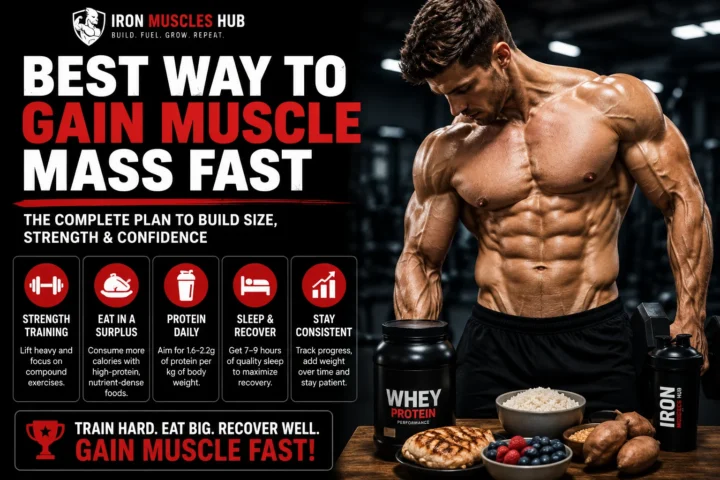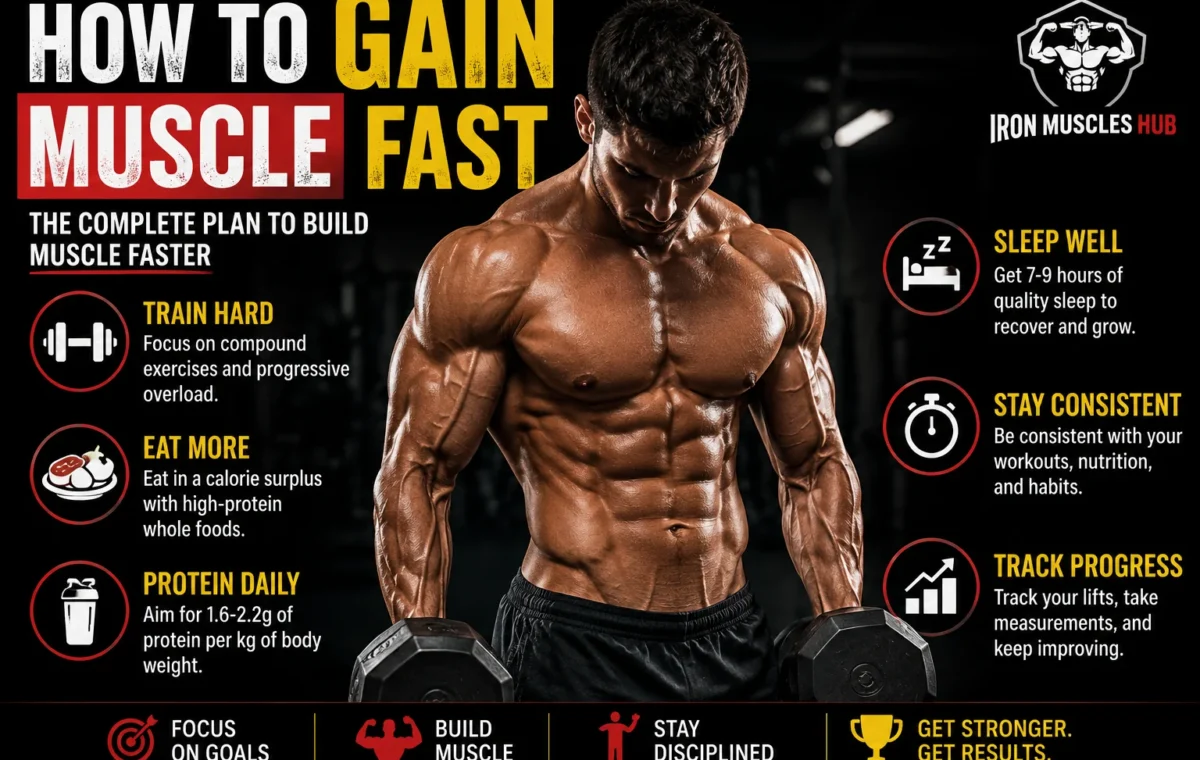
If you’re wondering how to gain muscle fast, the short answer is simple: combine progressive strength training, enough protein, a small calorie surplus, quality sleep, and consistency. There isn’t a shortcut that replaces these basics, but following them correctly can help you build muscle faster than most beginners.
- Quick Answer
- Why Building Muscle Takes Time
- 1. How to Gain Muscle Fast Follow a Proven Strength Training Program
- Focus on Compound Exercises
- 2. Use Progressive Overload
- 3. Train Each Muscle Enough Every Week
- 4. Eat Enough Protein
- Example
- 5. Eat Slightly More Calories Than You Burn
- Simple Example
- 6. Don't Skip Carbohydrates
- 7. Sleep Like Recovery Is Part of Training
- 8. Consider Evidence-Based Supplements
- Creatine Monohydrate
- Whey Protein
- Common Mistakes That Slow Muscle Growth
- A Simple Beginner Weekly Plan
- Frequently Asked Questions
- Can you gain muscle fast naturally?
- How much protein do I need to gain muscle?
- Should I do cardio while building muscle?
- How long before I see results?
- Is creatine safe?
The good news is that you don’t need complicated workout plans or expensive supplements. Modern research shows that simple, consistent training works remarkably well when paired with smart nutrition and recovery. This guide explains exactly what to do. For more insights read here:- how to build muscle.
Quick Answer
| Step | What to Do | Why It Matters |
|---|---|---|
| Strength Train | Lift weights 2–4 days weekly | Stimulates muscle growth |
| Progressive Overload | Gradually lift more weight or perform more reps | Forces muscles to adapt |
| Eat Enough Protein | Around 1.6 g per kg of body weight daily is a well-supported target for maximizing muscle growth in most people. | Supports muscle repair |
| Small Calorie Surplus | Eat slightly more calories than you burn | Provides energy for growth |
| Sleep | Aim for 7–9 hours each night | Recovery is where muscles grow |
| Stay Consistent | Follow the plan for months, not weeks | Muscle takes time to build |
Why Building Muscle Takes Time
Muscle growth happens after your body repairs the tiny amounts of damage created during resistance training. That repair process builds stronger, thicker muscle fibers.
Although beginners often notice strength improvements within a few weeks, visible muscle growth usually takes longer. Your genetics, training experience, nutrition, sleep, and consistency all influence your results.
The fastest progress usually comes during your first year of proper training.
1. How to Gain Muscle Fast Follow a Proven Strength Training Program
The foundation of muscle growth is resistance training.
According to the 2026 American College of Sports Medicine (ACSM) Position Stand, nearly every structured resistance-training program improves muscle size compared with doing nothing. The biggest difference comes from training consistently rather than chasing the “perfect” workout.
A beginner can make excellent progress by training 3–4 days each week.
Focus on Compound Exercises
Prioritize movements that train multiple muscles at once.
Examples include:
- Squats
- Deadlifts
- Bench Press
- Overhead Press
- Pull-ups or Lat Pulldowns
- Barbell Rows
- Lunges
These exercises allow you to lift heavier weights while training more muscle groups efficiently.
2. Use Progressive Overload
Your muscles won’t grow if every workout stays exactly the same.
Progressive overload means gradually increasing the challenge by:
- Adding weight
- Performing extra repetitions
- Completing another set
- Improving exercise technique
- Reducing rest time slightly
Even small improvements each week add up over months.
3. Train Each Muscle Enough Every Week
Current evidence suggests muscle growth improves with higher weekly training volume, with around 10 or more hard sets per muscle group per week being an effective target for many people.
For example:
| Muscle Group | Weekly Sets |
|---|---|
| Chest | 10–15 |
| Back | 10–15 |
| Legs | 10–20 |
| Shoulders | 10–15 |
| Biceps | 8–12 |
| Triceps | 8–12 |
As a beginner, start on the lower end and increase gradually if you’re recovering well.
4. Eat Enough Protein
Training creates the stimulus.
Protein provides the building blocks.
Research consistently supports consuming about 1.6 grams of protein per kilogram of body weight each day for maximizing muscle growth in most healthy adults. Going well above this generally offers little additional benefit.
Example
| Body Weight | Daily Protein Goal |
|---|---|
| 60 kg (132 lb) | ~95–100 g |
| 70 kg (154 lb) | ~110–115 g |
| 80 kg (176 lb) | ~125–130 g |
| 90 kg (198 lb) | ~145 g |
Good protein sources include:
- Chicken
- Turkey
- Fish
- Lean beef
- Greek yogurt
- Cottage cheese
- Eggs
- Whey protein
- Soy products
- Lentils
- Beans
5. Eat Slightly More Calories Than You Burn
If your goal is building muscle, eating enough matters.
A small calorie surplus helps your body build new muscle tissue while limiting unnecessary fat gain.
Simple Example
Suppose your maintenance intake is 2,400 calories daily.
A reasonable starting point could be:
- Maintenance: 2,400 calories
- Muscle-building target: 2,650 calories
Track your body weight for two to three weeks.
If your weight never changes, increase calories slightly.
6. Don’t Skip Carbohydrates
Carbohydrates fuel hard workouts.
Good choices include:
- Rice
- Potatoes
- Oats
- Fruit
- Whole-grain bread
- Pasta
Eating carbohydrates before training can improve workout performance, allowing you to complete more quality sets.
7. Sleep Like Recovery Is Part of Training
Muscles don’t grow during workouts.
They grow while you recover.
Aim for:
- 7–9 hours of sleep
- Regular bedtime
- Enough rest days
- Stress management
Poor sleep makes it harder to recover and perform well in the gym.
8. Consider Evidence-Based Supplements
Supplements should support—not replace—a solid training and nutrition plan.
The strongest evidence supports:
Creatine Monohydrate
Creatine helps improve high-intensity exercise performance and may increase training volume over time, which can contribute to greater strength and muscle gains when combined with resistance training.
Whey Protein
Protein powder is simply a convenient way to reach your daily protein goal if whole foods aren’t enough.
Avoid supplements promising “instant muscle growth” or unrealistic results.
Common Mistakes That Slow Muscle Growth
Many beginners make progress harder than it needs to be.
Avoid these mistakes:
- Changing workout programs every week
- Not eating enough calories
- Skipping protein
- Training inconsistently
- Ignoring sleep
- Doing excessive cardio while trying to gain size
- Expecting dramatic changes in only a few weeks
A Simple Beginner Weekly Plan
| Day | Workout |
|---|---|
| Monday | Full Body |
| Tuesday | Rest or Light Walking |
| Wednesday | Full Body |
| Thursday | Rest |
| Friday | Full Body |
| Saturday | Optional Cardio |
| Sunday | Rest |
This schedule provides enough training while allowing recovery.
Frequently Asked Questions
Can you gain muscle fast naturally?
Yes. Beginners often experience the fastest natural progress because their bodies adapt quickly to resistance training. Consistent workouts, enough protein, adequate calories, and proper recovery are far more important than expensive supplements.
How much protein do I need to gain muscle?
A daily intake of about 1.6 grams per kilogram of body weight is supported by strong evidence for maximizing muscle growth in most people. Some individuals may choose slightly higher intakes, but benefits generally level off beyond this point.
Should I do cardio while building muscle?
Yes. Moderate cardio supports heart health and fitness without preventing muscle growth when you eat enough calories and continue resistance training. Keep long, intense cardio sessions limited if maximizing muscle gain is your priority.
How long before I see results?
Many beginners notice strength improvements within several weeks. Visible muscle growth usually becomes noticeable after several months of consistent training, nutrition, and recovery.
Is creatine safe?
For most healthy adults, creatine monohydrate is one of the most researched sports supplements available and has a strong safety record when used as directed. People with kidney disease or other medical conditions should speak with a healthcare professional before using it.
The Bottom Line
Learning how to gain muscle fast isn’t about finding a secret workout or miracle supplement. The biggest improvements come from doing the basics well: train with progressive overload, eat enough high-quality protein, maintain a slight calorie surplus, sleep consistently, and stick with your plan for months rather than weeks.
If you’re just getting started, don’t chase perfection. A simple routine followed consistently will outperform an advanced program you can’t maintain. Focus on gradual progress, track your workouts, and give your body time to adapt. That’s how lasting muscle growth happens.