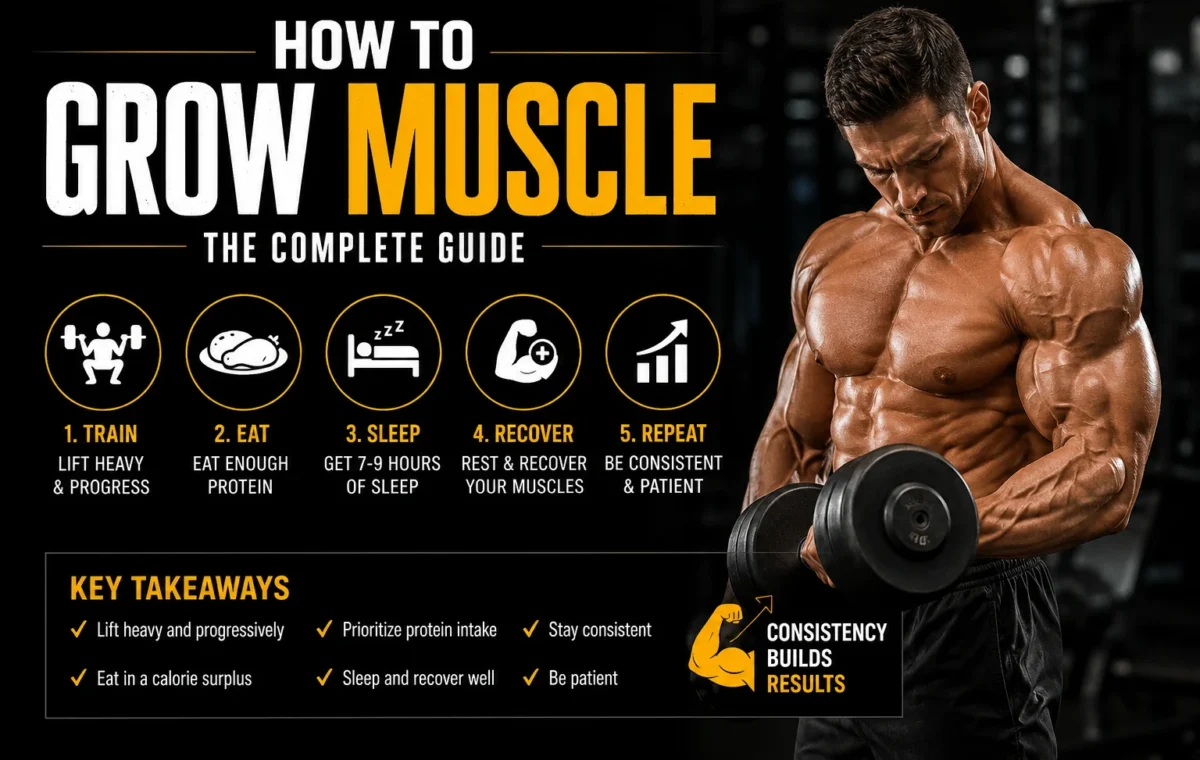
If you’re wondering how to grow muscle, the answer is simpler than many fitness influencers make it sound. Build muscle by following a progressive resistance training program, eating enough protein and calories, sleeping well, and staying consistent for months—not days.
- Quick Answer
- Why Muscles Grow
- Step 1: Follow a Progressive Strength Training Program
- Best Exercises for Muscle Growth
- Step 2: Train Hard Enough
- Step 3: Eat Enough Protein
- Step 4: Don't Undereat
- Step 5: Prioritize Sleep
- Sample Beginner Weekly Plan
- A Realistic Example
- Common Mistakes That Slow Muscle Growth
- Changing workouts every week
- Skipping recovery
- Ignoring nutrition
- Focusing only on isolation exercises
- Comparing yourself to others
- Do You Need Supplements?
- How Long Does It Take to Build Muscle?
- Can I build muscle without a gym?
- How many days per week should I train?
- Is cardio bad for muscle growth?
- What's the best rep range for muscle growth?
- Can older adults still build muscle?
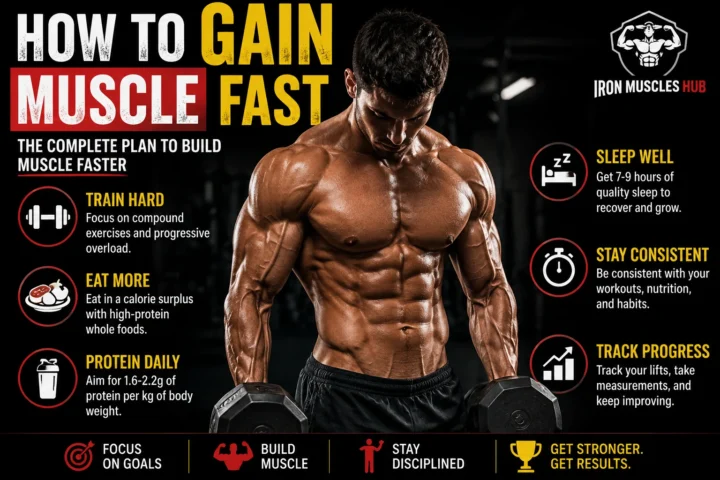
The good news is that you don’t need an expensive gym membership or complicated workout plan. According to the latest evidence from the American College of Sports Medicine (ACSM), consistency matters far more than fancy techniques. For more insight read here:- how to gain muscle fast and how to build muscle
Quick Answer
| What matters | Beginner recommendation |
|---|---|
| Strength training | 2–4 sessions per week |
| Muscle frequency | Train each muscle at least twice weekly |
| Weekly training volume | Around 10+ challenging sets per muscle group |
| Progression | Gradually increase weight, reps, or sets |
| Protein | Eat enough protein daily from quality foods |
| Recovery | Aim for 7–9 hours of sleep most nights |
| Timeline | Visible changes usually take several weeks of consistent training |
Why Muscles Grow
Muscles grow through a process called muscle hypertrophy.
Resistance training places stress on muscle fibers. During recovery, your body repairs those fibers, making them stronger and slightly larger. This cycle repeats every time you train consistently.
Three things drive muscle growth:
- Progressive overload
- Good nutrition
- Recovery
Miss one of these, and progress slows considerably.
Step 1: Follow a Progressive Strength Training Program
The latest ACSM guidance emphasizes that almost any well-designed resistance program works if you consistently increase the challenge over time.
For beginners, focus on compound exercises because they train multiple muscles at once.
Best Exercises for Muscle Growth
Lower Body
- Squats
- Romanian deadlifts
- Lunges
- Leg press
- Hip thrusts
Upper Body Push
- Bench press
- Push-ups
- Overhead press
- Incline dumbbell press
Upper Body Pull
- Pull-ups or assisted pull-ups
- Lat pulldowns
- Dumbbell rows
- Seated cable rows
Core
- Planks
- Hanging knee raises
- Dead bugs
Don’t worry about using every exercise. Choose a handful you enjoy and improve them over time.
Step 2: Train Hard Enough
One of the biggest beginner mistakes is stopping every set long before the muscles become challenged.
For muscle growth:
- Perform each exercise with good form.
- Finish each set feeling like you could only do a few more quality repetitions.
- Increase weight once your current weight feels comfortable.
Research shows you don’t always need extremely heavy weights to build muscle. Both lighter and heavier loads can work when the effort is high enough.
Step 3: Eat Enough Protein
Training provides the stimulus.
Protein provides the building blocks.
Include protein with each meal from foods such as:
- Chicken
- Turkey
- Fish
- Lean beef
- Eggs
- Greek yogurt
- Cottage cheese
- Tofu
- Tempeh
- Beans
- Lentils
Most healthy adults who regularly strength train benefit from eating sufficient daily protein spread across meals. Individual needs vary depending on body size, activity level, and goals, so consider speaking with a registered dietitian if you’re unsure.
Step 4: Don’t Undereat
Trying to lose weight aggressively while expecting rapid muscle growth often leads to disappointment.
If your goal is building muscle:
- Eat a balanced diet.
- Include carbohydrates for training energy.
- Consume healthy fats.
- Stay hydrated.
A small calorie surplus may help some people maximize muscle gain, while beginners with higher body fat can often build muscle while maintaining or slowly reducing calories.
Step 5: Prioritize Sleep
Muscle isn’t built during workouts.
It’s built while recovering.
Aim for 7–9 hours of quality sleep each night.
Poor sleep can reduce workout performance, recovery, and long-term progress. Recovery also includes taking rest days and avoiding excessive training volume.
Sample Beginner Weekly Plan
| Day | Workout |
|---|---|
| Monday | Full Body |
| Tuesday | Rest or light walking |
| Wednesday | Full Body |
| Thursday | Mobility or light cardio |
| Friday | Full Body |
| Saturday | Optional cardio or stretching |
| Sunday | Rest |
This schedule allows each muscle group to be trained multiple times every week while leaving enough time for recovery.
A Realistic Example
Imagine Sarah, a complete beginner.
Week 1:
- Squats: 20 lb dumbbells × 10 reps
- Bench press: 40 lb × 8 reps
After eight weeks of consistent training:
- Squats: 35 lb dumbbells × 10 reps
- Bench press: 60 lb × 8 reps
She also:
- Eats protein with every meal.
- Sleeps around eight hours most nights.
- Misses very few workouts.
These steady improvements are exactly what muscle-building should look like. Progress isn’t dramatic overnight—but it adds up surprisingly fast.
Common Mistakes That Slow Muscle Growth
Changing workouts every week
Stick with the same core exercises long enough to improve them.
Skipping recovery
More training isn’t always better.
Ignoring nutrition
You can’t out-train a poor diet.
Focusing only on isolation exercises
Compound lifts deliver more overall training stimulus.
Comparing yourself to others
Genetics, training history, age, and lifestyle all affect how quickly people build muscle. Focus on your own progress instead.
Do You Need Supplements?
Most beginners don’t.
The basics matter far more than supplements.
Some people choose to use:
| Supplement | Evidence |
|---|---|
| Whey protein | Convenient way to increase protein intake |
| Creatine monohydrate | One of the most researched sports supplements for improving strength and training performance when combined with resistance training |
| Caffeine | May improve workout performance for some people |
Supplements should support a good diet—not replace it.
How Long Does It Take to Build Muscle?
Everyone progresses differently.
Your age, genetics, training quality, nutrition, recovery, and consistency all play a role.
Many beginners notice improved strength within a few weeks, while visible muscle growth generally takes longer. The key is staying consistent rather than chasing quick results.
Frequently Asked Questions
Can I build muscle without a gym?
Yes. Bodyweight exercises, resistance bands, adjustable dumbbells, and kettlebells can all build muscle when you progressively increase the challenge. ACSM notes that home-based resistance training can be highly effective.
How many days per week should I train?
For most beginners, 2–4 strength-training sessions each week work well. This provides enough training stimulus while allowing adequate recovery.
Is cardio bad for muscle growth?
No. Moderate cardio supports heart health and recovery. Just avoid letting excessive endurance exercise interfere with your strength workouts or recovery.
What’s the best rep range for muscle growth?
There isn’t one perfect number. Research shows muscle growth can occur across a wide range of repetitions as long as your sets are challenging and you continue progressing over time.
Can older adults still build muscle?
Absolutely. Resistance training benefits adults of all ages by improving strength, physical function, and muscle mass. Progress may be slower than in younger people, but meaningful improvements are still possible.
Build the Habits Before Chasing Perfection
Growing muscle doesn’t require perfect genetics, expensive equipment, or marathon workouts. The biggest wins come from training consistently, challenging your muscles, eating enough protein, and allowing your body to recover. Focus on gradual improvements instead of quick transformations. If you can stick to a simple routine for several months, you’ll likely see stronger muscles, better fitness, and greater confidence. Remember that sustainable progress beats short bursts of motivation every time.