If you’re wondering what are the 3 kinds of muscle tissue, the answer is simple: skeletal muscle, cardiac muscle, and smooth muscle. Each type has a unique structure and job. Skeletal muscles help you move your body, cardiac muscle keeps your heart beating, and smooth muscles control many automatic functions inside your organs.
- Quick Answer
- 1. Skeletal Muscle
- Where Is Skeletal Muscle Found?
- Main Functions of Skeletal Muscle
- Characteristics of Skeletal Muscle
- 2. Cardiac Muscle
- Main Functions of Cardiac Muscle
- Characteristics of Cardiac Muscle
- 3. Smooth Muscle
- Where Is Smooth Muscle Found?
- Main Functions of Smooth Muscle
- Characteristics of Smooth Muscle
- Voluntary Muscle
- Involuntary Muscle
- Skeletal Muscle
- Cardiac Muscle
- Smooth Muscle
- 1. Exercise Regularly
- 2. Eat Enough Protein
- 3. Stay Hydrated
- 4. Sleep Well
- 5. Warm Up Before Activity
- 6. Allow Recovery Time
- What are the 3 kinds of muscle tissue?
- Which muscle tissue is voluntary?
- Which muscle tissue is found only in the heart?
- Where is smooth muscle found?
- Why are the three muscle tissues important?
- Can muscle tissue repair itself?
- Key Takeaways
Together, these three muscle tissues make movement, circulation, digestion, and breathing possible. Although they all contract to produce force, they differ in where they’re found, how they’re controlled, and the work they perform every day.
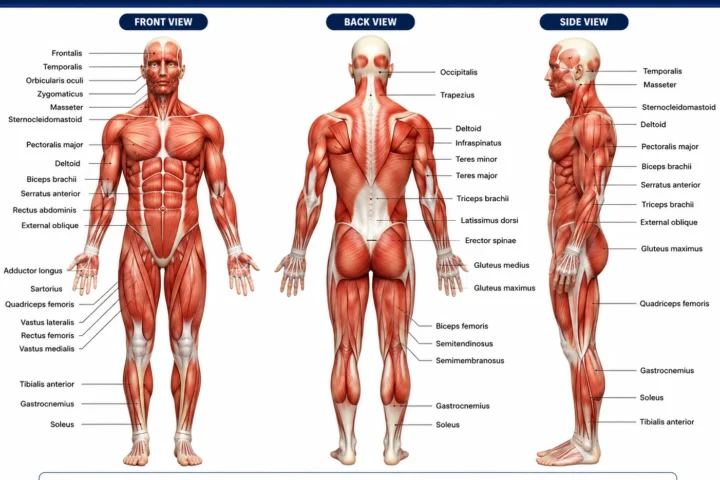
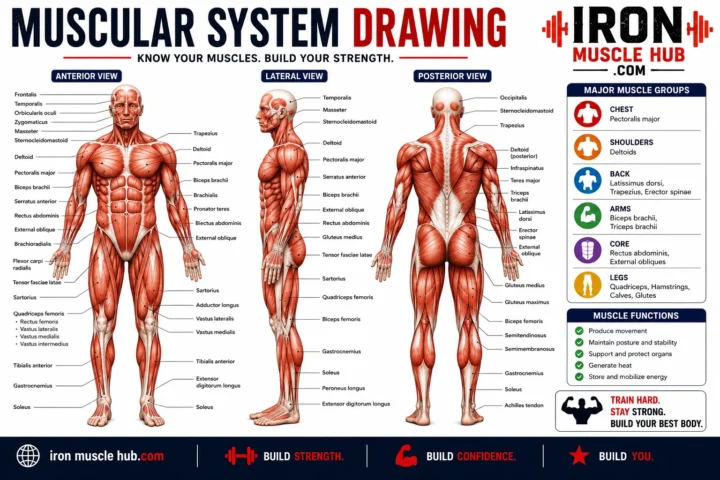
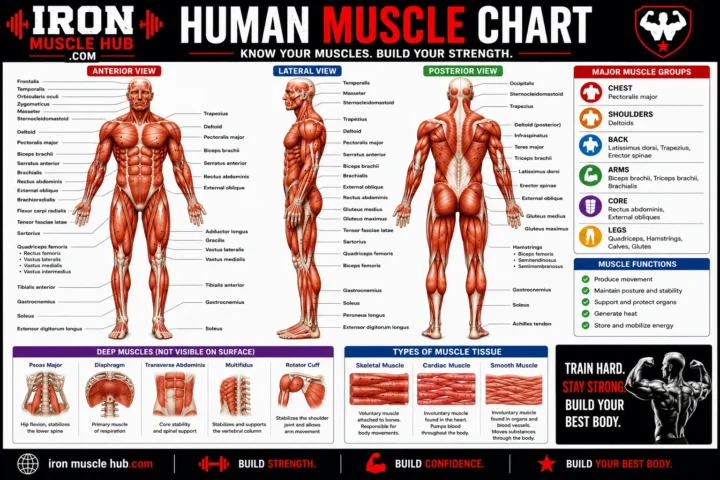
Whether you’re studying biology, improving your fitness knowledge, or simply curious about the human body, understanding these muscle types helps explain how your body works. For more insights read here :- what are muscles and what are some major muscles in the human body
Quick Answer
| Muscle Tissue | Found In | Voluntary or Involuntary | Main Function |
|---|---|---|---|
| Skeletal Muscle | Attached to bones | Voluntary | Moves the body and maintains posture |
| Cardiac Muscle | Heart | Involuntary | Pumps blood throughout the body |
| Smooth Muscle | Internal organs and blood vessels | Involuntary | Moves substances through organs and controls organ functions |
What Is Muscle Tissue?
Muscle tissue is a specialized body tissue made up of cells called muscle fibers. These fibers can shorten (contract) and lengthen (relax), allowing your body to create movement or perform important internal functions.
Muscle tissue is one of the four primary tissue types in the human body, alongside epithelial, connective, and nervous tissue.
Every type of muscle tissue shares one basic ability: contraction. However, each type is designed for different tasks.
The 3 Kinds of Muscle Tissue
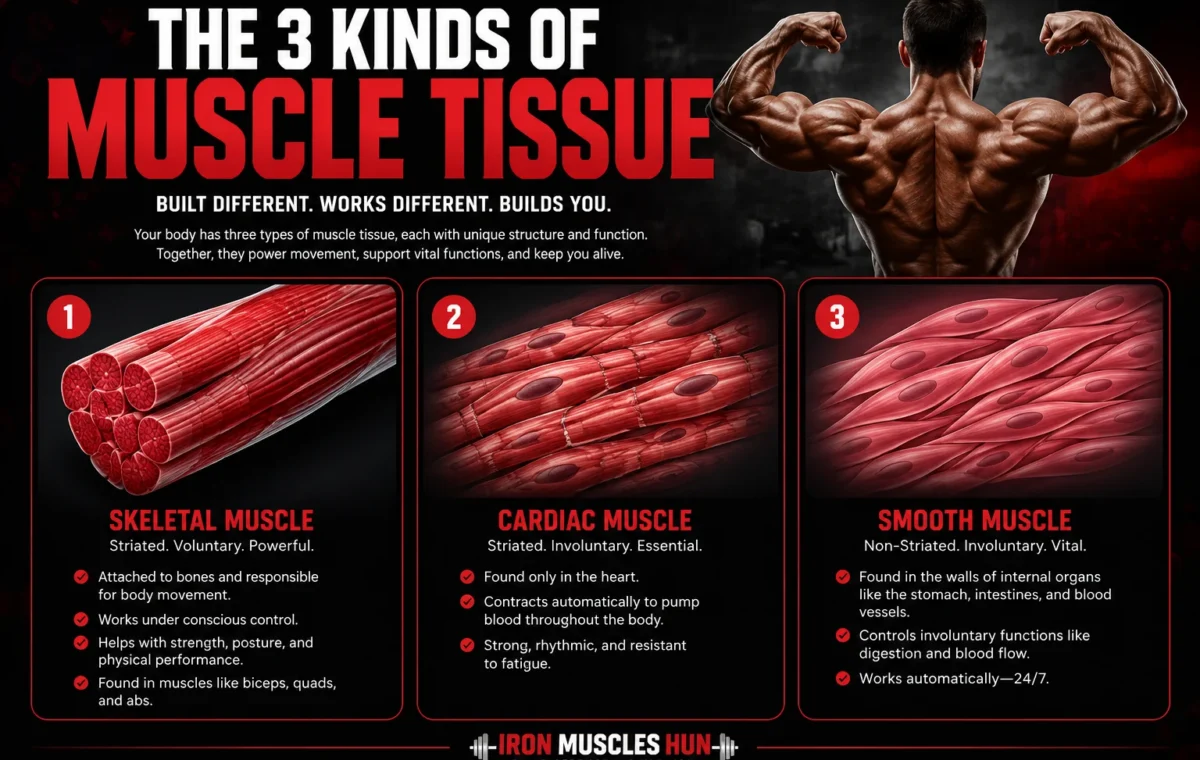
Although all muscle tissue contracts, the body contains three distinct types, each with a specialized role.
1. Skeletal Muscle
Skeletal muscle is the muscle most people recognize. These muscles attach to bones through tendons, allowing your skeleton to move.
Because you consciously control skeletal muscles, they are called voluntary muscles.
Where Is Skeletal Muscle Found?
Skeletal muscles are located throughout the body, including the:
- Arms
- Legs
- Chest
- Back
- Shoulders
- Neck
- Face
- Abdomen
Together, they form the body’s muscular system.
Main Functions of Skeletal Muscle
Skeletal muscles help you:
- Walk and run
- Lift and carry objects
- Stand upright
- Maintain balance
- Climb stairs
- Jump
- Smile and make facial expressions
- Breathe with the help of the diaphragm
Without skeletal muscles, everyday movement would not be possible.
Characteristics of Skeletal Muscle
- Voluntary control
- Attached to bones
- Long, cylindrical muscle fibers
- Striated (striped appearance under a microscope)
- Can become stronger with exercise
- Can become weaker without regular use
Skeletal muscles also work in pairs. For example, when your biceps contract to bend your elbow, your triceps relax. This coordinated action creates smooth movement.
2. Cardiac Muscle
Cardiac muscle is found only in the heart. It forms the thick muscular walls responsible for pumping blood throughout the body.
Unlike skeletal muscle, cardiac muscle works automatically. You don’t have to think about making your heart beat—it contracts continuously throughout your life.
Main Functions of Cardiac Muscle
Cardiac muscle is responsible for:
- Pumping oxygen-rich blood
- Delivering nutrients to tissues
- Removing waste products
- Supporting circulation
- Maintaining blood pressure
Because the heart never truly rests, cardiac muscle is specially adapted to resist fatigue.
Characteristics of Cardiac Muscle
- Involuntary control
- Found only in the heart
- Striated appearance
- Short, branching muscle fibers
- Connected by specialized structures called intercalated discs
- Contracts rhythmically throughout life
Healthy cardiac muscle is essential for survival because every organ depends on a continuous blood supply.
3. Smooth Muscle
Smooth muscle is found inside the walls of hollow organs and blood vessels. Unlike skeletal muscle, it isn’t attached to bones and doesn’t help move your body.
Instead, smooth muscle controls many automatic processes that keep your body functioning.
Where Is Smooth Muscle Found?
Smooth muscle is located in the:
- Stomach
- Small intestine
- Large intestine
- Bladder
- Blood vessels
- Airways
- Uterus
- Eye
- Esophagus
Main Functions of Smooth Muscle
Smooth muscles help:
- Move food through the digestive system
- Control blood flow
- Regulate blood pressure
- Empty the bladder
- Move air through the lungs
- Support childbirth
- Adjust the size of the pupils
These actions occur automatically without conscious effort.
Characteristics of Smooth Muscle
- Involuntary control
- Found in internal organs
- Non-striated appearance
- Spindle-shaped cells
- Slow, steady contractions
- Can remain contracted for long periods without tiring
Smooth muscle works continuously to support digestion, circulation, and many other body systems.
Comparing the Three Muscle Tissues
| Feature | Skeletal Muscle | Cardiac Muscle | Smooth Muscle |
|---|---|---|---|
| Control | Voluntary | Involuntary | Involuntary |
| Location | Bones | Heart | Internal organs |
| Appearance | Striated | Striated | Non-striated |
| Cell Shape | Long cylinders | Branching cells | Spindle-shaped cells |
| Main Function | Body movement | Pump blood | Move substances through organs |
| Gets Tired? | Yes | Rarely | Very resistant to fatigue |
Although skeletal, cardiac, and smooth muscles have different jobs, they constantly work together to keep your body functioning.
For example, imagine you’re going for a morning jog:
- Your skeletal muscles move your legs, arms, and body.
- Your cardiac muscle pumps faster to deliver oxygen-rich blood to your muscles.
- Your smooth muscles adjust blood vessel size, control breathing passages, and keep your digestive system working.
Without all three muscle tissues working as a team, even simple daily activities would be impossible.
Voluntary vs. Involuntary Muscle Tissue
One of the biggest differences between muscle tissues is how they’re controlled.
Voluntary Muscle
Voluntary muscles are muscles you control consciously.
Whenever you decide to:
- Walk
- Lift weights
- Write
- Smile
- Throw a ball
you’re using skeletal muscles.
Your brain sends signals through nerves telling these muscles exactly when to contract.
Involuntary Muscle
Involuntary muscles work automatically without you thinking about them.
These include:
- Cardiac muscle
- Smooth muscle
Even while you’re sleeping, these muscles continue working by:
- Pumping blood
- Digesting food
- Moving oxygen through your lungs
- Controlling blood pressure
- Moving waste through your intestines
This automatic control is managed by the autonomic nervous system.
Why Are the Three Muscle Tissues Important?
Every type of muscle tissue performs tasks that are essential for life.
Skeletal Muscle
Without skeletal muscles, you couldn’t:
- Stand
- Walk
- Run
- Lift objects
- Maintain posture
- Protect your joints
These muscles also help maintain balance and support healthy bones.
Cardiac Muscle
Your heart beats approximately 100,000 times each day, pumping blood throughout your body.
Cardiac muscle:
- Delivers oxygen
- Carries nutrients
- Removes waste products
- Supports every organ
Unlike skeletal muscle, it never takes a break.
Smooth Muscle
Smooth muscle quietly performs hundreds of important tasks, including:
- Moving food through your digestive system
- Controlling blood vessel diameter
- Helping your bladder empty
- Supporting healthy breathing
- Assisting during childbirth
Most people never notice smooth muscle working—but it never stops.
Common Disorders That Affect Muscle Tissue
Muscle tissue can become damaged due to injury, disease, aging, or overuse.
Some common conditions include:
| Condition | Muscle Tissue Affected | Description |
|---|---|---|
| Muscle strain | Skeletal | Overstretched or torn muscle fibers. |
| Muscle cramps | Skeletal | Sudden painful contractions. |
| Muscular dystrophy | Skeletal | Group of inherited diseases causing muscle weakness. |
| Heart attack | Cardiac | Damage to heart muscle caused by reduced blood flow. |
| High blood pressure | Smooth | Blood vessels remain narrowed, increasing pressure. |
Many muscle conditions can be managed or their risk reduced through healthy lifestyle habits, though some require medical treatment.
How to Keep Your Muscle Tissue Healthy
Healthy muscles contribute to better movement, strength, and overall well-being.
1. Exercise Regularly
A balanced routine should include:
- Strength training
- Walking
- Cycling
- Swimming
- Stretching
- Balance exercises
Regular activity keeps muscles active and helps prevent muscle loss.
2. Eat Enough Protein
Protein supplies the amino acids your body needs to repair and maintain muscle tissue.
Good sources include:
- Chicken
- Fish
- Eggs
- Milk
- Greek yogurt
- Cottage cheese
- Beans
- Lentils
- Tofu
- Nuts
3. Stay Hydrated
Water helps muscles contract efficiently and supports overall body function.
Proper hydration may also reduce the likelihood of exercise-related muscle cramps.
4. Sleep Well
During sleep, your body repairs damaged muscle fibers and prepares them for future activity.
Most adults benefit from 7–9 hours of quality sleep each night.
5. Warm Up Before Activity
A good warm-up:
- Improves blood flow
- Increases flexibility
- Prepares muscles for movement
- Helps lower injury risk
Five to ten minutes of light activity before exercise can make a noticeable difference.
6. Allow Recovery Time
Muscles become stronger during recovery—not while you’re exercising.
Rest days help your body:
- Repair muscle fibers
- Restore energy
- Reduce fatigue
- Lower injury risk
Avoid training the same muscle groups intensely every day.
Interesting Facts About Muscle Tissue
- The human body contains more than 600 muscles.
- Cardiac muscle works continuously from before birth until the end of life.
- The largest muscle in the body is the gluteus maximus.
- The smallest skeletal muscle is the stapedius in the middle ear.
- Smooth muscles can remain contracted much longer than skeletal muscles without becoming fatigued.
- Muscle tissue adapts to exercise by becoming stronger and more efficient over time. Also explore:- athletic muscular build.
Common Mistakes People Make
Many beginners misunderstand how muscle tissue works. Here are a few common misconceptions:
- Myth: All muscles are under your control.
Fact: Only skeletal muscles are voluntary. Cardiac and smooth muscles work automatically. - Myth: Bigger muscles always mean stronger muscles.
Fact: Strength also depends on nerve function, coordination, and training. - Myth: Only athletes need healthy muscles.
Fact: Everyone relies on healthy muscle tissue for everyday movement, posture, and vital body functions.
These facts can help you better understand the role muscles play in overall health.
What are the 3 kinds of muscle tissue?
The three kinds of muscle tissue are skeletal muscle, cardiac muscle, and smooth muscle. Skeletal muscle moves your body, cardiac muscle pumps blood through the heart, and smooth muscle controls automatic functions inside organs such as the stomach, intestines, bladder, and blood vessels.
Which muscle tissue is voluntary?
Skeletal muscle is the only voluntary muscle tissue. You control it consciously whenever you walk, lift objects, write, or exercise. Cardiac and smooth muscles are involuntary, meaning they work automatically without you having to think about them.
Which muscle tissue is found only in the heart?
Cardiac muscle is found exclusively in the heart. Its unique structure allows it to contract rhythmically and continuously, pumping blood throughout the body every second of your life.
Where is smooth muscle found?
Smooth muscle is located in the walls of many internal organs, including the:
- Stomach
- Intestines
- Blood vessels
- Bladder
- Airways
- Uterus
- Esophagus
It helps move food, control blood flow, regulate blood pressure, and perform many other automatic body functions.
Why are the three muscle tissues important?
Each muscle tissue has a different but essential role. Skeletal muscles enable movement and posture, cardiac muscle keeps blood circulating, and smooth muscles support digestion, breathing, and organ function. Together, they allow the body to function normally every day.
Can muscle tissue repair itself?
Yes. Skeletal muscle has a good ability to repair after minor injuries and exercise with proper nutrition and rest. Cardiac muscle has a very limited ability to regenerate, which is why heart damage can be serious. Smooth muscle generally has a better capacity to repair itself than cardiac muscle.
Key Takeaways
| Muscle Tissue | Main Location | Control | Primary Function |
|---|---|---|---|
| Skeletal Muscle | Attached to bones | Voluntary | Body movement and posture |
| Cardiac Muscle | Heart | Involuntary | Pumps blood |
| Smooth Muscle | Internal organs | Involuntary | Controls organ movements |
Final Thoughts
Understanding what are the 3 kinds of muscle tissue helps you appreciate how your body performs both voluntary movements and automatic life-sustaining functions. Although skeletal, cardiac, and smooth muscles have different structures and responsibilities, they work together every second to keep you moving, breathing, digesting food, and circulating blood.
Whether you’re learning human anatomy, studying for school, or improving your fitness knowledge, recognizing the differences between these muscle tissues provides a strong foundation for understanding the muscular system. Taking care of your muscles through regular exercise, balanced nutrition, hydration, and adequate rest can help support long-term health and physical performance.