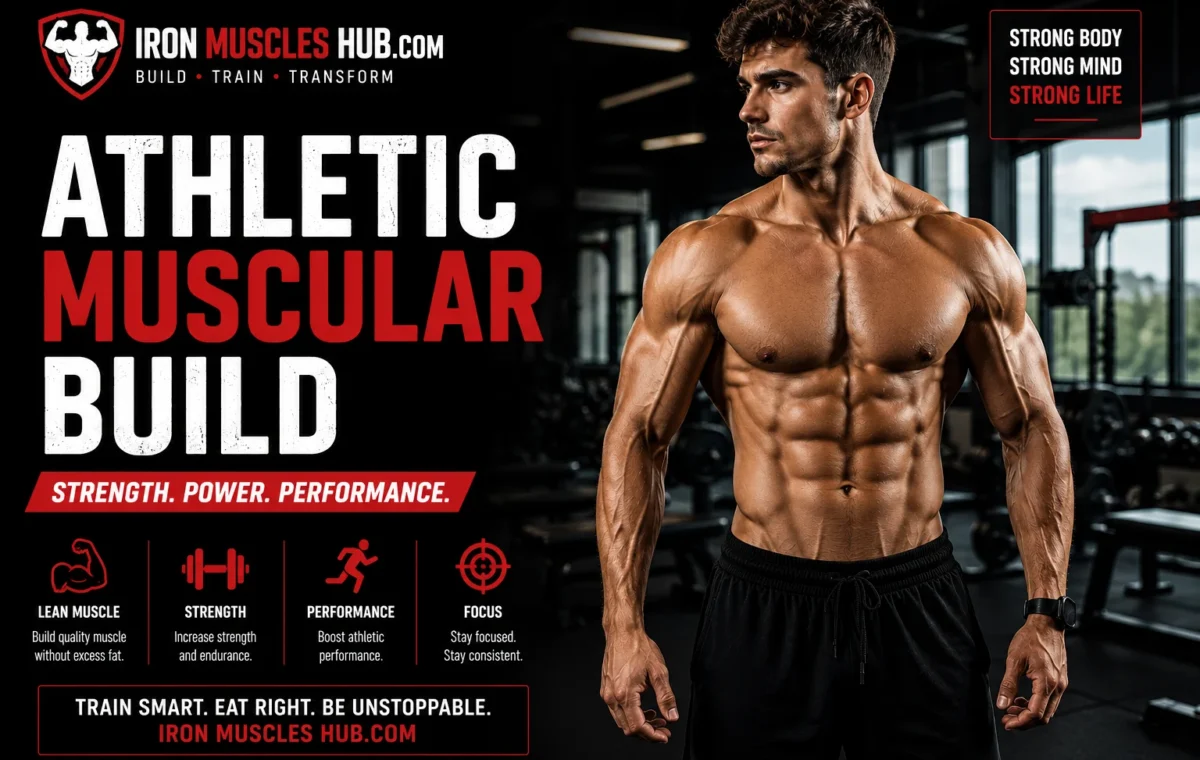
An athletic muscular build combines strength, lean muscle, endurance, and mobility into a balanced physique. Instead of focusing only on muscle size, the goal is to build a body that looks fit, performs well, and stays healthy.
- Better Overall Strength
- Improved Athletic Performance
- Healthier Body Composition
- Better Posture
- Increased Confidence
- 1. Progressive Strength Training
- 2. Compound Exercises
- 3. Balanced Nutrition
- 4. Recovery
- 5. Consistency
- Monday – Upper Body
- Tuesday – Lower Body
- Wednesday
- Thursday
- Friday
- Saturday
- Sunday
- Breakfast
- Morning Snack
- Lunch
- Afternoon Snack
- Dinner
- Evening Snack
- Whey Protein
- Creatine Monohydrate
- Caffeine
- 1. Apply Progressive Overload
- 2. Prioritize Compound Movements
- 3. Train Your Core
- 4. Improve Mobility
- 5. Stay Consistent
- Weeks 1–4
- Weeks 5–8
- Weeks 9–12
- What is an athletic muscular build?
- How long does it take to build an athletic muscular body?
- Can I build an athletic muscular build at home?
- Is cardio necessary?
- Do I need supplements?
- What's the best workout split?
- Key Takeaways
- Related Articles on Iron Muscle Hub
- Trusted Sources
- Final Thoughts
Whether you’re new to the gym or returning after a break, developing an athletic physique doesn’t require extreme diets or endless hours of exercise. With the right training plan, nutritious eating habits, and consistent recovery, you can steadily build muscle while improving your overall fitness.
This guide explains everything beginners need to know to build an athletic muscular body naturally. For more insights read here:- lean muscle physique and how do you get lean.
Quick Answer
| Goal | Best Strategy |
|---|---|
| Build Athletic Muscle | Strength train 3–5 days per week |
| Improve Definition | Eat a balanced, protein-rich diet |
| Increase Strength | Focus on compound exercises |
| Burn Body Fat | Add moderate cardio 2–3 times weekly |
| Recover Properly | Sleep 7–9 hours each night |
| See Results | Stay consistent for several months |
What Is an Athletic Muscular Build?
An athletic muscular build is a physique that combines:
- Lean muscle mass
- Functional strength
- Good mobility
- Healthy body composition
- Cardiovascular fitness
Unlike bodybuilding, which often prioritizes maximum muscle size, an athletic build focuses on muscles that improve performance in sports and everyday life while maintaining a lean appearance.
Benefits of Building an Athletic Physique
Better Overall Strength
Strength training helps you perform daily activities more efficiently while increasing your lifting capacity and muscular endurance.
Improved Athletic Performance
Whether you enjoy running, football, basketball, hiking, or recreational sports, stronger muscles improve power, balance, and coordination.
Healthier Body Composition
Building muscle while managing body fat creates a more defined physique and supports long-term physical health.
Better Posture
A stronger back, shoulders, and core help improve posture and reduce discomfort caused by prolonged sitting.
Increased Confidence
Reaching fitness goals often improves confidence and encourages healthier lifestyle habits.
The Five Foundations of an Athletic Muscular Build
Every successful transformation is built on five key habits.
1. Progressive Strength Training
Your muscles adapt only when they’re challenged.
Gradually increase:
- Weight
- Repetitions
- Training volume
- Exercise difficulty
This gradual increase encourages steady muscle growth over time.
2. Compound Exercises
Compound movements recruit several muscle groups at once, making workouts more efficient.
Examples include:
- Squats
- Deadlifts
- Bench Press
- Pull-Ups
- Rows
- Overhead Press
- Lunges
These exercises should form the foundation of your training plan.
3. Balanced Nutrition
Muscles require nutrients to repair and grow after workouts.
Prioritize:
- Lean protein
- Whole grains
- Fruits
- Vegetables
- Healthy fats
- Plenty of water
Avoid relying heavily on highly processed foods.
4. Recovery
Recovery allows muscles to repair and become stronger.
Good recovery includes:
- Rest days
- Quality sleep
- Hydration
- Stretching
- Stress management
Training intensely every day without adequate recovery can slow progress.
5. Consistency
The most effective workout program is the one you can follow consistently.
Small improvements each week often lead to significant changes over several months.
Best Exercises for Building an Athletic Muscular Body
| Exercise | Main Muscles Worked |
|---|---|
| Squat | Legs, Glutes |
| Deadlift | Full Body |
| Bench Press | Chest, Shoulders, Triceps |
| Pull-Up | Back, Biceps |
| Barbell Row | Upper Back |
| Overhead Press | Shoulders |
| Romanian Deadlift | Hamstrings |
| Walking Lunges | Legs and Core |
These exercises help build balanced strength while improving coordination and athletic performance.
Sample Weekly Workout Plan
Monday – Upper Body
- Bench Press
- Pull-Ups or Lat Pulldown
- Barbell Rows
- Shoulder Press
- Plank
Tuesday – Lower Body
- Squats
- Romanian Deadlifts
- Walking Lunges
- Calf Raises
- Hanging Leg Raises
Wednesday
Light cardio or mobility work.
Thursday
Repeat Upper Body with slight progression.
Friday
Repeat Lower Body with gradual increases in weight or repetitions.
Saturday
Moderate cardio such as cycling, swimming, or jogging.
Sunday
Complete rest or gentle stretching.
Common Beginner Mistakes
Avoid these habits that often slow progress:
- Skipping warm-ups.
- Ignoring proper exercise form.
- Changing workout plans too often.
- Eating too little protein.
- Doing excessive cardio.
- Not allowing enough recovery time.
- Expecting fast results.
Patience and consistency are far more effective than constantly searching for a “perfect” workout.
What Results Can You Expect?
With consistent effort, many beginners notice:
| Timeline | Expected Progress |
|---|---|
| Weeks 1–4 | Improved coordination and strength |
| Months 2–3 | Better muscle tone and endurance |
| Months 3–6 | Noticeable improvements in muscle definition |
| Months 6–12 | A stronger, leaner, more athletic physique |
Progress varies from person to person based on training consistency, nutrition, sleep, and individual factors.
Training is only one part of building an athletic muscular build. Your muscles need the right nutrients to recover, repair, and grow after every workout. A balanced diet helps improve performance, supports muscle growth, and keeps your energy levels steady throughout the day.
Instead of following restrictive diets, focus on eating mostly whole, nutrient-rich foods while maintaining consistent meal timing.
The Three Macronutrients Explained
Your body needs all three macronutrients to perform at its best.
| Macronutrient | Why It’s Important | Best Food Sources |
|---|---|---|
| Protein | Builds and repairs muscle tissue | Chicken, fish, eggs, Greek yogurt, cottage cheese, tofu |
| Carbohydrates | Provide energy for training and recovery | Rice, oats, potatoes, whole-grain bread, fruit |
| Healthy Fats | Support hormones and overall health | Avocados, olive oil, nuts, seeds, salmon |
A balanced intake of protein, carbohydrates, and healthy fats helps you perform better in the gym and recover more effectively.
Best High-Protein Foods
Include a quality protein source in every meal.
Excellent choices include:
- Chicken breast
- Turkey
- Lean beef
- Tuna
- Salmon
- Eggs
- Cottage cheese
- Greek yogurt
- Low-fat milk
- Tofu
- Tempeh
- Lentils
- Chickpeas
- Black beans
Eating a variety of protein sources also provides important vitamins and minerals.
Sample Daily Meal Plan
This beginner-friendly meal plan supports muscle growth and athletic performance.
Breakfast
- Oatmeal
- Greek yogurt
- Blueberries
- Almonds
Morning Snack
- Banana
- Cottage cheese
Lunch
- Grilled chicken breast
- Brown rice
- Broccoli
- Mixed vegetables
Afternoon Snack
- Apple
- Peanut butter
Dinner
- Baked salmon
- Sweet potato
- Green beans
- Side salad
Evening Snack
- Greek yogurt
- Mixed berries
This eating pattern provides steady energy while helping your muscles recover throughout the day.
Hydration Supports Performance
Water plays a key role in:
- Muscle function
- Exercise performance
- Recovery
- Body temperature regulation
- Energy levels
Simple hydration habits include:
- Drink water regularly throughout the day.
- Drink before, during, and after workouts.
- Carry a reusable water bottle.
- Increase fluid intake during hot weather or longer training sessions.
Understanding Body Recomposition
Many beginners think they must either lose fat or build muscle.
In reality, many people—especially beginners—can improve both at the same time. This is known as body recomposition.
The goal is to:
- Build lean muscle
- Reduce excess body fat
- Improve overall body composition
- Increase strength without focusing only on the scale
Progress photos, body measurements, and strength gains often tell a better story than body weight alone.
Should You Do Cardio?
Absolutely.
Cardio improves heart health and endurance while complementing strength training.
Good options include:
- Walking
- Cycling
- Swimming
- Rowing
- Light jogging
Aim for 2–3 moderate sessions per week without letting cardio replace your resistance training.
Recovery Is Essential
Your muscles become stronger while recovering—not during your workout.
To improve recovery:
- Sleep 7–9 hours each night.
- Schedule at least one or two rest days weekly.
- Stretch after training.
- Stay hydrated.
- Manage stress through walking, mobility work, or relaxation techniques.
Good recovery allows you to train consistently and reduce your risk of injury.
Are Supplements Necessary?
Supplements can be helpful, but they are not required to build an athletic muscular build.
Popular options include:
Whey Protein
A convenient way to increase daily protein intake if you struggle to meet your needs through food alone.
Creatine Monohydrate
One of the most researched sports supplements. When combined with resistance training, it may help improve strength and high-intensity exercise performance.
Caffeine
Some people use caffeine before workouts to improve focus and energy. Use it responsibly and avoid consuming it too close to bedtime.
Remember, supplements should support a healthy diet—not replace it.
How to Track Your Progress
Avoid relying only on the scale.
Track several indicators, including:
- Progress photos every four weeks
- Body measurements
- Strength improvements
- Workout log
- Energy levels
- Endurance
- How your clothes fit
These measurements provide a much clearer picture of your progress than body weight alone.
Daily Habits That Build an Athletic Physique
Success comes from small habits repeated consistently.
Focus on:
- Meal prepping each week
- Training consistently
- Walking more during the day
- Eating enough protein
- Sleeping well
- Staying hydrated
- Managing stress
- Remaining patient
These habits form the foundation of a strong, lean, athletic body.
Advanced Tips to Build an Athletic Muscular Build
Once you’ve built a solid foundation, these advanced strategies can help you continue making progress.
1. Apply Progressive Overload
Your muscles grow when you gradually challenge them. Increase one variable over time:
- Lift slightly heavier weights.
- Perform more repetitions.
- Add an extra set.
- Improve exercise technique.
- Reduce rest time when appropriate.
Small improvements every week lead to significant results over the long term.
2. Prioritize Compound Movements
Base your workouts around exercises that work multiple muscle groups.
Top compound exercises include:
| Exercise | Primary Muscles |
|---|---|
| Barbell Squat | Legs, Glutes, Core |
| Deadlift | Full Body |
| Bench Press | Chest, Shoulders, Triceps |
| Pull-Up | Back, Biceps |
| Overhead Press | Shoulders, Triceps |
| Barbell Row | Upper Back |
Compound lifts build strength faster than relying only on isolation exercises.
3. Train Your Core
A strong core improves nearly every exercise.
Include:
- Planks
- Hanging Leg Raises
- Cable Crunches
- Russian Twists
- Ab Wheel Rollouts
Training your core also helps improve posture, balance, and athletic performance.
4. Improve Mobility
Mobility training keeps your joints moving well and may reduce stiffness.
Spend 5–10 minutes after workouts on:
- Hip stretches
- Hamstring stretches
- Shoulder mobility drills
- Thoracic spine mobility
- Ankle mobility
Better mobility can improve squat depth, overhead movements, and overall exercise quality.
5. Stay Consistent
The biggest difference between successful people and those who quit isn’t genetics—it’s consistency.
Train regularly, eat balanced meals, recover well, and trust the process.
Common Mistakes to Avoid
| Mistake | Better Alternative |
|---|---|
| Skipping warm-ups | Spend 5–10 minutes warming up |
| Ignoring leg training | Train your entire body evenly |
| Poor exercise technique | Learn proper form before increasing weight |
| Sleeping too little | Aim for 7–9 hours nightly |
| Program hopping | Stay with one program for 8–12 weeks |
| Comparing yourself to others | Track your own progress |
12-Week Beginner Action Plan
Weeks 1–4
- Learn proper lifting technique.
- Train 3–4 days each week.
- Begin tracking workouts.
- Focus on consistency rather than perfection.
Weeks 5–8
- Gradually increase weights.
- Continue eating protein-rich meals.
- Add 2–3 cardio sessions weekly.
- Take progress photos.
Weeks 9–12
- Review your strength gains.
- Continue progressive overload.
- Improve recovery habits.
- Stay patient and consistent.
Frequently Asked Questions
What is an athletic muscular build?
An athletic muscular build combines lean muscle, functional strength, mobility, endurance, and a healthy body-fat level. It focuses on performance as much as appearance.
How long does it take to build an athletic muscular body?
Most beginners notice strength gains within 4–8 weeks, while visible muscle development usually appears after 3–6 months of consistent training and nutrition. Larger transformations often take 6–12 months.
Can I build an athletic muscular build at home?
Yes. Bodyweight exercises, resistance bands, adjustable dumbbells, kettlebells, and a pull-up bar can help you build muscle if you continue challenging your muscles over time.
Is cardio necessary?
Yes. Moderate cardio supports heart health, improves endurance, and complements resistance training. Walking, cycling, swimming, rowing, or light jogging are all excellent choices.
Do I need supplements?
No. Most progress comes from consistent strength training, nutritious food, and quality sleep. Supplements such as whey protein or creatine can be useful, but they are optional.
What’s the best workout split?
For beginners, an Upper/Lower Split or Full Body Workout performed 3–4 days each week provides an excellent balance between training frequency and recovery.
Build an Athletic Physique That Lasts
Building an athletic muscular build is about more than looking fit—it’s about becoming stronger, healthier, and more capable in everyday life. By combining resistance training, balanced nutrition, regular cardio, proper recovery, and patience, you’ll create a physique that performs as well as it looks.
Don’t chase quick fixes or compare your progress with others. Focus on improving one workout at a time, eating nourishing foods, and staying consistent. Over time, these habits will help you build lasting muscle, improve your fitness, and enjoy a healthier lifestyle.
Key Takeaways
- ✔ Strength train 3–5 days each week.
- ✔ Build workouts around compound exercises.
- ✔ Eat balanced meals with plenty of protein.
- ✔ Include moderate cardio for heart health.
- ✔ Sleep 7–9 hours each night.
- ✔ Track your workouts and progress.
- ✔ Stay consistent and patient.
Related Articles on Iron Muscle Hub
- Lean Muscle Physique: Complete Guide
- How to Build Muscle Quickly for Skinny Guys
- Best High-Protein Foods for Muscle Growth
- Complete Beginner Workout Plan
- Body Recomposition Explained
Trusted Sources
- American College of Sports Medicine (ACSM)
- National Strength and Conditioning Association (NSCA)
- Academy of Nutrition and Dietetics
- Dietary Guidelines for Americans
Final Thoughts
Building an athletic muscular build isn’t about chasing perfection or following the latest fitness trend. It’s about developing consistent habits that improve your strength, endurance, and overall health over time. Every workout, balanced meal, and good night’s sleep moves you one step closer to your goal.
Remember that progress won’t happen overnight. Some weeks you’ll notice strength gains, while other weeks you’ll see changes in your physique or energy levels. Stay focused on long-term improvement rather than quick results. Tracking your workouts, eating nutritious foods, and recovering properly will help you keep making steady progress.
Whether your goal is to look more athletic, perform better in sports, or simply feel healthier, the same principles apply: train with purpose, fuel your body well, prioritize recovery, and remain patient. If you stay consistent, you’ll build an athletic muscular physique that not only looks great but also supports better performance and lifelong fitness.