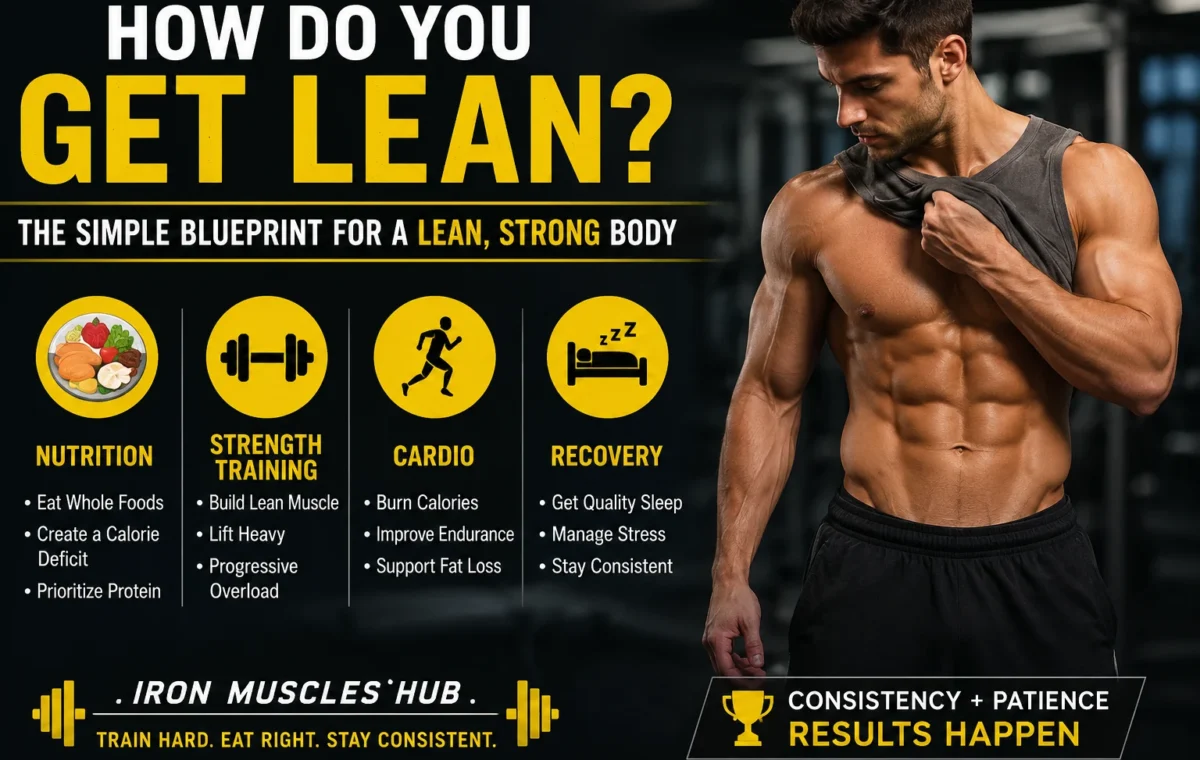
If you’re wondering how do you get lean, the answer is surprisingly simple: lose body fat while keeping as much muscle as possible. You do this by eating in a moderate calorie deficit, strength training consistently, staying active, sleeping well, and eating enough protein.
- Quick Answer
- Signs Your Deficit Is Working
- Why Consistency Beats Perfection
- Week 1–4
- Week 5–8
- Week 9–12
- 1. Eating Too Little
- 2. Avoiding Strength Training
- 3. Skipping Protein
- 4. Expecting Overnight Results
- 5. Being Inconsistent
- How do you get lean without losing muscle?
- Can beginners get lean?
- Is cardio necessary to get lean?
- How long does it take to get lean?
- What foods should I eat to get lean?
- Can you get lean without going to the gym?
Getting lean isn’t about starving yourself or spending hours doing cardio every day. It’s about following habits you can maintain for months—not days. Whether your goal is visible abs, a toned appearance, or simply feeling healthier, this guide will show you exactly how to get there. For more insights read here :- lean exercises and how to get a lean body.
Quick Answer
| Goal | What You Should Do |
|---|---|
| Lose body fat | Maintain a moderate calorie deficit |
| Keep muscle | Eat plenty of protein and lift weights |
| Burn more calories | Stay active daily |
| Improve body shape | Focus on strength training |
| Recover properly | Sleep 7–9 hours each night |
| Stay consistent | Follow your plan for several months |
Bottom line:
The fastest healthy way to get lean is combining good nutrition, resistance training, regular movement, and recovery. There are no shortcuts that replace consistent habits.
What Does “Getting Lean” Actually Mean?
Many beginners confuse getting lean with simply losing weight.
They’re not the same thing.
Someone can lose 20 pounds but still have a high body-fat percentage if much of the weight came from muscle.
A lean body means:
- Lower body-fat percentage
- More visible muscle definition
- Better body composition
- Improved fitness
- Higher strength relative to body weight
The goal isn’t simply becoming lighter.
The goal is improving the ratio of muscle to body fat.
That’s why successful fat-loss plans focus on preserving muscle while reducing fat.
Why Most People Never Get Lean
Many people spend months dieting but never achieve a lean physique because they make common mistakes.
These include:
- Eating far too little
- Doing endless cardio
- Ignoring strength training
- Not eating enough protein
- Following fad diets
- Giving up after only a few weeks
Getting lean isn’t about finding a secret workout.
It’s about consistently following proven habits long enough for your body to change.
Step 1: Eat in a Moderate Calorie Deficit
The first step in learning how do you get lean is understanding calories.
Your body uses energy every day.
When you consume fewer calories than you burn, your body begins using stored fat for energy.
This is called a calorie deficit.
However, bigger isn’t always better.
A small, sustainable calorie deficit usually works better than extreme dieting because it helps preserve muscle while making the plan easier to maintain.
Signs Your Deficit Is Working
- Slow, steady fat loss
- Good workout performance
- Hunger stays manageable
- Energy levels remain fairly stable
Crash diets often cause fatigue, muscle loss, and eventually overeating.
Slow progress usually leads to better long-term results.
Step 2: Prioritize Protein Every Day
Protein is one of the most important nutrients for getting lean.
It helps:
- Maintain muscle
- Support recovery
- Keep you feeling full
- Reduce muscle loss during fat loss
Good protein sources include:
| Food | Examples |
|---|---|
| Lean meat | Chicken breast, turkey |
| Fish | Salmon, tuna, cod |
| Dairy | Greek yogurt, cottage cheese |
| Eggs | Whole eggs and egg whites |
| Plant protein | Lentils, beans, tofu, tempeh |
| Protein supplements | Whey or plant-based protein powders |
Rather than eating most of your protein in one meal, spread it throughout the day.
This helps support muscle recovery after training.
Step 3: Lift Weights Instead of Only Doing Cardio
One of the biggest myths is that endless cardio is the fastest way to get lean.
Cardio burns calories.
Strength training helps keep the muscle that gives your body shape.
The best fat-loss programs include both.
Focus on compound exercises like:
- Squats
- Deadlifts
- Bench press
- Rows
- Pull-ups
- Shoulder press
- Lunges
Beginners should aim for 3–5 strength workouts each week.
Over time, gradually increase the weight or repetitions.
This process is called progressive overload.
Your muscles respond by becoming stronger while your body burns fat.
Step 4: Walk More Than You Think You Need To
Walking is often underestimated.
It burns calories without putting excessive stress on your body.
Many successful fat-loss programs encourage increasing daily movement through:
- Walking
- Taking stairs
- Housework
- Gardening
- Standing breaks
- Cycling for transport
These activities increase your daily calorie expenditure without requiring exhausting workouts.
For beginners, simply walking consistently every day can make a noticeable difference over several months.
Step 5: Don’t Fear Healthy Carbohydrates
Some diets suggest removing nearly all carbohydrates.
That’s usually unnecessary.
Carbohydrates provide energy for workouts.
Good carbohydrate choices include:
- Oats
- Rice
- Potatoes
- Sweet potatoes
- Fruit
- Whole-grain bread
- Whole-grain pasta
- Beans
Instead of eliminating carbs, pay attention to portion sizes and choose mostly minimally processed foods.
Balanced meals are generally easier to sustain than highly restrictive diets.
Step 6: Include Healthy Fats
Healthy fats support normal hormone production and overall health.
Good options include:
- Avocados
- Nuts
- Seeds
- Olive oil
- Peanut butter (in moderation)
- Fatty fish
Because fats contain more calories than protein or carbohydrates, portion control still matters.
The goal isn’t avoiding fat—it’s choosing nutritious sources while staying within your calorie target.
Why Consistency Beats Perfection
The people who become lean aren’t usually the ones following perfect diets.
They’re the people who keep showing up.
Missing one workout won’t ruin your progress.
Neither will enjoying a meal out.
Long-term consistency matters far more than occasional perfection.
A realistic plan you follow for six months will almost always outperform an extreme diet you quit after two weeks.
If your goal is how do you get lean, your workouts should focus on building or maintaining muscle while burning calories. Many beginners think they need hours of cardio, but a balanced routine delivers better long-term results. Also explore :- how long does it take to get lean.
A simple weekly plan looks like this:
| Day | Workout |
|---|---|
| Monday | Full-body strength training |
| Tuesday | 30–45 minute brisk walk |
| Wednesday | Upper-body strength training |
| Thursday | Light cardio or active recovery |
| Friday | Lower-body strength training |
| Saturday | Walking, cycling, or a sport you enjoy |
| Sunday | Rest and stretching |
The best workout is the one you can stick with consistently. Aim to improve your strength over time by gradually increasing the weight or repetitions.
How Much Cardio Do You Actually Need?
Cardio supports fat loss, but it isn’t the main driver of getting lean. Nutrition and strength training usually have a bigger impact.
Good cardio options include:
- Brisk walking
- Cycling
- Swimming
- Jogging
- Rowing
- Hiking
For beginners, 2–4 cardio sessions each week alongside strength training are often enough. You don’t need to spend hours on a treadmill every day.
If you enjoy cardio, keep doing it—but don’t let it replace resistance training.
Sleep Is Your Secret Fat-Loss Tool
Many people focus only on food and exercise while ignoring sleep.
Poor sleep can make it harder to:
- Recover from workouts
- Control hunger
- Stay motivated
- Perform well during exercise
Aim for 7–9 hours of quality sleep each night whenever possible. A regular bedtime, limiting screen time before bed, and keeping your room cool and dark can all help improve sleep quality.
Manage Stress for Better Results
Stress affects more than your mood. It can make healthy habits harder to maintain and may lead to overeating or skipped workouts.
Simple ways to manage stress include:
- Taking daily walks
- Practicing deep breathing
- Spending time outdoors
- Reading
- Stretching or yoga
- Talking with friends or family
You don’t need to eliminate stress completely—just find healthy ways to cope with it.
Stay Hydrated
Water plays an important role in overall health and exercise performance.
Drinking enough water may help you:
- Feel more energized
- Support workouts
- Reduce confusion between thirst and hunger
- Stay focused throughout the day
Carry a reusable water bottle and drink regularly, especially before, during, and after exercise.
A Simple Daily Meal Example
You don’t need expensive “fitness foods” to get lean.
Here’s a balanced day of eating:
| Meal | Example |
|---|---|
| Breakfast | Greek yogurt, berries, and oats |
| Snack | Apple and a handful of almonds |
| Lunch | Grilled chicken, rice, and vegetables |
| Snack | Protein shake or cottage cheese |
| Dinner | Salmon, potatoes, and broccoli |
| Evening | Fruit or low-fat yogurt if hungry |
This approach provides protein, carbohydrates, healthy fats, and fiber without being overly restrictive.
Sample Beginner Fat-Loss Plan
If you’re just starting, keep things simple.
Week 1–4
- Strength train 3 times per week
- Walk 30–45 minutes most days
- Eat protein with every meal
- Drink more water
- Sleep 7–9 hours
Week 5–8
- Increase workout weights slightly
- Add one extra cardio session if needed
- Continue eating mostly whole foods
- Track progress every two weeks
Week 9–12
- Stay consistent
- Make small adjustments if progress slows
- Focus on building habits rather than chasing quick results
Common Mistakes That Stop People Getting Lean
Many beginners unknowingly slow their progress by making avoidable mistakes.
1. Eating Too Little
Extreme diets may cause muscle loss, low energy, and increased hunger. A moderate calorie deficit is usually easier to maintain.
2. Avoiding Strength Training
Only doing cardio can make it harder to preserve muscle. Include resistance exercises every week.
3. Skipping Protein
Protein helps maintain muscle while losing fat. Include a good protein source at each meal.
4. Expecting Overnight Results
Getting lean takes time. Healthy progress is built over weeks and months—not days.
5. Being Inconsistent
One unhealthy meal won’t ruin your progress, just as one healthy meal won’t transform your body. Consistency matters most.
How Long Does It Take to Get Lean?
One of the most common questions is how quickly you’ll see results.
The answer depends on factors such as:
- Starting body-fat percentage
- Diet consistency
- Training routine
- Sleep
- Genetics
- Overall activity level
Many beginners notice improvements in energy and strength within a few weeks. Visible body composition changes often take several weeks to a few months of consistent effort.
Instead of chasing rapid results, focus on habits you can maintain for the long term.
Example: A Beginner’s Journey
Imagine Sarah, who wants to become lean.
She starts by:
- Strength training three times a week
- Walking 8,000–10,000 steps most days
- Eating protein at every meal
- Reducing sugary drinks
- Sleeping around eight hours per night
After several months of consistent effort, she notices:
- Better muscle definition
- More energy
- Improved fitness
- Clothes fitting better
- Greater confidence
She didn’t rely on a fad diet or extreme workouts. She built sustainable habits that supported her goal.
Extra Tips for Getting Lean
These small habits can make a big difference over time:
- Prepare meals in advance.
- Track your workouts to monitor progress.
- Choose whole foods most of the time.
- Eat slowly to help recognize fullness.
- Don’t skip meals if it leads to overeating later.
- Celebrate small improvements, not just the number on the scale.
- Be patient—lasting results take time.
These habits may seem simple, but together they create a strong foundation for a lean, healthy physique.
How do you get lean without losing muscle?
The best way to get lean without losing muscle is to combine a moderate calorie deficit, regular strength training, and adequate protein intake. Avoid crash diets and continue challenging your muscles with resistance exercises while losing fat gradually.
Can beginners get lean?
Yes. Beginners often see noticeable improvements because their bodies respond quickly to consistent training and better nutrition. Following a balanced eating plan, lifting weights, staying active, and getting enough sleep can produce excellent results over time.
Is cardio necessary to get lean?
Cardio is helpful, but it isn’t essential. Strength training and nutrition have the greatest impact on body composition. Walking, cycling, or other forms of cardio can support fat loss by increasing your daily calorie expenditure.
How long does it take to get lean?
The timeline depends on your starting point, consistency, and overall lifestyle. Some people notice changes within a few weeks, while achieving a noticeably lean physique often takes several months of steady effort.
What foods should I eat to get lean?
Choose mostly nutrient-dense, minimally processed foods, including:
- Lean chicken and turkey
- Fish
- Eggs
- Greek yogurt
- Cottage cheese
- Oats
- Rice
- Potatoes
- Fruits
- Vegetables
- Beans and lentils
- Nuts and seeds
- Olive oil
A balanced diet that fits your calorie needs is more important than eliminating any one food group.
Can you get lean without going to the gym?
Yes. While a gym can provide more equipment, you can build muscle and lose fat at home using bodyweight exercises, resistance bands, or adjustable dumbbells. The key is to challenge your muscles consistently and combine exercise with a healthy eating plan.
Your Action Plan for Getting Lean
If you’ve been asking how do you get lean, remember that success comes from doing the basics well—not chasing shortcuts.
Start with these simple steps:
- Eat in a moderate calorie deficit.
- Include protein in every meal.
- Strength train 3–5 times each week.
- Stay active with regular walking or cardio.
- Sleep 7–9 hours every night.
- Drink plenty of water.
- Stay consistent, even when progress feels slow.
You don’t need a perfect diet or expensive supplements to build a lean physique. Small, sustainable habits repeated over time will produce better results than any quick-fix program. Focus on improving week by week, and you’ll be much more likely to achieve lasting fat loss while keeping the muscle you’ve worked hard to build.
Final Thoughts
Getting lean isn’t about finding the perfect workout or following the latest diet trend. It’s about building habits you can maintain for the long term.
By eating nutritious foods, staying in a moderate calorie deficit, lifting weights, staying active, and prioritizing recovery, you can steadily reduce body fat while maintaining muscle. There will be weeks when progress feels slow, but consistency almost always beats perfection.
If you stick to the fundamentals and make small improvements over time, you’ll not only build a leaner physique but also improve your strength, energy, and overall health.