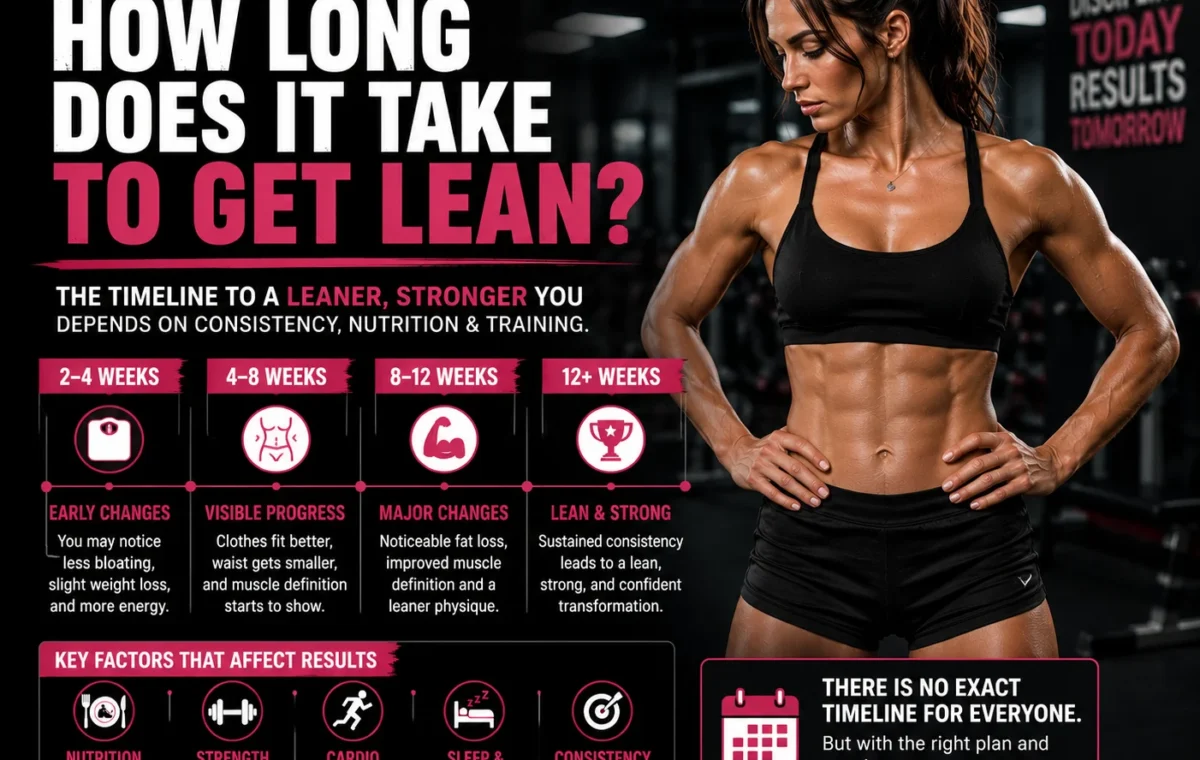
Getting lean usually takes 8 to 24 weeks for most beginners, depending on your starting body fat, diet consistency, training routine, sleep, and genetics. Some people notice changes within the first month, while a major lean physique transformation often requires several months of steady effort.
- Quick Answer: How Long Does It Take to Get Lean?
- 1. Your Starting Body Fat Level
- 2. Your Calorie Intake and Nutrition
- 3. Your Workout Routine
- Strength Training
- Cardio and Daily Movement
- 4. Sleep and Recovery
- Weeks 1–4: Building the Foundation
- Weeks 5–12: Visible Progress Begins
- Months 3–6: Major Transformation Period
- How to Get Lean Faster Without Losing Muscle
- 1. Create a Small Calorie Deficit
- Body Measurements
- Progress Photos
- Strength Improvements
- Mistake 1: Cutting Calories Too Low
- Mistake 2: Doing Only Cardio
- Mistake 3: Changing Plans Too Often
- Mistake 4: Comparing Yourself to Online Transformations
- Weeks 1–4: Build Consistency
- Weeks 5–8: Improve Performance
- Weeks 9–12: Refine Your Routine
- How long does it take to get lean if you are a beginner?
- Can you get lean in 30 days?
- How long does it take to get a lean body with muscle?
- What is the fastest way to get lean naturally?
- How do you know you are getting leaner?
- Can you build muscle while getting lean?
If you’re wondering how long does it take to get lean, the honest answer is that there is no single timeline that works for everyone. Getting lean is not about extreme diets or exhausting workouts for a few weeks. It’s about reducing body fat while maintaining or building muscle through smart training and consistent habits.
Many beginners expect dramatic changes quickly, but sustainable results come from repeating simple actions: eating enough protein, lifting weights, staying active, and giving your body time to adapt. For more insights read here:- lean muscle female
Quick Answer: How Long Does It Take to Get Lean?
| Starting Point | Realistic Time to Get Lean |
|---|---|
| Slightly overweight with good habits | 8–12 weeks |
| Average beginner with noticeable fat to lose | 12–24 weeks |
| Higher body fat level | 6–12+ months |
| Building a lean muscular physique | Several months to years |
Key Takeaways:
- Getting lean is mainly about lowering body fat while keeping muscle.
- Most beginners need 3–6 months of consistent effort for a noticeable transformation.
- A realistic fat-loss rate is usually gradual rather than extreme.
- Strength training and protein intake help protect muscle during fat loss.
- Your starting body composition affects your timeline.
What Does “Getting Lean” Actually Mean?
Getting lean means reducing excess body fat while keeping your muscles visible and maintaining strength.
A lean physique usually includes:
- Lower body fat percentage
- More visible muscle definition
- Better muscle-to-fat ratio
- Improved fitness and strength
- A healthier overall body composition
Being lean does not mean becoming extremely thin. A person can have a low body weight but still lack muscle definition. The goal is usually to create a stronger, more athletic-looking body.
For beginners, the biggest mistake is focusing only on the scale. Your weight may change slowly while your body shape improves because you are losing fat and gaining muscle at the same time.
Factors That Decide How Long It Takes to Get Lean
1. Your Starting Body Fat Level
Your current body composition is one of the biggest factors.
Someone who wants to lose a small amount of fat may see changes in a few months. Someone starting with more body fat will naturally need more time.
For example:
- A person trying to lose 10 pounds of fat may need a shorter timeline.
- A person trying to lose 40 pounds may need many additional months.
The important thing is comparing your progress with your own starting point, not someone else’s transformation online.
2. Your Calorie Intake and Nutrition
Fat loss happens when your body uses more energy than you consume over time.
This does not mean you need extreme calorie restriction. A balanced approach usually works better because it is easier to maintain.
A beginner-friendly lean diet often includes:
- High-protein foods
- Vegetables and fruits
- Whole grains
- Healthy fats
- Enough water
Examples of protein-rich foods:
- Chicken
- Eggs
- Fish
- Greek yogurt
- Lean beef
- Beans
- Tofu
Protein is especially important because it supports muscle maintenance during fat loss.
3. Your Workout Routine
A good training plan can speed up your progress by helping you keep muscle while losing fat.
The most effective beginner approach usually combines:
Strength Training
Resistance training helps build and maintain muscle.
Common exercises include:
- Squats
- Deadlifts
- Push-ups
- Bench press
- Rows
- Shoulder presses
Cardio and Daily Movement
Cardio can help increase calorie expenditure and improve fitness.
Examples:
- Walking
- Cycling
- Swimming
- Running
You do not need hours of cardio every day. Consistency matters more than extreme workouts.
4. Sleep and Recovery
Many beginners underestimate recovery.
Poor sleep can make it harder to maintain good eating habits and perform well during workouts.
Aim for:
- A consistent sleep schedule
- Enough recovery between workouts
- Stress management
Your body changes during recovery, not only during exercise.
A Realistic Lean Body Transformation Timeline
Weeks 1–4: Building the Foundation
During the first month, many beginners notice:
- Better energy
- Improved workout performance
- Small changes in measurements
- Improved eating habits
The mirror may not show dramatic changes yet, but important habits are being built.
Weeks 5–12: Visible Progress Begins
This is when many people start noticing:
- Smaller waist size
- Better muscle shape
- Increased strength
- Improved confidence
If your nutrition and training are consistent, your body composition can start changing noticeably.
Months 3–6: Major Transformation Period
For many beginners, this is the stage where the biggest visible changes happen.
You may experience:
- More muscle definition
- Lower body fat
- Better fitness levels
- A more athletic appearance
The exact results depend on your starting point and consistency.
How to Get Lean Faster Without Losing Muscle
Many beginners search for the fastest way to get lean, but rushing the process often creates problems. Extreme dieting can cause muscle loss, low energy, and a higher chance of regaining fat later.
A better approach is to focus on habits that help your body lose fat while protecting your muscle.
Here are the most important steps:
1. Create a Small Calorie Deficit
To get lean, your body needs to use stored energy, which usually requires eating slightly fewer calories than you burn.
A small calorie deficit is often easier to maintain than aggressive dieting.
A beginner approach:
- Reduce unnecessary high-calorie foods
- Increase protein intake
- Eat more whole foods
- Control portion sizes
- Track progress regularly
For example:
A person who normally eats large portions of fast food, sugary drinks, and snacks may create progress simply by replacing those choices with:
- Water instead of sugary drinks
- Lean protein instead of processed meals
- Fruit instead of high-calorie snacks
Small daily improvements can create noticeable changes over time.
2. Eat Enough Protein for a Lean Physique
Protein plays a major role in building and maintaining muscle while losing fat.
Good protein sources include:
| Food | Why It Helps |
|---|---|
| Chicken breast | High protein and versatile |
| Eggs | Easy source of complete protein |
| Fish | Protein plus healthy fats |
| Greek yogurt | Convenient high-protein snack |
| Beans and lentils | Plant-based protein option |
| Tofu | Useful vegetarian protein source |
A common mistake is reducing food too aggressively and not eating enough protein. This can make your body lose muscle instead of creating a lean appearance.
3. Follow a Progressive Strength Training Plan
If your goal is a lean and muscular body, strength training should be the foundation.
Your muscles need a reason to stay and grow while you lose fat.
A beginner weekly routine may look like this:
| Day | Training |
|---|---|
| Monday | Upper body strength |
| Tuesday | Walking or light cardio |
| Wednesday | Lower body strength |
| Thursday | Rest or mobility |
| Friday | Full-body workout |
| Saturday | Light cardio or activities |
| Sunday | Rest |
The exact schedule can change, but consistency is what creates results.
4. Increase Daily Movement
Exercise sessions are important, but your daily activity also matters.
Simple ways to move more:
- Walk after meals
- Take stairs when possible
- Stand more during the day
- Play sports or outdoor activities
- Add short walking sessions
These small activities increase your total daily energy use without making your workouts harder.
5. Track Progress the Right Way
Many beginners quit because they only look at body weight.
The scale does not always tell the full story.
Better progress measurements include:
Body Measurements
Track:
- Waist size
- Chest measurement
- Arm measurement
- Leg measurement
Progress Photos
Take photos every few weeks under similar lighting.
Strength Improvements
Notice whether you can:
- Lift heavier weights
- Complete more repetitions
- Perform exercises with better form
A person can become leaner even when the scale changes slowly.
How Long Does It Take to Get Lean for Different Goals?
Your timeline depends on what “lean” means for you.
| Goal | Possible Timeline |
|---|---|
| Lose a small amount of belly fat | 2–4 months |
| Noticeable body transformation | 3–6 months |
| Athletic lean physique | 6–12 months |
| Very defined muscular look | 1+ years |
A naturally lean body is usually built through months and years of consistent habits, not a short-term challenge.
Common Mistakes That Slow Down Getting Lean
Mistake 1: Cutting Calories Too Low
Some people believe eating as little as possible will create faster results.
The problem:
- Workouts become harder
- Energy decreases
- Muscle loss risk increases
- Hunger becomes difficult to manage
A sustainable plan usually produces better long-term results.
Mistake 2: Doing Only Cardio
Cardio can support fat loss, but relying only on cardio may not create the muscular look many people want.
Strength training helps create:
- Better muscle definition
- Improved body shape
- Greater strength
A balanced approach works better.
Mistake 3: Changing Plans Too Often
A common beginner pattern:
- Start a diet
- Try a new workout after one week
- Change again
- Quit because results are unclear
Your body needs time to respond.
Give your plan enough time before making major changes.
Mistake 4: Comparing Yourself to Online Transformations
Many online fitness photos do not show:
- Different starting points
- Different genetics
- Different lighting
- Years of training
Your progress should be measured against where you started.
A Simple 12-Week Beginner Plan to Get Lean
Weeks 1–4: Build Consistency
Focus on:
- Strength training 3 times per week
- Eating protein with each meal
- Walking regularly
- Drinking enough water
- Creating better sleep habits
Goal: Build the routine.
Weeks 5–8: Improve Performance
Focus on:
- Increasing workout intensity
- Improving food choices
- Tracking measurements
- Staying consistent
Goal: Start creating visible changes.
Weeks 9–12: Refine Your Routine
Focus on:
- Adjusting calories if progress stops
- Increasing training quality
- Maintaining healthy habits
Goal: Continue improving body composition.
Example: Realistic Lean Transformation
Imagine a beginner named Alex.
Starting point:
- Weight: 190 pounds
- Goal: Become leaner and more athletic
Alex focuses on:
- Strength training 4 days per week
- Higher-protein meals
- Daily walking
- Better sleep
After 12 weeks:
- Weight decreases gradually
- Waist measurement improves
- Strength increases
- Clothes fit differently
The biggest change is not only the number on the scale. Alex has built habits that can continue creating results.
How long does it take to get lean if you are a beginner?
For most beginners, getting lean can take around 3 to 6 months of consistent training and nutrition habits. Someone with less body fat to lose may see changes faster, while someone starting with more fat may need longer. The key factors are your calorie intake, workout routine, sleep, genetics, and how consistently you follow your plan.
Can you get lean in 30 days?
You can make progress in 30 days, but a complete lean physique transformation usually takes longer. In the first month, many people notice improved energy, better workout performance, and small changes in body measurements. A realistic approach focuses on losing fat gradually while protecting muscle instead of using extreme methods.
How long does it take to get a lean body with muscle?
Building a lean muscular body usually takes several months to years because it involves two goals: reducing body fat and developing muscle. Beginners often experience faster early progress because their bodies respond well to new training. Long-term consistency with strength workouts, protein intake, and recovery creates the best results.
What is the fastest way to get lean naturally?
The fastest healthy way to get lean is to combine a moderate calorie deficit, regular strength training, enough protein, daily movement, and good sleep. Extreme diets may create quick scale changes, but they often make it harder to maintain muscle and keep results long term.
How do you know you are getting leaner?
Signs that you are getting leaner include:
- Your waist measurement decreases
- Your clothes fit better
- Muscle definition improves
- Strength stays the same or increases
- Progress photos show changes
The scale is only one measurement. Body composition changes can happen even when your weight does not move quickly.
Can you build muscle while getting lean?
Yes, beginners can often build muscle while losing fat, especially when they start strength training and improve their diet. This process is sometimes called body recomposition. Results depend on your training experience, nutrition, recovery, and genetics.
Final Thoughts: Building a Lean Physique Takes Time and Consistency
So, how long does it take to get lean? For most beginners, the answer is usually several months, not several weeks. A noticeable transformation can happen in about 12–24 weeks, but creating a truly lean and muscular physique requires patience and consistent habits.
The best approach is simple: train with purpose, eat enough protein, manage your calories, recover properly, and track your progress. Avoid shortcuts that promise overnight changes because lasting results come from habits you can maintain.
Your starting point does not decide your final result. The actions you repeat every day do.