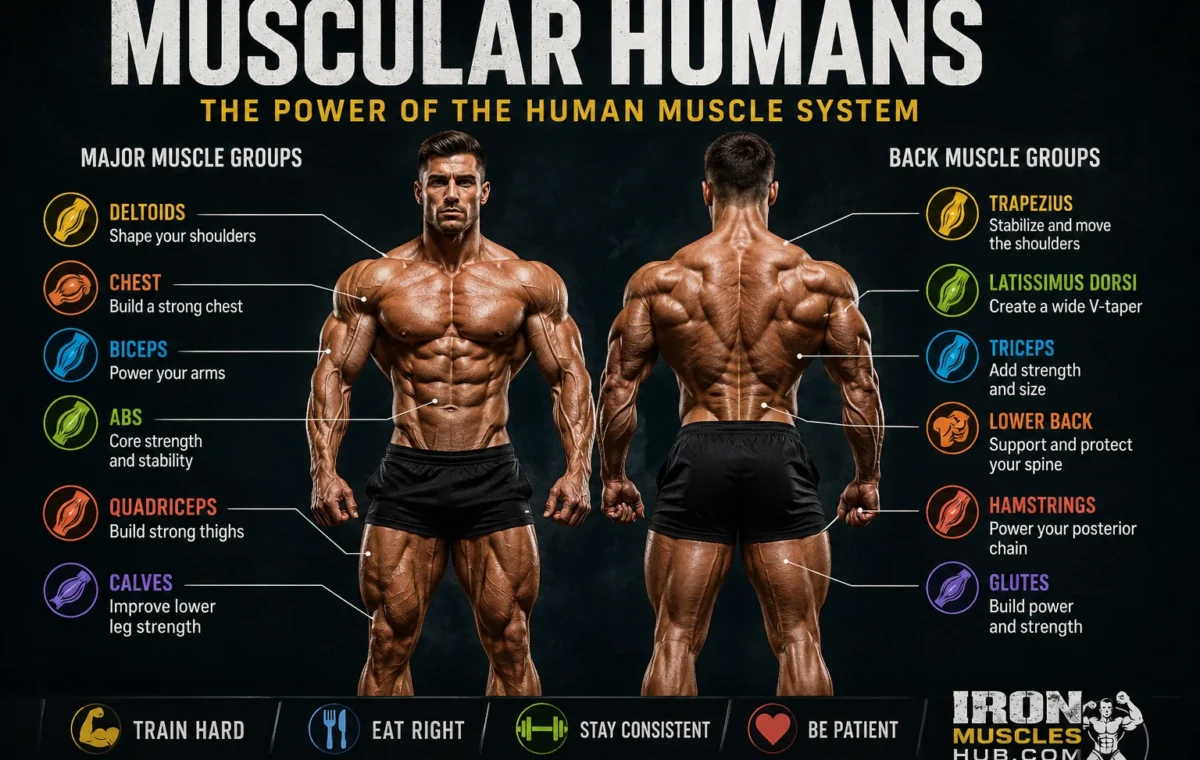
Muscular humans are people with well-developed muscle tissue that supports movement, strength, posture, and physical performance. Human muscles are not only about appearance; they are essential systems that help you walk, breathe, maintain balance, pump blood, and complete everyday activities.
- Quick Answer: Muscular Humans Explained
- 1. Skeletal Muscle
- 2. Cardiac Muscle
- 3. Smooth Muscle
- 1. Strength Training
- 2. Eat Enough Protein
- 3. Prioritize Recovery
- 4. Increase Training Difficulty Over Time
- Training Too Much
- Ignoring Nutrition
- Copying Professional Athletes
- Expecting Immediate Results
- What are muscular humans?
- How many muscles are in the human body?
- What is the strongest muscle in the human body?
- How long does it take to become muscular?
- Can everyone become muscular?
- Do muscles only help with strength?
- Why Do Some Humans Become More Muscular Than Others?
- Type I Muscle Fibers
- Type II Muscle Fibers
- Step 1: Learn Basic Movements
- Step 2: Train Consistently
- Step 3: Track Progress
- Protein Sources
- Carbohydrate Sources
- Healthy Fat Sources
- Myth 1: More Pain Means More Muscle Growth
- Myth 2: You Need Expensive Supplements
- Myth 3: Lifting Weights Makes Everyone Bulky
- Myth 4: Cardio Destroys Muscle
The human body contains more than 600 muscles, and each one has a specific role. From the powerful muscles in your legs that help you run to the tiny muscles that control your eyes, muscles keep your body functioning every moment.
Understanding how muscular humans develop strength starts with learning how muscles work, what types of muscles exist, and how training, nutrition, and recovery affect muscle growth. For more insights read here :- muscles of the body and muscle anatomy .
Quick Answer: Muscular Humans Explained
| Topic | Simple Explanation |
|---|---|
| What are muscular humans? | People with developed muscle size, strength, and physical ability |
| How many muscles do humans have? | More than 600 muscles throughout the body |
| Main muscle types | Skeletal, cardiac, and smooth muscles |
| Muscle growth happens through | Resistance training, proper nutrition, and recovery |
| Biggest visible muscle groups | Legs, back, chest, shoulders, and arms |
What Makes Humans Muscular?
Muscular humans usually have a higher amount of developed skeletal muscle. Skeletal muscles are the muscles attached to bones that allow voluntary movement, such as lifting weights, running, jumping, and changing body position.
Muscle development happens when the body adapts to repeated physical challenges. During strength training, muscles experience stress. The body repairs and strengthens these tissues so they can handle similar demands in the future.
Building muscle is not only about lifting heavy weights. Several factors influence muscular development:
- Consistent resistance exercise
- Enough protein and calories
- Quality sleep
- Proper recovery
- Genetics and body structure
Two people can follow the same workout plan and see different results because genetics influence muscle shape, growth rate, and body composition.
How Does the Human Muscular System Work?
Muscles work by contracting and relaxing. When your brain sends a signal through the nervous system, muscle fibers receive instructions to tighten. This contraction creates movement.
For example:
- Your brain decides to move your arm.
- Nerves send signals to your biceps.
- The muscle contracts.
- The contraction pulls your bones through tendons.
- Your arm moves.
Muscles work together with bones, joints, tendons, and the nervous system to create movement. This partnership is called the musculoskeletal system.
The Three Types of Human Muscles
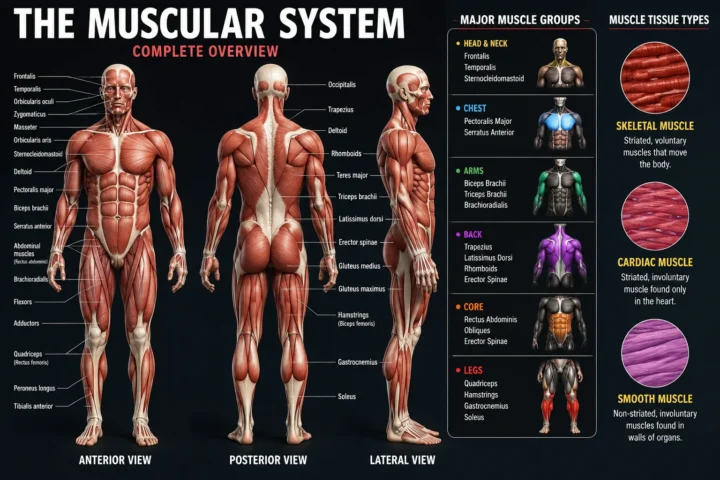
The human body has three major types of muscle tissue.
| Muscle Type | Location | Main Function |
|---|---|---|
| Skeletal muscle | Attached to bones | Controls movement |
| Cardiac muscle | Heart | Pumps blood |
| Smooth muscle | Internal organs | Controls automatic body functions |
1. Skeletal Muscle
Skeletal muscles are the muscles most people think about when they imagine muscular humans. These muscles connect to bones through tendons and allow controlled movements.
Examples include:
- Biceps
- Triceps
- Quadriceps
- Hamstrings
- Chest muscles
- Back muscles
Skeletal muscles also help maintain posture and protect joints. They make up a significant portion of body mass and are responsible for many everyday movements.
2. Cardiac Muscle
Cardiac muscle exists only in the heart. Unlike skeletal muscles, you cannot consciously control it.
Its job is to contract continuously and pump blood throughout your body.
3. Smooth Muscle
Smooth muscles are found inside organs such as the digestive system and blood vessels.
They work automatically without conscious control. These muscles help move food through digestion and regulate important internal processes.
Major Muscle Groups in Muscular Humans
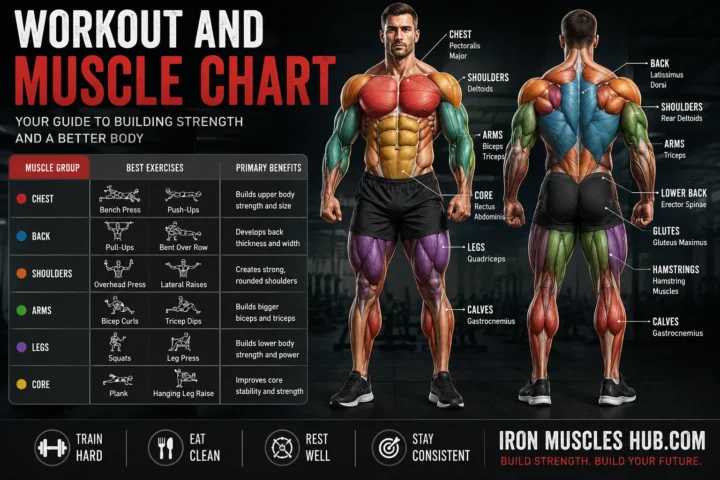
A balanced muscular body usually focuses on developing several major muscle groups.
| Muscle Group | Location | Common Exercises |
|---|---|---|
| Chest (Pectorals) | Front upper body | Push-ups, bench press |
| Back | Upper and middle body | Rows, pull-ups |
| Shoulders | Upper body | Shoulder presses |
| Arms | Biceps and triceps | Curls, extensions |
| Legs | Lower body | Squats, lunges |
| Core | Abdomen and trunk | Planks, controlled movements |
A strong body is not created by training only one area. Balanced muscle development improves movement quality and reduces the chance of creating weaknesses between muscle groups.
How Do Muscular Humans Build Muscle?
Muscle growth is a gradual process. It requires repeating the right habits over time.
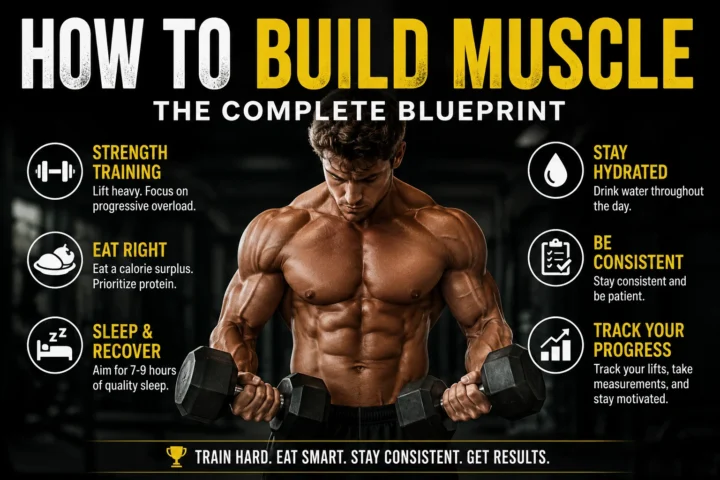
1. Strength Training
Resistance training is one of the main ways people stimulate muscle growth.
Examples include:
- Weight lifting
- Bodyweight exercises
- Resistance band training
- Functional strength exercises
The goal is to challenge muscles while maintaining proper form.
2. Eat Enough Protein
Protein provides amino acids that the body uses to repair and maintain muscle tissue.
Good protein sources include:
- Eggs
- Fish
- Chicken
- Lean meat
- Dairy products
- Beans
- Lentils
- Tofu
A balanced diet matters more than focusing on one single food.
3. Prioritize Recovery
Muscles do not grow during the workout itself. The body adapts during recovery.
Helpful recovery habits include:
- Sleeping consistently
- Taking rest days
- Managing training intensity
- Staying hydrated
4. Increase Training Difficulty Over Time
Muscles adapt when they face increasing challenges.
This can include:
- Adding more weight
- Increasing repetitions
- Improving exercise technique
- Increasing training volume gradually
Common Mistakes People Make When Trying to Become More Muscular
Many beginners make progress slower because of avoidable mistakes.
Training Too Much
More workouts do not always mean faster results. Excessive training without recovery can reduce performance.
Ignoring Nutrition
A hard workout cannot completely replace poor eating habits. Muscle growth requires enough energy and nutrients.
Copying Professional Athletes
Fitness models and professional athletes often have years of training, specific diets, coaching, and genetics that beginners may not share.
Expecting Immediate Results
Building noticeable muscle usually takes consistent effort over months and years, not days or weeks.
Simple Example: How a Beginner Builds Muscle
Imagine someone starting strength training three days per week.
Their routine may include:
- Monday: Full-body strength workout
- Wednesday: Full-body strength workout
- Friday: Full-body strength workout
They also focus on:
- Eating balanced meals
- Getting enough protein
- Sleeping well
- Tracking progress
After several months of consistency, their muscles may become stronger and more developed.
The exact results depend on factors such as age, training history, nutrition, and genetics.
Benefits of Having Strong Muscles
Strong muscles support more than appearance.
Benefits include:
- Better movement and balance
- Improved physical performance
- Support for joints and bones
- Easier completion of daily activities
- Better ability to maintain independence as you age
Muscle health is part of overall health, not just bodybuilding.
Frequently Asked Questions
What are muscular humans?
Muscular humans are people with developed muscle tissue that provides greater strength, size, and physical ability. A muscular appearance usually comes from increased skeletal muscle development combined with healthy body composition.
How many muscles are in the human body?
The human body has more than 600 muscles. These muscles perform different jobs, including movement, posture control, breathing support, digestion, and heart function.
What is the strongest muscle in the human body?
There is no single universally accepted “strongest” muscle because strength can be measured in different ways, such as force, endurance, or pressure. Different muscles excel at different tasks.
How long does it take to become muscular?
The time required varies from person to person. Training experience, genetics, diet, sleep, and workout consistency all affect results. Most people need months of regular training to notice meaningful changes.
Can everyone become muscular?
Most people can increase muscle strength and size through proper training and nutrition. However, the amount of muscle a person can build depends partly on genetics, age, health, and other individual factors.
Do muscles only help with strength?
No. Muscles also help maintain posture, protect joints, support movement, and perform automatic functions such as heart pumping and digestion.
Building a Stronger Understanding of Muscular Humans
Muscular humans are not defined only by large muscles or physical appearance. A truly strong body depends on healthy muscle function, balanced development, and consistent habits.
Learning how muscles work helps you make better choices about exercise, nutrition, and recovery. Whether your goal is improving fitness, gaining strength, or simply understanding your body, building muscle is a gradual process based on patience and consistency.
Related articles you could add on [SITE NAME]:
- “How to Build Muscle for Beginners”
- “Best Foods for Muscle Growth”
- “Strength Training Basics Explained”
Why Do Some Humans Become More Muscular Than Others?
Not every person develops muscle at the same speed. Two people can follow similar workouts and have different results because muscle growth depends on several biological and lifestyle factors.
Some important factors include:
| Factor | How It Affects Muscle Development |
|---|---|
| Genetics | Influences muscle shape, growth potential, and body structure |
| Training history | Beginners often gain strength faster at the start |
| Nutrition | Provides energy and building materials for repair |
| Hormones | Affect muscle-building processes |
| Sleep and recovery | Allows the body to repair muscle tissue |
| Age | Muscle-building ability changes throughout life |
Genetics can influence things like muscle fiber distribution, limb length, and how easily someone gains muscle. However, consistent training and healthy habits can help most people improve their strength and muscle development.
Understanding Muscle Fibers in Muscular Humans
Human skeletal muscles contain different types of muscle fibers. These fibers work together but have different characteristics.
| Muscle Fiber Type | Main Feature | Best Used For |
|---|---|---|
| Type I fibers | Slow and fatigue-resistant | Endurance activities |
| Type II fibers | Produce more force | Sprinting, jumping, heavy lifting |
Type I Muscle Fibers
Type I fibers are sometimes called slow-twitch fibers. They are designed for activities that require endurance.
Examples:
- Walking
- Long-distance running
- Maintaining posture
They can work for longer periods without becoming tired quickly.
Type II Muscle Fibers
Type II fibers produce stronger and faster contractions.
They are important for:
- Weightlifting
- Sprinting
- Explosive movements
People involved in power sports often train these fibers through high-intensity exercises.
The Role of the Brain and Nervous System in Muscle Strength
Muscular humans do not become stronger only because muscles grow bigger. The nervous system plays a major role.
Your brain communicates with muscles through nerves. This communication controls:
- How strongly muscles contract
- How many muscle fibers activate
- How efficiently movements are performed
This is why beginners often become stronger before they see large physical changes. Their nervous system becomes better at controlling movement.
How Exercise Changes Muscles Over Time
When muscles experience resistance, they adapt.
The basic process looks like this:
- Training stress: Exercise creates a challenge for muscles.
- Recovery period: The body repairs muscle tissue.
- Adaptation: Muscles become better prepared for future challenges.
- Progressive improvement: Training gradually increases in difficulty.
This process is called adaptation.
Without enough recovery, the body may struggle to make progress.
Different Body Types and Muscle Appearance
People often talk about body types when discussing muscular humans. While these categories are popular in fitness discussions, real human bodies are much more complex.
A person’s appearance depends on:
- Bone structure
- Muscle size
- Body fat levels
- Genetics
- Training style
- Diet habits
Two people with the same amount of muscle can look different because their body structures are different.
Male and Female Muscle Differences
Both men and women can build muscle through resistance training.
Some average differences exist because hormones influence muscle development, but training benefits apply to everyone.
Women can improve:
- Strength
- Muscle tone
- Athletic performance
- Bone health
Men often have higher average levels of testosterone, which can influence potential muscle size. However, individual variation is large.
Famous Examples of Muscular Human Physiques
Throughout history, muscular humans have appeared in sports, fitness, and entertainment.
Examples include athletes and bodybuilders who developed their physiques through years of:
- Structured training
- Nutrition planning
- Recovery strategies
- Discipline
Professional physiques should not be considered normal expectations for beginners because they often involve exceptional genetics, professional coaching, and many years of dedicated work.
How to Train Like a Beginner Who Wants More Muscle
A beginner does not need a complicated program.
A simple approach:
Step 1: Learn Basic Movements
Focus on exercises that train multiple muscles.
Examples:
- Squats
- Push-ups
- Rows
- Deadlift variations
- Pressing movements
Step 2: Train Consistently
A realistic schedule is more useful than an extreme routine.
Many beginners start with:
- 2–4 strength sessions per week
- Full-body workouts
- Gradual increases in difficulty
Step 3: Track Progress
Progress can be measured through:
- More repetitions
- Increased resistance
- Better technique
- Improved endurance
Body measurements and photos can also help track physical changes over time.
Foods That Support Muscle Development
Muscular humans usually follow balanced eating patterns rather than relying on one “magic” food.
Protein Sources
Examples:
- Chicken
- Fish
- Eggs
- Greek yogurt
- Beans
- Lentils
- Soy products
Carbohydrate Sources
Carbohydrates provide energy for training.
Examples:
- Rice
- Potatoes
- Oats
- Whole grains
- Fruits
Healthy Fat Sources
Healthy fats support normal body functions.
Examples:
- Nuts
- Seeds
- Avocado
- Olive oil
A balanced diet helps support training performance and recovery.
Muscle Growth Myths Explained
Myth 1: More Pain Means More Muscle Growth
Feeling sore after exercise does not always mean a workout was effective. Progress comes from consistent training and proper recovery.
Myth 2: You Need Expensive Supplements
Supplements may help some people, but they are not a replacement for good food, training, and sleep.
Myth 3: Lifting Weights Makes Everyone Bulky
Building a large amount of muscle takes significant time and effort. Most people who strength train develop improved strength and body composition.
Myth 4: Cardio Destroys Muscle
Cardiovascular exercise can be part of a healthy fitness routine. The effect depends on training balance, nutrition, and overall workload.
Final Thoughts on Muscular Humans
Muscular humans represent the result of how the body adapts to training, nutrition, and recovery. Building muscle is not only about creating a stronger appearance; it is about improving movement, health, and physical capability.
The best approach is simple: train consistently, eat balanced meals, recover properly, and focus on gradual improvement. Muscle development is a long-term process, and small daily habits create meaningful results over time.