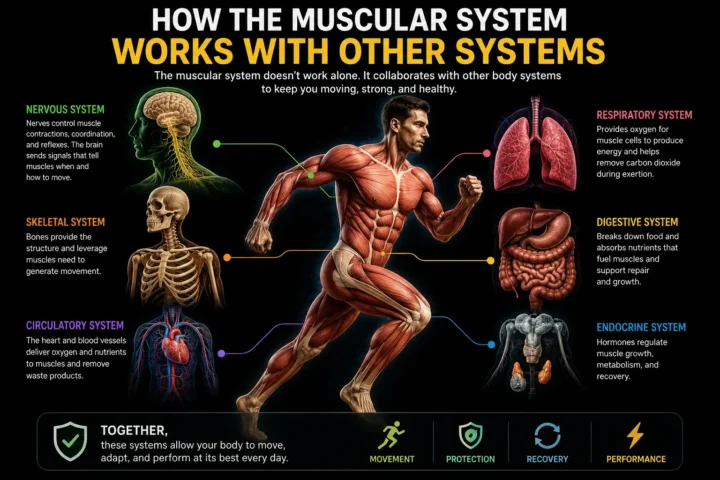
Muscles of the body are soft tissues that allow you to move, maintain posture, protect your organs, and even help you breathe. Every movement—from smiling and walking to lifting weights and running—depends on muscles working together with your bones, joints, and nervous system.
- Quick Answer: What Are the Muscles of the Body?
- What Are Muscles?
- 1. Skeletal Muscles
- 2. Smooth Muscles
- 3. Cardiac Muscle
- Upper Body Muscles
- Latissimus Dorsi (Lats)
- Trapezius (Traps)
- Biceps
- Triceps
- Rectus Abdominis
- Oblique Muscles
- Transverse Abdominis
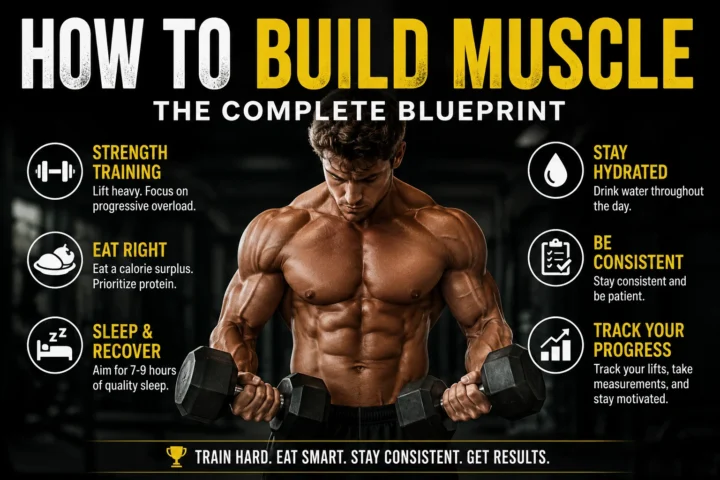
- 1. Do Resistance Training Regularly
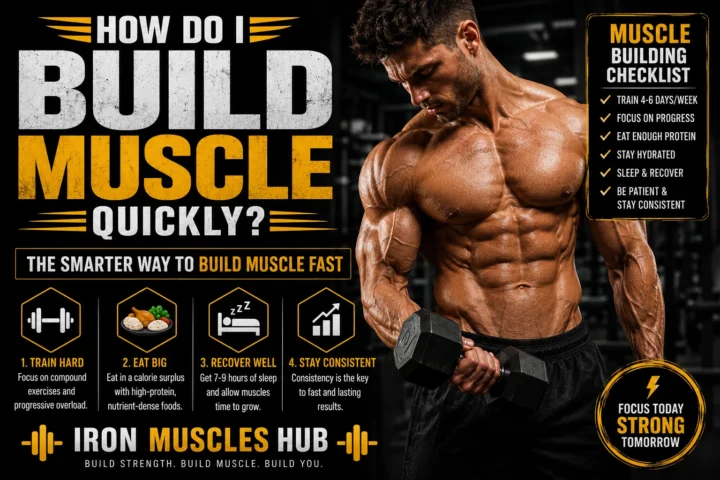
- 2. Eat Enough Protein
- 3. Prioritize Recovery
- 4. Stay Active Throughout the Day
- Mistake 1: Training Only Visible Muscles
- Mistake 2: Using Poor Exercise Form
- Mistake 3: Skipping Leg Training
- Mistake 4: Ignoring Flexibility and Mobility
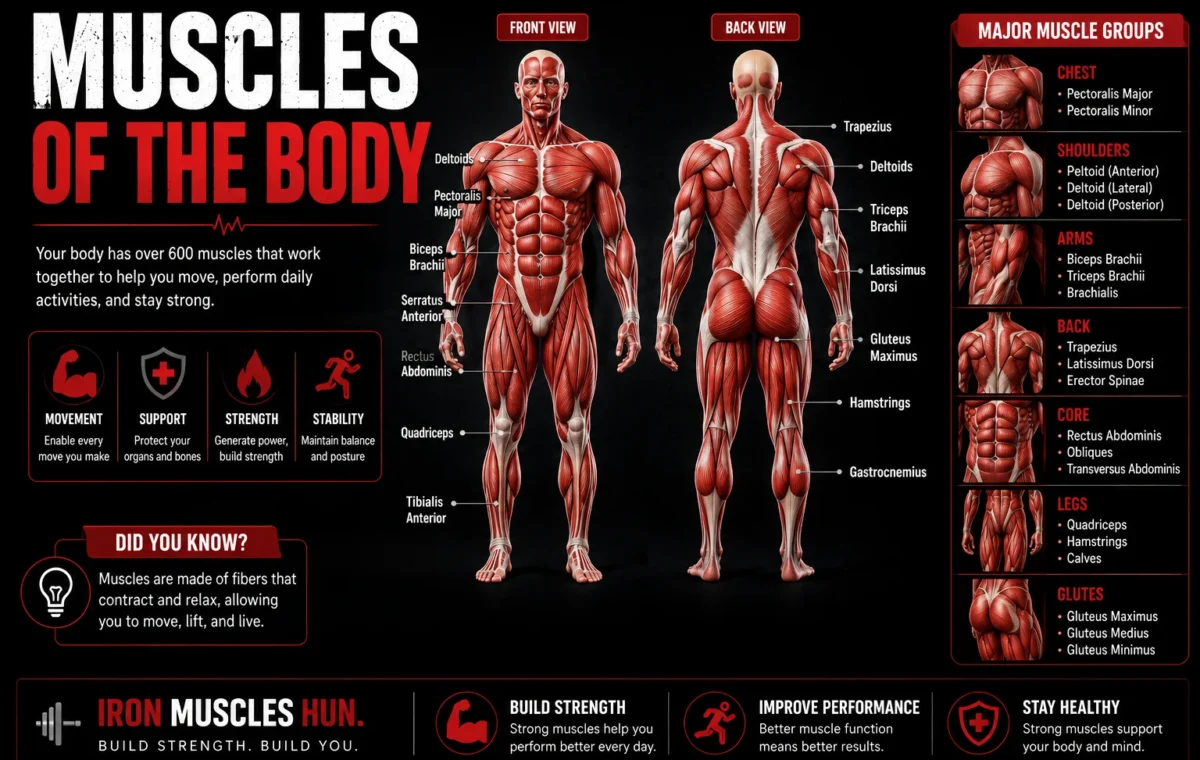
- Front Body Muscles
- Back Body Muscles
- How many muscles are in the human body?
- What are the major muscles of the body?
- What is the largest muscle in the body?
- What are the three types of muscles?
- Can muscles become stronger without lifting weights?
- Why do muscles become sore after exercise?
- Final Thoughts:
If you’re new to fitness or simply want to understand how your body works, learning the major muscle groups is one of the best places to start. Once you know where muscles are located and what they do, you’ll find it easier to exercise correctly, prevent injuries, and improve your overall health. For more insights read here :- how to grow muscle and lean build.
Quick Answer: What Are the Muscles of the Body?
| Feature | Quick Explanation |
|---|---|
| Total muscles | Over 600 muscles in the human body |
| Main function | Produce movement and stabilize the body |
| Muscle types | Skeletal, Smooth, and Cardiac |
| Largest muscle | Gluteus Maximus |
| Strongest muscle | Jaw muscle (Masseter), by force generated |
| Controlled voluntarily? | Skeletal muscles are voluntary; smooth and cardiac muscles work automatically |
What Are Muscles?
Muscles are specialized tissues made of fibers that contract and relax to create movement. They work closely with bones through tendons, allowing every voluntary movement you make.
Besides movement, muscles help:
- Maintain posture
- Support joints
- Generate body heat
- Protect internal organs
- Assist breathing
- Pump blood throughout the body
Without muscles, even simple tasks like standing, swallowing, or blinking wouldn’t be possible.
The Three Types of Muscles
Although people often think only about muscles used in exercise, the human body actually contains three different muscle types.
1. Skeletal Muscles
Skeletal muscles attach to bones with tendons.
These muscles are responsible for:
- Walking
- Running
- Jumping
- Lifting
- Sports performance
- Facial expressions
These are the muscles people usually train in the gym.
Examples include:
- Biceps
- Triceps
- Quadriceps
- Hamstrings
- Deltoids
- Chest muscles
2. Smooth Muscles
Smooth muscles work automatically without conscious control.
They’re found inside organs such as:
- Stomach
- Intestines
- Blood vessels
- Bladder
- Airways
They help move food through digestion and regulate blood flow.
3. Cardiac Muscle
Cardiac muscle exists only in the heart.
Unlike skeletal muscle, it contracts continuously throughout your life without needing conscious effort.
Its main job is pumping blood to every part of your body.
Why Muscles Matter
Healthy muscles do much more than improve appearance.
Strong muscles help you:
- Move efficiently
- Improve balance
- Protect joints
- Reduce injury risk
- Support healthy aging
- Improve athletic performance
- Increase daily energy
- Burn more calories at rest
Even people who never visit a gym rely on healthy muscles every single day.
Major Muscles of the Body and Their Functions
The human body contains hundreds of muscles, but some major muscle groups play a bigger role in everyday movement, strength, and exercise. Understanding these muscles can help beginners learn basic anatomy and create better fitness routines.
Below are the main muscles of the body and what each group does.
Upper Body Muscles
The upper body contains muscles that help with pushing, pulling, lifting, carrying, and controlling arm movements.
| Muscle Group | Location | Main Function |
|---|---|---|
| Chest muscles (Pectorals) | Front of the chest | Push movements, arm movement toward the body |
| Back muscles (Latissimus dorsi, Trapezius) | Upper and middle back | Pulling movements, posture support |
| Shoulder muscles (Deltoids) | Around the shoulder joint | Arm lifting and rotation |
| Biceps | Front of upper arm | Bending the elbow |
| Triceps | Back of upper arm | Straightening the elbow |
| Forearm muscles | Lower arm | Grip and wrist movement |
Chest Muscles (Pectorals)
The chest muscles, also called the pectorals, are located on the front of the upper body.
The two main chest muscles are:
- Pectoralis major
- Pectoralis minor
Their functions include:
- Pushing objects away from your body
- Moving your arms across your chest
- Supporting shoulder movement
Exercises like push-ups and bench presses mainly target these muscles.
Back Muscles
The back contains some of the largest and strongest muscles in the body.
Important back muscles include:
Latissimus Dorsi (Lats)
The latissimus dorsi are broad muscles on both sides of your back.
They help with:
- Pulling movements
- Climbing
- Swimming
- Moving your arms downward
Trapezius (Traps)
The trapezius extends from the neck to the upper back.
It helps with:
- Shoulder movement
- Neck stability
- Maintaining posture
Strong back muscles are important because they support your spine and help keep your body balanced.
Shoulder Muscles (Deltoids)
The deltoid muscles cover the shoulder joint.
They have three main sections:
- Front deltoid
- Side deltoid
- Rear deltoid
Together, they help you:
- Lift your arms overhead
- Rotate your shoulders
- Perform pushing and pulling movements
Healthy shoulders are important for everyday activities like reaching shelves, carrying bags, and throwing objects.
Arm Muscles
The arms contain several important muscles that allow movement and strength.
Biceps
The biceps are located at the front of the upper arm.
Main function:
- Bending the elbow
- Rotating the forearm
A common example is the movement used when lifting a cup toward your mouth.
Triceps
The triceps are located at the back of the upper arm.
They are responsible for:
- Straightening the arm
- Supporting pushing movements
The triceps contain three muscle heads, which work together to extend the elbow.
Core Muscles
Your core is the central area of your body. It includes muscles around your abdomen, lower back, and pelvis.
| Core Muscle | Function |
|---|---|
| Rectus abdominis | Bending the spine and trunk movement |
| Obliques | Twisting and side movements |
| Transverse abdominis | Core stability and support |
| Lower back muscles | Posture and spinal support |
A strong core helps with:
- Balance
- Stability
- Lifting safely
- Sports performance
- Everyday movements
Abdominal Muscles
The abdominal muscles are commonly known as the abs.
The main abdominal muscles include:
Rectus Abdominis
This is the muscle often associated with a “six-pack.”
It helps with:
- Bending forward
- Supporting the spine
- Maintaining posture
Oblique Muscles
Located on the sides of the abdomen, the obliques help with:
- Rotation
- Side bending
- Core stability
Transverse Abdominis
This deep abdominal muscle acts like a natural belt around your torso.
It helps:
- Stabilize your spine
- Support internal organs
- Improve body control
Lower Body Muscles
The lower body contains some of the biggest muscles in the human body. These muscles are essential for walking, running, jumping, and maintaining balance.
| Muscle Group | Location | Main Function |
|---|---|---|
| Glute muscles | Buttocks | Hip movement and stability |
| Quadriceps | Front thigh | Straightening the knee |
| Hamstrings | Back thigh | Bending the knee and hip movement |
| Calves | Lower leg | Walking and pushing movements |
| Hip muscles | Around pelvis | Leg movement and balance |
Glute Muscles
The glutes are located in the buttocks and include:
- Gluteus maximus
- Gluteus medius
- Gluteus minimus
The gluteus maximus is one of the largest muscles in the human body.
Functions include:
- Hip extension
- Standing up
- Climbing stairs
- Running
- Maintaining pelvic stability
Strong glutes support both athletic performance and daily movement.
Quadriceps Muscles
The quadriceps are a group of four muscles located at the front of the thigh.
They help with:
- Straightening the knee
- Walking
- Running
- Jumping
- Squatting
The quadriceps are among the most powerful muscle groups because they handle many weight-bearing activities.
Hamstring Muscles
The hamstrings are located at the back of the thigh.
They help with:
- Bending the knee
- Moving the hip
- Running speed
- Lower-body control
Balanced strength between quadriceps and hamstrings can help support knee health.
Calf Muscles
The calf muscles are located at the back of the lower leg.
The main calf muscles are:
- Gastrocnemius
- Soleus
They help with:
- Standing on your toes
- Walking
- Running
- Jumping
How to Keep the Muscles of the Body Strong and Healthy
Understanding the muscles of the body is useful, but knowing how to take care of them is even more important. Your muscles respond to regular movement, proper nutrition, recovery, and healthy lifestyle habits.
Whether your goal is building strength, improving fitness, or simply staying active as you age, caring for your muscles can improve how your body performs every day.
Ways to Strengthen the Muscles of the Body
1. Do Resistance Training Regularly
Resistance training is one of the most effective ways to build and maintain muscle strength.
Examples include:
- Weight lifting
- Resistance band exercises
- Bodyweight exercises
- Functional training movements
Beginner-friendly exercises include:
- Squats
- Push-ups
- Lunges
- Rows
- Planks
You don’t need expensive equipment to start. Consistency matters more than having a complicated workout plan.
2. Eat Enough Protein
Muscles need protein to repair and maintain themselves after activity.
Protein-rich foods include:
- Eggs
- Fish
- Chicken
- Lean meat
- Milk and yogurt
- Beans
- Lentils
- Tofu
- Nuts
A balanced diet that provides enough nutrients supports muscle recovery and overall health.
3. Prioritize Recovery
Muscles don’t grow stronger during exercise itself. They adapt during recovery after being challenged.
Important recovery habits include:
- Getting enough sleep
- Taking rest days
- Staying hydrated
- Managing training intensity
Training the same muscles too hard without recovery can increase the chance of fatigue and injury.
4. Stay Active Throughout the Day
Exercise sessions are helpful, but daily movement also matters.
Simple activities that support healthy muscles include:
- Walking
- Taking stairs
- Stretching
- Playing sports
- Gardening
- Household activities
Small movements add up and help maintain muscle function.
Common Mistakes People Make With Their Muscles
Many beginners make mistakes that slow progress or increase injury risk.
Mistake 1: Training Only Visible Muscles
Some people focus only on muscles they can see, such as:
- Chest
- Arms
- Abs
However, ignoring muscles like the back, legs, and core can create imbalances.
Better approach: Train the whole body.
Mistake 2: Using Poor Exercise Form
Lifting heavier weights with incorrect technique can place unnecessary stress on joints and muscles.
Focus on:
- Controlled movements
- Proper posture
- Full range of motion
- Gradual progress
Quality movement is more important than lifting the heaviest weight.
Mistake 3: Skipping Leg Training
Leg muscles make up a major part of your body’s strength and movement system.
Training your legs helps support:
- Balance
- Mobility
- Athletic performance
- Everyday activities
Mistake 4: Ignoring Flexibility and Mobility
Strong muscles also need good movement ability.
Helpful activities include:
- Stretching
- Mobility exercises
- Warm-ups before training
These habits can help your body move more comfortably.
Simple Beginner Muscle Training Plan
A beginner can start with a full-body routine two or three times per week.
| Exercise | Main Muscles Worked |
|---|---|
| Squats | Quadriceps, glutes, core |
| Push-ups | Chest, shoulders, triceps |
| Rows | Back, biceps |
| Lunges | Legs, glutes |
| Planks | Core muscles |
Start with a comfortable level and increase difficulty slowly as your strength improves.
Muscles of the Body: Front and Back Overview
Front Body Muscles
The front side of the body includes:
- Chest muscles
- Front shoulders
- Biceps
- Abdominal muscles
- Quadriceps
- Tibialis muscles
These muscles help with pushing, lifting, bending, and movement control.
Back Body Muscles
The back side includes:
- Trapezius
- Latissimus dorsi
- Rear shoulders
- Triceps
- Lower back muscles
- Hamstrings
- Calf muscles
These muscles support posture, pulling movements, and body stability.
Interesting Facts About Human Muscles
Here are some beginner-friendly facts about the muscular system:
- The human body contains more than 600 muscles.
- The heart is made of a specialized muscle called cardiac muscle.
- Muscles produce movement by contracting and relaxing.
- Skeletal muscles work with bones and joints to create motion.
- Regular physical activity helps maintain muscle strength throughout life.
Frequently Asked Questions
How many muscles are in the human body?
The human body has more than 600 muscles. These muscles work together to create movement, support posture, protect organs, and maintain important body functions.
What are the major muscles of the body?
The major muscles include the chest, back, shoulders, arms, abdominal muscles, glutes, quadriceps, hamstrings, and calves. These groups control most everyday movements and are commonly trained during exercise.
What is the largest muscle in the body?
The gluteus maximus, located in the buttocks, is generally considered the largest muscle in the human body. It plays an important role in hip movement, standing, climbing, and running.
What are the three types of muscles?
The three types of muscles are skeletal muscle, smooth muscle, and cardiac muscle. Skeletal muscles control voluntary movement, smooth muscles control automatic processes inside organs, and cardiac muscle powers the heartbeat.
Can muscles become stronger without lifting weights?
Yes. Bodyweight exercises, resistance bands, sports, and physically active habits can improve muscle strength. The key factors are consistent training, progressive challenge, and proper recovery.
Why do muscles become sore after exercise?
Muscle soreness often happens because exercise creates small changes in muscle tissue. The body repairs and adapts during recovery, helping muscles become better prepared for future activity.
Related Articles You Can Add on Iron Muscle Hub
Internal link ideas:
- What Are Muscles? A Beginner’s Guide to the Human Muscular System
- Major Muscle Groups Explained: Complete Fitness Anatomy Guide
- How to Build Lean Muscle: Beginner Workout and Nutrition Tips
Building a Better Understanding of Your Body
Learning about the muscles of the body gives you a stronger foundation for fitness, health, and movement. Every muscle group has a purpose, from helping you lift objects to keeping you balanced while walking.
You don’t need to become an athlete to benefit from stronger muscles. Regular movement, good nutrition, and proper recovery can help your body stay capable and healthy for years.
Start by learning how your body works, then build simple habits that support your muscles one step at a time.
Final Thoughts:
The muscles of the body are the foundation of almost everything you do. From walking and lifting objects to maintaining posture and protecting your joints, your muscles work constantly to keep you moving and functioning.
Learning the major muscle groups helps you understand your body better and make smarter choices about exercise, nutrition, and recovery. You don’t need to memorize every muscle name to benefit from this knowledge. Start with the basics: train your body consistently, move regularly, eat a balanced diet, and give your muscles time to recover.
A strong and healthy body is built through small habits repeated over time. Whether you’re beginning your fitness journey or simply curious about human anatomy, understanding your muscles is a valuable first step toward better health and performance.