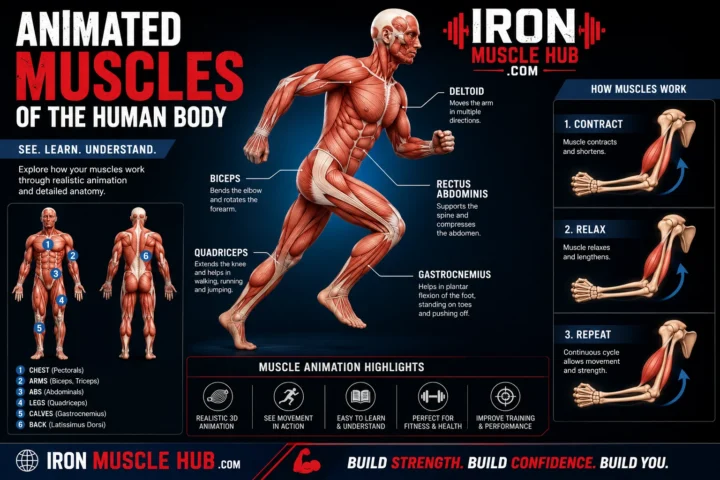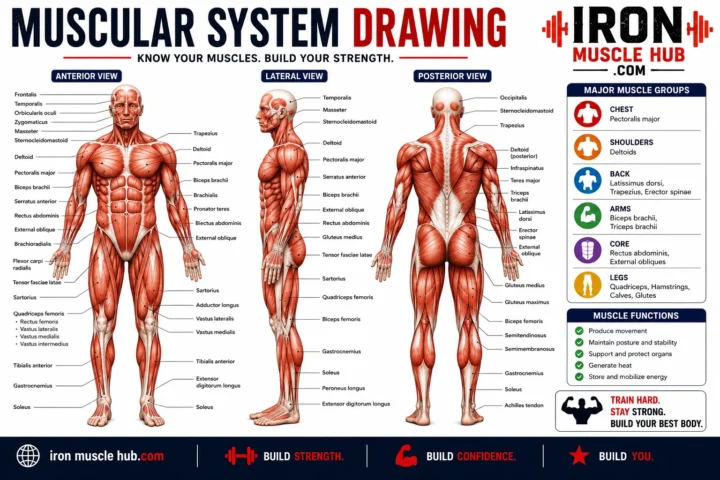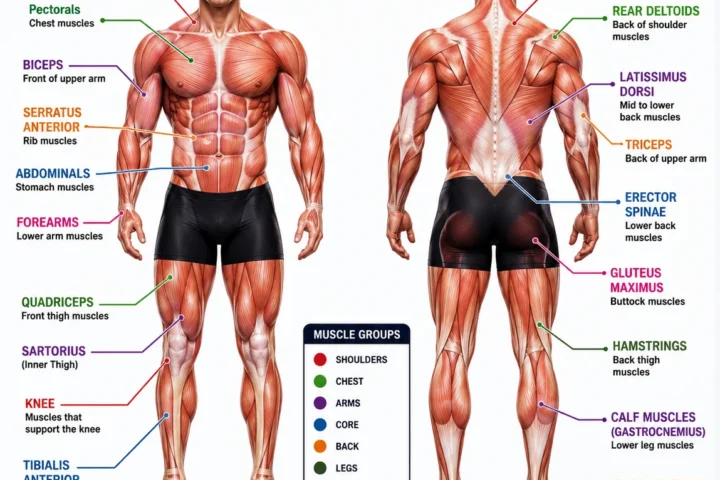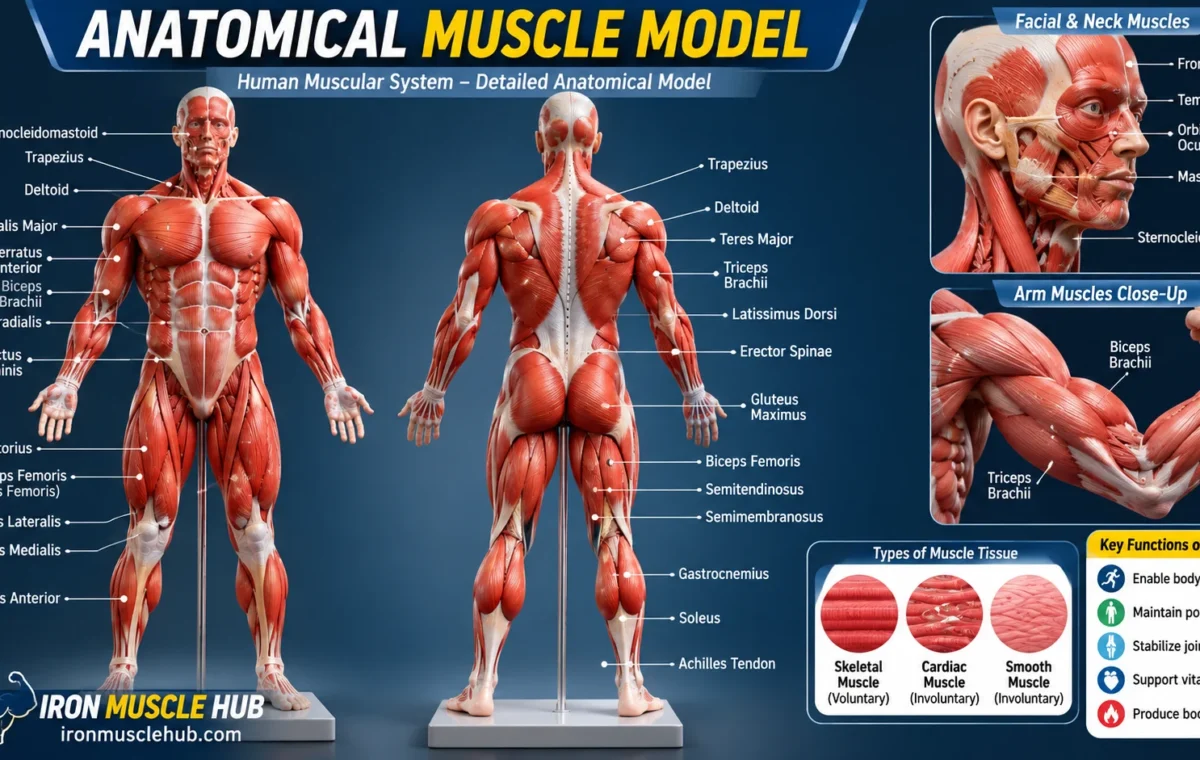
An anatomical muscle model is a three-dimensional teaching model that represents human muscles and related structures. Prices vary dramatically depending on size, detail, number of removable parts, and whether the model is designed for home study, classroom teaching, or professional medical education. Current online listings range from relatively inexpensive educational models to professional models costing thousands of dollars.
- Anatomical Muscle Model Costs at a Glance
- What Is an Anatomical Muscle Model?
- How Much Should You Budget for an Anatomical Muscle Model?
- If you're a beginner or casual learner
- If you're a student
- If you're a teacher or tutor
- What Makes an Anatomical Muscle Model More Expensive?
- 1. Number of parts
- 2. Level of anatomical detail
- 3. Size
- 4. Construction and finish
- A Simple Anatomical Muscle Model Budget Example
- How to Decide If an Anatomical Muscle Model Is Worth the Money
- 1. Will you use it regularly?
- 2. Does it solve a specific problem?
- 3. Do you need a full-body model?
- 4. Can you borrow or share one?
- 5. Can you resell it?
- Common Buying Mistakes to Avoid
- Paying for detail you'll never use
- Ignoring shipping
- Buying from an unclear seller
- Assuming every model is medically identical
- Financing a non-essential purchase
- A Better Way to Compare Anatomical Muscle Models
- Could an Anatomical Muscle Model Be a Business Expense?
- Internal Links to Add on [SITE NAME]
- Frequently Asked Questions
- How much does an anatomical muscle model cost?
- Is an anatomical muscle model worth buying for students?
- What should I look for in an anatomical muscle model?
- Are expensive anatomical models better?
- Can I use an anatomical muscle model to learn anatomy?
- Should I buy a full-body muscle model or a smaller model?
- Make the Purchase Fit Your Budget
- How to Compare an Anatomical Muscle Model Before Buying
- Start with the anatomy you actually need
- Don't Compare Prices Without Comparing the Parts
- A Simple Value Test for Expensive Models
- When Buying Used Makes Sense
- Buying New vs. Used
- Don't Forget Storage
- The Hidden Cost of International Purchases
- A Practical Buying Checklist
- How to Avoid Paying for Features You Don't Need
- When a Digital Alternative May Be Better
- A Three-Level Budget Strategy
- Budget option
- Mid-range option
- Professional option
- A Better Question Than “Is It Cheap?”
- What to Do Before Spending $500 or More
- Step 1: Write down the exact learning goal
- Step 2: Choose the smallest suitable model
- Step 3: Compare three alternatives
- Step 4: Calculate the delivered price
- Step 5: Wait 24–48 hours
- Step 6: Check your other financial priorities
- The Bottom Line
- Best Ways to Save Money on an Anatomical Muscle Model
- 1. Buy for your actual course, not your imagination
- 2. Consider a regional model
- Should You Buy a Full-Body Anatomical Muscle Model?
- A full-body model may make sense if:
- A full-body model may not make sense if:
- The $1,000 Question: Is More Detail Worth It?
- Watch the Cost of Large Models
- Compare the Total Cost, Not Just the Listing Price
- A Useful Rule for Students
- Consider Sharing the Cost
- What About an Anatomy Model Set?
- Don't Ignore Digital Learning Tools
- A Simple Decision Tree
- Do you need a physical model at all?
- Do you need the entire body?
- Will several people use it?
- Do you need removable parts?
- Will you use it frequently?
- How to Tell If a Seller Is Reliable
- What to Check in the Product Description
- Size
- Number of parts
- Anatomy
- Materials
- Stand
- Accessories
- Warranty
- A Good Purchase Doesn't Have to Be the Cheapest
- Final Part 3 Takeaway
- How to Choose an Anatomical Muscle Model Without Overspending
- Match the model to your purpose
- Check the Total Cost Before You Buy
- Don't Assume the Most Expensive Model Is the Best
- When a Regional Model Is the Smarter Choice
- Think About Cost Per Use
- Consider Buying Used
- Borrow Before Buying
- Be Careful With “Bundle” Deals
- Digital Resources Can Reduce the Need for a Physical Model
- What to Ask Before Buying an Expensive Model
- Is the displayed price current?
- What exactly is included?
- Are parts replaceable?
- Is there a warranty?
- What is the return policy?
- What are the exact dimensions and weight?
- A Five-Minute Price Comparison Method
- When a Professional Model Makes Financial Sense
- Don't Put an Educational Purchase on Expensive Debt
- Build a Small Sinking Fund
- Signs You Should Wait Before Buying
- Final Buying Checklist
- The Smartest Way to Spend Your Money
- Final Thoughts
If you’re considering buying one, the smartest approach isn’t simply choosing the cheapest model. You want to compare the purchase price with what you’ll actually use it for, then account for shipping, taxes, replacement costs, and how long you’ll keep it. For more insights read here :- muscular system and how to become buff .
Quick answer: A basic anatomical muscle model may be relatively affordable, while detailed professional models can cost several hundred to several thousand dollars. As of August 2026, one specialist retailer lists a 10,000× magnified muscle-fiber model at $582.50, while a medical-supply distributor lists larger professional muscle models from roughly $1,600 to more than $12,000.
Anatomical Muscle Model Costs at a Glance
There isn’t one standard price for an anatomical model. The table below gives you a better way to think about the market.
| Type of model | Typical use | Current example | Budget takeaway |
|---|---|---|---|
| Small educational model | Home study or basic demonstrations | Low-cost models are widely listed online | Good for learning without a large upfront cost |
| Microanatomy model | Studying muscle fibers | $582.50 listed by one specialist retailer | More specialized, so you’re paying for detail |
| Small professional muscle figure | Medical or classroom teaching | $1,613.05 listed by CME | Higher upfront investment |
| Large professional muscle model | Institutions and advanced teaching | $7,851.23–$12,582.11 examples | Usually difficult to justify for casual home use |
Prices are examples found in online listings and can change. CME’s listed prices are procurement-oriented and may not represent what every consumer pays.
What Is an Anatomical Muscle Model?
An anatomical muscle model is a physical representation of the human muscular system or a specific part of it.
Depending on the model, you might see superficial muscles, deeper muscle layers, tendons, bones, nerves, blood vessels, or individual muscle fibers. Some models can be taken apart so you can examine structures that would otherwise be hidden.
That makes these models useful for students, teachers, medical professionals, fitness educators, and people who learn better by physically examining a three-dimensional object.
A model isn’t a replacement for a textbook or qualified instruction. It’s a visual and hands-on learning aid.
OpenStax’s anatomy and physiology material explains that skeletal muscles contain muscle fibers, connective tissues, blood vessels, and nerves, while tendons help transfer muscle force to bones. A good physical model can make those relationships easier to visualize.
How Much Should You Budget for an Anatomical Muscle Model?
The right budget depends on your purpose.
If you’re a beginner or casual learner
You probably don’t need a large, professional full-body model.
A smaller model can give you a physical reference without tying up a large amount of money. Before buying, decide which parts of anatomy you actually need to study.
For example, someone studying upper-limb anatomy may get more value from a detailed arm model than from an expensive full-body figure.
If you’re a student
Think about the model as a study expense rather than automatically treating it as a must-have purchase.
Ask yourself:
- Will you use it throughout the course?
- Does your school already provide access to models?
- Could you share the cost with classmates?
- Would a smaller removable-part model answer most of your study needs?
- Can you resell it after completing the course?
A $300 model used several times a week for two years may provide more practical value than a $1,000 model that sits on a shelf.
If you’re a teacher or tutor
Your calculation changes because several people may use the same model.
A higher-quality model can make more sense if it will be used repeatedly for lessons, demonstrations, and revision sessions.
Some professional models are specifically marketed for medical education and institutional use, so durability and the number of structures represented can matter as much as the initial price.
What Makes an Anatomical Muscle Model More Expensive?
Price isn’t determined by size alone.
1. Number of parts
A model with removable components generally offers more ways to examine different structures.
For example, one reduced-size model currently listed by eAnatomi has 32 parts, with removable sections that expose deeper musculature.
More parts can mean more educational flexibility, but it can also mean a higher price and more pieces to store.
2. Level of anatomical detail
A basic decorative figure and a teaching model aren’t the same product.
Some models identify major muscles. Others include deeper structures, tendons, nerves, blood vessels, and layers of muscle.
A specialist 3B Scientific microanatomy model, for example, represents a section of skeletal muscle fiber at approximately 10,000× magnification.
You’re paying for a much more specialized teaching tool in that case.
3. Size
Large models need more material and storage space.
One current 3/4-size model listed by eAnatomi measures 138 × 45 × 32 cm and weighs 13.4 kg. It also comes with a five-wheel stand.
That’s very different from a small desktop model you can keep beside your textbooks.
4. Construction and finish
Professional teaching models may use materials and construction designed for repeated classroom or clinical handling.
A cheaper model may still be perfectly adequate for basic learning, but you should check how securely parts attach and whether the labels are clear before assuming the lower price is a bargain.
A Simple Anatomical Muscle Model Budget Example
Suppose you have a $600 study budget.
You could spend the entire amount on a highly detailed model, but that doesn’t automatically make it the best financial decision.
Instead, create a simple purchase budget:
| Expense | Example budget |
| Anatomical model | $450 |
| Shipping | $50 |
| Tax or other checkout costs | $50 |
| Replacement/repair buffer | $25 |
| Remaining cash | $25 |
| Total planned amount | $600 |
These are illustrative budgeting numbers, not current product prices.
The important idea is to budget for the complete purchase rather than focusing only on the sticker price.
If you’re buying from overseas, check the final checkout total carefully. For UK buyers, VAT and import rules can depend on how the goods are sold, where they are located, and the transaction structure. HMRC says the standard UK VAT rate is 20% for most goods and services, although the applicable treatment depends on the specific goods and circumstances.
How to Decide If an Anatomical Muscle Model Is Worth the Money
Use this five-question test before paying.
1. Will you use it regularly?
A model that helps you study several times each week has a stronger case than one you’re buying mainly because it looks impressive.
2. Does it solve a specific problem?
Maybe you’re struggling to understand muscle attachments or the relationship between superficial and deep muscles.
A model that directly addresses that problem can be more useful than a general-purpose figure.
3. Do you need a full-body model?
Not necessarily.
If you’re studying one body region, buying a specialized model can prevent you from paying for features you don’t need.
4. Can you borrow or share one?
Check your school, university, library, training center, or study group before spending hundreds of dollars.
If a model is available for free, your money may be better used elsewhere.
5. Can you resell it?
A quality educational model may have a useful second-hand market, but don’t build your budget around an assumed resale price.
Treat any future resale money as a bonus rather than part of your original financial plan.
Common Buying Mistakes to Avoid
Paying for detail you’ll never use
A model with dozens of removable pieces sounds impressive, but more complexity isn’t automatically better.
Choose the level of detail that matches your course or teaching needs.
Ignoring shipping
Large anatomical models can be bulky and heavy. One current full-body listing weighs 20 kg, showing why delivery costs can matter.
Always look at the delivered price rather than the product price alone.
Buying from an unclear seller
Before paying, check the seller’s return policy, product specifications, warranty information, and delivery terms.
This matters even more for expensive medical-education equipment.
Assuming every model is medically identical
Models can differ in the structures they show and how deeply they reproduce anatomy.
Read the specification sheet instead of relying only on a product title such as “human muscle model.”
Financing a non-essential purchase
If the model is for personal study rather than an immediate professional requirement, consider waiting and saving rather than taking on expensive debt.
A learning aid shouldn’t create a financial problem that lasts longer than the course.
A Better Way to Compare Anatomical Muscle Models
Instead of comparing models by price alone, give each one a simple score.
| Factor | Question to ask |
| Educational value | Does it show what I actually need to learn? |
| Detail | Are the important structures clearly represented? |
| Size | Do I have somewhere practical to store it? |
| Durability | Can it handle repeated use? |
| Parts | Are removable components useful or unnecessary? |
| Total cost | What will I pay after shipping and applicable taxes? |
| Resale | Is there likely to be a second-hand market? |
| Frequency of use | How often will I realistically use it? |
This prevents a common mistake: choosing the model with the longest feature list instead of the model with the best value for your situation.
Could an Anatomical Muscle Model Be a Business Expense?
Sometimes, yes, but don’t assume a purchase automatically qualifies for a tax deduction.
If you’re a teacher, tutor, fitness educator, healthcare professional, or business owner, an anatomical model might have a genuine business or educational purpose. However, tax treatment depends on your country, business structure, and how the item is used.
For UK businesses, HMRC rules around VAT and business expenses depend on the circumstances, and overseas sellers can have additional VAT responsibilities.
For US buyers, tax treatment can vary by state and by whether the purchase is personal, educational, or genuinely business-related. If the amount is significant, check current IRS guidance or speak with a qualified tax professional rather than assuming the entire purchase is deductible.
Internal Links to Add on [SITE NAME]
Consider linking this article to related beginner-friendly money content such as:
- How to Budget for a Large One-Time Purchase
- How to Compare Price vs. Value Before Buying
- How to Build a Sinking Fund for Education Expenses
These links can help readers move from researching a product to making a sensible purchasing decision.
Frequently Asked Questions
How much does an anatomical muscle model cost?
There is no single price. Current listings range from inexpensive educational models to professional models costing thousands of dollars. For example, one specialist retailer lists a microanatomy muscle-fiber model at $582.50, while CME lists professional muscle models at prices ranging from about $1,600 to more than $12,000. Prices can change, so check the seller’s current listing before purchasing.
Is an anatomical muscle model worth buying for students?
It can be, especially if you learn better through physical, three-dimensional demonstrations. But students don’t always need an expensive full-body model. Check whether your school provides anatomy models first, then compare the cost of buying, sharing, borrowing, or renting access to one.
What should I look for in an anatomical muscle model?
Start with the structures you need to study. Then compare the model’s number of parts, anatomical detail, size, construction, labeling, removability, warranty, shipping cost, and return policy. A model with fewer features can be the better purchase if it covers your actual learning requirements.
Are expensive anatomical models better?
Not automatically. Expensive professional models may offer more parts, greater detail, larger dimensions, or construction intended for repeated teaching use. If you’re studying one body region at home, those features may provide little additional value. Match the model to your intended use rather than assuming price equals quality.
Can I use an anatomical muscle model to learn anatomy?
Yes. A physical model can help you visualize the location and relationships of muscles and other structures. However, use it alongside reliable anatomy textbooks, coursework, diagrams, and qualified instruction. A model is a learning aid, not a substitute for formal medical education.
Should I buy a full-body muscle model or a smaller model?
Choose based on what you’re studying and how much space you have. A full-body model gives you a broad overview but can be expensive and difficult to store. A smaller regional model may provide better value if you primarily need to study the arm, leg, torso, or another specific area.
Make the Purchase Fit Your Budget
An anatomical muscle model can be a useful educational purchase, but you don’t need to spend thousands of dollars simply because professional models exist. Start with your learning goal, identify the features you actually need, and compare the full delivered cost of several options.
For a beginner, the best choice is often the model that solves a specific learning problem at a price you can comfortably afford. If you’re buying for a school, clinic, or business, durability and repeated use may justify a larger investment.
Most importantly, don’t let an educational purchase crowd out essentials such as rent, debt payments, emergency savings, or other priority expenses. Good budgeting means making room for useful purchases without allowing them to control the rest of your finances.
Models, Costs, and Value
Buying an anatomical muscle model can be surprisingly complicated. Two products may both be described as “human muscle models,” yet one might be designed for basic classroom demonstrations while another is built for professional medical education.
The smartest comparison starts with your purpose, not the product’s feature count.
How to Compare an Anatomical Muscle Model Before Buying
Use this quick framework before you put any model in your shopping cart.
| Comparison factor | What to check | Why it matters |
|---|---|---|
| Anatomy covered | Full body or specific region | Prevents paying for structures you don’t need |
| Number of parts | Removable muscles and sections | More parts can improve hands-on learning |
| Labels | Printed labels, numbered parts, guide included | Makes independent study easier |
| Construction | Materials and assembly | Important if many people will use it |
| Dimensions | Height, width, depth | Large models need suitable storage |
| Weight | Shipping and moving requirements | Heavy models can increase delivery costs |
| Intended use | Student, classroom, clinic, professional | Helps you avoid overbuying |
| Total price | Product + shipping + applicable taxes | Shows the real purchase cost |
| Return policy | Conditions and return window | Protects you if the model isn’t suitable |
Start with the anatomy you actually need
Suppose you’re studying the muscles of the upper limb.
A detailed arm model could be more useful than a full-body model because you can spend your budget on the area you’re studying rather than paying for an entire figure.
The same principle works for instructors. If your lessons focus mainly on the torso, buying a model that devotes substantial cost and space to the legs may not provide much additional value.
Don’t Compare Prices Without Comparing the Parts
A model priced at $300 isn’t necessarily a better deal than one priced at $200.
Imagine these two hypothetical options:
| Feature | Model A | Model B |
| Purchase price | $300 | $200 |
| Removable parts | 20 | 8 |
| Study guide | Included | Not included |
| Shipping | $40 | $70 |
| Total initial cost | $340 | $270 |
| Main purpose | Detailed study | Basic reference |
Model B is cheaper, but Model A might provide substantially more useful functionality for someone who needs hands-on study.
These figures are illustrative only, not current product quotations.
The lesson is simple: compare educational value per dollar, not just the headline price.
A Simple Value Test for Expensive Models
If a model costs several hundred dollars, calculate an approximate cost per use.
For example, imagine you spend $500 on a model and expect to use it 100 times during a two-year course.
$500 ÷ 100 uses = $5 per use.
That doesn’t prove the purchase is worthwhile. But it gives you a more useful perspective than simply seeing a $500 price tag.
If you expect to use the model only five times, the same purchase would work out to:
$500 ÷ 5 uses = $100 per use.
This is one of the easiest ways to spot an impulse purchase.
When Buying Used Makes Sense
A used anatomical model can sometimes reduce the upfront cost, particularly for students.
Before buying second-hand, inspect:
- Missing pieces
- Cracks or damaged joints
- Loose components
- Faded or unreadable labels
- Broken stands
- Staining or other damage
- Whether the original identification guide is included
A used model isn’t automatically a bargain. If replacement parts are difficult to obtain, a heavily discounted model could become expensive after repairs.
For a high-value purchase, ask the seller for clear photographs of every side and all removable pieces before paying.
Buying New vs. Used
| New model | Used model | |
| Upfront cost | Usually higher | Often lower |
| Condition | Predictable | Can vary considerably |
| Warranty | May be available | Often limited or absent |
| Missing parts | Less likely | More likely |
| Resale potential | Potentially better | Depends on condition |
| Best for | Professional or frequent use | Budget-conscious buyers |
If you’re purchasing for a classroom, clinic, or business where the model will receive frequent handling, buying new can make the risk easier to manage.
For occasional personal study, a well-inspected used model may be worth considering.
Don’t Forget Storage
Storage is an overlooked cost.
A large anatomical model needs somewhere safe to stand. You may also need room for removable muscles, labels, bases, stands, and instructional materials.
Before ordering, measure the space where you’ll keep it.
A model that technically fits in a room isn’t necessarily practical if it blocks a walkway or needs to be moved every time you study.
For larger professional models, weight matters too. One current anatomical model listing gives a weight of 13.4 kg, showing how different these products can be from lightweight desktop teaching aids. (eanatomi.com)
The Hidden Cost of International Purchases
International buyers should pay attention to more than the advertised currency conversion.
Your final cost may depend on:
- Product price
- Shipping
- Import charges
- Local taxes
- Currency-conversion costs
- Delivery or customs fees
For UK shoppers, GOV.UK explains that VAT and customs treatment can vary depending on how and where goods are purchased. The standard UK VAT rate is currently 20% for most goods and services, but the actual treatment of a particular transaction should be checked using current government guidance. (gov.uk)
Don’t assume that a model listed at £500 will cost exactly £500 at your door.
A Practical Buying Checklist
Before purchasing an anatomical muscle model, run through this list:
- Identify the body region you actually need.
- Decide whether you need removable parts.
- Set your maximum total budget.
- Check the model’s dimensions.
- Check its weight.
- Read the complete specification.
- Confirm what’s included in the package.
- Calculate shipping.
- Check applicable taxes or import costs.
- Read the return policy.
- Check warranty information where available.
- Compare at least two or three suitable models.
- Consider buying used if the savings are meaningful.
- Make sure you have somewhere suitable to store it.
How to Avoid Paying for Features You Don’t Need
Feature lists can make expensive models look tempting.
A model may include dozens of removable structures, but ask yourself whether you’ll actually use them.
For example, if your primary goal is learning the major superficial muscles, paying extra for highly specialized microanatomy may not improve your study experience enough to justify the cost.
On the other hand, someone studying advanced anatomy may benefit from exactly that additional detail.
The best model isn’t the one with the most features. It’s the one whose features match your purpose.
When a Digital Alternative May Be Better
A physical model isn’t the only way to study anatomy.
Digital anatomy resources can provide interactive views, labels, animations, and the ability to rotate structures without requiring physical storage.
That doesn’t mean digital tools are always cheaper or better. Subscription costs, software availability, device requirements, and learning preferences all matter.
A useful strategy is to decide what you need from a physical model first.
If you mainly want to rotate a structure, identify muscles quickly, or explore layers, a digital resource might handle much of that work. If you specifically need a tactile three-dimensional reference for demonstrations, a physical model may be more useful.
A Three-Level Budget Strategy
If you’re unsure how much to spend, divide your choices into three levels.
Budget option
Choose a smaller or simpler model that covers the anatomy you need.
This is usually the most sensible starting point for casual learners and students who are paying from limited funds.
Mid-range option
Look for better construction, more removable parts, clearer labeling, or greater anatomical coverage.
This may suit someone who expects to use the model regularly for coursework.
Professional option
Professional models can be substantially more expensive and are generally easier to justify when they’re used repeatedly for teaching, training, or institutional purposes.
Don’t choose this category simply because it looks impressive.
A Better Question Than “Is It Cheap?”
Ask:
“Will this purchase solve my problem better than the alternatives?”
That question changes the entire buying process.
A $150 model that doesn’t show the structures you need isn’t necessarily cheaper than a $400 model that does.
Likewise, a $1,500 professional model isn’t good value if you only need a basic visual reference for occasional study.
Price matters. But fit, frequency of use, durability, and educational value matter too.
What to Do Before Spending $500 or More
If your planned purchase is several hundred dollars, pause before ordering.
Try this process:
Step 1: Write down the exact learning goal
For example:
“I need to identify major muscles and understand their positions.”
That’s much more useful than simply saying:
“I want an anatomy model.”
Step 2: Choose the smallest suitable model
Start with the least expensive product that genuinely satisfies the goal.
Step 3: Compare three alternatives
Look at specifications rather than marketing language.
Step 4: Calculate the delivered price
Include shipping and applicable taxes.
Step 5: Wait 24–48 hours
If you still want the model after the initial excitement disappears, reconsider the purchase with a clear head.
Step 6: Check your other financial priorities
Don’t use money needed for rent, bills, minimum debt payments, or essential savings to buy a non-essential educational product.
The Bottom Line
An anatomical muscle model can be a useful educational investment, but the right price depends on what you’re trying to accomplish.
Students should usually prioritize the structures they need, portability, and affordability. Teachers and professional users may place greater value on durability, detail, removable parts, and repeated use.
Before buying, compare the complete cost, not just the product listing. Then ask whether the model will genuinely improve your learning or teaching enough to justify the money.
If the answer is yes and the purchase fits comfortably within your budget, a quality model can be a sensible educational expense. If you’re stretching your finances to afford one, a simpler model, shared access, a used option, or a digital alternative may be the better choice.
If you’ve reached this point, you already know that an anatomical muscle model can range from a relatively simple teaching aid to a professional-grade piece of equipment costing thousands of dollars.
The good news is that you don’t need the most expensive model to get useful anatomy instruction.
The better strategy is to match the model to your learning goal, expected usage, available space, and budget. Current listings show just how wide the range can be: a 9-part 3B Scientific leg model is listed at $1,429.75, a life-size six-part muscular arm at $1,590, and a 33-part half-size muscular model at $5,500.
Prices are examples checked in August 2026 and can change.
Best Ways to Save Money on an Anatomical Muscle Model
1. Buy for your actual course, not your imagination
One of the easiest ways to overspend is buying a model designed for advanced anatomy when your immediate need is much simpler.
Start by writing down the structures you need to study.
For example:
- Major muscles of the upper body
- Muscle attachments
- Leg musculature
- Muscle layers
- Tendons and nerves
- Muscle origins and insertions
- General three-dimensional anatomy
Once you know the goal, eliminate models that don’t contribute much to it.
A student studying leg anatomy may get more value from a dedicated leg model than from a full-body model.
A current 3B Scientific leg model, for example, is designed specifically around the muscles, tendons, nerves, blood vessels, bones, and foot structures of the leg and has nine removable pieces.
2. Consider a regional model
You don’t always need an entire human figure.
Regional models can concentrate your budget on one area.
Examples include:
- Arm models
- Leg models
- Shoulder models
- Joint models
- Muscle-fiber models
- Torso models
This can be especially useful if your coursework has a strong focus on one body region.
A current 3B Scientific deluxe muscular arm is a life-size six-part model with detachable muscles and is listed at $1,590 by Fisher Scientific.
That may sound expensive, but it’s a very different purchase from a complete professional human muscular figure.
Should You Buy a Full-Body Anatomical Muscle Model?
A full-body model makes more sense when you need broad anatomical coverage or expect many people to use it.
Professional models can include superficial and deep musculature plus organs, nerves, blood vessels, and removable components.
For example, Carolina Biological currently lists a 3B Scientific half-size human muscular male and female model for $5,500. The model is approximately 84 cm tall, has 33 removable parts, and includes access to the 3B Smart Anatomy system.
That kind of model is very different from something intended for occasional home study.
A full-body model may make sense if:
- You teach anatomy regularly.
- Multiple students will use it.
- You need whole-body muscle relationships.
- You need removable structures.
- You have suitable storage space.
- Your organization has a dedicated education budget.
A full-body model may not make sense if:
- You’re studying only one body region.
- You’re buying it for occasional personal reference.
- Your school already provides anatomy models.
- You don’t have suitable storage.
- The purchase would require high-interest debt.
- Most of its features won’t be used.
The $1,000 Question: Is More Detail Worth It?
More anatomical detail can be useful, but it doesn’t automatically produce better learning.
Consider two hypothetical buyers.
Buyer A needs to memorize the major muscles for an introductory course.
Buyer B teaches advanced anatomy and needs to demonstrate deeper structures to a class.
The same model shouldn’t necessarily be recommended to both.
Buyer A might benefit from a simpler model and reliable reference material.
Buyer B could justify a much more detailed model because the additional structures will actually be used.
That’s why the right question isn’t:
“What’s the most detailed model I can afford?”
It’s:
“Which features will I use often enough to justify their cost?”
Watch the Cost of Large Models
Large models aren’t just more expensive to purchase.
They can also require more room, stronger storage arrangements, and potentially more expensive delivery.
A current 3B Scientific life-size male muscular figure is listed at 71 × 43 × 19.5 inches and weighs 53 kg according to the manufacturer’s current catalog information. Fisher Scientific lists the model at $13,408.
That illustrates why institutional models should be evaluated as equipment purchases rather than ordinary household purchases.
Before buying a large model, measure:
- The storage area.
- Doorway width.
- Available floor space.
- Ceiling clearance.
- Space needed to move around the model.
- Where removable parts will be stored.
A model that doesn’t fit comfortably can become an expensive inconvenience.
Compare the Total Cost, Not Just the Listing Price
Create a simple purchase worksheet before you buy.
| Cost | Example |
|---|---|
| Model | $1,400 |
| Shipping | $100 |
| Tax | $120 |
| Accessories | $50 |
| Estimated total | $1,670 |
These figures are illustrative only.
The calculation matters because the advertised product price may not be your final cost.
For international purchases, check applicable import charges and taxes before ordering. For UK buyers, GOV.UK provides current guidance on VAT and customs treatment for goods purchased from abroad.
A Useful Rule for Students
If you’re paying personally, consider this simple rule:
Don’t let an anatomy model compete with essential expenses.
Your priority order might look like:
- Housing and utilities
- Food and essential transportation
- Required education costs
- Minimum debt payments
- Emergency savings
- Optional study equipment
- Upgrades and extras
An anatomical model can be valuable without being urgent.
If buying one would leave you unable to cover essentials, waiting is usually the more financially sensible option.
Consider Sharing the Cost
A study group can sometimes make an expensive physical resource more affordable.
Suppose four students each contribute $150 toward a hypothetical $600 model.
Each person has paid less than the full cost, but the arrangement only works if everyone agrees on:
- Who stores it
- When each person can use it
- Who is responsible for damage
- What happens if someone leaves the group
- Whether the model can later be sold
Put the agreement in writing, even if everyone is friends.
Money arrangements are easier when expectations are clear from the beginning.
What About an Anatomy Model Set?
A set can make sense when you need different levels of detail.
One current 3B Scientific muscle anatomy set is listed by Anatomy Warehouse at $1,436.40 on sale, compared with a listed normal price of $1,652. The set includes a microanatomy human muscle-fiber model and a life-size deluxe muscle arm.
The important point isn’t that this particular set is automatically a good buy.
It’s that bundled products need the same analysis as individual purchases.
Ask:
Would I buy every item separately?
If the answer is no, the bundle may not actually save you money.
Don’t Ignore Digital Learning Tools
Modern anatomical models increasingly come with digital components.
Some 3B Scientific models currently include access to 3B Smart Anatomy, which provides digital anatomy content alongside physical models. Carolina Biological describes features such as rotating and zooming virtual models, anatomical hotspots, quizzes, augmented-reality functions, and drawing tools.
That can increase the usefulness of a physical model.
But don’t pay extra for digital features you won’t use.
If you already have effective digital anatomy resources through your school, you may value the physical model primarily for hands-on demonstrations.
A Simple Decision Tree
Use this quick process.
Do you need a physical model at all?
No: Use your existing textbook, diagrams, laboratory access, or digital resources.
Yes: Continue.
Do you need the entire body?
No: Consider a regional model.
Yes: Continue.
Will several people use it?
No: Compare smaller and less expensive options first.
Yes: Consider durability and professional-grade construction.
Do you need removable parts?
No: Don’t pay extra simply for a long list of detachable components.
Yes: Compare the number and type of removable structures.
Will you use it frequently?
No: Borrowing, sharing, or buying used may make more sense.
Yes: A higher-quality model may be easier to justify.
How to Tell If a Seller Is Reliable
Before purchasing an expensive anatomical model, check the seller rather than relying solely on product photographs.
Look for:
- A physical business address
- Clear product specifications
- Manufacturer information
- Return terms
- Warranty details
- Secure payment options
- A clear shipping policy
- A way to contact customer service
For expensive equipment, manufacturer identification is particularly useful.
You should be able to determine exactly what model you’re buying and what comes in the package.
What to Check in the Product Description
A good product listing should answer basic questions.
Size
Is it desktop-sized, half-life-size, or life-size?
Number of parts
How many pieces can actually be removed?
Anatomy
Which muscles and structures are represented?
Materials
What is the model made from?
Stand
Does it include a base or mobile stand?
Accessories
Does it include a manual, key card, digital access, or storage components?
Warranty
How long does manufacturer coverage last?
For example, the Carolina Biological listing for the 3B human muscular male and female model specifies a five-year warranty.
Don’t assume every model has the same protection.
A Good Purchase Doesn’t Have to Be the Cheapest
There are two common mistakes.
The first is buying the cheapest model without checking whether it meets your needs.
The second is buying the most expensive model because it appears to offer better quality.
Both approaches can waste money.
A better approach is to find the lowest-cost model that comfortably meets your requirements.
That is a much more useful definition of value.
Final Part 3 Takeaway
An anatomical muscle model can be a smart educational purchase when you have a clear purpose for it.
Start with the body structures you need to understand. Then decide whether a regional model, full-body model, used model, or model set fits that purpose.
For personal study, avoid stretching your budget simply to own professional equipment. For classrooms, clinics, and training environments, repeated use can make durability and advanced features more valuable.
Finally, compare the total delivered cost, not just the advertised price. The best purchase is the one that gives you the anatomy support you need while leaving your wider finances in good shape.
If you’re planning to buy an anatomical muscle model, the biggest financial mistake is focusing only on the advertised price. A model that costs less upfront can become poor value if it lacks the structures you need, arrives with expensive shipping, or isn’t durable enough for regular use.
A better approach is to work backward from your purpose. Decide what you need to learn, determine how often you’ll use the model, set a maximum all-in budget, and then compare products that meet those requirements.
For many beginners, a smaller regional model can provide enough detail without the cost and storage requirements of a professional full-body model.
How to Choose an Anatomical Muscle Model Without Overspending
Start with these four questions:
- What do I need to study?
- How often will I use the model?
- Who else will use it?
- What is my maximum total budget?
Your answers will narrow the field quickly.
For example, a student who needs to understand the muscles of the arm doesn’t necessarily need a complete life-size muscular figure. A teacher demonstrating whole-body anatomy to multiple classes may have a much stronger reason to buy one.
Match the model to your purpose
| Your situation | Model type to consider | Main priority |
|---|---|---|
| Occasional home study | Small educational model | Affordability |
| Anatomy student | Regional or removable-part model | Relevant detail |
| Tutor | Durable regional/full-body model | Repeated use |
| Classroom | Professional teaching model | Durability and visibility |
| Clinic or institution | Professional-grade model | Longevity and functionality |
| Advanced anatomy study | Detailed or microanatomy model | Anatomical detail |
This isn’t a rule that every buyer must follow. It’s simply a way to avoid paying for features you won’t use.
Check the Total Cost Before You Buy
The number on the product page isn’t always your final cost.
Your actual budget should account for:
- Product price
- Shipping
- Sales tax or VAT
- Import duties where applicable
- Replacement parts
- Accessories
- Storage
- Possible return shipping
This matters particularly for large models.
A professional anatomical model can be heavy and bulky, so delivery isn’t necessarily a minor expense.
For UK shoppers, GOV.UK explains that VAT and customs charges can depend on how goods are purchased and where they come from. The standard UK VAT rate is currently 20% for most goods and services, but buyers should check the applicable rules for their particular purchase. (gov.uk)
Don’t Assume the Most Expensive Model Is the Best
A high price can reflect:
- Larger dimensions
- More removable components
- More detailed anatomy
- Professional construction
- Digital learning access
- Specialized microanatomy
- Institutional teaching requirements
Those features can be useful.
But usefulness depends on the buyer.
A student might need only the major superficial muscles. A medical educator may need deep structures, nerves, blood vessels, tendons, and removable components.
Paying for professional features that you never use isn’t good budgeting.
When a Regional Model Is the Smarter Choice
Regional models can concentrate your spending on the anatomy you actually need.
Suppose you’re studying the lower limb. A detailed leg model may let you examine the relevant structures more closely than a basic full-body figure.
One current 3B Scientific leg musculature model includes nine removable parts and represents structures including muscles, tendons, nerves, blood vessels, bones, and the foot. (wardsci.com)
That’s a useful example of why the number of body regions covered isn’t the only measure of value.
Think About Cost Per Use
Here’s a simple calculation that can make an expensive purchase easier to evaluate.
Imagine you spend $600 on a model and use it 120 times.
$600 ÷ 120 = $5 per use.
Now imagine you spend $300 but use the model only 10 times.
$300 ÷ 10 = $30 per use.
The cheaper product has actually cost more per use in this example.
These numbers are illustrative, but the principle is useful: frequency of use changes the value equation.
You don’t need to predict your usage perfectly. A rough estimate is enough to expose an obvious mismatch between price and expected use.
Consider Buying Used
Second-hand anatomy models can make sense for students on a tight budget.
However, inspect the model carefully.
Before buying used, check:
- Every removable part is present.
- The stand or base works properly.
- Labels are readable.
- Joints aren’t cracked.
- Muscles aren’t loose or damaged.
- No major pieces have been repaired poorly.
- The model comes with the identification guide if one is required.
Ask for photographs of the complete model and its individual pieces.
A cheap model with missing components may not be cheap after all.
Borrow Before Buying
If your school, university, library, anatomy lab, or training center provides access to models, use that resource first.
This is especially sensible if you need the model for only a few weeks.
You can also ask whether classmates want to share the purchase.
For example, four students could theoretically share a $600 model by contributing $150 each. The arrangement only works if everyone agrees about storage, access, damage, and eventual resale.
A short written agreement can prevent awkward conversations later.
Be Careful With “Bundle” Deals
A bundle can look like a bargain because the seller shows a discount against the combined list price.
But ask yourself:
Would I buy every item separately?
If you only want one model, the bundle may encourage you to spend more rather than save money.
A useful comparison is:
Individual item I actually need + shipping
versus
Bundle price + shipping + items I don’t really need
The second number isn’t a saving simply because the seller calls it a bundle.
Digital Resources Can Reduce the Need for a Physical Model
Physical models have an important advantage: you can rotate, touch, remove, and examine the structures directly.
Digital anatomy tools offer a different set of benefits, including interactive views and searchable structures.
Some 3B Scientific models include access to digital anatomy resources. A current Carolina Biological listing describes access to 3B Smart Anatomy with features including virtual models, quizzes, hotspots, augmented-reality functions, and other learning tools. (carolina.com)
You don’t necessarily have to choose one or the other.
A digital resource can help you review anatomy anywhere, while a physical model can provide hands-on reference when you’re studying at a desk or teaching others.
What to Ask Before Buying an Expensive Model
If you’re spending several hundred dollars or more, contact the seller if the listing doesn’t answer important questions.
Ask:
Is the displayed price current?
Prices and promotions can change.
What exactly is included?
Don’t assume a stand, manual, digital access, or replacement pieces are included.
Are parts replaceable?
This matters if the model will receive heavy classroom use.
Is there a warranty?
Find out what it covers and for how long.
What is the return policy?
Pay particular attention to return shipping and restocking conditions.
What are the exact dimensions and weight?
This is important for both storage and shipping.
A Five-Minute Price Comparison Method
You don’t need a complicated spreadsheet.
Create a short table like this:
| Model | Price | Shipping | Key features | Best for |
| A | $___ | $___ | Major muscles | Basic study |
| B | $___ | $___ | Removable parts | Coursework |
| C | $___ | $___ | Full body | Teaching |
| D | $___ | $___ | Microanatomy | Advanced study |
Then eliminate anything that doesn’t meet your requirements.
This prevents a common shopping mistake: spending time comparing models that were never appropriate for your needs in the first place.
When a Professional Model Makes Financial Sense
A professional model may justify its cost when many people will use it.
Imagine a school buys a model for repeated classroom demonstrations over several years. The cost is spread across many students and many teaching sessions.
That is a completely different financial calculation from one person buying an expensive model for occasional home use.
For example, current professional listings include a 33-part half-size muscular model priced at $5,500 by Carolina Biological. The listing describes removable parts and access to digital anatomy content. (carolina.com)
For a private beginner, that could be excessive.
For an institution that needs a durable teaching resource, the calculation could be different.
Don’t Put an Educational Purchase on Expensive Debt
If you can’t comfortably pay for the model, consider waiting.
An anatomy model may improve your studying, but it usually isn’t worth taking on expensive consumer debt.
Possible alternatives include:
- Saving a fixed amount each month.
- Buying a used model.
- Sharing with classmates.
- Borrowing from a school or library.
- Choosing a smaller regional model.
- Using digital resources temporarily.
- Waiting for a legitimate sale.
The goal isn’t to avoid spending money.
It’s to make the purchase without creating a larger financial problem.
Build a Small Sinking Fund
If you know you’ll need an anatomy model several months from now, create a separate savings target.
Suppose your target budget is $600 and you have six months.
$600 ÷ 6 = $100 per month.
If you can set aside $100 monthly without disrupting essential expenses, you’ll reach the target without needing to finance the purchase.
If $100 isn’t realistic, extend the timeline.
For example, over 10 months:
$600 ÷ 10 = $60 per month.
The exact numbers are examples. Your own budget should determine the amount and timeline.
Signs You Should Wait Before Buying
Consider delaying the purchase if:
- You haven’t decided what anatomy you need to study.
- You’re buying mainly because the model looks impressive.
- You haven’t compared the total delivered cost.
- The purchase would reduce your emergency savings.
- You would need high-cost borrowing.
- You don’t have adequate storage.
- Your school already provides access.
- You aren’t sure how often you’ll use it.
Waiting isn’t failure.
Sometimes a 30-day delay gives you enough information to make a much better purchase.
Final Buying Checklist
Before placing your order, make sure you can answer all of these questions:
- What specific anatomy do I need to study?
- Do I need a full-body model?
- Would a regional model work?
- How many removable parts do I actually need?
- How often will I use it?
- Can I borrow one instead?
- Is buying used reasonable?
- What is the complete delivered price?
- Are taxes or import charges applicable?
- How much space does it require?
- How heavy is it?
- What happens if a part breaks?
- Is there a warranty?
- What is the return policy?
- Can I comfortably afford it?
If you can’t answer several of these questions, you’re probably not ready to buy.
The Smartest Way to Spend Your Money
An anatomical muscle model can be an excellent learning tool, but buying intelligently matters more than buying expensively.
Start with your learning objective. Compare only models that can accomplish that objective. Then calculate the total cost and consider whether you’ll use the model often enough to justify it.
For students, smaller models, shared purchases, borrowing, and second-hand options can reduce the financial burden. For schools and professional users, durability, detail, and repeated use may make a more expensive model reasonable.
The key is simple: buy the tool you need, not the feature list you don’t.
A good purchase should improve your education without damaging your wider budget.
Final Thoughts
Choosing an anatomical muscle model doesn’t have to mean buying the biggest, most detailed, or most expensive option available. The better decision is the one that fits your actual learning needs and your budget.
Start by identifying the body structures you need to study. From there, compare regional and full-body models, removable parts, dimensions, durability, included learning materials, shipping, taxes, and return policies. Don’t judge value from the product price alone.
For students and individual learners, borrowing, buying used, sharing with classmates, or choosing a smaller model can reduce the upfront cost considerably. If you need a professional model for a classroom, clinic, or training environment, a higher-priced option may make more sense because many people can use it repeatedly.
Most importantly, don’t finance a non-essential purchase at a cost you can’t comfortably afford. If the right model isn’t within your budget today, saving gradually or using an alternative learning resource can be the smarter financial choice.
The best anatomical muscle model isn’t necessarily the one with the longest feature list. It’s the one that gives you the anatomical information you need, provides useful hands-on learning, and fits comfortably within your financial plan.