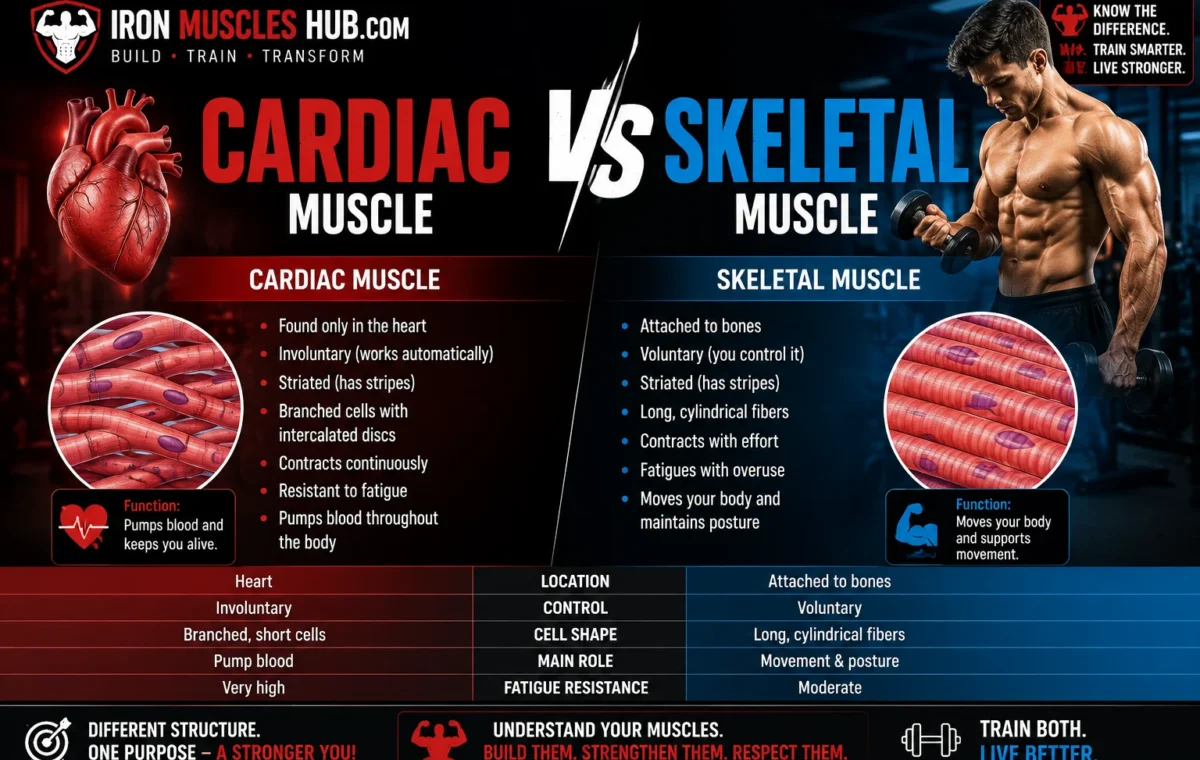
Cardiac vs skeletal muscle is a common comparison because both are striated muscles, yet they perform very different jobs in the human body. Cardiac muscle is found only in the heart and works automatically to pump blood throughout your body. Skeletal muscle is attached to bones and moves your body whenever you walk, lift weights, or even smile.
- Quick Answer
- Cardiac vs Skeletal Muscle at a Glance
- Main Characteristics of Cardiac Muscle
- Example
- Main Characteristics of Skeletal Muscle
- Examples of Skeletal Muscles
- Similarities Between Cardiac and Skeletal Muscle
- Quick Comparison of Similarities
- Cardiac Muscle Structure
- Skeletal Muscle Structure
- Cardiac Muscle
- Skeletal Muscle
- Cardiac Muscle
- Example
- Skeletal Muscle
- Skeletal Muscle
- Cardiac Muscle
- Myth 1: Cardiac muscle is the strongest muscle.
- Myth 2: Your heart can become tired like your biceps.
- Myth 3: Cardiac muscle can be trained to become huge like bodybuilder muscles.
- Myth 4: Both muscles are controlled by the brain in the same way.
- What is the main difference between cardiac and skeletal muscle?
- Are cardiac and skeletal muscles both striated?
- Why doesn't cardiac muscle get tired?
- Can exercise strengthen cardiac muscle?
- Can skeletal muscle repair itself?
- Which muscle is stronger: cardiac or skeletal?
- Common Mistakes Beginners Make
- Quick Revision Table
- Which Muscle Type Is More Important?
Understanding these two muscle types helps you learn how your body works, why exercise affects them differently, and why keeping both healthy is important. This beginner-friendly guide explains everything in simple language with practical examples. For more insights read here :- are muscles organs and muscular system.
Quick Answer
| Feature | Cardiac Muscle | Skeletal Muscle |
|---|---|---|
| Found In | Heart | Attached to bones |
| Control | Involuntary | Voluntary |
| Appearance | Striated | Striated |
| Cell Shape | Short, branched cells | Long, cylindrical fibers |
| Number of Nuclei | Usually 1 (sometimes 2) | Many nuclei |
| Fatigue | Highly resistant | Can become tired |
| Main Job | Pumps blood | Moves the body |
Cardiac vs Skeletal Muscle at a Glance
Although both muscles look striped under a microscope, they have different structures and functions.
- Cardiac muscle keeps your heart beating every second of your life without conscious effort.
- Skeletal muscle lets you perform intentional movements such as running, lifting, writing, and speaking.
- Cardiac muscle cells are connected by intercalated discs, allowing the heart to contract as one powerful pump.
- Skeletal muscle fibers work together in groups to move bones and joints.
What Is Cardiac Muscle?
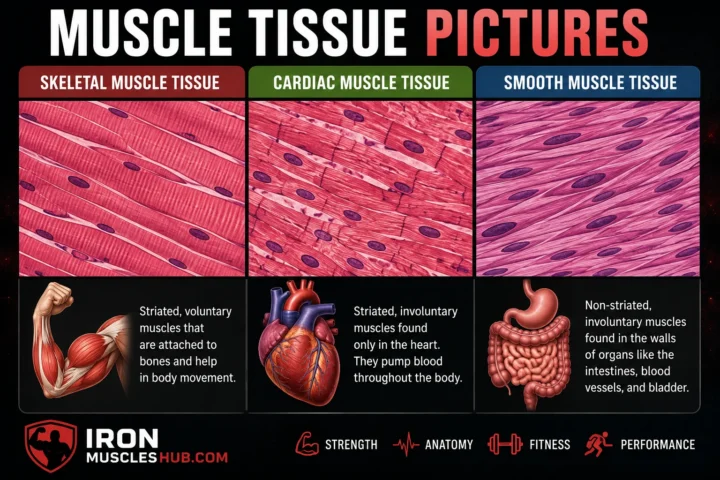
Cardiac muscle is a specialized muscle tissue found only in the heart. Its primary job is to pump oxygen-rich blood throughout the body and return oxygen-poor blood to the lungs.
Unlike skeletal muscle, you cannot consciously control cardiac muscle. Your heartbeat continues whether you’re sleeping, working, or exercising because the heart has its own electrical conduction system that automatically generates contractions.
Main Characteristics of Cardiac Muscle
- Located only in the heart
- Involuntary muscle
- Striated appearance
- Branched muscle cells
- Usually one central nucleus
- Connected by intercalated discs
- Extremely resistant to fatigue
- Contracts rhythmically throughout life
Example
When you go for a jog, your heart beats faster automatically. You don’t have to think about increasing your heart rate—cardiac muscle responds to your body’s oxygen needs.
What Is Skeletal Muscle?
Skeletal muscle is the muscle attached to bones through tendons. It creates movement by pulling on bones whenever it contracts.
This muscle type is under voluntary control, meaning your brain tells it when to move. Whether you’re typing on a keyboard, lifting groceries, or playing football, skeletal muscles make those actions possible.
Main Characteristics of Skeletal Muscle
- Attached to bones
- Voluntary control
- Long cylindrical fibers
- Striated appearance
- Multiple nuclei in each muscle fiber
- Produces body movement
- Helps maintain posture
- Generates body heat
Examples of Skeletal Muscles
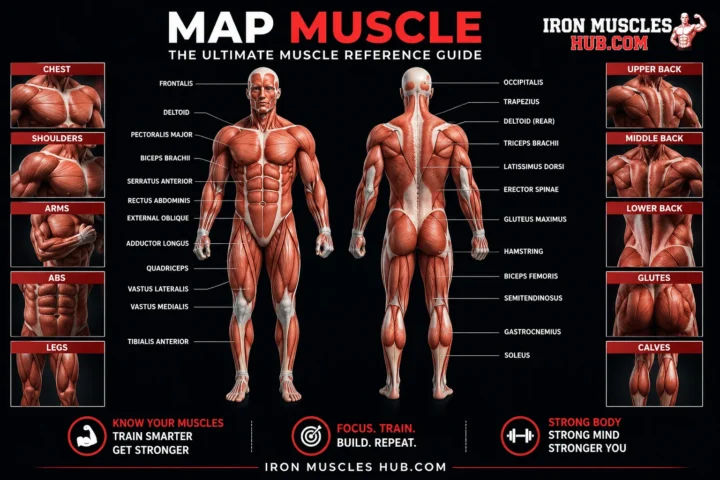
Some of the major skeletal muscles include:
- Biceps
- Triceps
- Quadriceps
- Hamstrings
- Deltoids
- Gluteus maximus
- Gastrocnemius (calf muscle)
- Pectoralis major
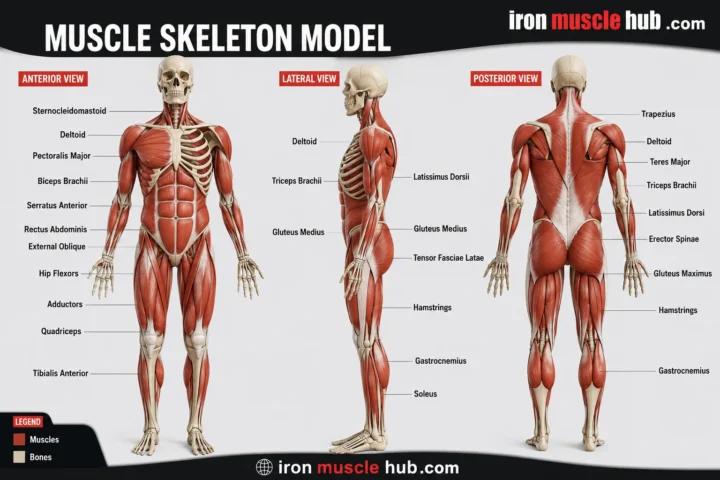
These muscles work together to help you move, balance, and perform everyday activities.
Cardiac vs Skeletal Muscle: The Biggest Differences
Understanding the major differences makes it easier to remember each muscle’s role.
| Feature | Cardiac Muscle | Skeletal Muscle |
|---|---|---|
| Location | Heart only | Throughout the body |
| Function | Pumps blood | Moves bones |
| Control | Automatic | Conscious |
| Cell Shape | Branched | Long fibers |
| Intercalated Discs | Present | Absent |
| Fatigue | Rarely fatigues | Can fatigue after heavy use |
| Regeneration | Very limited | Limited but better than cardiac muscle |
One simple way to remember this is:
Cardiac muscle keeps you alive. Skeletal muscle helps you live actively.
Why Cardiac Muscle Doesn’t Get Tired
Your heart beats around the clock from before birth until the end of life. It can do this because cardiac muscle has several special features.
These include:
- Rich blood supply
- Large numbers of mitochondria
- Constant oxygen delivery
- Efficient energy production
- Short recovery periods between heartbeats
This design allows the heart to continue pumping efficiently for decades without stopping.
Similarities Between Cardiac and Skeletal Muscle
Even though cardiac and skeletal muscles have different jobs, they also share several important features. These similarities often confuse students because both muscles appear striped under a microscope.
Here are the main similarities:
- Both are striated muscles. Their striped appearance comes from repeating units called sarcomeres, which are responsible for muscle contraction.
- Both use actin and myosin. These proteins slide past each other to shorten the muscle and produce force.
- Both require calcium ions. Calcium triggers muscle contraction in both tissue types.
- Both need ATP (adenosine triphosphate). ATP is the energy source that powers every muscle contraction.
- Both contain many mitochondria. These tiny structures produce energy needed for continuous muscle activity.
- Both receive signals from nerves. Skeletal muscle depends on motor neurons, while cardiac muscle is regulated by the autonomic nervous system and the heart’s own electrical conduction system.
Quick Comparison of Similarities
| Feature | Cardiac Muscle | Skeletal Muscle |
|---|---|---|
| Striated | ✅ Yes | ✅ Yes |
| Contains Sarcomeres | ✅ Yes | ✅ Yes |
| Uses ATP | ✅ Yes | ✅ Yes |
| Uses Calcium | ✅ Yes | ✅ Yes |
| Contains Actin & Myosin | ✅ Yes | ✅ Yes |
| Controlled by Nerves | ✅ Yes | ✅ Yes |
Structure Comparison
The structure of each muscle type is closely related to its function.
Cardiac Muscle Structure
Cardiac muscle cells are:
- Short
- Branched
- Usually have one central nucleus
- Connected by intercalated discs
Intercalated discs contain specialized junctions that allow electrical signals to spread rapidly from one cell to another. This ensures the heart contracts as one coordinated pump instead of many separate cells.
Skeletal Muscle Structure
Skeletal muscle fibers are:
- Very long
- Cylindrical
- Unbranched
- Multinucleated
- Organized into bundles called fascicles
Each muscle fiber receives instructions from motor neurons, allowing precise control of movement.
How They Contract
Although both muscles contract using the sliding filament mechanism, the process begins differently.
Cardiac Muscle
The heartbeat starts with electrical impulses produced naturally by the heart’s pacemaker cells. These signals spread through the heart, causing rhythmic contractions without conscious thought.
Skeletal Muscle
Skeletal muscle contracts only after receiving signals from the brain through motor neurons. If you decide to lift a dumbbell, your brain sends electrical messages that activate the appropriate muscles.
Voluntary vs Involuntary Control
One of the easiest ways to distinguish these muscles is by how they’re controlled.
Cardiac Muscle
Cardiac muscle works automatically.
You cannot consciously:
- Stop your heartbeat
- Speed it up instantly
- Slow it down on command
Instead, your nervous system and hormones adjust your heart rate based on your body’s needs.
Example
During exercise, your heart beats faster to deliver more oxygen to working muscles.
Skeletal Muscle
Skeletal muscle is under voluntary control.
You decide when to:
- Walk
- Stand
- Jump
- Lift weights
- Smile
- Write
- Throw a ball
Because your brain controls these muscles, they allow extremely precise movements.
Which Muscle Gets Bigger?
This is one of the most common questions among fitness beginners.
Skeletal Muscle
Skeletal muscle grows through hypertrophy, which occurs when resistance training causes muscle fibers to adapt and become thicker.
Activities that promote muscle growth include:
- Weight training
- Progressive overload
- Adequate protein intake
- Proper recovery
- Consistent exercise
This is why regular strength training increases muscle size and strength over time.
Cardiac Muscle
Cardiac muscle does not grow in the same way.
Instead, regular aerobic exercise makes the heart more efficient. A trained heart can pump more blood with each beat, allowing it to work harder while often beating fewer times per minute at rest.
Healthy adaptations from endurance exercise are different from unhealthy enlargement caused by certain heart diseases. If a doctor detects heart enlargement, it requires medical evaluation.
How Exercise Affects Both Muscles
Exercise benefits both muscle types, but in different ways.
| Exercise | Cardiac Muscle | Skeletal Muscle |
|---|---|---|
| Walking | Improves heart efficiency | Improves endurance |
| Running | Strengthens cardiovascular fitness | Builds endurance in leg muscles |
| Weightlifting | Slight increase in heart workload | Increases muscle size and strength |
| Cycling | Improves heart health | Builds lower-body endurance |
| Swimming | Improves circulation | Works many muscle groups simultaneously |
Common Myths About Cardiac vs Skeletal Muscle
Myth 1: Cardiac muscle is the strongest muscle.
Reality: The heart is incredibly powerful for continuous work, but “strongest muscle” depends on how strength is measured. Different muscles excel in different ways.
Myth 2: Your heart can become tired like your biceps.
Reality: A healthy heart is designed to beat continuously throughout life and is highly resistant to fatigue.
Myth 3: Cardiac muscle can be trained to become huge like bodybuilder muscles.
Reality: Exercise improves heart efficiency rather than producing the same kind of muscle enlargement seen in skeletal muscles.
Myth 4: Both muscles are controlled by the brain in the same way.
Reality: Skeletal muscle requires conscious control, while cardiac muscle contracts automatically through its own electrical system and is influenced by the autonomic nervous system.
Real-Life Example
Imagine you’re lifting a heavy box.
- Your skeletal muscles in your arms, shoulders, back, and legs contract to lift the weight.
- At the same time, your cardiac muscle increases your heart rate to deliver more oxygen and nutrients to those working muscles.
Although they perform different jobs, they work together to keep your body functioning efficiently.
What is the main difference between cardiac and skeletal muscle?
The biggest difference is control and location. Cardiac muscle is found only in the heart and works automatically without conscious effort. Skeletal muscle is attached to bones and is under voluntary control, allowing you to move your body whenever you choose.
Are cardiac and skeletal muscles both striated?
Yes. Both muscle types have a striated (striped) appearance because they contain repeating units called sarcomeres. However, despite looking similar under a microscope, they have different structures, functions, and methods of control.
Why doesn’t cardiac muscle get tired?
Cardiac muscle is designed to work continuously throughout your life. It has a rich blood supply, numerous mitochondria for energy production, and an efficient oxygen supply. These features allow the heart to beat millions of times each year without becoming fatigued like skeletal muscles.
Can exercise strengthen cardiac muscle?
Yes. Regular aerobic exercise—such as brisk walking, cycling, swimming, or jogging—helps the heart become more efficient. Instead of becoming larger like skeletal muscles, a healthy heart pumps more blood with each beat, improving cardiovascular fitness.
Can skeletal muscle repair itself?
Skeletal muscle has a limited ability to repair after injury. Small injuries often heal with proper nutrition, rest, and rehabilitation. Severe muscle damage may take longer to recover and sometimes requires medical treatment or physical therapy.
Which muscle is stronger: cardiac or skeletal?
They are designed for different purposes, so they cannot be directly compared. Cardiac muscle excels at continuous, rhythmic contractions without fatigue, while skeletal muscle is built for powerful, voluntary movements such as lifting, jumping, and running.
Common Mistakes Beginners Make
When learning about muscle tissue, people often confuse these two muscle types. Here are some common mistakes to avoid:
- Thinking all striated muscles are voluntary.
- Assuming the heart is controlled consciously.
- Believing weight training makes the heart grow like biceps.
- Forgetting that cardiac muscle exists only in the heart.
- Mixing up branched cardiac muscle cells with long skeletal muscle fibers.
Remember this simple rule:
Heart = Cardiac = Automatic
Bones = Skeletal = Voluntary
This memory trick makes it much easier to recall the differences.
Quick Revision Table
| Topic | Cardiac Muscle | Skeletal Muscle |
|---|---|---|
| Location | Heart only | Attached to bones |
| Control | Involuntary | Voluntary |
| Appearance | Striated | Striated |
| Cell Shape | Branched | Long cylindrical fibers |
| Nuclei | One (occasionally two) | Many |
| Fatigue | Highly fatigue-resistant | Can fatigue |
| Main Function | Pumps blood | Produces movement |
| Growth | Improves efficiency with exercise | Hypertrophy through resistance training |
Which Muscle Type Is More Important?
This question doesn’t have a single answer because both are essential.
Without cardiac muscle, your heart couldn’t circulate oxygen and nutrients to the rest of your body. Without skeletal muscles, you wouldn’t be able to walk, breathe deeply, maintain posture, or perform everyday activities.
Together, these muscles work as a team. Every time you exercise, skeletal muscles generate movement while cardiac muscle works harder to supply the oxygen and energy those muscles need.
Final Thoughts
Understanding cardiac vs skeletal muscle becomes much easier once you focus on their main roles. Cardiac muscle is an involuntary, highly specialized tissue found only in the heart, where it pumps blood continuously throughout your life. Skeletal muscle, on the other hand, is voluntary, attaches to bones, and allows you to move, exercise, maintain posture, and perform daily tasks.
Although both muscles are striated and share similar contraction mechanisms, their structure, control, and functions are very different. Learning these differences not only improves your knowledge of human anatomy but also helps you appreciate how exercise benefits both your muscles and your heart.
Whether you’re studying biology, beginning your fitness journey, or simply curious about how your body works, understanding these two muscle types provides a strong foundation for learning more about human health.