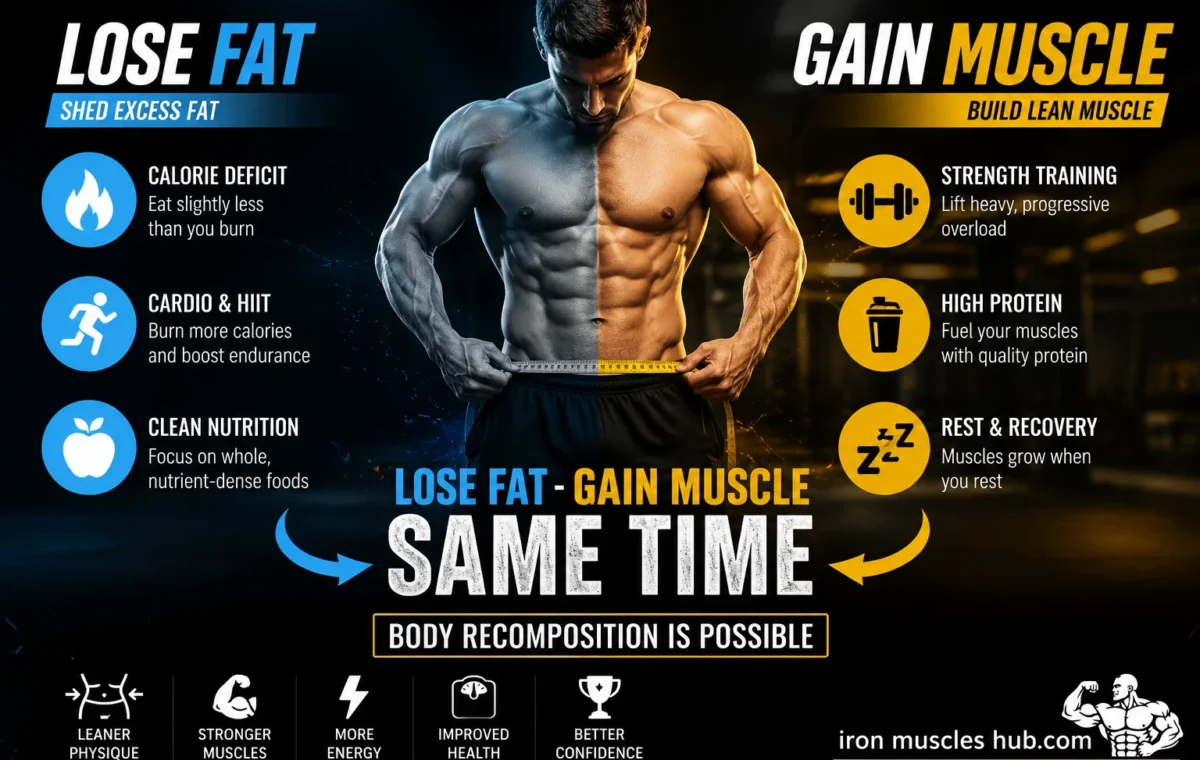
Yes, you can lose fat and gain muscle at the same time. This process is usually called body recomposition. It works especially well for beginners, people returning to training, and people carrying more body fat.
- Quick Answer
- lose fat gain muscle same time
- 1. You're new to lifting
- 2. You're returning after a long break
- 3. You have noticeable body fat to lose
- 4. You're willing to accept slower progress
- A practical starting point
- Protein target
- Example
- Beginner full-body template
- Protein
- Training
- Calories
- Measurements
- Decision rule
- Mistake 1: Cutting calories too hard
- Mistake 2: Treating protein as optional
- Mistake 3: Doing only cardio
- Mistake 4: Changing workouts every week
- Mistake 5: Chasing soreness
- Mistake 6: Trusting the scale alone
- Mistake 7: Trying to train like an advanced bodybuilder
- 1. Body weight
- 2. Waist circumference
- 3. Progress photos
- 4. Gym performance
- Can you really lose fat and gain muscle at the same time?
- How much protein should I eat to lose fat and gain muscle?
- Should I be in a calorie deficit to build muscle while losing fat?
- How many days a week should I lift weights for body recomposition?
- Why am I getting stronger but not losing weight?
- Training
- Nutrition
- Activity
- Recovery
- Tracking
- Final Thoughts
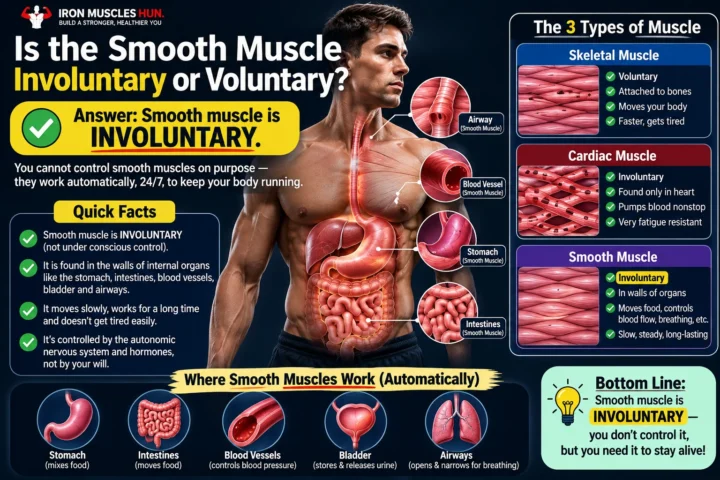
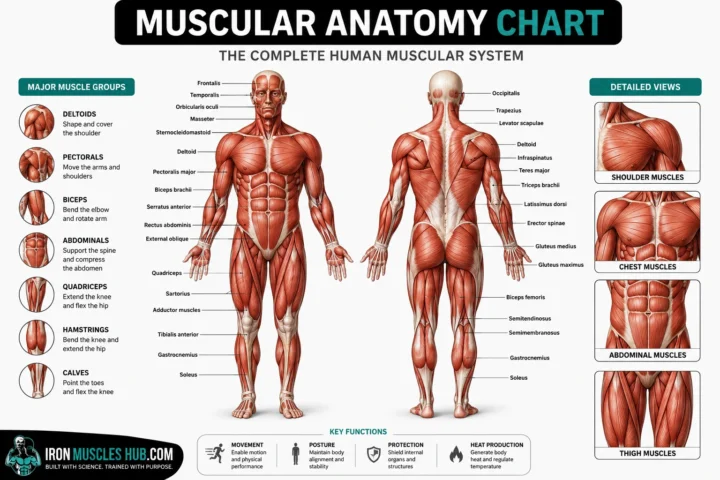
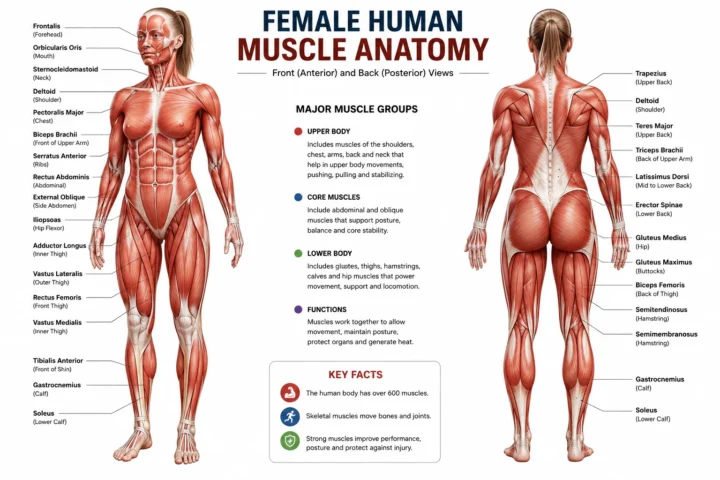
The basic setup is simple: lift weights consistently, eat enough protein, use a modest calorie deficit rather than a crash diet, and recover properly. Research also shows that resistance training can help protect or increase lean mass during weight loss, although larger energy deficits make muscle gain harder. For more insights read here :- muscle chart and human muscle chart.
Quick Answer
- Strength train 2–3 times per week and focus on progressive improvement. ACSM recommends resistance training 2–3 times weekly, with major muscle groups trained using controlled, challenging sets.
- Aim for roughly 1.6–2.0 g of protein per kg of body weight per day as a practical target for many lifters. Research finds that benefits for resistance-training muscle gain tend to level off around 1.62 g/kg/day, while higher intakes can be useful in aggressive dieting situations.
- Keep your calorie deficit modest, especially if building muscle is equally important. A prolonged deficit around 500 kcal/day or greater can make lean-mass gains harder.
- Track waist size, body weight, photos and gym performance, not the scale alone.
lose fat gain muscle same time
Yes. Body recomposition is real, but it doesn’t happen equally easily for everyone. Your chances are generally better if you’re new to resistance training, returning after a long break, or starting with more body fat. The more advanced and lean you become, the harder it is to add muscle while simultaneously losing fat.
Think about the two goals as separate processes.
Fat loss requires your body to use more energy than it receives over time.
Muscle growth requires a strong training stimulus, adequate protein, recovery and enough available energy to support tissue repair.
That doesn’t mean your body has to choose one process and completely stop the other.
Stored body fat provides an energy reserve. Resistance training gives your muscles a reason to adapt. Protein supplies amino acids needed for tissue repair and remodeling.
That’s why a beginner with plenty of stored energy can sometimes become noticeably leaner and stronger at the same time.
A 4-week randomized trial found that participants consuming 2.4 g/kg/day of protein during a substantial energy deficit while performing resistance and high-intensity exercise increased lean mass while losing fat. The study was small and used a demanding protocol, so don’t treat 2.4 g/kg as a universal requirement. It does, however, show why adequate protein matters during dieting.
Who Should Try Body Recomposition?
Body recomposition isn’t the best strategy for every lifter.
It’s particularly useful for beginners because your first months of properly structured resistance training can produce significant adaptations.
1. You’re new to lifting
If you’ve never followed a consistent strength program, almost everything is a new stimulus.
You don’t need complicated exercises or advanced programming. Learning basic movements and gradually becoming stronger can provide a powerful reason for your body to build and retain muscle.
2. You’re returning after a long break
Someone who previously trained seriously and then stopped may regain lost muscle relatively quickly after returning.
That makes simultaneous fat loss and muscle regain a reasonable goal.
3. You have noticeable body fat to lose
Having stored energy available can make recomposition more practical than it is for someone who is already very lean.
This doesn’t mean body-fat percentage needs to be estimated perfectly. In fact, home body-fat measurements can be noisy. Use several indicators instead.
4. You’re willing to accept slower progress
This is the part many beginners miss.
A dedicated fat-loss phase is designed primarily to reduce body weight.
A muscle-building phase is designed primarily to add lean mass.
Trying to accomplish both at once can mean neither number changes dramatically every week.
That’s normal.
Who This Is NOT For
Body recomposition may not be your best first choice if you’re:
- Already quite lean and highly trained.
- Primarily interested in maximizing muscle gain as quickly as possible.
- Preparing for a physique competition.
- Trying to lose weight extremely quickly.
- Struggling to eat enough protein or maintain consistent training.
- Dealing with an injury or medical condition that requires supervised exercise or nutrition.
For an advanced, already-lean lifter, separate muscle-gain and fat-loss phases may be more practical.
For a beginner carrying extra body fat, however, recomposition can be a very sensible starting point.
Step 1: Set Up a Small Calorie Deficit
The first nutrition mistake I see beginners make is cutting calories too aggressively.
They think:
“If a small deficit loses fat, a huge deficit must lose fat faster.”
The scale might fall faster, but that doesn’t automatically make the approach better for muscle retention or performance.
A meta-analysis examining resistance training during energy restriction found that prolonged energy deficits impair lean-mass gains. Its analysis suggested that an energy deficit around 500 kcal/day was enough to prevent lean-mass gains in the populations studied.
For someone whose goal is specifically fat loss plus muscle gain, I’d rather see a controlled approach than a crash diet.
A practical starting point
Instead of immediately cutting food dramatically:
- Estimate your normal calorie intake.
- Track your body weight consistently.
- Make a modest reduction.
- Keep protein high.
- Train hard.
- Watch your performance and waist measurement.
- Adjust only when the trend tells you to.
Traditional clinical weight-loss guidelines often use larger deficits, such as 500–1,000 kcal/day, for people whose primary objective is weight loss. That’s different from the goal of maximizing muscle retention or gain during fat loss.
Don’t copy a medical weight-loss calorie target from someone else’s plan.
Your calorie needs depend on body size, activity, age, sex, training and other factors.
Step 2: Eat Enough Protein
Protein is one of the most important pieces of the body-recomposition puzzle.
A large meta-analysis involving 49 studies and 1,863 participants found that protein supplementation improved resistance-training-related gains in strength and fat-free mass. Its analysis found that additional benefit for fat-free mass became much smaller beyond approximately 1.62 g/kg/day of total protein intake.
That gives us a useful practical starting point.
Protein target
For many healthy adults doing resistance training while trying to lose fat and gain muscle:
1.6–2.0 g/kg/day is a reasonable practical range.
In pounds, that’s approximately:
0.73–0.91 g/lb/day.
You don’t need to hit the exact same number every day.
Consistency across weeks matters much more.
Example
Imagine a beginner weighs:
80 kg / 176 lb
At 1.6 g/kg:
80 × 1.6 = 128 g protein/day
At 2.0 g/kg:
80 × 2.0 = 160 g protein/day
So a practical target could be around:
128–160 g protein per day.
That’s far more useful than simply saying “eat lots of protein.”
Step 3: Build Meals Around Protein
You don’t need to live on protein shakes.
Use ordinary foods first.
Good options include:
- Eggs
- Greek yogurt
- Milk
- Chicken
- Turkey
- Lean beef
- Fish
- Cottage cheese
- Beans
- Lentils
- Tofu
- Tempeh
- Protein-rich mixed meals
If you’re vegetarian or vegan, combine different protein-rich foods across the day and pay attention to your total intake.
A simple meal structure is:
Protein + vegetables/fruit + carbohydrate + healthy fat
For example:
Breakfast: Eggs + whole-grain toast + fruit
Lunch: Chicken + rice + vegetables
Snack: Greek yogurt + berries
Dinner: Lean beef + potatoes + vegetables
This doesn’t need to be complicated.
Step 4: Strength Train 2–3 Times Per Week
If your goal is to gain or retain muscle while losing fat, resistance training should be the foundation of your exercise program.
ACSM’s resistance-training guidance recommends training 2–3 times per week, using exercises that challenge the major muscle groups. Its general example uses 8–10 multi-joint exercises, 2–3 sets of 8–12 repetitions, controlled movement and progressive increases in resistance.
For a beginner, you don’t need to copy that exact template immediately.
Start with movements you can perform safely and consistently.
Beginner full-body template
| Movement | Exercise example | Sets | Reps |
|---|---|---|---|
| Squat | Goblet squat | 2–3 | 8–12 |
| Push | Dumbbell bench press | 2–3 | 8–12 |
| Pull | Lat pulldown | 2–3 | 8–12 |
| Hip hinge | Romanian deadlift | 2–3 | 8–12 |
| Row | Cable or dumbbell row | 2–3 | 8–12 |
| Shoulders | Dumbbell overhead press | 2–3 | 8–12 |
| Core | Plank | 2–3 | Controlled |
The table is a beginner example, not a prescription for every person.
Your exercise selection should reflect your equipment, mobility, training experience and any injuries.
Step 5: Make Your Training Progressively Harder
This is where many “fat-loss workouts” go wrong.
You don’t want to spend months doing the exact same workout with the exact same resistance.
Your body needs a reason to adapt.
Progressive overload can mean:
- Adding a small amount of weight.
- Performing another repetition with the same weight.
- Improving technique.
- Increasing your range of motion when appropriate.
- Making the same exercise feel easier before increasing resistance.
ACSM advises progressing the weight over time and describes an effort around 8 out of 10 as a useful general target in its resistance-training resource.
You don’t need to train to absolute failure on every set.
Instead, learn to recognize challenging sets where the final repetitions require concentration and good technique.
Step 6: Don’t Turn Cardio Into Punishment
Cardio can help you increase energy expenditure and improve fitness.
It doesn’t need to become an exhausting daily punishment for eating food.
Walking is often an excellent choice because it creates relatively little recovery stress compared with harder conditioning.
Other options include:
- Cycling
- Swimming
- Jogging
- Rowing
- Incline walking
The key is fitting cardio around your strength training rather than using it to destroy your recovery.
If your legs are constantly exhausted, your strength sessions may suffer.
And if your strength performance keeps dropping, muscle-building becomes harder.
ACSM recommends combining resistance and aerobic activity as part of a well-rounded exercise program.
Step 7: Sleep and Recovery Count
You can have a good training plan and a good diet and still struggle if recovery is poor.
Your muscles don’t grow because you stared at a dumbbell for an hour.
Training provides the stimulus.
Recovery allows your body to respond.
Build a routine that gives you enough time for sleep, regular meals and recovery between demanding sessions.
Also remember that soreness isn’t the goal.
Progress is the goal.
You don’t need to be painfully sore after every workout to know that your training worked.
Your Body-Recomposition Comparison Table
| Approach | Main Goal | Calories | Protein | Strength Training | Expected Scale Trend |
| Fat-loss phase | Lose fat | Deficit | High | Essential | Usually down |
| Muscle-gain phase | Gain muscle | Usually maintenance/surplus | High | Essential | Usually up |
| Body recomposition | Lose fat + gain/retain muscle | Small deficit or near maintenance | High | Essential | May change slowly |
| Crash diet | Rapid scale loss | Large deficit | Often inadequate | Often poorly supported | Down quickly, but not necessarily ideal |
The important point is that scale weight isn’t the entire objective during recomposition.
Suppose someone loses 2 kg / 4.4 lb of fat while gaining 1 kg / 2.2 lb of lean mass.
Their scale weight could fall only 1 kg / 2.2 lb.
Their physique could still look substantially different.
That’s why waist measurements, photographs and gym performance matter.
Worked Example: 80 kg / 176 lb Beginner
Let’s make this practical.
Imagine a beginner is:
- 80 kg / 176 lb
- 175 cm / 69 inches
- New to structured resistance training
- Interested in losing fat while gaining muscle
The goal isn’t to prescribe their exact calorie intake without knowing their age, sex, daily activity and current food intake.
Instead, use the following framework.
Protein
At 1.6–2.0 g/kg:
128–160 g protein/day
Training
Start with:
2–3 resistance sessions per week
Use full-body movements and focus on improving technique and performance.
Calories
Rather than starting with an extreme restriction, establish current intake and make a modest adjustment.
Then monitor the trend.
Measurements
Record:
- Body weight
- Waist circumference
- Progress photos
- Key exercise performance
For waist measurement, use the same location and conditions each time.
For photos, use similar lighting, clothing, distance and posture.
This makes your comparisons much more useful.
The 30-Second Recomposition Self-Test
Ask yourself these five questions:
1. Am I getting stronger?
If yes, that’s a positive sign.
2. Is my waist slowly getting smaller?
If yes, that’s a positive sign for fat loss.
3. Am I eating enough protein consistently?
If no, fix this before making the plan more complicated.
4. Is my body weight stable or slowly trending down?
Either can happen during recomposition.
5. Am I recovering well enough to train consistently?
If no, your calorie deficit, training volume or lifestyle may need adjustment.
Decision rule
If waist is decreasing + strength is stable/improving, keep going.
If weight is dropping rapidly + strength is falling + recovery is poor, your deficit may be too aggressive.
If weight and waist are both unchanged for several weeks, review food intake and activity before making another adjustment.
This is much more useful than judging your plan from one morning’s weigh-in.
Common Mistakes → Why → Fix
Mistake 1: Cutting calories too hard
Why: A large energy deficit can make training and recovery harder and can reduce the potential for lean-mass gain.
Fix: Use a controlled deficit rather than trying to lose as much weight as possible each week.
Mistake 2: Treating protein as optional
Why: Resistance training provides the stimulus, but protein provides amino acids needed for muscle protein remodeling. Higher protein intake can support lean mass during resistance training and energy restriction.
Fix: Build every main meal around a meaningful protein source.
Mistake 3: Doing only cardio
Why: Cardio is useful for fitness and energy expenditure, but resistance training provides the direct muscular stimulus needed to build or preserve muscle.
Fix: Put strength training at the center of your recomposition plan.
Mistake 4: Changing workouts every week
Why: Constantly changing exercises makes it harder to tell whether you’re actually getting stronger.
Fix: Keep your main movements consistent long enough to learn them and measure progress.
Mistake 5: Chasing soreness
Why: Soreness doesn’t directly tell you how much muscle you built.
Fix: Track performance, technique, repetitions and resistance.
Mistake 6: Trusting the scale alone
Why: Fat mass and lean mass can change in opposite directions.
Fix: Track your waist, photos, strength and body weight together.
Mistake 7: Trying to train like an advanced bodybuilder
Why: Beginners usually don’t need complicated split routines, huge exercise lists or marathon gym sessions.
Fix: Start with a simple full-body program and master the basics.
How Fast Should You Expect Results?
Don’t set a deadline such as “I will lose 10 kg / 22 lb and gain 5 kg / 11 lb of muscle in three months.”
That’s not how body recomposition works.
Your results depend on:
- Training age
- Starting body composition
- Protein intake
- Calorie intake
- Training quality
- Sleep
- Genetics
- Consistency
- Stress
- Medical factors
A beginner may see noticeable changes in strength fairly quickly.
Visible physique changes can take longer.
And because muscle gain and fat loss can occur simultaneously, the scale may move much more slowly than you expect.
The best sign isn’t a dramatic weekly transformation.
It’s a consistent trend:
better training performance + smaller waist + improved physique + reasonable recovery.
How to Track Body Recomposition Correctly
Use four measurements.
1. Body weight
Weigh under similar conditions and look at the trend rather than reacting to individual readings.
Water, food volume and other normal changes can move the scale even when body fat hasn’t changed.
2. Waist circumference
Measure consistently.
A decreasing waist combined with stable or improving strength is useful evidence that your plan is moving in the right direction.
3. Progress photos
Take front, side and back photographs under similar conditions.
Don’t judge yourself from one photograph taken in different lighting.
4. Gym performance
Keep a simple training log.
Record:
- Exercise
- Weight used
- Repetitions
- Sets
- Technique notes
If your squat, press, row or other movements are gradually improving while your waist measurement trends downward, you’re getting valuable feedback that the plan is working.
What About Men and Women?
The basic principles are similar:
Resistance training + adequate protein + appropriate energy intake + recovery.
The exact calorie requirement and rate of change will differ between individuals.
Don’t assume a diet that works for a male lifter should simply be scaled down for a female lifter, or vice versa.
Body size, activity, age, training history and other factors all affect energy needs.
For either sex, the same basic rule applies:
Don’t sacrifice muscle-building training just because your goal includes fat loss.
What About Supplements?
You don’t need a large supplement stack to recomposition.
Food should do most of the work.
Protein powder can be useful if it helps you reach your protein target conveniently, but it isn’t mandatory.
A basic diet containing protein-rich foods, vegetables, fruits, whole grains or other carbohydrate sources, and appropriate dietary fats can support a well-designed training program.
Avoid products marketed with promises of dramatically accelerating fat loss or muscle growth.
If a product sounds like it bypasses training, nutrition and recovery, be skeptical.
FAQ: Can You Lose Fat and Gain Muscle at the Same Time?
Can you really lose fat and gain muscle at the same time?
Yes. Body recomposition describes simultaneous reductions in fat mass and increases or maintenance of lean mass. It tends to be more achievable in beginners, people returning to resistance training and people with more body fat to lose. It becomes harder for advanced, very lean lifters. The process also tends to be slower than focusing exclusively on fat loss or muscle gain.
How much protein should I eat to lose fat and gain muscle?
A practical target for many resistance-training adults is around 1.6–2.0 g/kg/day, or roughly 0.73–0.91 g/lb/day. A large meta-analysis found that resistance-training benefits for fat-free mass tended to level off around 1.62 g/kg/day, while a controlled energy-deficit trial found benefits from 2.4 g/kg/day under a particularly demanding protocol.
Should I be in a calorie deficit to build muscle while losing fat?
Some calorie restriction is usually necessary if reducing body fat is the goal, but you don’t need an aggressive deficit. Research examining resistance training during energy restriction found that prolonged deficits impair lean-mass gains, with the analysis identifying roughly 500 kcal/day as an important threshold in the studied data. For recomposition, a more conservative approach is generally sensible.
How many days a week should I lift weights for body recomposition?
For beginners, 2–3 resistance-training sessions per week is a strong starting point. ACSM’s resistance-training guidance uses 2–3 weekly sessions and recommends challenging the major muscle groups with controlled repetitions and progressive resistance. A simple full-body routine can work well because it gives beginners repeated practice with fundamental movements.
Why am I getting stronger but not losing weight?
Strength can improve because you’re learning exercises, improving technique and adapting neurologically, even when body weight changes little. During successful recomposition, fat loss and lean-mass gain can partly offset each other on the scale. Look at your waist measurement, photographs, gym performance and longer-term weight trend together rather than expecting the scale to fall every week.
Your Simple 8-Week Body-Recomposition Framework
If you’re a beginner, keep the first phase boring and consistent.
Training
2–3 resistance sessions per week
Prioritize:
- Squat pattern
- Hip hinge
- Horizontal push
- Horizontal pull
- Vertical push
- Vertical pull
- Core work
Progress gradually.
Nutrition
Aim for:
1.6–2.0 g/kg/day protein
Use a modest calorie deficit if fat loss is the priority.
Don’t slash calories simply because you’re impatient.
Activity
Use walking and other enjoyable cardio to increase activity without compromising recovery.
Recovery
Build a consistent sleep routine.
Take rest days.
Don’t turn every workout into a competition.
Tracking
Every week, review:
- Weight trend
- Waist
- Training performance
- Photos
- Hunger
- Energy
- Recovery
Then make one change at a time.
The Bottom Line
You can lose fat and gain muscle at the same time. For beginners, this is one of the most useful ways to approach body recomposition without jumping straight into complicated bulk-and-cut cycles.
The formula isn’t mysterious.
Lift consistently. Eat enough protein. Keep the calorie deficit sensible. Recover well. Track more than your scale weight.
A beginner doesn’t need a perfect diet or an advanced bodybuilding program. You need a plan you can repeat for months.
If your waist is gradually shrinking while your strength is holding steady or improving, you’re moving in the right direction.
Don’t rush the process. The goal isn’t simply to weigh less. The goal is to build a stronger, leaner body while keeping the habits that got you there.
For more beginner-friendly strength, nutrition and muscle-anatomy guides, visit Iron Muscle Hub and build your training knowledge one useful skill at a time.
Final Thoughts
Losing fat while gaining muscle is possible, but it rewards consistency more than speed. Resistance training provides the muscle-building signal, while adequate protein and a sensible calorie deficit help support body composition during fat loss. Research supports resistance training and higher protein intake as useful tools for preserving or improving lean mass during energy restriction.
For a beginner, keep the plan simple: lift 2–3 times per week, eat enough protein, avoid aggressive calorie restriction, stay active, sleep well, and track your waist and gym performance alongside body weight.
You don’t need to chase dramatic weekly changes. If your waist is gradually getting smaller while your strength stays steady or improves, you’re building the kind of progress that matters. Give the process enough time, make small adjustments when needed, and focus on becoming stronger and leaner—not simply lighter.