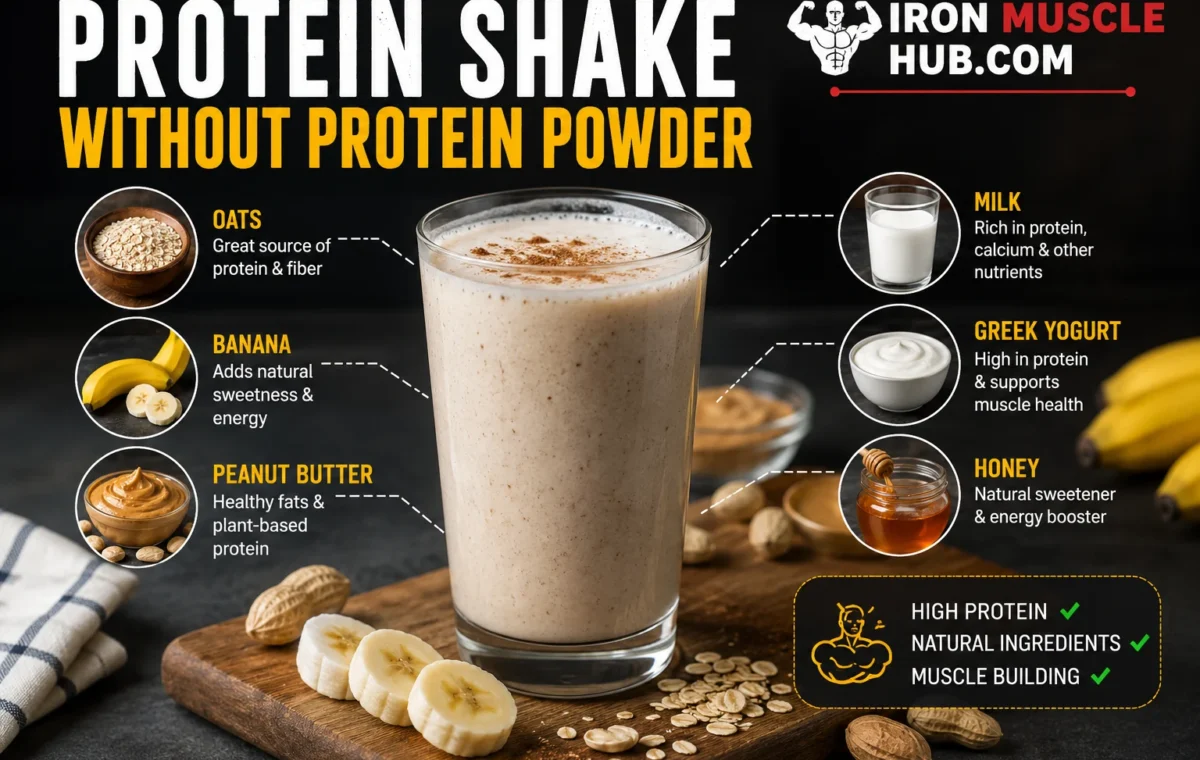
You can make a protein shake without protein powder by blending naturally protein-rich foods such as Greek yogurt, milk, peanut butter, seeds, or oats with fruit. You don’t need whey or a commercial protein supplement to make a filling smoothie. A simple combination of Greek yogurt and milk can provide a substantial amount of protein, while banana and berries add flavor and carbohydrates.
- Quick Answer: What Goes Into a Protein Shake Without Protein Powder?
- How to Make a Protein Shake Without Protein Powder
- Ingredients
- Method
- Why This Combination Works
- How Much Protein Can You Get Without Powder?
- 7 Best Ingredients for a Natural Protein Shake
- 1. Greek Yogurt
- 2. Milk
- 3. Peanut Butter
- 4. Oats
- 5. Chia Seeds
- 6. Hemp Seeds
- 7. Cottage Cheese
- Three Easy Variations
- Chocolate Peanut Butter Protein Shake
- Berry Greek Yogurt Shake
- Dairy-Free Protein Smoothie
- A Simple Formula You Can Remember
- Common Mistakes to Avoid
- Mistake 1: Using Only Fruit
- Mistake 2: Adding Too Much Peanut Butter
- Mistake 3: Choosing Sweetened Everything
- Mistake 4: Assuming Every Greek Yogurt Is the Same
- Mistake 5: Thinking You Need a Huge Amount of Protein in One Drink
- How to Make Your Shake Cheaper
- What If You Want a Very High-Protein Shake?
- Internal Link Ideas for [SITE NAME]
- Frequently Asked Questions
- Can I make a protein shake without protein powder?
- What is the best protein source for a shake without powder?
- How do I make a high-protein smoothie without whey?
- Is a homemade protein shake healthy?
- Can I make a protein shake without protein powder for breakfast?
- How much protein should I put in my shake?
- Build a Better Shake Without the Powder
- More Ways to Make a Protein Shake Without Protein Powder
- Apple Cinnamon Protein Shake
- Coffee Protein Shake
- Chocolate Banana Shake
- Protein Shake Without Protein Powder for Different Goals
- How to Make a Shake More Filling
- Add Oats
- Use Whole Fruit
- Add Seeds
- A Budget-Friendly Protein Shake Formula
- How to Compare Ingredients at the Grocery Store
- A Simple Example for Meal Planning
- When Protein Powder May Still Be Useful
- Don't Confuse a Protein Shake With a Balanced Diet
- The Easiest Recipe to Remember
- Final Thoughts
- Protein Shake Without Protein Powder: Practical Tips for Better Results
- Choose Ingredients You Already Eat
- Freeze Fruit Before It Gets Too Ripe
- Add Liquid Gradually
- Blend the Seeds and Oats Properly
- How to Make a Protein Shake Without Protein Powder Taste Better
- Use Cinnamon
- Use Unsweetened Cocoa
- Add Vanilla
- Let Fruit Provide Some Sweetness
- Protein Shake Without Protein Powder for Weight Management
- Protein Shake Without Protein Powder After Exercise
- Can You Prepare the Shake Ahead of Time?
- What to Do If You Don't Like Greek Yogurt
- A No-Recipe Method for Busy Mornings
- A Beginner's Shopping List
- Protein-focused ingredients
- Fruit
- Texture and fiber
- Flavor
- A Simple Cost-Saving Strategy
- The Bottom Line
- Final Thoughts: Make It Simple and Make It Work for You
If you’re trying to save money, avoid supplements, or simply prefer recognizable ingredients, a homemade shake can be a practical option. The trick is choosing ingredients that actually contribute protein rather than making a fruit smoothie and calling it a protein shake. For more insights read here :- protein shake and Foods to Eat to Gain Muscle.
Quick Answer: What Goes Into a Protein Shake Without Protein Powder?
| Ingredient | What it adds | Easy amount |
|---|---|---|
| Plain Greek yogurt | Protein + creamy texture | ¾–1 cup |
| Milk | Protein + liquid | ¾–1 cup |
| Banana | Natural sweetness + carbohydrates | 1 small |
| Peanut butter | Protein + fats | 1 tbsp |
| Oats | Protein + fiber + thickness | 2 tbsp |
| Chia or hemp seeds | Protein + healthy fats | 1 tbsp |
| Berries | Flavor + fruit | ½ cup |
| Cinnamon | Flavor | ¼–½ tsp |
Greek yogurt is particularly useful because straining concentrates its protein. Harvard Health’s July 2026 nutrition comparison lists plain Greek yogurt at roughly 15–18 grams of protein per 6-ounce serving, depending on the fat level.
Milk also contributes protein. Harvard’s nutrition guidance lists 2% milk at about 8 grams of protein per cup.
That makes dairy a convenient foundation for a homemade shake.
How to Make a Protein Shake Without Protein Powder
Here’s a simple recipe you can make with ordinary supermarket ingredients.
Ingredients
- ¾ cup plain Greek yogurt
- ¾ cup milk
- 1 small banana
- 1 tablespoon peanut butter
- 2 tablespoons rolled oats
- ½ cup frozen berries
- A pinch of cinnamon
- A few ice cubes, if desired
Method
- Add the Greek yogurt and milk to your blender.
- Add the banana, peanut butter, oats, berries, and cinnamon.
- Blend until smooth and creamy.
- Add a little more milk if it’s too thick.
- Taste before adding any sweetener. A ripe banana and berries may provide enough sweetness.
- Drink immediately or refrigerate it for later.
The exact nutrition will vary by the brands and quantities you use, so check your food labels if you’re tracking protein, calories, sugar, or other nutrients.
Why This Combination Works
The important part isn’t the banana. It’s the protein-rich base.
Greek yogurt and milk do most of the protein-heavy lifting. Peanut butter and oats add smaller amounts of protein while also changing the texture and making the drink more substantial. Harvard Health identifies dairy products, nuts, seeds, peanut butter, beans, lentils, eggs, and other foods as useful protein sources.
USDA FoodData Central is also a useful reference for checking the nutrition of individual foods and branded products; its database is updated regularly, with branded-food information updated monthly.
How Much Protein Can You Get Without Powder?
You can get a meaningful amount of protein from a shake without adding a supplement.
For example, using ¾ cup Greek yogurt plus ¾ cup milk already gives you protein from two substantial sources. Depending on the exact yogurt and milk, adding peanut butter and oats increases the total further.
As a reference point, Harvard Health lists:
- 2% milk, 1 cup: about 8 grams of protein
- Plain Greek yogurt, 6 ounces: about 17 grams
- Almonds, 1 ounce: about 6 grams
Don’t treat those numbers as a guaranteed amount for every product. Greek yogurt varies considerably between brands and types, which is why checking the label matters. Harvard’s July 2026 yogurt guide specifically recommends comparing serving sizes and protein amounts rather than assuming every Greek yogurt has the same nutrition.
7 Best Ingredients for a Natural Protein Shake
1. Greek Yogurt
This is one of the easiest ways to increase protein without powder.
Plain Greek yogurt also makes a smoothie thick and creamy, so you don’t need as much banana or another thickener. Choose plain yogurt if you’d like more control over added sugar.
2. Milk
Regular dairy milk gives you both liquid and protein in one ingredient.
If you’re lactose intolerant, you may prefer lactose-free milk. Plant-based milks can also work, but their protein content varies considerably, so check the nutrition label rather than assuming they’re equivalent to dairy milk.
3. Peanut Butter
Peanut butter makes the shake richer and adds protein, fats, and calories.
It’s easy to overdo it, though. If you’re trying to keep the shake lighter, start with 1 tablespoon rather than several spoonfuls.
4. Oats
Oats are useful if you want a thicker, more filling smoothie.
They don’t provide as much protein per serving as Greek yogurt, but they contribute protein along with carbohydrates and fiber. Blending them directly into the shake is an easy option.
5. Chia Seeds
Chia seeds can add protein, fiber, and fats while thickening the smoothie.
A small amount is usually enough. If you add too many, your drink can quickly become more like pudding than a shake.
6. Hemp Seeds
Hemp seeds are another plant-based ingredient that can increase the protein content of a smoothie.
They have a mild flavor, so they’re relatively easy to combine with banana, berries, cocoa, or peanut butter.
7. Cottage Cheese
Cottage cheese may sound unusual in a smoothie, but it can create a surprisingly creamy texture.
Blend it thoroughly with fruit and milk. If the flavor is too noticeable, berries or cocoa can help balance it.
Three Easy Variations
Chocolate Peanut Butter Protein Shake
Use:
- Greek yogurt
- Milk
- Banana
- Peanut butter
- Unsweetened cocoa powder
- Oats
- Ice
The banana supplies sweetness while cocoa gives you a chocolate flavor without requiring chocolate syrup.
Berry Greek Yogurt Shake
Use:
- Greek yogurt
- Milk
- Frozen mixed berries
- Banana
- Chia seeds
- Cinnamon
Frozen berries make the drink cold and thick without requiring much ice.
Dairy-Free Protein Smoothie
Try:
- Unsweetened soy milk
- Soy yogurt
- Banana
- Peanut butter
- Oats
- Chia seeds
- Frozen berries
Read the labels because plant-based yogurt and milk products can have very different protein amounts. Harvard notes that non-dairy yogurts vary substantially in their nutritional content.
A Simple Formula You Can Remember
If you don’t want to follow a recipe every time, use this formula:
1 protein base + 1 fruit + 1 extra protein source + 1 flavor + liquid
For example:
Greek yogurt + banana + peanut butter + cinnamon + milk
Or:
Soy yogurt + berries + hemp seeds + cocoa + soy milk
This makes it easier to create different shakes from whatever you already have at home.
Common Mistakes to Avoid
Mistake 1: Using Only Fruit
Banana, strawberries, mango, and other fruits taste great in smoothies, but fruit alone isn’t a particularly protein-dense base.
Add yogurt, milk, soy ingredients, seeds, or another protein-rich food if protein is the goal.
Mistake 2: Adding Too Much Peanut Butter
Peanut butter contains protein, but it’s also energy-dense. More isn’t automatically better.
Start with a tablespoon and adjust according to your needs.
Mistake 3: Choosing Sweetened Everything
A flavored yogurt, sweetened milk alternative, fruit juice, honey, and syrup can turn a simple shake into a very sweet drink.
Plain Greek yogurt plus fruit is often an easier way to control sweetness. Harvard Health recommends paying attention to added sugars when selecting yogurt.
Mistake 4: Assuming Every Greek Yogurt Is the Same
Protein content can differ significantly between products.
Look at the protein per serving, but also check that the serving sizes match before comparing brands.
Mistake 5: Thinking You Need a Huge Amount of Protein in One Drink
Protein needs vary according to factors such as body size, age, activity level, and overall diet. The general adult Recommended Dietary Allowance is 0.8 grams of protein per kilogram of body weight per day, according to Harvard’s summary of established dietary guidance.
That figure is a general reference, not a personalized target.
How to Make Your Shake Cheaper
You don’t need expensive ingredients to make a good homemade shake.
Try these simple money-saving swaps:
- Buy plain Greek yogurt in a larger container when the price per serving is lower.
- Use bananas as your main sweetener instead of specialty smoothie ingredients.
- Buy frozen berries when fresh berries are expensive.
- Use ordinary rolled oats rather than packaged smoothie mixes.
- Buy peanut butter in a larger jar if you’ll use it regularly.
- Use whatever fruit is already available rather than buying ingredients specifically for one recipe.
The result can be both a nutritious snack and a practical way to use ingredients you already have.
What If You Want a Very High-Protein Shake?
You can increase protein without powder by making the protein base larger or combining several protein-rich foods.
For example, you could use Greek yogurt plus milk plus cottage cheese, or Greek yogurt plus soy milk and seeds.
However, more protein isn’t automatically better for everyone. If you’re trying to meet a specific protein target because of athletic training, a medical condition, pregnancy, kidney disease, or another health concern, it’s sensible to discuss your needs with a qualified healthcare professional.
Internal Link Ideas for [SITE NAME]
Consider linking this article to:
- How to Save Money on Groceries Without Sacrificing Nutrition
- Cheap Healthy Breakfast Ideas for Beginners
- How to Meal Prep on a Budget
These links can help readers connect the recipe with practical grocery and budgeting advice.
Frequently Asked Questions
Can I make a protein shake without protein powder?
Yes. Greek yogurt, milk, soy foods, cottage cheese, peanut butter, seeds, oats, and other foods can provide protein without using a powdered supplement. A particularly simple combination is Greek yogurt, milk, fruit, and peanut butter. Check the nutrition labels because protein amounts vary between products.
What is the best protein source for a shake without powder?
Greek yogurt is one of the easiest choices because it provides substantial protein while also making the smoothie thick and creamy. Milk can add more protein and liquid. If you don’t eat dairy, soy milk and soy yogurt are useful alternatives, provided their labels show a suitable protein amount.
How do I make a high-protein smoothie without whey?
Build the smoothie around protein-rich whole foods. Try Greek yogurt, milk, peanut butter, oats, and seeds, or use soy milk and soy yogurt for a dairy-free version. Start with one main protein source and add another rather than relying on large amounts of fruit.
Is a homemade protein shake healthy?
It can be, depending on the ingredients and your overall diet. A shake made from plain Greek yogurt, milk, fruit, oats, and a modest amount of peanut butter can provide protein alongside other nutrients. Sweetened yogurt, syrups, juice, and large amounts of nut butter can substantially change the nutritional profile.
Can I make a protein shake without protein powder for breakfast?
Yes. A shake containing Greek yogurt, milk, fruit, and oats can work as a convenient breakfast. If you’re hungry soon afterward, make the shake more substantial with additional whole-food ingredients or pair it with another breakfast food.
How much protein should I put in my shake?
There’s no single amount that works for everyone. Protein needs depend on factors such as body weight, age, sex, activity, and health status. The general adult RDA is 0.8 grams per kilogram of body weight per day, but individual needs can differ.
Build a Better Shake Without the Powder
A protein shake without protein powder doesn’t have to be complicated. Start with Greek yogurt or another protein-rich base, add milk or a suitable alternative, then use fruit for flavor and ingredients such as peanut butter, oats, chia seeds, or hemp seeds to make the drink more substantial.
The biggest advantage is flexibility. You can adjust the recipe based on your taste, budget, dietary preferences, and the ingredients already in your kitchen. Just remember that nutrition varies by brand and serving size, so check the label rather than relying on a generic number.
More Ways to Make a Protein Shake Without Protein Powder
If you want more variety, you don’t have to keep making the same banana-and-yogurt smoothie. A few simple ingredient changes can give you a completely different flavor while keeping the basic protein-focused structure.
Apple Cinnamon Protein Shake
This is a good choice if you prefer a shake that tastes more like a simple breakfast than a dessert.
Try:
- Plain Greek yogurt
- Milk
- ½–1 small apple
- 2 tablespoons rolled oats
- 1 tablespoon peanut or almond butter
- Cinnamon
- Ice
Blend everything until smooth. If your blender struggles with apple pieces, chop the apple into small pieces first.
Coffee Protein Shake
For a morning option, combine:
- Plain Greek yogurt
- Cold milk
- A small amount of chilled brewed coffee
- Banana
- Oats
- Peanut butter
- Ice
Use cooled coffee rather than hot coffee so the drink stays cold and blends smoothly.
You can adjust the coffee amount to suit your taste. If caffeine affects your sleep or makes you feel uncomfortable, choose decaffeinated coffee or skip this version.
Chocolate Banana Shake
For a simple chocolate version, blend:
- Greek yogurt
- Milk
- Banana
- Unsweetened cocoa powder
- Oats
- Peanut butter
- Ice
The banana provides sweetness, while unsweetened cocoa gives you the chocolate flavor without needing chocolate syrup.
Protein Shake Without Protein Powder for Different Goals
The same basic shake can be adjusted depending on what you’re trying to get from it.
| Your priority | Ingredients to emphasize | What to watch |
|---|---|---|
| More protein | Greek yogurt, milk, soy milk, cottage cheese | Check protein per serving |
| More calories | Oats, nut butter, whole milk | Portions can add up quickly |
| Fewer calories | Low-fat yogurt, lower-calorie milk, berries | Avoid turning it into a tiny meal |
| More fiber | Oats, berries, chia seeds, fruit | Increase fiber gradually |
| Dairy-free | Soy milk, soy yogurt, seeds | Compare labels |
| Less added sugar | Plain yogurt, whole fruit, unsweetened cocoa | Watch sweetened yogurt and syrups |
| Thicker texture | Greek yogurt, oats, frozen fruit | Add liquid slowly |
There isn’t one universally “best” smoothie. The better choice depends on what the rest of your meals look like.
How to Make a Shake More Filling
Protein is only one part of a satisfying meal or snack.
If your smoothie leaves you hungry shortly afterward, consider adding ingredients that provide fiber and energy rather than simply making the drink sweeter.
Add Oats
Oats can make a smoothie thicker and more substantial.
Start with a small amount. Too many oats can make the shake extremely thick and may require additional milk.
Use Whole Fruit
Whole fruit provides more than sweetness. It also contributes fiber and makes the shake more substantial than using fruit juice.
Frozen fruit is especially convenient because it can make the drink cold without adding much ice.
Add Seeds
Chia, hemp, or ground flaxseed can change the texture and add nutrients.
You don’t need a large quantity. A tablespoon is an easy starting point.
A Budget-Friendly Protein Shake Formula
If you’re making smoothies regularly, buying lots of specialty ingredients can become expensive.
A simpler grocery list can keep the cost under control:
Protein base
- Plain Greek yogurt
- Milk or soy milk
Fruit
- Bananas
- Frozen berries
- Seasonal fruit
Extras
- Rolled oats
- Peanut butter
- Chia seeds
- Cinnamon
- Unsweetened cocoa
With those basics, you can make several different combinations without purchasing a separate ingredient for every recipe.
That’s especially useful if you’re trying to keep your grocery spending predictable.
How to Compare Ingredients at the Grocery Store
Don’t judge a product by its front label alone.
Turn the package around and compare:
- Serving size
- Protein per serving
- Added sugars
- Calories
- Saturated fat, if that is relevant to your diet
- Price per serving
A product that looks cheaper may not actually be cheaper if its container provides fewer servings.
The same principle applies to Greek yogurt. One brand may list a substantially different protein amount from another, so checking the nutrition panel is more reliable than assuming all Greek yogurt products are nutritionally identical.
A Simple Example for Meal Planning
Suppose you normally spend money on ready-made drinks or protein supplements but want to make breakfast at home.
Instead, you could keep Greek yogurt, milk, bananas, oats, and peanut butter in your kitchen.
On one morning, you could make:
Greek yogurt + banana + milk + oats + peanut butter
The next day:
Greek yogurt + berries + milk + chia seeds
And later:
Greek yogurt + banana + cocoa + milk + oats
The base ingredients overlap, but the flavors are different. That can make it easier to use groceries before they go to waste.
When Protein Powder May Still Be Useful
Avoiding protein powder is completely reasonable, but there’s no rule saying you must avoid it.
Protein powder can be convenient for people who have difficulty getting enough protein from ordinary foods. It can also be easier to measure than combining several ingredients.
The important point is that protein powder is optional, not mandatory.
A whole-food smoothie can work perfectly well for someone who prefers regular foods. If you have a specific dietary or athletic target, though, your total daily protein intake matters more than whether one particular shake contains powder.
Don’t Confuse a Protein Shake With a Balanced Diet
A smoothie can be useful, but it doesn’t automatically make a meal nutritionally complete.
Your overall diet can include a mixture of:
- Fruits and vegetables
- Whole grains
- Protein-rich foods
- Healthy sources of fat
- Dairy or suitable alternatives
Harvard’s Healthy Eating Plate model emphasizes variety and balance rather than relying on one food or drink to provide everything your body needs.
A protein shake can fit into that pattern as a breakfast, snack, or convenient addition to a meal.
The Easiest Recipe to Remember
If you want just one formula, keep this one:
¾–1 cup Greek yogurt + ¾–1 cup milk + fruit + one extra protein-rich ingredient
For example:
Greek yogurt + milk + banana + peanut butter
Blend until smooth.
Then change the fruit or flavor whenever you get bored.
That’s the main advantage of making a protein shake without protein powder: you can build it from ordinary foods, adjust the ingredients to your preferences, and avoid depending on a specialized supplement.
Final Thoughts
You don’t need a tub of whey protein sitting in your cupboard to make a protein-focused shake. Greek yogurt, milk, soy foods, peanut butter, seeds, oats, and other everyday ingredients can all help you build a satisfying homemade drink.
Start with a simple recipe instead of buying ten different ingredients. Choose one protein-rich base, add fruit for flavor, and adjust the texture with milk or oats. Then check the nutrition labels on the products you actually buy.
If saving money is part of the reason you’re skipping protein powder, using ingredients you already keep at home can make the habit easier to maintain.
Protein Shake Without Protein Powder: Practical Tips for Better Results
Once you’ve got the basic recipe down, the next step is making it fit your routine. A shake that’s easy to prepare and affordable is much more useful than a complicated recipe that requires ingredients you rarely use.
Choose Ingredients You Already Eat
You don’t need to build your grocery list around smoothies.
If you already buy bananas, yogurt, milk, oats, peanut butter, or frozen fruit, you’re probably close to having everything needed for a basic homemade shake.
This approach can also help reduce food waste. Soft bananas, for example, can be peeled, sliced, and frozen for future smoothies instead of being thrown away.
Freeze Fruit Before It Gets Too Ripe
Frozen bananas and berries can make a shake thick and cold without requiring much ice.
Cut bananas into pieces before freezing them and store them in a sealed freezer-safe container or bag. Frozen fruit also means you don’t have to worry about fresh fruit going bad before you get around to using it.
Add Liquid Gradually
One of the easiest ways to ruin a smoothie is adding too much liquid at the beginning.
Start with the amount suggested by the recipe. Blend, check the consistency, and add another splash if necessary.
This gives you more control over the final texture.
Blend the Seeds and Oats Properly
If you’re using oats or seeds, give the blender enough time to break them down.
A powerful blender will usually produce a smoother drink, while a basic blender may leave small pieces behind. If texture bothers you, reduce the amount of seeds or use finely ground versions.
How to Make a Protein Shake Without Protein Powder Taste Better
A high-protein shake doesn’t have to taste like plain yogurt.
Small additions can make a big difference.
Use Cinnamon
Cinnamon works particularly well with:
- Banana
- Apple
- Peanut butter
- Oats
- Coffee
You only need a small amount.
Use Unsweetened Cocoa
Cocoa can turn a basic yogurt-and-banana shake into a chocolate-flavored drink.
Start with a small amount because cocoa can taste bitter if you add too much.
Add Vanilla
A little vanilla extract can improve the flavor of a plain yogurt smoothie.
Because flavored yogurts can contain added sugar, using plain yogurt and adding your own flavoring gives you more control over the recipe.
Let Fruit Provide Some Sweetness
A ripe banana can make a noticeable difference in flavor.
If the smoothie still isn’t sweet enough for you, taste it before adding anything else. You may find that you need less sweetener than expected.
Protein Shake Without Protein Powder for Weight Management
A homemade shake can fit into a weight-management diet, but the recipe still matters.
Ingredients such as peanut butter, oats, whole milk, dates, honey, and large portions of fruit can increase the energy content quickly. None of those foods are automatically “bad,” but portions matter.
If you’re trying to make a lighter shake, you could use:
- Plain Greek yogurt
- Lower-fat milk or an appropriate unsweetened alternative
- Berries
- A small banana
- Cinnamon
- Ice
The goal isn’t to make the shake as low-calorie as possible. It’s to make the portion appropriate for how you’re using it.
Protein Shake Without Protein Powder After Exercise
A homemade shake can be convenient after exercise because it’s easy to drink and can combine protein with carbohydrates.
For example, Greek yogurt, milk, banana, and oats provide a mixture of protein and carbohydrates without requiring a supplement.
However, you don’t need to treat a shake as a special requirement after every workout. Your total food intake across the day matters, and ordinary meals can also provide the protein and energy your body needs.
If you’re training intensely or following a specific sports-nutrition plan, consider getting individualized guidance from a registered dietitian or another qualified professional.
Can You Prepare the Shake Ahead of Time?
Yes, but the texture can change after sitting.
Oats and chia seeds can continue absorbing liquid, making a smoothie thicker. Some fruits may also change the texture or color over time.
For the best texture:
- Prepare the ingredients ahead of time.
- Keep refrigerated ingredients cold.
- Blend close to the time you plan to drink it.
- If storing a finished smoothie, keep it refrigerated and follow normal food-safety practices.
If you’re preparing smoothies for several days, freezing individual fruit-and-ingredient portions can be easier than keeping finished drinks in the refrigerator for extended periods.
What to Do If You Don’t Like Greek Yogurt
Greek yogurt is convenient, but it isn’t your only option.
Try building your shake around:
- Milk
- Soy milk
- Soy yogurt
- Cottage cheese
- Peanut butter
- Hemp seeds
- Chia seeds
- Other protein-rich foods you enjoy
If you’re comparing dairy-free products, check the nutrition label carefully. Some plant-based drinks and yogurts contain relatively little protein, while others are designed to provide more.
Soy-based products are often a practical choice for a dairy-free shake because they can contribute meaningful protein.
A No-Recipe Method for Busy Mornings
Don’t have time to measure everything?
Use this simple method:
Step 1: Add a protein-rich base.
Step 2: Add one piece of fruit or a handful of frozen fruit.
Step 3: Add one supporting ingredient such as oats, peanut butter, or seeds.
Step 4: Pour in enough milk or another liquid to blend.
Step 5: Add cinnamon, cocoa, or vanilla if you want more flavor.
Step 6: Blend and adjust the thickness.
You can make the drink differently every day without memorizing a complicated recipe.
A Beginner’s Shopping List
If you’re starting from scratch, you don’t need a huge list.
Protein-focused ingredients
- Plain Greek yogurt
- Milk
- Unsweetened soy milk
- Peanut butter
Fruit
- Bananas
- Frozen berries
- Apples
- Seasonal fruit
Texture and fiber
- Rolled oats
- Chia seeds
- Hemp seeds
Flavor
- Cinnamon
- Unsweetened cocoa
- Vanilla extract
Pick just a few items from each group. Once you know which combinations you actually enjoy, you can build your regular grocery list around them.
A Simple Cost-Saving Strategy
If you’re making these shakes mainly to save money, don’t compare the cost of a homemade smoothie with the cheapest possible protein powder.
Compare what you’re actually replacing.
For example, if you’re currently buying expensive ready-made drinks, café smoothies, or individually packaged breakfast products, making a shake from ingredients you already buy may reduce your spending.
Keep the recipe simple and calculate the approximate cost per serving from your own grocery receipts.
A useful formula is:
Total ingredient cost ÷ number of servings = approximate cost per shake
This is more useful than relying on a generic online price because grocery prices differ between countries, stores, brands, package sizes, and sales.
The Bottom Line
A protein shake without protein powder can be simple, affordable, and genuinely useful.
You don’t need a complicated supplement stack. Start with a protein-rich ingredient such as Greek yogurt, milk, or soy food. Add fruit, then choose one or two extras for flavor, texture, or additional nutrients.
The best recipe is one you’ll actually make.
If you’re trying to save money, use ingredients that already appear in your normal grocery shop. If you’re focused on protein, check the nutrition labels and build the shake around foods that contribute meaningful amounts rather than relying mainly on fruit.
Final Thoughts: Make It Simple and Make It Work for You
Making a protein shake without protein powder is easier than it may seem. You can build a satisfying shake with everyday foods such as Greek yogurt, milk, soy products, peanut butter, oats, seeds, and fruit.
You don’t need an expensive collection of supplements or a complicated recipe. Start with one reliable protein-rich base, add fruit for flavor, and adjust the texture with milk, oats, or frozen ingredients.
If you’re trying to save money, there’s another advantage: you can use ingredients that already belong on your regular grocery list. Bananas, oats, yogurt, milk, peanut butter, and frozen fruit can be used across multiple meals, helping you avoid buying specialty ingredients for one recipe.
The most useful habit is to check the nutrition label on the foods you actually purchase. Protein amounts can vary between brands and serving sizes, so the label gives you a more accurate picture than a generic recipe estimate.