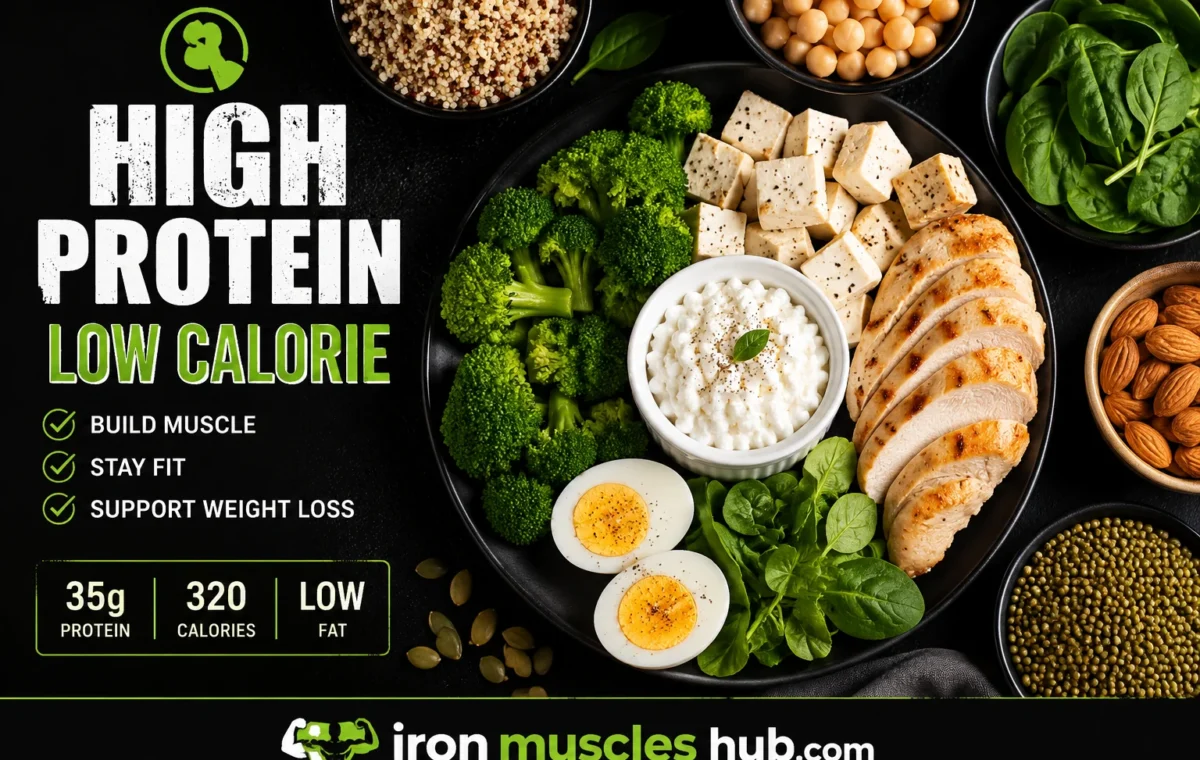
If you want high protein and low calorie foods, the basic idea is simple: choose foods that provide a useful amount of protein without bringing a large amount of energy with them. This can make it easier to manage hunger while keeping your diet supportive of muscle maintenance.
- Quick Answer
- What Does High Protein and Low Calorie Actually Mean?
- Protein Density Matters More Than a "Healthy" Label
- How Much Protein Do You Need?
- A Practical Beginner Range
- Worked Example: 80 kg / 176 lb
- 15 High Protein and Low Calorie Food Choices
- 1. Skinless Chicken Breast
- 2. White Fish
- 3. Shrimp
- 4. Tuna
- 5. Egg Whites
- 6. Eggs
- 7. Non-Fat or Low-Fat Greek Yogurt
- 8. Skyr
- 9. Low-Fat Cottage Cheese
- 10. Low-Fat Milk
- 11. Tofu
- 12. Lentils
- 13. Beans
- 14. Edamame
- 15. Lean Turkey
- High Protein and Low Calorie Food Comparison
- How to Build a High Protein and Low Calorie Meal
- Step 1: Pick Your Protein Anchor
- Step 2: Add High-Volume Produce
- Step 3: Add Carbohydrates Based on Your Needs
- Step 4: Measure Calorie-Dense Extras
- Step 5: Make the Meal Taste Good
- Common Mistakes → Why → Fix
- Mistake 1: Eating Too Little
- Mistake 2: Treating Protein as the Only Nutrient That Matters
- Mistake 3: Choosing "High Protein" Products Automatically
- Mistake 4: Pouring Oil Without Measuring
- Mistake 5: Removing Every Carbohydrate
- Mistake 6: Trying to Hit a Perfect Protein Number
- Mistake 7: Depending on Protein Powder
- A 30-Second High-Protein, Low-Calorie Decision Rule
- Can High Protein and Low Calorie Eating Help With Fat Loss?
- Can You Build Muscle While Eating Low Calorie?
- High Protein and Low Calorie Snacks
- If You're Hungry
- If You Need Convenience
- If You Want Something Sweet
- Who This Is NOT For
- FAQ
- 1. What foods are high in protein but low in calories?
- 2. What is the best high-protein food for weight loss?
- 3. How much protein should I eat when trying to lose fat?
- 4. Can I eat high protein and low calorie without exercising?
- 5. Is a high-protein, low-calorie diet healthy?
- A Simple Beginner Plan
- The Bottom Line
- Final Thoughts
For beginners, the goal isn’t to eat as little as possible. It’s to build meals around lean protein, vegetables, fruit, sensible carbohydrate portions, and enough dietary fat to make the diet enjoyable and nutritionally balanced. For more insights read here :- how do i build muscle quickly and how to get big .
Quick Answer
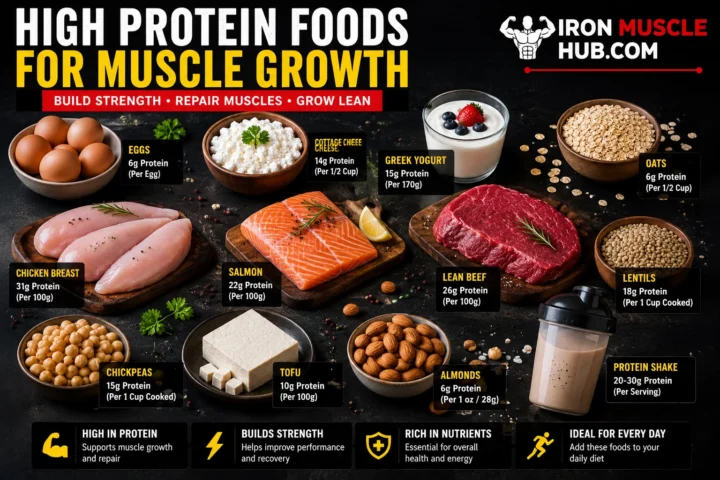
- High protein and low calorie foods include options such as lean poultry, fish, seafood, low-fat dairy, Greek-style yogurt, egg whites, tofu, beans and lentils.
- Protein can help you feel fuller, while lower-calorie, water-rich foods can increase meal volume.
- For resistance-trained adults, research suggests that around 1.6 g of protein per kg of body weight per day is a useful upper point for maximizing average muscle-building benefits from protein supplementation during resistance training.
- You don’t need an extreme diet. The best approach is one you can repeat while still getting vegetables, fruit, carbohydrates, fats and other essential nutrients.
What Does High Protein and Low Calorie Actually Mean?
High protein and low calorie means getting a relatively large amount of protein for the calories you spend on a food or meal.
There isn’t one official calorie number that makes a food “low calorie.” Your needs depend on body size, activity, age, sex, training, health status and your overall diet.
That’s why I don’t recommend judging a food from the label alone.
Instead, ask:
- How much protein does this food provide?
- How many calories come with that protein?
- Does it keep me satisfied?
- Does it provide other useful nutrients?
- Can I realistically eat it regularly?
Mayo Clinic recommends lower-energy-density foods when managing calorie intake because they allow larger portions for fewer calories. Its examples of lower-energy-density protein choices include beans, peas, lentils, fish, lean meat, poultry, low-fat dairy and egg whites.
Protein Density Matters More Than a “Healthy” Label
Here’s a simple coaching rule:
Don’t just ask, “Is this food healthy?” Ask, “How much protein do I get for the calories I’m spending?”
For example, a food can be nutritious but still relatively calorie-dense.
Nuts, seeds, cheese and oils can all have a place in a balanced diet, but they’re not usually the easiest foods to build a very low-calorie, high-protein meal around.
On the other hand, lean fish, skinless poultry, low-fat dairy and egg whites can provide protein without adding as much fat.
That doesn’t make one food “good” and the other “bad.” It simply makes them useful for different jobs.
How Much Protein Do You Need?
For healthy adults, the standard protein RDA is 0.8 g per kg of body weight per day.
That’s a population-level baseline, not necessarily the ideal target for someone who regularly performs resistance training.
Research examining resistance exercise has found additional benefits from higher protein intake, with one major meta-analysis finding that benefits for fat-free mass generally levelled off around 1.62 g/kg/day when protein supplementation was considered.
A separate systematic review also found small additional improvements in lean body mass and some strength outcomes with higher protein intake in adults performing resistance exercise.
A Practical Beginner Range
If you’re a healthy adult who lifts weights, you can use roughly 1.2–1.6 g/kg/day as a practical planning range rather than chasing the highest possible intake.
This isn’t a prescription.
Your ideal intake can differ based on your goals, total calorie intake, training volume, age, food preferences and health status.
For someone weighing 70 kg (154 lb):
- 1.2 g/kg = 84 g protein/day
- 1.4 g/kg = 98 g protein/day
- 1.6 g/kg = 112 g protein/day
For someone weighing 90 kg (198 lb):
- 1.2 g/kg = 108 g protein/day
- 1.4 g/kg = 126 g protein/day
- 1.6 g/kg = 144 g protein/day
These calculations are simply the body-weight value multiplied by the protein target. They aren’t a promise that a particular number will produce a particular physique.
Worked Example: 80 kg / 176 lb
Let’s say you’re 80 kg (176 lb) and you’re starting resistance training.
Using the practical range:
80 × 1.2 = 96 g
80 × 1.6 = 128 g
So a reasonable planning range could be 96–128 g of protein per day.
You don’t have to hit exactly 112 g every day.
Think of your protein intake as a target zone rather than a test you either pass or fail.
15 High Protein and Low Calorie Food Choices
The following foods are useful starting points because they’re commonly used as lean or relatively lower-calorie protein sources.
1. Skinless Chicken Breast
Chicken breast is a simple meal-prep protein because you can grill, bake, air-fry or pan-cook it and combine it with almost any vegetable or carbohydrate.
Choose skinless portions when your priority is getting substantial protein without adding a large amount of fat.
2. White Fish
Cod, haddock, pollock and similar white fish can work well when you want a lean protein source.
They’re particularly useful with potatoes, rice, vegetables or a large salad.
3. Shrimp
Shrimp is another protein-dense option that cooks quickly.
Use it in stir-fries, wraps, salads or rice bowls. The main thing to watch is what you cook it with. A lean protein can become a high-calorie meal if it’s covered in large amounts of butter, oil or creamy sauce.
4. Tuna
Tuna can be convenient for sandwiches, salads and quick meals.
For a lower-calorie meal, pair it with vegetables and a measured amount of dressing rather than automatically adding large quantities of mayonnaise.
5. Egg Whites
Egg whites provide protein without the fat found in the yolk.
That doesn’t mean you need to remove yolks from your diet. Whole eggs can absolutely fit into a balanced diet.
Egg whites are simply an option when you want to increase protein without adding as much dietary fat.
6. Eggs
Whole eggs are nutritious and easy to prepare.
They’re not as protein-efficient by calorie as some very lean protein sources, but that doesn’t make them a poor choice.
A couple of eggs with vegetables and a sensible carbohydrate portion can make a balanced breakfast.
7. Non-Fat or Low-Fat Greek Yogurt
Plain Greek yogurt can be useful for breakfast, snacks and quick desserts.
Add berries or other fruit for volume and flavour.
Watch flavoured versions because added sugar can increase calories.
8. Skyr
Skyr is a thick cultured dairy product that’s naturally high in protein.
It works well as a snack or breakfast base.
Try it with fruit, cinnamon or a small amount of oats.
9. Low-Fat Cottage Cheese
Cottage cheese can be eaten alone or combined with fruit, vegetables or whole-grain foods.
If you’re sensitive to texture, try blending it into a dip or smoothie-style meal.
10. Low-Fat Milk
Milk can contribute protein while also supplying other nutrients.
It may not be the most protein-efficient option compared with very lean foods, but it can still fit easily into a balanced diet.
11. Tofu
Tofu is a useful plant-based protein source.
Firm tofu can be baked, pan-seared or air-fried and added to vegetable bowls.
Because tofu contains both protein and fat, portion size still matters if your calories are tightly controlled.
12. Lentils
Lentils aren’t as protein-dense by calorie as lean meat or seafood, but they’re valuable because they also provide carbohydrates and fibre.
This makes them useful in soups, curries, salads and mixed meals.
13. Beans
Beans can provide protein, fibre and carbohydrate in one food.
They’re especially useful for people following vegetarian or plant-forward diets.
Pair them with vegetables and a sensible portion of another protein source if you need a higher-protein meal.
14. Edamame
Edamame is a convenient plant-based option that can work as a snack, side dish or addition to a rice bowl.
It’s more calorie-dense than some extremely lean protein sources, but it also provides fibre and other nutrients.
15. Lean Turkey
Skinless turkey can be another practical lean protein option.
Use it in burgers, wraps, chilli, salads or meal-prep bowls.
The important detail is the specific cut and preparation method, because turkey products can vary considerably in fat and calories.
High Protein and Low Calorie Food Comparison
The easiest way to make better choices is to compare foods by their role rather than trying to find one “perfect” food.
| Food category | Protein usefulness | Calorie control | Best beginner use |
|---|---|---|---|
| Lean poultry | High | Easy | Lunch or dinner |
| White fish | High | Easy | Dinner |
| Shrimp | High | Easy | Stir-fry or salad |
| Tuna | High | Easy | Quick lunch |
| Egg whites | High | Very easy | Breakfast |
| Whole eggs | Moderate | Moderate | Breakfast |
| Greek yogurt | High | Easy with plain/low-fat versions | Breakfast/snack |
| Cottage cheese | High | Easy with low-fat versions | Snack |
| Tofu | Moderate | Moderate | Plant-based meals |
| Lentils | Moderate | Moderate | Soups/curries |
| Beans | Moderate | Moderate | Bowls/chilli |
| Edamame | Moderate-high | Moderate | Snack/side |
| Nuts | Low relative to calories | More difficult | Small portion |
| Cheese | Moderate | More difficult | Flavour addition |
| Cooking oils | None | Difficult | Measured amounts |
Key point: This isn’t a ranking of healthy versus unhealthy foods. It shows how useful different foods can be when your specific goal is more protein with fewer calories.
Mayo Clinic similarly recommends lower-energy-density foods such as lean meat, poultry, fish, low-fat dairy, legumes and egg whites when trying to manage calorie intake.
How to Build a High Protein and Low Calorie Meal
Here’s the easiest system I give beginners.
Step 1: Pick Your Protein Anchor
Start with one substantial protein source.
Examples:
- Chicken
- Turkey
- White fish
- Tuna
- Shrimp
- Eggs and egg whites
- Greek yogurt
- Cottage cheese
- Tofu
- Lentils or beans
Don’t start with rice, bread or sauce and then try to “find protein” afterward.
Build the protein into the meal from the beginning.
Step 2: Add High-Volume Produce
Add vegetables or fruit.
Good choices include:
- Leafy greens
- Tomatoes
- Cucumber
- Peppers
- Mushrooms
- Zucchini
- Broccoli
- Cauliflower
- Berries
- Apples
- Melon
- Oranges
Mayo Clinic notes that foods with lower energy density can help you eat larger portions for fewer calories, and water- and fibre-rich foods can contribute to fullness.
Step 3: Add Carbohydrates Based on Your Needs
You don’t have to eliminate carbohydrates to eat high protein and low calorie.
Choose foods such as:
- Potatoes
- Rice
- Oats
- Whole-grain bread
- Whole-grain pasta
- Beans
- Fruit
Your portion should match your overall calorie needs and activity level.
If you’re training hard, carbohydrates can be useful for fuelling exercise.
Step 4: Measure Calorie-Dense Extras
This is where many beginner diets go wrong.
Olive oil, butter, mayonnaise, creamy sauces, cheese, nuts and nut butters can add substantial calories quickly.
You don’t need to eliminate them.
Just stop treating them as “free.”
Measure them.
A tablespoon poured casually from a bottle isn’t always the same amount as the tablespoon you imagined.
Step 5: Make the Meal Taste Good
A low-calorie meal you hate won’t last.
Use:
- Herbs
- Spices
- Garlic
- Chilli
- Lemon
- Vinegar
- Mustard
- Salsa
- Low-calorie sauces
- Fresh herbs
The objective is a diet you can actually repeat.
Common Mistakes → Why → Fix
Mistake 1: Eating Too Little
Why: Beginners sometimes interpret “low calorie” as “as few calories as possible.”
That can make meals small, hunger high and training difficult.
Fix: Use a moderate calorie deficit if fat loss is your goal rather than trying to survive on the lowest possible intake.
Low calorie doesn’t mean starvation.
Mistake 2: Treating Protein as the Only Nutrient That Matters
Why: Protein gets so much attention in fitness that people sometimes forget about carbohydrates, fats, fibre, vitamins and minerals.
Fix: Build balanced meals. Protein should be an anchor, not the entire diet.
Mayo Clinic warns that restrictive high-protein approaches can reduce carbohydrate and fibre intake and may create nutritional problems.
Mistake 3: Choosing “High Protein” Products Automatically
Why: A product can be marketed as high protein while still containing substantial calories, added sugar, saturated fat or sodium.
Fix: Read the entire nutrition label.
Compare protein, calories, serving size and ingredients, not just the words printed on the front.
Mistake 4: Pouring Oil Without Measuring
Why: Oils are calorie-dense, so small differences in quantity can add up.
Fix: Measure cooking oil, dressings and sauces when calorie control matters.
Mistake 5: Removing Every Carbohydrate
Why: Some beginners assume carbs automatically prevent fat loss.
Fix: Keep carbohydrates if they help your training, energy and diet adherence. Your overall calorie intake matters far more than simply labelling one macronutrient as “bad.”
Mistake 6: Trying to Hit a Perfect Protein Number
Why: You don’t need to hit exactly the same number every day.
Fix: Work within a sensible range.
If your target is roughly 100–120 g, getting 103 g one day and 116 g another isn’t a problem.
Mistake 7: Depending on Protein Powder
Why: Supplements are convenient, but they can distract beginners from learning how to build meals from normal foods.
Fix: Make whole foods your foundation. Use protein powder only if it makes your diet easier and fits your preferences.
The British Heart Foundation also notes that protein powders, bars and shakes aren’t necessary for most people because a balanced diet can provide sufficient protein.
A 30-Second High-Protein, Low-Calorie Decision Rule
Before choosing a meal, ask yourself these three questions:
1. Where is my protein?
If you can’t identify a meaningful protein source, improve the meal.
2. Where is my volume?
Look for vegetables, fruit, legumes or another filling food.
3. Where are my hidden calories?
Check oil, butter, cheese, creamy sauces, dressings and large snack portions.
If you can answer all three, you’re probably moving in the right direction.
This is more useful than memorizing a list of “perfect” foods.
Can High Protein and Low Calorie Eating Help With Fat Loss?
It can be useful, particularly when higher-protein choices make it easier to control hunger and maintain a sensible calorie intake.
Mayo Clinic explains that lower-energy-density foods can help people feel full on fewer calories. Its higher-protein meal approach also emphasizes protein-rich foods across meals to help control appetite and cravings.
But don’t confuse “high protein” with automatic fat loss.
You still need an appropriate overall energy intake.
Eating unlimited amounts of low-calorie foods can still add up.
And adding protein shakes, bars or large portions to your existing diet doesn’t automatically create a calorie deficit.
The practical strategy is to replace some higher-calorie choices with more protein-efficient foods, not simply pile extra protein on top of everything you already eat.
Can You Build Muscle While Eating Low Calorie?
This depends on your training status, calorie deficit, protein intake, recovery and starting body composition.
Beginners may see improvements in strength and muscle development while also reducing body fat, particularly when they begin resistance training and improve their diet.
However, don’t expect a very aggressive calorie restriction to be ideal for maximizing muscle growth.
Your training needs fuel.
Protein is important, but muscle development also depends on progressive resistance training, recovery and adequate overall nutrition.
Research supports the value of sufficient protein alongside resistance training, but it does not mean that eating more and more protein will produce unlimited muscle growth. A large meta-analysis found that benefits to fat-free mass generally levelled off beyond roughly 1.6 g/kg/day in the population studied.
High Protein and Low Calorie Snacks
Snacks are where many diets quietly accumulate calories.
A good snack should have a job.
If You’re Hungry
Try a protein-rich food paired with fruit or vegetables.
Examples:
- Plain Greek yogurt + berries
- Cottage cheese + fruit
- Eggs + vegetables
- Edamame + vegetables
- Tuna + cucumber
- Low-fat yogurt + fruit
If You Need Convenience
Choose something that is easy to carry and has a clear nutrition label.
Don’t assume a “protein” bar is automatically low calorie.
Compare products based on their protein-to-calorie relationship and serving size.
If You Want Something Sweet
Plain Greek yogurt with berries and cinnamon can provide a simple dessert-style option without relying on a large amount of added sugar.
The Cleveland Clinic also recommends protein-containing snacks and points to foods such as yogurt, eggs, beans and cottage cheese as practical choices.
Who This Is NOT For
A high-protein, low-calorie approach shouldn’t be treated as a universal diet.
Talk with a qualified healthcare professional before significantly changing protein or calorie intake if you:
- Have kidney disease or another condition affecting protein needs
- Are pregnant or breastfeeding
- Have a history of an eating disorder
- Have been instructed to follow a specific medical diet
- Take medication affected by major dietary changes
- Are under 18 and considering a weight-loss diet
Mayo Clinic notes that high-protein diets can be problematic when they become highly restrictive, particularly if they eliminate major food groups or reduce fibre and other nutrients.
FAQ
1. What foods are high in protein but low in calories?
Good choices include lean poultry, white fish, shrimp, tuna, egg whites, low-fat Greek yogurt, skyr and low-fat cottage cheese. Plant options such as tofu, lentils, beans and edamame can also contribute protein, although their calorie and macronutrient profiles differ. The best choice depends on your diet, preferences and total calorie needs.
2. What is the best high-protein food for weight loss?
There isn’t one best food for everyone. Lean poultry, fish, seafood, egg whites and low-fat dairy are particularly convenient when you want substantial protein without a lot of calories. However, a successful fat-loss diet also needs vegetables, fruit, carbohydrates, fats and enough variety to remain practical. Mayo Clinic recommends lower-energy-density foods as one strategy for managing hunger and calorie intake.
3. How much protein should I eat when trying to lose fat?
Your protein needs depend on your body weight, training, age and health status. The adult RDA is 0.8 g/kg/day, while research in resistance-trained adults suggests that higher intakes can support lean-mass outcomes. A practical planning range for many healthy adults who lift is around 1.2–1.6 g/kg/day, but it shouldn’t be treated as individualized medical advice.
4. Can I eat high protein and low calorie without exercising?
Yes, you can choose higher-protein, lower-calorie foods without exercising. But nutrition and exercise serve different purposes. If your goal includes building or maintaining muscle, resistance training provides an important stimulus that protein alone cannot replace. Protein can support the process, but it isn’t a substitute for progressive training, recovery and adequate nutrition.
5. Is a high-protein, low-calorie diet healthy?
It can be part of a healthy eating pattern when it’s balanced and provides enough total energy and nutrients. Problems arise when “low calorie” turns into severe restriction or when high protein means eliminating vegetables, fruit, fibre or carbohydrates. A balanced pattern can include lean protein, plants, whole grains, healthy fats and dairy or suitable alternatives.
A Simple Beginner Plan
If you’re overwhelmed by all the nutrition information online, start here.
At each main meal:
1. Choose a protein source.
Chicken, fish, eggs, Greek yogurt, cottage cheese, tofu, beans or another protein you enjoy.
2. Add vegetables or fruit.
Aim for plenty of food volume without relying entirely on calorie-dense ingredients.
3. Add a sensible carbohydrate source.
Rice, potatoes, oats, whole-grain bread, pasta, beans or fruit can all have a place.
4. Add some dietary fat.
Use foods such as olive oil, nuts, seeds, avocado or other sources in portions that fit your calorie needs.
5. Check the extras.
Sauces, oils, dressings, cheese and spreads can change the calorie content of a meal quickly.
This approach is simple enough for a beginner but flexible enough to use for months.
The Bottom Line
High protein and low calorie eating is less about finding magical foods and more about building meals intelligently. Start with a lean or protein-rich food, add vegetables or fruit for volume, include carbohydrates and dietary fats according to your needs, and keep calorie-dense extras under control.
For resistance-training beginners, protein deserves attention, but more isn’t automatically better. Research suggests that benefits for muscle-related outcomes tend to level off around the 1.6 g/kg/day area for many adults doing resistance training.
You don’t need an extreme diet to make progress.
Pick foods you enjoy, train consistently, monitor your overall intake and make small adjustments based on how your body and performance respond.
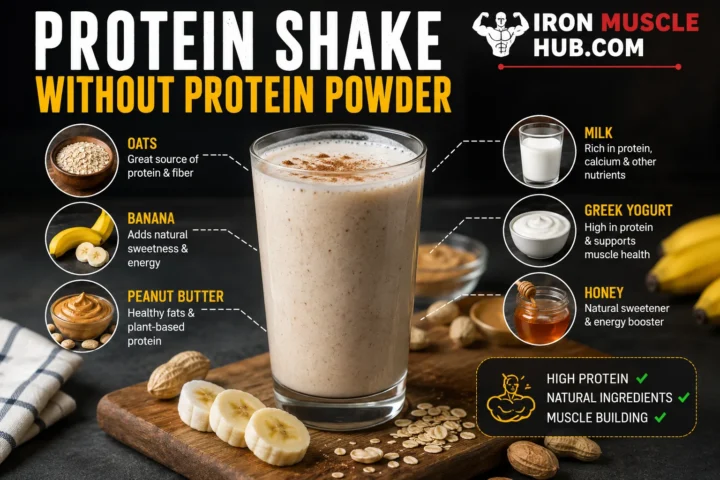
For more beginner-friendly nutrition guides, explore the related Iron Muscle Hub articles on protein breakfasts, foods for gaining muscle and protein shakes without protein powder.
Final Thoughts
Eating high protein and low calorie doesn’t mean living on tiny meals or cutting out entire food groups. A better approach is to make protein the anchor of your meals, add plenty of vegetables and fruit, choose sensible carbohydrate portions, and keep calorie-dense extras such as oils, sauces and spreads under control.
For people who lift, adequate protein can support muscle maintenance and training adaptations, while higher-volume, lower-energy-density foods can make calorie control easier. Research in resistance-trained adults suggests that going far beyond roughly 1.6 g/kg (0.73 g/lb) of protein per day doesn’t generally provide additional gains in fat-free mass.
The biggest win is consistency. Choose foods you enjoy, build balanced meals, train regularly, and avoid extreme restriction. A sustainable eating pattern will usually serve you better than trying to make every meal as low-calorie as possible. Mayo Clinic also emphasizes balanced, satisfying food choices rather than extreme restriction.