If you want to eat high protein low calorie, the basic strategy is simple: make a lean protein source the anchor of your meal, then add vegetables, fruit, or another filling food while keeping calorie-dense extras under control.
- Quick Answer
- What Does High Protein Low Calorie Actually Mean?
- The beginner's formula
- How Much Protein Should You Eat on a Low-Calorie Diet?
- Worked example: 70 kg / 154 lb
- What if you're dieting?
- Best High Protein Low Calorie Foods
- 1. Skinless Chicken Breast
- 2. White Fish
- 3. Shrimp
- 4. Tuna
- 5. Greek Yogurt and Skyr
- 6. Cottage Cheese
- 7. Egg Whites
- 8. Tofu and Edamame
- High Protein Low Calorie Meal-Building Table
- How to Build a High Protein Low Calorie Meal
- Step 1: Start With Protein
- Step 2: Add Volume
- Step 3: Add Carbohydrates Intelligently
- Step 4: Control Added Fats
- Mistake 1: Eating "High Protein" Without Watching Calories
- Mistake 2: Cutting Calories Too Hard
- Mistake 3: Eating Almost Nothing Except Protein
- Mistake 4: Forgetting Liquid Calories
- Mistake 5: Assuming More Protein Always Means More Muscle
- Mistake 6: Making Every Meal Boring
- Breakfast
- Lunch
- Dinner
- Fast meal
- Vegetarian option
- What foods are high in protein but low in calories?
- What is the best high protein low calorie food?
- How much protein should I eat on a low-calorie diet?
- Is high protein low calorie good for weight loss?
- Can I build muscle while eating low calorie?
For a beginner, the goal isn’t to eat as little as possible. It’s to get enough protein to support training and lean tissue while keeping your overall food intake appropriate for your goal. Research in resistance-trained adults suggests that around 1.6 g of protein per kg of body weight per day is a useful evidence-based reference point, although individual needs vary. For more insights read here:- how to grow muscle and how do you build muscle maas fast.
Quick Answer
- High protein low calorie means choosing foods that provide substantial protein without bringing a large amount of energy with them.
- Lean poultry, fish, seafood, low-fat dairy, egg whites and some soy foods can make it easier to build protein-heavy meals.
- For resistance-trained adults, around 1.6 g/kg/day is a useful reference point for maximizing the muscle-building benefit seen in research, but more isn’t automatically better.
- The easiest approach is to build meals around protein first, then add vegetables, fruit, carbohydrates and fats according to your calorie and training needs.
What Does High Protein Low Calorie Actually Mean?
High protein low calorie isn’t a fixed diet with one official calorie or protein limit. It’s a way of choosing foods and constructing meals so that protein takes up a useful share of your calories.
Think about two plates.
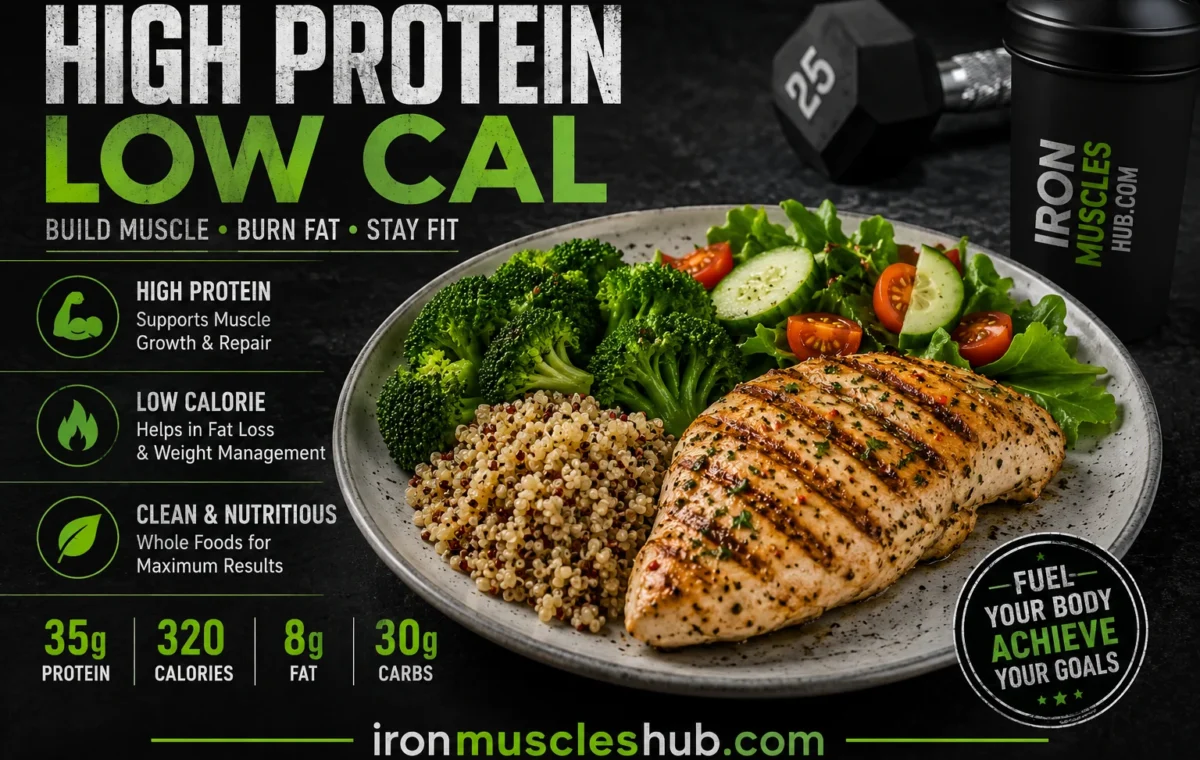
One might contain a large serving of lean chicken, vegetables and a measured carbohydrate source. The other might contain a smaller amount of protein covered in a calorie-heavy sauce with lots of cheese and oil.
Both meals can contain protein.
The difference is how much protein you get for the calories you spend.
That’s why looking only at grams of protein can be misleading. A food can be high in protein but also bring substantial calories from fat, sauces or added ingredients.
The beginner’s formula
Use this simple sequence:
- Pick a protein anchor.
- Add vegetables or fruit.
- Choose a carbohydrate based on your activity and goal.
- Add a sensible amount of fat.
- Measure calorie-dense extras when needed.
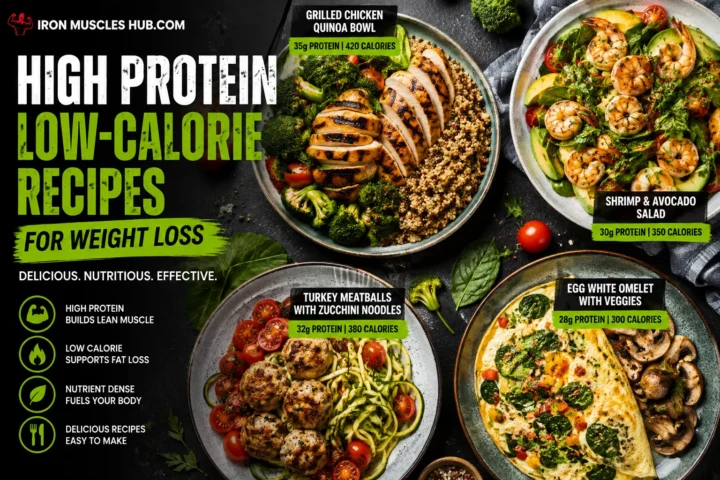
Good protein anchors include:
- Skinless chicken or turkey
- Tuna or other fish
- Shrimp and other seafood
- Egg whites and whole eggs
- Plain Greek yogurt or skyr
- Cottage cheese
- Tofu
- Tempeh
- Edamame
- Lentils and beans
Plant proteins can absolutely fit. Just remember that many plant foods bring carbohydrates and/or fats along with their protein, so the overall meal matters more than any single ingredient.
How Much Protein Should You Eat on a Low-Calorie Diet?
For people who lift weights, a practical evidence-based reference is about 1.6 g of protein per kg of body weight per day.
A systematic review and meta-analysis of resistance-training research found that protein intake above approximately 1.62 g/kg/day did not produce additional gains in fat-free mass in the analyzed data. Another systematic review found additional benefits around 1.6 g/kg/day or higher in younger adults doing resistance exercise.
That doesn’t mean 1.6 g/kg is a magic number.
Your ideal intake can vary with training status, body composition, calorie intake, age, preferences and medical circumstances.
Worked example: 70 kg / 154 lb
Suppose a beginner weighs 70 kg (154 lb).
Using 1.6 g/kg:
70 × 1.6 = 112 g protein per day
So, roughly 112 g/day would be an evidence-based reference target for this example.
You don’t have to hit exactly 112 g every day.
Think of it as a useful planning number rather than a pass/fail test.
If the same person weighs 90 kg (198 lb):
90 × 1.6 = 144 g protein/day
Again, that’s a planning example, not an individualized prescription.
What if you’re dieting?
Protein can become particularly important during energy restriction because maintaining lean tissue becomes harder as calories decrease.
Research in resistance-trained people has found benefits from higher protein intake during energy restriction, although the appropriate amount depends on the person and the severity of the deficit.
For that reason, I wouldn’t recommend simply cutting food as aggressively as possible.
A better beginner strategy is:
Moderate calorie reduction + resistance training + adequate protein + enough food variety.
Best High Protein Low Calorie Foods
The best choices aren’t necessarily the foods with the biggest protein number on the label.
Look for foods that make it easy to get meaningful protein while leaving room for vegetables, carbohydrates and healthy fats.
1. Skinless Chicken Breast
Chicken breast is one of the easiest foods to use as a meal foundation.
You can grill it, bake it, air-fry it, shred it into wraps or add it to rice and vegetable bowls.
The important point is portion control and preparation.
A lean chicken meal can become much more calorie-heavy if you add large amounts of oil, creamy sauces, cheese or mayonnaise.
Coach’s tip: Season aggressively with herbs, spices, garlic, paprika, pepper, lemon or vinegar instead of depending on heavy sauces.
2. White Fish
Cod, pollock and similar lean fish can be useful when you want a protein-centered meal without building the entire meal around meat.
Fish also gives you an easy way to add variety to your diet.
You don’t need to eat the same protein source every day.
3. Shrimp
Shrimp is another protein option that works particularly well in low-calorie meals.
Try it with:
- Stir-fried vegetables
- Salad
- Rice in a controlled portion
- Cauliflower rice
- Wraps
- Soup
The cooking method matters.
Deep-frying shrimp or coating it in a calorie-heavy sauce changes the overall meal considerably.
4. Tuna
Tuna is convenient because canned tuna requires very little preparation.
You can combine it with:
- Greek yogurt
- Mustard
- Cucumber
- Tomato
- Lettuce
- Whole-grain bread
- A measured amount of mayonnaise
If you’re eating canned fish regularly, pay attention to sodium and choose products that fit your dietary needs.
5. Greek Yogurt and Skyr
Plain Greek yogurt and skyr are particularly useful for beginners because they require almost no cooking.
Use them for:
- Breakfast
- Snacks
- Smoothies
- Yogurt bowls
- Dips
- Sauces
Add berries or another fruit for flavor.
Be careful with the toppings.
Granola, honey, nut butter and large portions of nuts can turn a relatively light yogurt bowl into a much more calorie-dense meal.
6. Cottage Cheese
Cottage cheese can be used in both sweet and savory meals.
Try it with fruit for a quick snack, or use it alongside eggs, vegetables or lean meat.
If you don’t like the texture, blending it can create a smoother consistency for sauces or bowls.
7. Egg Whites
Egg whites are useful when you want to increase protein without making eggs the entire meal.
You can combine egg whites with one or more whole eggs and add vegetables such as spinach, peppers, mushrooms or onions.
That gives you a much more complete meal than simply eating plain egg whites.
8. Tofu and Edamame
If you prefer plant-based foods, tofu and edamame can be excellent choices.
They’re especially useful because they can be combined with vegetables and a controlled amount of rice or noodles.
Don’t assume every plant-based meal is automatically low calorie, though.
Large quantities of oil, coconut milk, creamy sauces and nuts can increase calories quickly.
High Protein Low Calorie Meal-Building Table
Rather than giving you a rigid meal plan, here’s the framework I recommend for beginners.
| Meal component | Beginner choice | What to watch |
|---|---|---|
| Protein | Chicken, fish, shrimp, Greek yogurt, eggs, tofu | Choose a serving that fits your daily protein target |
| Vegetables | Broccoli, peppers, spinach, cucumber, salad greens | Keep preparation simple |
| Carbohydrate | Potatoes, rice, oats, fruit, whole grains | Portion according to your needs |
| Fat | Olive oil, nuts, seeds, avocado | Small portions can add substantial calories |
| Flavor | Herbs, spices, lemon, vinegar, mustard | Creamy sauces can change calories quickly |
| Convenience | Canned tuna, yogurt, cooked chicken, frozen vegetables | Check sodium and labels |
This is one of the biggest gaps in typical high-protein food lists: a list of foods isn’t enough.
You need to know how to combine them.
How to Build a High Protein Low Calorie Meal
Here’s the process I’d give a beginner in the gym.
Step 1: Start With Protein
Don’t start by asking, “What can I eat for the fewest calories?”
Start with:
“What protein source will I actually enjoy eating?”
Choose chicken, fish, seafood, dairy, eggs, tofu, tempeh or another protein source.
If you hate the food, you probably won’t stick with the plan.
Step 2: Add Volume
Now add vegetables or fruit.
This is where meals become more satisfying without requiring huge quantities of calorie-dense ingredients.
For example:
Chicken + vegetables + potatoes
is a very different meal from:
Chicken + creamy sauce + lots of cheese.
The first gives you a clear protein source, produce and carbohydrate.
The second can still be nutritious, but calories can rise much faster.
Step 3: Add Carbohydrates Intelligently
Carbohydrates aren’t the enemy.
If you’re training hard, carbohydrates can make meals more satisfying and support your training routine.
Good choices include:
- Potatoes
- Rice
- Oats
- Whole-grain bread
- Fruit
- Beans
- Lentils
- Whole-grain pasta
The amount depends on your total calorie needs and activity.
A beginner doesn’t need to remove carbohydrates simply because the goal is fat loss.
Step 4: Control Added Fats
This is where many “high protein low calorie” meals go wrong.
Olive oil is nutritious.
Nuts are nutritious.
Avocado can be nutritious.
Cheese can provide protein and calcium.
But nutritious doesn’t mean calorie-free.
If you’re trying to keep calories controlled, measure these ingredients instead of pouring or scooping them without thinking.
Common Mistakes → Why → Fix
Mistake 1: Eating “High Protein” Without Watching Calories
Why: A food can contain plenty of protein while also providing lots of calories.
Fix: Think about protein per calorie, not protein alone.
A meal doesn’t become low calorie just because it has chicken, eggs or protein powder in it.
Mistake 2: Cutting Calories Too Hard
Why: Very aggressive restriction can make training, recovery, hunger and adherence harder.
Research doesn’t show that extremely high-protein, very restrictive diets are automatically superior for long-term weight management. The USDA’s evidence review found that diets providing more than 35% of calories from protein were not more effective for long-term weight loss or maintenance than other approaches and could be harder to maintain.
Fix: Use a sustainable calorie deficit rather than trying to survive on as little food as possible.
Mistake 3: Eating Almost Nothing Except Protein
Why: Protein is important, but your diet also needs other nutrients.
Fix: Build meals around protein, then include vegetables or fruit and appropriate carbohydrate and fat sources.
A high-protein diet shouldn’t become a “chicken and protein shake” diet.
Mistake 4: Forgetting Liquid Calories
Why: Drinks can be easy to consume without feeling like you’ve eaten much.
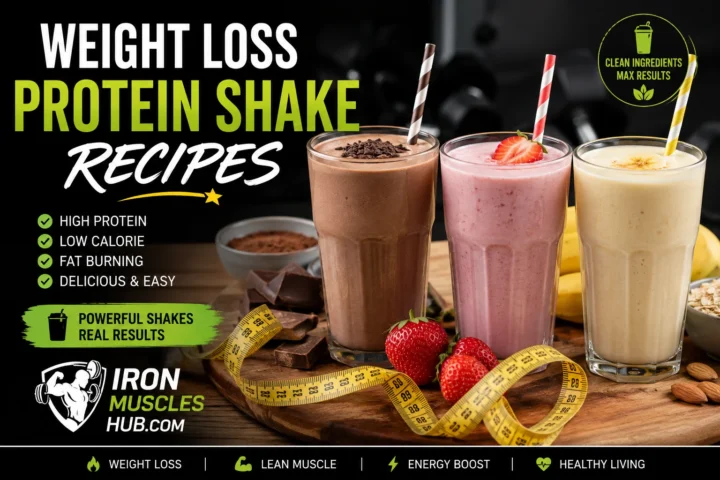
Sweetened coffee drinks, juices, large smoothies and other calorie-containing beverages can change your daily intake.
Fix: Keep most everyday drinks simple, such as water, unsweetened tea or other low-calorie choices that you enjoy.
Mistake 5: Assuming More Protein Always Means More Muscle
Why: Muscle growth doesn’t increase endlessly as protein intake rises.
The resistance-training literature suggests diminishing returns as daily protein intake rises, with around 1.6 g/kg/day appearing near the point where additional protein provided little extra benefit for fat-free-mass gains in one major meta-analysis.
Fix: Focus on adequate protein, progressive resistance training, sleep and a diet you can maintain.
Mistake 6: Making Every Meal Boring
Why: Bland food gets old.
Fix: Rotate seasonings and cooking methods.
Try:
- Mexican-style spices
- Curry spices
- Garlic and lemon
- Chili and lime
- Mustard and herbs
- Soy and ginger
- Tomato-based sauces
- Yogurt-based sauces
You don’t need to eat the same chicken-and-broccoli plate every day.
30-Second Self-Test: Is Your Meal Actually High Protein Low Calorie?
Before eating, ask yourself these four questions:
1. Where is the main protein?
If you can’t identify it, the meal probably isn’t protein-centered.
2. What makes the meal filling?
Look for vegetables, fruit, potatoes, whole grains, beans or another substantial food.
3. Where are the calorie-dense extras?
Check oil, butter, cheese, nuts, mayonnaise, creamy sauces and sugary toppings.
4. Will this meal help me reach my daily protein target?
If you’re using the 1.6 g/kg example, divide your approximate daily target across the meals you normally eat.
You don’t need perfect distribution.
The important thing is getting enough total protein consistently.
Research on protein distribution has explored roughly 0.4 g/kg per meal across at least four meals as one theoretical strategy for reaching 1.6 g/kg/day, but this shouldn’t be treated as a mandatory rule for every person.
High Protein Low Calorie Meals for Beginners
You don’t need complicated recipes.
Breakfast
Greek yogurt + berries + oats
Use plain Greek yogurt as the protein base. Add fruit and a measured portion of oats.
If you need more calories because you’re training hard, increase the carbohydrate portion rather than turning the meal into a pile of calorie-dense toppings.
Lunch
Chicken + potato + vegetables
Bake or grill the chicken.
Add potatoes and a large serving of vegetables.
Use herbs, spices and a light sauce for flavor.
Dinner
White fish + rice + vegetables
Cook the fish with lemon, garlic and herbs.
Add rice according to your needs and finish the plate with vegetables.
Fast meal
Tuna + salad + whole-grain bread
This is useful when you don’t have time to cook.
Use tuna as the protein anchor, then add salad vegetables and a controlled portion of bread.
Vegetarian option
Tofu + edamame + vegetables + rice
This provides a plant-based protein foundation while still giving you carbohydrate and vegetables.
Who Is This Approach NOT For?
A high-protein, low-calorie approach isn’t automatically appropriate for everyone.
You should get professional nutrition or medical guidance if you have a medical condition affecting your diet, particularly kidney disease, or if you’ve been told by a healthcare professional to follow a specific dietary plan.
It also isn’t a good idea to use this approach as an excuse to eat as little as possible.
If you’re under 18, pregnant, recovering from an eating disorder, or dealing with another condition requiring individualized nutrition care, speak with an appropriate healthcare professional rather than following a generic internet diet.
FAQ
What foods are high in protein but low in calories?
Lean poultry, many types of fish and seafood, egg whites, low-fat Greek yogurt or skyr, cottage cheese and some soy foods are common choices. The exact calorie and protein content depends on the product, preparation and serving size. For that reason, check the nutrition label when you’re tracking intake rather than assuming every version of a food has identical numbers.
What is the best high protein low calorie food?
There isn’t one universal winner. Your best choice is a food that provides substantial protein, fits your calorie target and is something you can eat consistently. Chicken, fish, shrimp, Greek yogurt, egg whites, cottage cheese, tofu and tuna are all practical options. Variety is useful because it makes the diet easier to follow and gives you different nutrients and flavors.
How much protein should I eat on a low-calorie diet?
For resistance-trained adults, around 1.6 g/kg/day is a useful evidence-based reference. For example, a 70 kg (154 lb) person would calculate 70 × 1.6 = 112 g/day. That isn’t a personalized prescription. Protein needs can differ with body composition, training, age, calorie restriction and health status.
Is high protein low calorie good for weight loss?
It can be a useful way to structure meals because it makes protein easier to prioritize while keeping overall calories controlled. However, high protein alone doesn’t guarantee fat loss. Your overall energy intake, activity, food choices and ability to maintain the approach over time matter. Research also doesn’t support the idea that simply pushing protein extremely high makes every diet better.
Can I build muscle while eating low calorie?
It depends on the person and situation. Resistance training plus adequate protein can help preserve lean mass during calorie restriction, and some people can gain muscle while losing fat, particularly when training status and starting body composition allow it. However, a calorie deficit isn’t the easiest environment for maximizing muscle growth. Your goal should determine how aggressive your calorie intake is.
A Simple High Protein Low Calorie Strategy
You don’t need a complicated diet spreadsheet to get started.
Pick three or four protein sources you enjoy.
For example:
- Chicken
- Greek yogurt
- Eggs
- Fish
Then pick several vegetables and fruits you actually like.
Add carbohydrates such as potatoes, rice, oats, bread or beans according to your activity and calorie needs.
Finally, pay attention to calorie-dense extras.
That’s it.
The biggest improvement most beginners can make isn’t finding a magical food. It’s learning to construct meals that are protein-centered, filling, enjoyable and appropriate for their overall calorie intake.
If you lift weights, keep resistance training in the plan. Protein works alongside training; it doesn’t replace it. Research consistently supports the combination of adequate protein and resistance exercise for supporting lean mass.
You also don’t need to chase extremely high protein numbers. Around 1.6 g/kg/day is a useful evidence-based starting reference for many resistance-trained adults, while individual circumstances can change the target.
Start with meals you can repeat.
That’s usually a better strategy than trying to follow a perfect diet for a week and abandoning it when life gets busy.