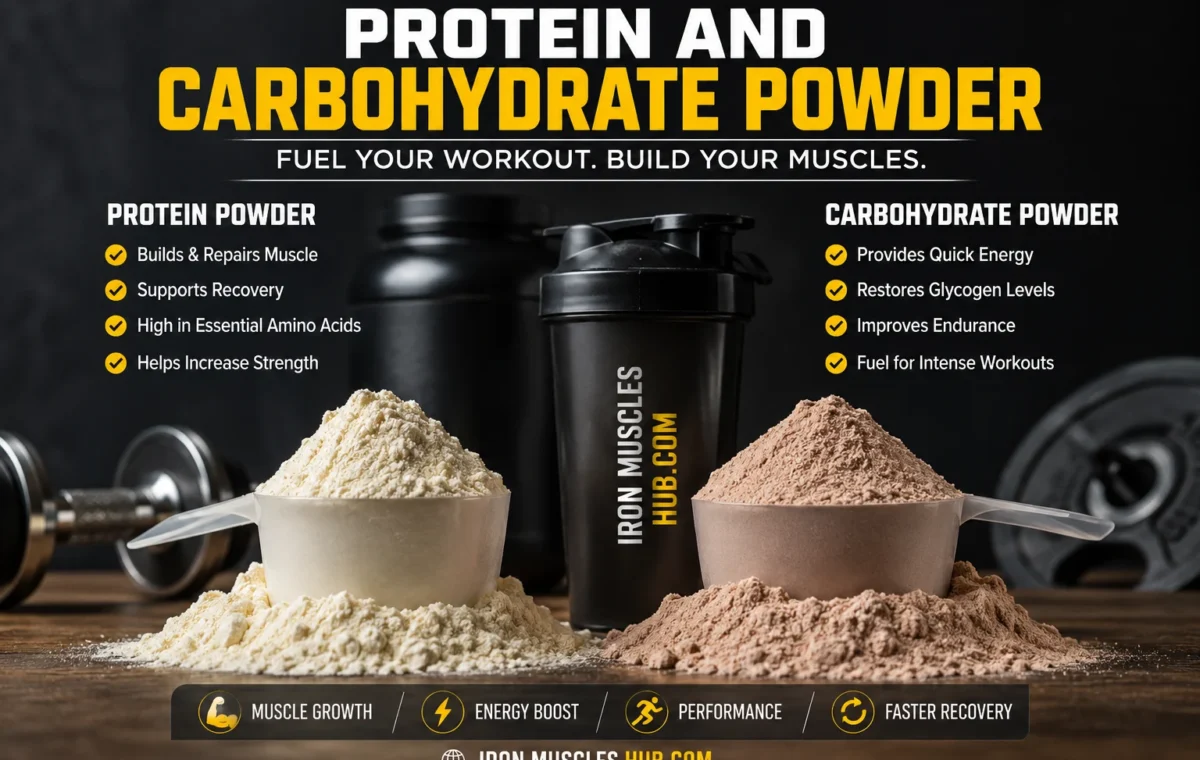
If you’re wondering what protein and carbohydrate powder actually does, think of it as a convenient way to add two major nutrients to your diet: protein for muscle repair and growth, and carbohydrate for energy and glycogen replacement. It can be useful when normal meals aren’t practical or when your training demands more food.
- Quick Answer
- What Is Protein and Carbohydrate Powder?
- What does the protein do?
- What do the carbohydrates do?
- 1. You struggle to eat enough food
- 2. You have a poor appetite after training
- 3. You have demanding training sessions
- 4. You need a convenient post-workout meal
- 5. You simply prefer liquid nutrition
- Worked example: 70 kg / 154 lb beginner
- Step 1: Check protein
- Step 2: Check calories
- Step 3: Check training
- Step 4: Check digestion
- Before training
- After training
- Between meals
- During long endurance sessions
- A better muscle-gain hierarchy
- Mistake 1: Taking a huge serving immediately
- Mistake 2: Choosing the highest calorie product
- Mistake 3: Ignoring the nutrition label
- Mistake 4: Treating the shake as a meal replacement every day
- Mistake 5: Taking it because you heard you need it immediately after lifting
- Mistake 6: Forgetting carbohydrates during a bulk
- Mistake 7: Assuming every powder is suitable for everyone
- 1. Protein amount
- 2. Carbohydrate amount
- 3. Calories
- 4. Sugar
- 5. Ingredient list
- 6. Third-party testing
- Protein sources
- Carbohydrate sources
- What is protein and carbohydrate powder used for?
- Is protein and carb powder good for gaining muscle?
- When should I take protein and carbohydrate powder?
- Is protein powder better than protein and carbohydrate powder?
- How much protein do I need for muscle growth?
But you don’t automatically need a protein-and-carb powder just because you lift weights. Your total daily food intake matters more than the supplement itself. For most beginners, the smartest approach is to first build a solid diet, then use a powder to fill a genuine nutrition gap. For more insights read here :- how to build muscle and how to grow muscle .
Quick Answer
- Protein and carbohydrate powder combines protein and carbs in one drink, often providing substantially more calories than ordinary whey protein.
- It’s most useful when you need convenient calories, protein, or carbohydrate around demanding training.
- If you already eat enough calories and protein, a carb-protein powder may add little benefit.
- For muscle gain, daily protein intake and progressive resistance training are more important than supplement timing.
What Is Protein and Carbohydrate Powder?
Protein and carbohydrate powder is a powdered supplement that supplies both protein and carbohydrates, usually in a drink mixed with water or milk.
The exact formula varies considerably between products. Some are relatively balanced, while mass-gainer products can contain much larger amounts of carbohydrates and calories. Others are designed primarily for recovery after prolonged endurance exercise and may contain a more controlled combination of protein and carbohydrate.
The important point is that “protein and carbohydrate powder” isn’t one standardized formula.
Two tubs can both use the same description while providing very different amounts of protein, carbohydrate, fat, sugar and calories.
What does the protein do?
Protein supplies amino acids that your body uses to build and repair tissues, including skeletal muscle.
Resistance training stimulates muscle protein synthesis, and consuming adequate protein provides the amino acids needed to support that process. Research involving resistance training has found that protein supplementation can modestly increase gains in muscle size and strength, particularly when it helps someone achieve adequate total protein intake.
For exercising adults, an often-used evidence-based range is approximately 1.4–2.0 g of protein per kg of body weight per day.
For example:
- 60 kg = about 132 lb
- 70 kg = about 154 lb
- 80 kg = about 176 lb
- 90 kg = about 198 lb
A 70 kg (154 lb) beginner using 1.6 g/kg would get:
70 × 1.6 = 112 g protein per day
That’s your approximate daily target from food and supplements combined—not 112 g from powder.
Research has also found diminishing returns for resistance-training-related lean mass gains as total protein intake rises above roughly 1.6 g/kg/day in the studied populations. That doesn’t mean higher protein is automatically harmful or useless; it means simply adding more protein isn’t guaranteed to produce more muscle.
What do the carbohydrates do?
Carbohydrates primarily provide fuel.
Your body stores carbohydrate as glycogen in muscle and liver. Training uses some of those stores, with the amount depending on exercise type, duration and intensity.
For athletes and active people, carbohydrate requirements can vary widely. ACSM material gives a general range of around 3–5 g/kg/day for athletes in some situations, while research specifically examining resistance training notes that carbohydrate requirements are less clearly established than they are for endurance exercise.
That distinction matters.
A beginner doing a 45-minute weight session doesn’t necessarily need a huge carbohydrate shake. Someone training hard for long periods, training twice in a day, or struggling to consume enough food may have a much better reason to use one.
Protein Powder vs Protein and Carbohydrate Powder
The easiest way to understand these supplements is to look at what problem you’re trying to solve.
| Feature | Protein Powder | Protein + Carb Powder | High-Calorie Mass Gainer |
|---|---|---|---|
| Main purpose | Increase protein | Add protein + carbs | Add substantial calories |
| Protein | Usually high relative to calories | Moderate to high | Moderate to high |
| Carbohydrates | Usually low/moderate | Moderate/high | Often high |
| Calories | Usually relatively low | Moderate/high | Often very high |
| Best use | Protein gap | Protein + energy gap | Difficulty eating enough calories |
| Beginner-friendly? | Yes | Yes, if needed | Yes, but portions matter |
| Main concern | Unnecessary if protein already adequate | Extra calories you may not need | Easy to overshoot calories |
The exact nutrition depends on the product, so always compare the nutrition label rather than choosing based on the name printed on the front.
For example, current products marketed as protein-and-carbohydrate or mass-gainer supplements can vary from relatively moderate formulations to very calorie-dense servings.
Who Should Consider Protein and Carbohydrate Powder?
A protein-and-carb powder can make sense in several situations.
1. You struggle to eat enough food
This is probably the clearest use case.
Suppose you weigh 75 kg (165 lb), train four days per week and want to gain weight, but you regularly finish the day without eating enough.
A convenient shake can help you close the gap.
The powder isn’t magically creating muscle. It’s simply making it easier to consume the nutrients and calories your body needs.
2. You have a poor appetite after training
Some people don’t want a large meal immediately after exercise.
A liquid shake can be easier to consume than a plate of rice, meat and vegetables.
You can then have a normal meal later.
3. You have demanding training sessions
Carbohydrates become more useful as training volume and intensity increase.
Someone doing long endurance sessions or multiple daily sessions has a stronger case for deliberately planning carbohydrate replacement than someone doing three short beginner gym sessions per week. Research on recovery shows that carbohydrate is particularly important for restoring glycogen after demanding exercise.
4. You need a convenient post-workout meal
A protein-and-carb shake can be useful when you finish training and can’t get a proper meal for a while.
Protein contributes amino acids for muscle protein synthesis, while carbohydrate contributes to replenishing energy stores.
That combination can be especially useful during short recovery windows between demanding sessions.
5. You simply prefer liquid nutrition
Convenience is a legitimate reason.
You don’t need a complicated supplement strategy if a simple shake makes it easier to stick to your nutrition plan.
Who Doesn’t Need Protein and Carbohydrate Powder?
You probably don’t need it if you:
- Eat enough calories from normal food.
- Consistently reach your protein needs.
- Have enough carbohydrate in your diet for your training.
- Are gaining weight faster than intended.
- Already consume plenty of calories through meals and snacks.
- Expect the powder itself to create muscle without appropriate training.
A supplement should solve a problem.
If there’s no nutritional problem, adding another source of calories isn’t automatically an advantage.
How Much Protein and Carbohydrate Do You Need?
There isn’t one universal serving size for everyone.
Your needs depend on body weight, training, goals, total food intake and how much recovery time you have.
For protein, a practical starting point for many exercising adults is around 1.4–2.0 g/kg/day, with approximately 1.6 g/kg/day being a useful reference point for resistance-training goals.
Worked example: 70 kg / 154 lb beginner
Let’s say you’re:
- 70 kg (154 lb)
- Lifting 3–4 times per week
- Trying to build muscle
- Eating roughly 2,400 calories per day
- Getting about 85 g protein from food
At 1.6 g/kg:
70 × 1.6 = 112 g protein/day
You’re approximately:
112 − 85 = 27 g short
A serving of protein powder providing around 20–30 g protein could therefore be practical.
But here’s the important part:
You don’t necessarily need a protein-and-carbohydrate powder.
If your meals already provide enough carbohydrate, ordinary protein powder may solve the actual problem more efficiently.
That’s why the first question shouldn’t be:
“Which gainer should I buy?”
It should be:
“What nutrient am I actually missing?”
A Simple 30-Second Decision Rule
Use this quick test before buying a protein-and-carb powder.
Step 1: Check protein
Can you consistently reach roughly 1.4–2.0 g/kg/day through normal food and/or protein supplements?
- Yes: Go to Step 2.
- No: A protein powder may be more useful than a high-carb gainer.
Step 2: Check calories
Are you eating enough calories for your current goal?
- Yes: You probably don’t need a high-calorie powder.
- No: A calorie-containing protein-and-carb product could be useful.
Step 3: Check training
Are you doing long, demanding or frequent training sessions?
- Yes: Carbohydrate becomes more relevant for fueling and recovery.
- No: You may be able to get everything you need from normal meals.
Step 4: Check digestion
Does a large shake cause bloating, stomach discomfort or diarrhea?
- Yes: Reduce the serving, change the product, or use whole-food meals.
- No: The supplement may be convenient for you.
This simple decision rule is one of the most useful ways to avoid buying a supplement you don’t actually need.
When Should You Take Protein and Carbohydrate Powder?
There’s no single magical minute when the powder suddenly starts working.
For resistance training, the bigger priority is total daily protein and energy intake.
Protein can be consumed before or after training, and the anabolic effect of resistance exercise lasts well beyond the workout itself. Evidence supports distributing protein across the day rather than obsessing over a tiny post-workout window.
Before training
A protein-and-carb drink can be useful before training if:
- You haven’t eaten for several hours.
- You need convenient carbohydrate.
- You tolerate liquid nutrition well.
- Your training session is demanding.
Don’t force a huge shake immediately before heavy squats or deadlifts if it makes your stomach uncomfortable.
After training
Post-workout is a practical time to use it because you’re often trying to replace nutrients used during exercise.
Research indicates that protein after resistance exercise supports muscle protein balance, while carbohydrate is particularly relevant to glycogen restoration when training demands are high.
Between meals
This can be particularly useful for people trying to gain weight.
Instead of forcing a massive meal, a shake between breakfast and lunch—or lunch and dinner—can increase total daily intake.
During long endurance sessions
This is a different situation.
For prolonged endurance exercise, carbohydrate intake during training can become important. ACSM material cites 30–60 g carbohydrate per hour during prolonged exercise, with higher amounts sometimes used for sessions lasting more than two hours.
A normal protein-and-carb mass gainer isn’t automatically the ideal intra-workout product, though. The formulation, concentration, digestion and carbohydrate type matter.
Protein and Carbohydrate Powder for Muscle Gain
If your goal is muscle gain, don’t confuse weight gain with muscle gain.
A high-calorie powder can make the number on the scale rise because you’re consuming more energy.
It doesn’t guarantee that all of that weight is new muscle.
Muscle growth depends on appropriate resistance training, adequate protein, sufficient energy, recovery and time.
Protein supplementation can help resistance-training adaptations when it improves total protein intake, but research doesn’t support the idea that simply consuming increasingly large amounts of protein will continuously increase muscle growth.
A better muscle-gain hierarchy
Think about your priorities in this order:
- Consistent resistance training
- Enough total calories
- Adequate daily protein
- Enough carbohydrate to support training
- Good sleep and recovery
- Supplements for convenience
The powder belongs near the bottom of the list.
That’s not an insult to supplements. It’s how you use them intelligently.
Common Mistakes → Why → Fix
Mistake 1: Taking a huge serving immediately
Why:
Many mass gainers contain a lot of calories in a single serving. Jumping straight into the full serving can cause bloating and may push your daily calorie intake much higher than intended.
Fix:
Start with a smaller portion and assess digestion and your overall calorie intake.
Mistake 2: Choosing the highest calorie product
Why:
More calories aren’t automatically better.
If you’re already eating enough, a very high-calorie shake can simply make it easier to overshoot your needs.
Fix:
Choose the smallest serving that solves your actual nutritional problem.
Mistake 3: Ignoring the nutrition label
Why:
“Mass gainer,” “lean mass,” “recovery,” and “protein-carb blend” don’t tell you the complete nutritional picture.
Two products can have very different protein, carbohydrate, sugar, fat and calorie contents.
Fix:
Compare protein, carbohydrate, calories, serving size and ingredients.
Mistake 4: Treating the shake as a meal replacement every day
Why:
Powder can be convenient, but whole foods provide a broader range of nutrients and can contribute fiber, vitamins, minerals and food variety.
Fix:
Use the powder to supplement your diet rather than automatically replacing every meal.
Mistake 5: Taking it because you heard you need it immediately after lifting
Why:
The post-workout period matters, but muscle protein synthesis isn’t controlled by a tiny one-hour timer.
Total daily protein and energy intake are major priorities.
Fix:
Think about the whole day first. Use the shake after training because it’s convenient—not because you believe missing a 30-minute window will ruin your workout.
Mistake 6: Forgetting carbohydrates during a bulk
Why:
Some lifters become so focused on protein that they neglect carbohydrates.
Carbohydrates can help supply training fuel and spare protein from being used as an energy source. ACSM notes the importance of adequate carbohydrate intake for active people.
Fix:
Build meals around useful carbohydrate sources such as rice, potatoes, oats, bread, pasta, fruit and other carbohydrate-rich foods that fit your diet.
Mistake 7: Assuming every powder is suitable for everyone
Why:
Protein and carbohydrate products can contain milk, soy, gluten-containing ingredients, sweeteners or other ingredients that some people don’t tolerate.
Fix:
Read the complete ingredient and allergen information before using a product.
How to Choose a Protein and Carbohydrate Powder
You don’t need a complicated supplement checklist.
Focus on these factors.
1. Protein amount
Look at the actual protein per serving.
Don’t judge quality from the word “protein” printed on the front.
For a basic shake, knowing how much protein you’re getting allows you to fit it into your daily target.
2. Carbohydrate amount
Look at total carbohydrate.
If you’re trying to gain weight and struggle to eat enough, a higher-carb product may be useful.
If you’re already eating enough calories, a lower-carb protein powder may make more sense.
3. Calories
This is one of the most important numbers.
A powder providing 150 calories and one providing 700 calories aren’t interchangeable simply because both contain protein.
Your calorie target determines which one makes sense.
4. Sugar
Don’t automatically treat all sugar as bad.
Carbohydrate powders can intentionally contain rapidly digested carbohydrates for particular training situations.
But if you’re using a shake simply to increase daily protein, you probably don’t need a product loaded with added sugars.
Look at the whole nutritional profile.
5. Ingredient list
Keep it simple.
You don’t need a supplement containing a long list of trendy ingredients simply because the label looks impressive.
A product that clearly tells you its protein, carbohydrate and calorie content is easier to manage.
6. Third-party testing
Supplement quality can vary between markets and manufacturers.
Third-party testing can reduce the risk of inaccurate labeling or contamination, although certification isn’t a guarantee that a product is appropriate for your individual needs.
Recent research reviewing supplement safety has highlighted differences in regulation and the value of third-party testing as a risk-reduction measure.
Can You Make Your Own Protein and Carbohydrate Shake?
Absolutely.
You don’t have to buy a specialized powder containing both nutrients.
For example, a homemade shake could combine:
- Milk or a suitable milk alternative
- Greek yogurt
- Oats
- Banana
- Peanut butter
- Whey or another protein source
This gives you control over the ingredients and portion sizes.
It can also be cheaper depending on where you live.
The advantage of a commercial powder is mainly convenience and predictable nutrition.
Protein and Carbohydrate Powder vs Whole Foods
Whole foods should usually form the foundation of your diet.
Examples include:
Protein sources
- Chicken
- Eggs
- Fish
- Greek yogurt
- Milk
- Lean meat
- Tofu
- Beans
- Lentils
- Soy foods
Carbohydrate sources
- Rice
- Potatoes
- Oats
- Pasta
- Bread
- Fruit
- Beans
- Whole grains
A powder simply makes certain nutrients easier to consume.
Research also indicates that active people can meet protein needs through whole foods, with supplementation being a practical option when convenience or adequate intake is an issue.
Is Protein and Carbohydrate Powder Safe?
For healthy adults, protein and carbohydrate powders can be used as part of an appropriate diet, but “safe” doesn’t mean every product is suitable for every person.
Potential problems include:
- Digestive discomfort
- Excessive calorie intake
- Allergic reactions
- Lactose intolerance
- Poor-quality or contaminated products
- Unwanted ingredients
- Excessive reliance on supplements instead of food
People with kidney disease or other medical conditions may have different protein or dietary requirements. Mayo Clinic specifically notes that people with kidney disease may need to limit protein and should discuss their needs with a healthcare professional.
If you have a medical condition, take medication, are pregnant, or have been advised to follow a medically restricted diet, speak with your doctor or registered dietitian before using a high-protein or high-calorie supplement.
Who This Is NOT For
A protein-and-carbohydrate powder probably isn’t the right first choice if:
- You’re already gaining weight faster than intended.
- Your daily protein intake is already adequate.
- You have no trouble eating enough food.
- You dislike liquid calories.
- Large shakes upset your stomach.
- You’re buying it because you think supplements are required for muscle growth.
- You have a medical condition requiring specific dietary restrictions without professional guidance.
In those situations, adding more powder may make your nutrition harder—not easier—to manage.
FAQ: Protein and Carbohydrate Powder
What is protein and carbohydrate powder used for?
Protein and carbohydrate powder is primarily used to conveniently increase protein and carbohydrate intake. Protein supplies amino acids used for muscle repair and adaptation, while carbohydrate supplies energy and can help replenish glycogen after demanding exercise. It’s particularly useful when normal meals aren’t practical or when someone struggles to consume enough food. It isn’t required for muscle growth, and your overall diet and training remain more important.
Is protein and carb powder good for gaining muscle?
It can be useful for gaining muscle if it helps you consistently consume enough protein and calories to support resistance training. However, the powder itself doesn’t guarantee muscle growth. Research suggests protein supplementation can enhance resistance-training gains, especially when it helps increase total protein intake, with diminishing returns around 1.6 g/kg/day in the available meta-analysis. Progressive training, adequate nutrition and recovery still provide the foundation.
When should I take protein and carbohydrate powder?
You can take it before training, after training or between meals depending on your nutrition needs. After exercise is a convenient time because protein supports muscle protein synthesis and carbohydrate can help replace glycogen after demanding sessions. You don’t need to obsess over a tiny post-workout window, though. Consistently meeting your daily protein and energy needs is more important.
Is protein powder better than protein and carbohydrate powder?
Neither is automatically better. Protein powder is usually more appropriate when you mainly need additional protein without many calories. Protein-and-carb powder makes more sense when you need both protein and additional carbohydrate or calories. If you’re already eating enough carbohydrates and calories, a simpler protein powder may be the better fit. Check the nutrition label rather than choosing based on the product name.
How much protein do I need for muscle growth?
A practical evidence-based range for exercising adults is approximately 1.4–2.0 g/kg/day, or about 0.64–0.91 g/lb/day. For example, a 70 kg (154 lb) lifter would be around 98–140 g protein per day across that range. A commonly useful middle point is approximately 1.6 g/kg/day, or 112 g for a 70 kg person. Your individual needs can vary.
Final Takeaway
Protein and carbohydrate powder is a convenience tool, not a shortcut to muscle growth. Protein helps provide the amino acids needed for muscle adaptation, while carbohydrate supplies useful training fuel and supports glycogen replacement. The right product depends on what your diet is missing.
For most beginners, start with your normal meals. Work out your approximate protein and calorie needs, then use a powder only where it makes eating those nutrients easier. If you need mostly protein, a standard protein powder may be enough. If you’re genuinely struggling to consume enough calories and carbohydrate, a protein-and-carb product can be more useful. Keep portions sensible, read the label, and let your training and overall diet do most of the work.
For Iron Muscle Hub, the best next step is to compare your daily food intake against your goal before adding a supplement. That approach keeps your nutrition simple, measurable and easier to adjust.