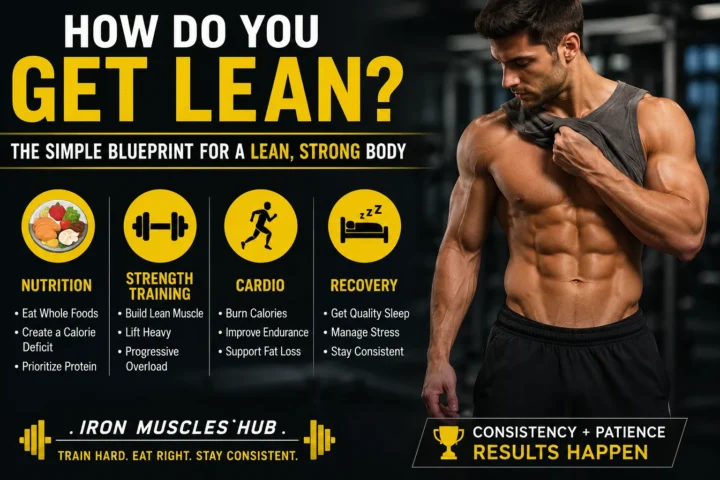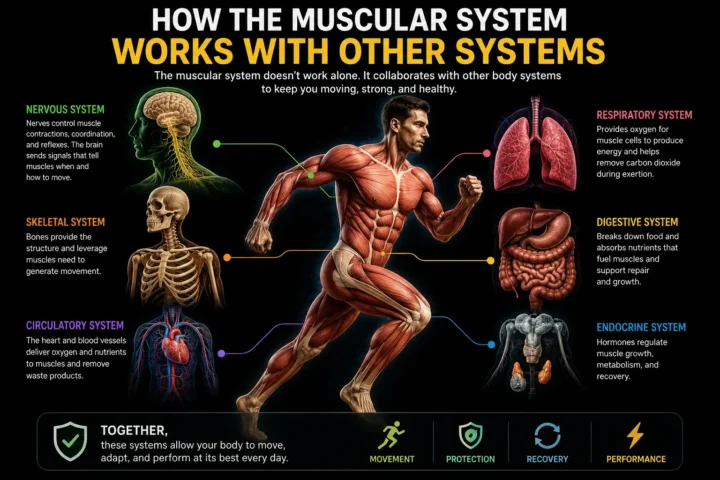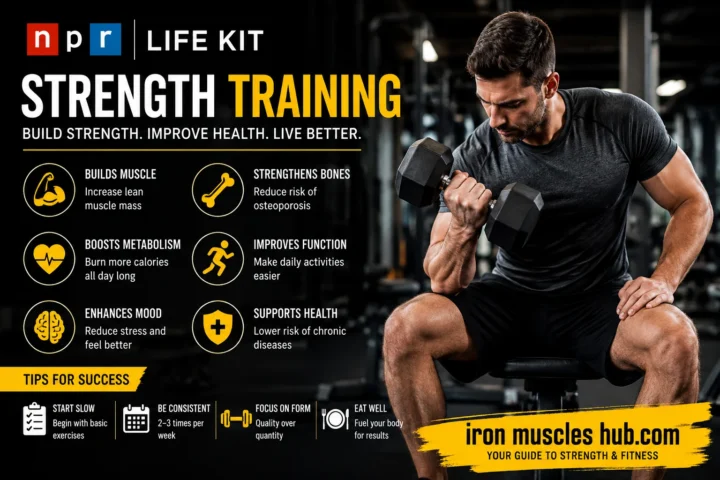
If you’re searching for guys that workout, you may simply want to understand what a sensible training routine looks like for men who go to the gym. The answer is simpler than social media makes it seem: train the major muscle groups, start with manageable resistance, practise good technique, and gradually make your workouts harder.
- What Does “Guys That Workout” Actually Mean?
- Why Do Guys Work Out?
- Does Working Out Mean You Have to Get Huge?
- A Simple Workout Structure for Guys That Workout
- Beginner Full-Body Example
- How Heavy Should You Lift?
- How Often Should Guys Work Out?
- Worked Example: A Beginner Starting at 80 kg / 176 lb
- How Guys That Workout Should Progress
- Guys That Workout Don't Need to Copy Advanced Lifters
- Common Beginner Comparison
- Common Mistakes → Why → Fix
- 1. Lifting Too Heavy
- 2. Changing Programs Every Week
- 3. Training Only Chest and Arms
- 4. Ignoring Recovery
- 5. Chasing Soreness
- 6. Ignoring Cardiovascular Fitness
- 7. Treating the Gym Like a Competition
- A 30-Second Self-Test for Beginners
- What Should Guys That Workout Eat?
- Do Guys That Workout Need Protein Shakes?
- How Long Should a Workout Last?
- What About Guys That Workout at Home?
- Who This Is NOT For
- Do Guys Who Work Out Have to Be Muscular?
- Can Guys That Workout Train Every Day?
- Guys That Workout and Social Pressure
- A Better Gym Mindset
- 5 PAA-Style Questions Beginners Ask About Guys That Workout
- Do girls like guys that workout?
- What workouts should guys do to build muscle?
- How many days a week should guys workout?
- Should guys workout every day?
- What should guys eat after a workout?
- A Simple 4-Week Starting Framework
- Week 1: Learn
- Week 2: Repeat
- Week 3: Progress
- Week 4: Review
- The Biggest Lesson for Guys That Workout
- Final Takeaway
You don’t need to spend two hours in the gym, copy an advanced bodybuilder, or lift the heaviest weight in the room. A consistent beginner can make solid progress with a straightforward resistance-training routine performed a few times each week. The American College of Sports Medicine recommends resistance training that challenges the major muscle groups and progresses over time. For more insights read here :- Protein Breakfast and Foods to Eat to Gain Muscle .
What Does “Guys That Workout” Actually Mean?
Guys that workout are simply men who regularly participate in physical training. That can include weightlifting, resistance machines, bodyweight exercises, running, sports, cycling, swimming, or a combination of activities.
You don’t have to look muscular to count as someone who works out.
A beginner doing two full-body strength sessions each week is exercising. So is an experienced lifter training four days per week. The difference is training experience, goals, exercise selection, and workload—not whether one person is a “real” gym-goer.
For general health, adults are advised to perform muscle-strengthening activities on at least 2 days per week, alongside regular aerobic activity. The federal Physical Activity Guidelines also recommend gradually increasing activity rather than jumping immediately into a demanding routine.
Why Do Guys Work Out?
Men train for many different reasons:
- Build strength
- Increase or maintain muscle
- Improve general fitness
- Support bone and connective-tissue health
- Improve physical performance
- Develop better movement skills
- Manage body weight
- Enjoy a structured hobby
- Feel more capable during everyday activities
There isn’t one correct reason to exercise.
A beginner might start because he wants to become stronger. Six months later, his main reason might be better fitness or simply enjoying his training routine.
That’s perfectly normal.
Does Working Out Mean You Have to Get Huge?
No.
Resistance training can be used for different outcomes depending on exercise selection, workload, nutrition, recovery, and progression.
Someone can train primarily for strength. Another person can focus on general fitness. Someone else may want to build muscle while maintaining their current body weight.
The key is matching the training plan to the goal.
A Simple Workout Structure for Guys That Workout
For beginners, I prefer a simple structure rather than a complicated body-part split.
A practical full-body session can contain:
- Squat or leg movement
- Hip-hinge movement
- Horizontal push
- Horizontal or vertical pull
- Shoulder movement
- Core exercise
- Optional cardiovascular work
This gives you a way to train the major movement patterns without needing a huge exercise list.
ACSM’s resistance-training guidance describes a general approach using 8–10 multi-joint exercises, 2–3 sets of 8–12 repetitions, and training 2–3 times per week for general fitness.
That doesn’t mean every beginner must follow those exact numbers. Your starting point should depend on experience, exercise technique, fitness level, available equipment, and recovery.
Beginner Full-Body Example
| Exercise | Sets | Reps | Beginner Focus |
|---|---|---|---|
| Goblet squat | 2 | 8–12 | Controlled depth |
| Romanian deadlift | 2 | 8–12 | Hip movement |
| Dumbbell bench press | 2 | 8–12 | Stable pressing |
| Lat pulldown | 2 | 8–12 | Controlled pulling |
| Dumbbell shoulder press | 2 | 8–12 | Smooth reps |
| Cable or machine row | 2 | 8–12 | Pull without swinging |
| Plank | 2 | 20–40 sec | Brace the trunk |
Performing this routine 2–3 days per week gives a beginner a simple starting framework. Leave adequate recovery between hard sessions for the same muscle groups.
Mayo Clinic guidance for strength training also recommends starting gradually, using controlled movements, training major muscle groups, and allowing recovery between sessions.
How Heavy Should You Lift?
Start with a weight you can control while maintaining good technique.
Your first workout isn’t a test of how much you can lift.
If you’re supposed to perform 10 repetitions but your technique breaks down at repetition six, the weight is probably too heavy for that set.
On the other hand, if you can perform 10 repetitions effortlessly and feel like you could have completed another 15, you may be ready for more resistance.
The goal is to find a challenging but manageable load.
How Often Should Guys Work Out?
For a beginner, 2–3 strength-training sessions per week is a practical starting range.
You don’t need to train seven days a week.
The U.S. Physical Activity Guidelines recommend muscle-strengthening activity on at least two days per week, while ACSM’s general resistance-training guidance describes 2–3 weekly sessions as a useful structure.
A simple schedule could look like this:
| Day | Activity |
| Monday | Full-body strength |
| Tuesday | Walking or rest |
| Wednesday | Full-body strength |
| Thursday | Walking or rest |
| Friday | Full-body strength |
| Saturday | Optional easy cardio |
| Sunday | Rest |
You could also train Monday and Thursday if three sessions don’t fit your schedule.
Consistency beats the perfect schedule.
A routine you can follow for months is more useful than an impressive program you abandon after two weeks.
Worked Example: A Beginner Starting at 80 kg / 176 lb
Imagine a beginner who weighs 80 kg (176 lb) and has never followed a structured resistance program.
Instead of immediately attempting heavy barbell lifts, he could begin with:
- Goblet squat: 12 kg / 26 lb
- Dumbbell bench press: 10 kg / 22 lb per hand
- Lat pulldown: 35 kg / 77 lb
- Romanian deadlift: 14 kg / 31 lb per hand
- Dumbbell shoulder press: 8 kg / 18 lb per hand
These aren’t prescribed weights. They’re an example of how to think about starting loads, because the correct resistance depends on the individual and the equipment.
Suppose he completes 2 sets of 10 repetitions with controlled technique.
The next session doesn’t need a dramatic jump.
He might repeat the same load and try to improve technique. Once the prescribed repetitions become comfortable, he can make a small increase.
That is a much better process than adding 10 kg / 22 lb simply because the person feels motivated.
How Guys That Workout Should Progress
Progressive overload doesn’t mean adding weight every single workout.
It means gradually increasing the challenge placed on your body.
You can progress by:
- Adding a small amount of weight
- Performing an additional repetition
- Adding a set when appropriate
- Improving technique
- Increasing range of motion
- Performing the same work with better control
- Reducing unnecessary rest only when appropriate
For beginners, adding a small amount of resistance after repeatedly completing the upper end of your target repetition range is a simple method.
For example:
Week 1: 10 kg / 22 lb × 8 reps
Week 2: 10 kg / 22 lb × 10 reps
Week 3: 10 kg / 22 lb × 12 reps
Week 4: 12 kg / 26 lb × 8 reps
That’s a basic example—not a rule that every lifter must follow.
The important part is that the increase remains manageable.
ACSM recommends progressively increasing the weight lifted as training becomes easier.
Guys That Workout Don’t Need to Copy Advanced Lifters
Walk into a busy gym and you’ll see people doing very different things.
One person may be squatting 140 kg / 309 lb.
Another may be learning a bodyweight squat.
Someone might use machines exclusively.
Another person might train with barbells.
None of those approaches automatically makes someone a better gym member.
Common Beginner Comparison
| Training Approach | Good For | Beginner Friendly? | Main Challenge |
| Full-body training | General fitness | Yes | Keeping sessions organised |
| Upper/lower split | Building a regular routine | Yes, after basics | Requires more weekly sessions |
| Push/pull/legs | Experienced lifters | Usually later | More scheduling |
| Machine-based training | Learning resistance exercise | Yes | Equipment availability |
| Bodyweight training | Home or minimal equipment | Yes | Progression can become harder |
| Sport-based training | Performance and enjoyment | Yes | Requires sport-specific planning |
For someone new to training, simple usually wins.
You don’t need to know every exercise variation before your first session.
Common Mistakes → Why → Fix
1. Lifting Too Heavy
Why: Beginners often compare themselves with experienced lifters.
Fix: Choose a resistance you can control. Build technique before chasing heavier numbers.
A heavy weight with poor technique isn’t a badge of honour.
2. Changing Programs Every Week
Why: Social media provides endless workout ideas.
Fix: Keep your basic exercises long enough to learn them and track progress.
If you change everything constantly, it’s harder to determine whether you’re actually improving.
3. Training Only Chest and Arms
Why: Chest and biceps are highly visible and popular gym targets.
Fix: Train your legs, back, shoulders, chest, arms, and core.
A balanced program gives you more complete physical development.
4. Ignoring Recovery
Why: More training can feel like more progress.
Fix: Give hard-trained muscles time to recover and avoid turning every session into an all-out test.
Mayo Clinic guidance recommends rest between strength-training sessions and warns against starting with excessive resistance or repetitions.
5. Chasing Soreness
Why: Beginners sometimes assume a workout only worked if they’re extremely sore afterward.
Fix: Judge your training by performance, technique, consistency, and progression—not soreness alone.
Some workouts produce significant soreness. Others don’t.
6. Ignoring Cardiovascular Fitness
Why: Some guys assume lifting weights is enough for every fitness goal.
Fix: Include appropriate aerobic activity as part of your overall routine.
The Physical Activity Guidelines recommend both aerobic activity and muscle-strengthening activity for adults.
7. Treating the Gym Like a Competition
Why: Comparing numbers can create pressure to lift beyond your current ability.
Fix: Compete mainly with your previous performance.
Your starting point doesn’t matter nearly as much as your ability to train consistently and safely.
A 30-Second Self-Test for Beginners
Before adding weight to an exercise, ask yourself four questions:
1. Can I control the movement?
2. Can I use a comfortable range of motion?
3. Can I maintain my technique through the set?
4. Could I repeat the movement without needing to compensate?
If the answer is no, don’t increase the load yet.
If the answer is yes, and the current resistance has become comfortable, a small progression may be reasonable.
This simple decision rule can prevent a common beginner problem: increasing weight faster than technique improves.
What Should Guys That Workout Eat?
Training and nutrition work together, but you don’t need an extreme diet to support exercise.
A beginner’s diet should generally provide enough overall food, protein, carbohydrates, fats, fluids, vitamins, and minerals to support their needs.
Protein-rich foods can include:
- Eggs
- Milk
- Greek yogurt
- Chicken
- Fish
- Lean meat
- Beans
- Lentils
- Tofu
- Cottage cheese
Carbohydrate sources such as oats, potatoes, rice, fruit, and whole grains can also provide useful fuel for training.
Don’t assume that a supplement is required simply because someone at the gym uses one.
Food quality, total intake, training consistency, and recovery habits matter far more than having a shelf full of products.
Do Guys That Workout Need Protein Shakes?
Not necessarily.
A protein shake is simply a convenient food product. It can help someone reach their protein intake when normal meals aren’t practical, but it’s not mandatory for getting stronger.
For example, someone might have:
Breakfast: eggs + oats + fruit
Lunch: chicken + rice + vegetables
Snack: Greek yogurt + fruit
Dinner: fish + potatoes + vegetables
Another person might use a protein shake after training because they’re travelling or don’t have time for a meal.
Both approaches can fit into a sensible diet.
Don’t confuse convenience with necessity.
How Long Should a Workout Last?
There’s no single perfect workout duration.
A beginner full-body session can often be relatively short if you avoid unnecessary exercises and long periods of distraction.
A practical session might include:
- 5–10 minutes of general warm-up
- 30–45 minutes of resistance training
- Optional cardiovascular work
Mayo Clinic material recommends warming up before strength exercises and beginning with manageable resistance.
You don’t need to spend 120 minutes in the gym just because someone else does.
If your workout is productive and fits your schedule, that’s a win.
What About Guys That Workout at Home?
You don’t need a commercial gym to begin resistance training.
Home options include:
- Bodyweight squats
- Push-ups
- Lunges
- Split squats
- Resistance-band rows
- Band presses
- Dumbbell exercises
- Adjustable kettlebells
- Core exercises
The main challenge is progression.
If your only exercise is bodyweight squats and they become extremely easy, you’ll eventually need a way to make the movement more challenging.
That could mean more repetitions, a harder variation, additional resistance, or a different exercise.
The equipment matters less than having a method for gradually increasing the challenge.
Who This Is NOT For
This beginner guide isn’t intended to replace medical or professional guidance for people with:
- A current injury
- Significant unexplained pain
- A medical condition affected by exercise
- Recent surgery
- Symptoms that worsen during exercise
- A history that requires exercise modification
If you’re unsure whether a particular form of exercise is appropriate for you, speak with a qualified healthcare professional or appropriately qualified exercise professional before beginning.
For healthy beginners, the general principle is simple: start gradually and build up.
Do Guys Who Work Out Have to Be Muscular?
No.
The phrase guys that workout covers a huge range of body types.
Someone may train for cardiovascular health without wanting substantial muscle growth.
Someone else may train for strength.
Another person may want to gain muscle.
A fourth person might exercise because lifting helps them stay active as they get older.
Fitness isn’t a single appearance.
Judging whether someone works out solely by looking at their body can also be misleading. Genetics, training history, body composition, age, sport, nutrition, and many other factors influence appearance.
Focus on what your training helps you do.
Can Guys That Workout Train Every Day?
They can be physically active every day, but that doesn’t mean they should perform hard resistance training for the same muscles every day.
A better approach is to manage training stress.
For example:
- Monday: Full-body strength
- Tuesday: Walking
- Wednesday: Full-body strength
- Thursday: Easy cardio
- Friday: Full-body strength
- Saturday: Recreational activity
- Sunday: Rest
This allows movement throughout the week without requiring seven hard lifting sessions.
Mayo Clinic guidance notes that recovery between strength-training sessions is important, while federal guidelines encourage a mix of aerobic and muscle-strengthening activity.
Guys That Workout and Social Pressure
There is another side to gym culture that beginners don’t always expect.
Some men feel pressure to appear strong before they’ve developed the strength.
They may compare their body with advanced lifters, worry about being judged, or feel embarrassed about using lighter weights.
Don’t let that stop you.
Every experienced lifter started somewhere.
You may also notice that gym culture varies widely. Some people train quietly with headphones. Others enjoy talking with training partners. Some gyms are highly social; others are more private.
You don’t need to adopt a particular personality to belong in a gym.
A Better Gym Mindset
Instead of asking:
“Do I look like I belong here?”
Ask:
“Did I complete today’s training better than I could before?”
That question gives you something useful to control.
5 PAA-Style Questions Beginners Ask About Guys That Workout
Do girls like guys that workout?
Some do, some don’t, and preferences vary considerably. Training can improve physical fitness and may change how you feel about your body, but there’s no universal body type that everyone finds attractive. Don’t start exercising with the expectation that a certain physique guarantees dating success. Build your fitness because it supports your health, confidence, performance, or personal goals.
What workouts should guys do to build muscle?
Beginners should start with a routine that trains the major muscle groups consistently. A practical full-body program can include a squat or leg movement, hip hinge, push, pull, shoulder movement, and core exercise. Start with manageable resistance and progress gradually. ACSM’s general resistance-training guidance uses multi-joint exercises, sets of repetitions, and progressive increases in training difficulty.
How many days a week should guys workout?
For general strength training, 2–3 days per week is a sensible beginner range. Federal guidelines recommend muscle-strengthening activity on at least two days per week. You can also perform aerobic activity on other days. The best schedule is one you can recover from and maintain consistently.
Should guys workout every day?
Not necessarily. You can be physically active every day, but hard resistance training places stress on muscles and other tissues. Beginners generally benefit from recovery days or easier activity between challenging sessions. Walking, mobility work, or light cardiovascular exercise can complement strength training without turning every day into a hard lifting session.
What should guys eat after a workout?
You don’t need a special post-workout food. A normal balanced meal containing protein and carbohydrate can fit well after training. Examples include chicken and rice, eggs and toast, yogurt with oats and fruit, or fish with potatoes. A protein shake can be convenient, but it isn’t required. Your overall diet matters more than obsessing over a single meal immediately after exercise.
A Simple 4-Week Starting Framework
If you’re completely new to structured training, keep your first month boring—in a good way.
Week 1: Learn
Focus on:
- Exercise technique
- Comfortable ranges of motion
- Consistent attendance
- Appropriate resistance
Don’t worry about impressive numbers.
Week 2: Repeat
Perform the same basic exercises.
Try to make each repetition more controlled.
Write down your weights and repetitions.
Week 3: Progress
If an exercise feels comfortable and your technique remains solid, consider a small increase in resistance or repetitions.
Don’t increase everything simultaneously.
Week 4: Review
Look at your training log.
Ask:
- Did I attend consistently?
- Did my technique improve?
- Did I increase any repetitions?
- Did I increase any weights?
- Do I feel recovered between sessions?
- Which exercises feel uncomfortable or confusing?
Use those answers to plan the next month.
The Biggest Lesson for Guys That Workout
The best beginner isn’t the person who lifts the most weight.
It’s the person who can train consistently without constantly getting hurt, changing programs, or comparing themselves with everyone else.
Start with manageable resistance.
Learn the movements.
Train the major muscle groups.
Record what you do.
Increase the challenge gradually.
Give yourself enough recovery.
Eat a normal, balanced diet.
Then repeat the process.
That’s how a beginner turns gym visits into a sustainable training habit.
Final Takeaway
Guys that workout don’t need a complicated system to get started. A beginner can build a strong foundation with 2–3 weekly resistance sessions, balanced exercises, controlled technique, gradual progression, and adequate recovery. ACSM and federal physical-activity guidance both support regular muscle-strengthening work as part of a healthy lifestyle.
Don’t judge your first month against someone else’s tenth year.
Your job is to learn the movements, establish consistency, and gradually become more capable. Keep your program simple enough to follow, challenging enough to matter, and flexible enough to fit your real life.