A high calorie protein shake for muscle gain can make it easier to eat enough energy and protein without forcing yourself through another large meal. A practical shake can combine milk or a fortified alternative, fruit, oats, nut butter, yogurt and protein powder. For people who lift weights, overall daily protein matters more than chasing a huge shake: sports-nutrition guidance commonly places protein needs for exercising adults around 1.4–2.0 grams per kilogram of body weight per day.
- Quick Answer: High Calorie Protein Shake for Muscle Gain
- High Calorie Protein Shake for Muscle Gain
- An Easy High Calorie Protein Shake Recipe
- Ingredients
- How to Make It More Calorie-Dense
- How Much Protein Should Your Shake Have?
- A Simple Way to Think About It
- When Should You Drink a Protein Shake for Muscle Gain?
- A Practical Example for a Beginner
- Best Ingredients for a High Protein Shake
- Milk
- Greek Yogurt
- Oats
- Peanut Butter
- Banana
- Protein Powder
- High Calorie Doesn't Mean "As Many Calories as Possible"
- Common Mistakes to Avoid
- 1. Drinking a shake instead of eating proper meals
- 2. Chasing extreme protein intake
- 3. Using only sugary ingredients
- 4. Forgetting resistance training
- 5. Ignoring unexpected weight loss
- How to Adjust Your Shake Over Time
- Internal Link Ideas for [SITE NAME]
- Frequently Asked Questions
- What is the best high calorie protein shake for muscle gain?
- How many calories should a muscle-gain shake have?
- How much protein should I put in a shake for muscle gain?
- Can I gain muscle just by drinking protein shakes?
- Is it better to drink a protein shake before or after a workout?
- Can I make a high calorie protein shake without protein powder?
- Build a Shake That Fits Your Diet
- How to Make Your Shake More Effective for Muscle Gain
- Start With a Protein Base
- Add Carbohydrates for Energy
- Add Healthy Fats if You Need More Calories
- A Simple High-Calorie Shake Formula
- What If You Have a Small Appetite?
- What If You're Not Gaining Weight?
- What If You're Gaining Too Much Body Fat?
- High-Calorie Shake vs. Mass Gainer
- Can You Use a Protein Shake Every Day?
- A Beginner-Friendly Daily Strategy
- Breakfast
- Lunch
- Training
- After Training or Between Meals
- Dinner
- Snack
- The Biggest Mistake: Treating the Shake as a Shortcut
- A Simple Ingredient Swap Guide
- When a Shake May Not Be the Right Choice
- A Better Way to Track Progress
- Quick Checklist Before You Blend
- The Bottom Line
- High Calorie Protein Shake for Muscle Gain: Practical Recipe Ideas
- 1. Banana Peanut Butter Protein Shake
- 2. Berry Oat Protein Shake
- 3. Chocolate Oat Shake
- How to Calculate Your Shake's Nutrition
- Why This Matters
- How to Make a Shake Without Protein Powder
- How to Make a Shake Without Dairy
- How to Make Your Shake Easier to Digest
- Reduce the portion
- Reduce the fiber
- Check dairy tolerance
- Avoid adding everything at once
- Should You Drink a Shake Before Bed?
- Is a Homemade Shake Better Than a Store-Bought Shake?
- How Much Should a Protein Shake Cost?
- A Budget-Friendly Muscle-Gain Approach
- Buy versatile foods
- Use seasonal fruit
- Compare protein sources
- Buy only what you'll actually use
- A Simple Weekly Prep Strategy
- What to Do If You Miss a Shake
- What to Look for in a Protein Powder
- Supplements Aren't a Replacement for Food
- When to Get Professional Help
- Final Takeaway: Keep the Shake Simple
- Final Thoughts
The key is to make the shake support your whole diet rather than replace balanced meals. Here’s how to build one that actually makes sense for muscle gain. For more insights read here :- how to gain muscle fast and how to grow muscle .
Quick Answer: High Calorie Protein Shake for Muscle Gain
A good high-calorie shake should give you protein plus energy from carbohydrates and fats. You can adjust the portions depending on your appetite, body size, training and overall calorie intake.
| Shake component | Easy choices | Why add it? |
|---|---|---|
| Protein | Greek yogurt, milk, protein powder, soy milk | Helps you reach your daily protein target |
| Carbohydrates | Banana, oats, berries, dates | Adds energy and makes the shake more filling |
| Healthy fats | Peanut or almond butter, nuts, seeds | Adds calories without a huge food volume |
| Liquid | Milk or fortified soy milk | Helps blend everything and can add protein |
| Optional extras | Cinnamon, cocoa, coffee, frozen fruit | Improves flavor without changing the basic structure |
For muscle gain, resistance training matters too. The 2026 American College of Sports Medicine position stand reviewed 137 systematic reviews involving more than 30,000 participants and found that resistance training improves muscle size and strength among other outcomes.
High Calorie Protein Shake for Muscle Gain
Building muscle isn’t simply a matter of drinking more protein.
Your body needs enough total energy, protein and nutrients to support training and recovery. Research summarized by the International Society of Sports Nutrition indicates that diets aimed at gaining lean mass generally use a sustained calorie surplus alongside resistance training.
A shake is useful because liquid calories can sometimes be easier to consume than another full plate of food.
The NHS also recommends calorie-dense drinks and adding foods such as nuts, seeds, cheese and dairy products when someone needs to increase calorie intake, while emphasizing a balanced diet rather than relying heavily on sugary foods.
So think of your shake as an easy calorie-and-protein tool, not a shortcut around proper eating and training.
An Easy High Calorie Protein Shake Recipe
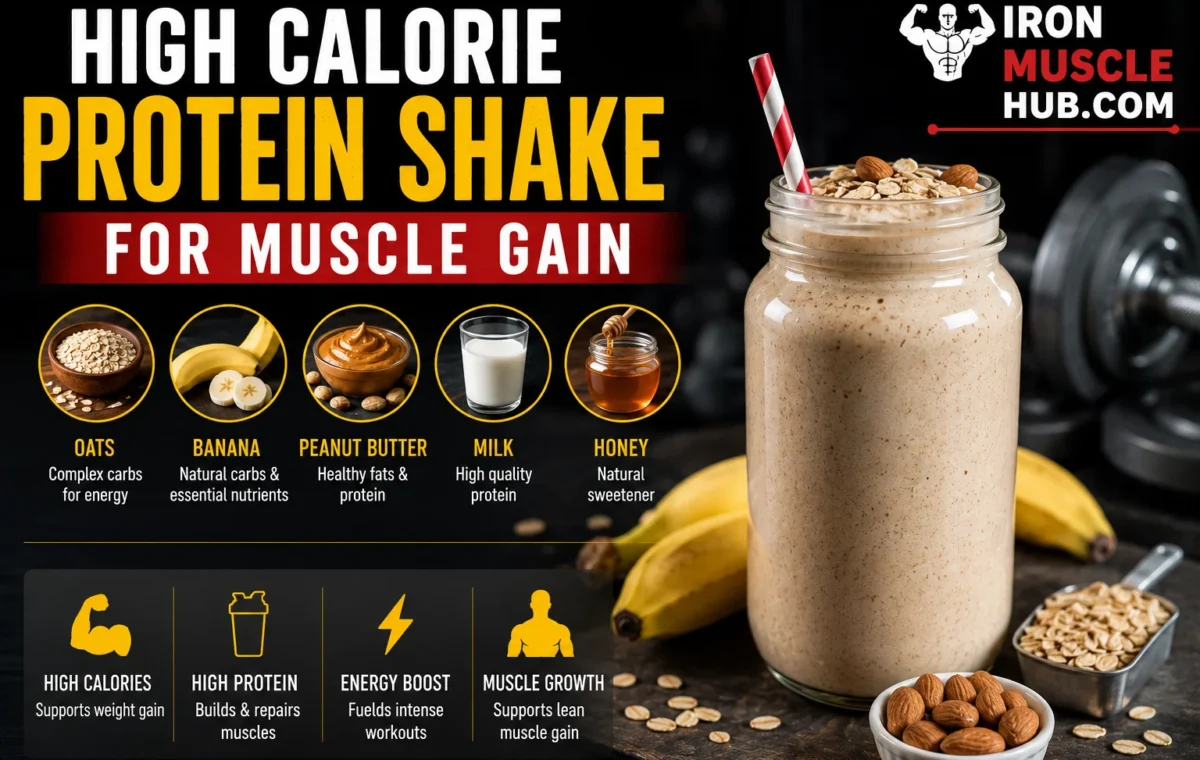
Here’s a flexible template you can make at home.
Ingredients
- Milk or fortified soy milk
- 1 banana
- Oats
- Peanut butter or another nut butter
- Greek yogurt
- Protein powder, if needed to help you reach your daily protein target
- Cinnamon or unsweetened cocoa for flavor
- Ice, if desired
Blend until smooth.
The exact calorie and protein total will depend heavily on your brands and serving sizes, so check the nutrition labels rather than assuming every homemade shake has the same numbers.
How to Make It More Calorie-Dense
If your shake isn’t giving you enough energy, increase one ingredient at a time:
- Add more oats for additional carbohydrate and energy.
- Add nut butter for a compact source of calories.
- Use whole milk if it fits your dietary needs.
- Add Greek yogurt for additional protein and creaminess.
- Use a larger banana or another serving of fruit.
- Add protein powder if your overall diet is falling short on protein.
This approach is usually more useful than simply dumping large amounts of sugar into the blender.
NHS dietetic guidance similarly recommends increasing calories through foods such as milk, nuts, seeds, dried fruit and other nutrient-containing ingredients rather than depending entirely on sweets and sugary drinks.
How Much Protein Should Your Shake Have?
There isn’t one magic protein number that makes a shake effective.
For most exercising adults, the ISSN position stand gives a daily protein range of 1.4–2.0 g/kg of body weight. It also describes a general per-serving range of about 20–40 grams of high-quality protein, depending on the individual and circumstances.
For example, someone weighing 75 kg would fall within a broad daily range of approximately 105–150 grams of protein using that guideline.
That doesn’t mean the shake needs to provide all of it.
You could get part of your protein from breakfast, lunch, dinner and snacks, then use your shake to fill whatever gap remains.
A Simple Way to Think About It
Daily protein goal → protein from normal meals → remaining amount your shake can provide.
This is more sensible than automatically making every shake enormous.
When Should You Drink a Protein Shake for Muscle Gain?
You can have your shake at a time that helps you consistently meet your nutrition needs.
A post-workout shake is convenient, especially if you’re not ready for a full meal. Protein intake around resistance exercise can support muscle protein synthesis, but your overall daily intake remains an important priority.
Good options include:
- After training: convenient if your next meal isn’t soon.
- Between meals: useful when you’re trying to increase total calories.
- At breakfast: helpful if you struggle to eat enough early in the day.
- Before bed: another option if it fits comfortably into your daily diet.
You don’t have to obsess over a tiny post-workout timing window.
Consistency with your total diet and resistance-training routine matters more.
A Practical Example for a Beginner
Imagine you’re struggling to eat enough food because large meals make you feel uncomfortably full.
Instead of adding another huge meal, you could have a homemade shake between lunch and dinner.
For example:
Milk + banana + oats + peanut butter + Greek yogurt + protein powder
The important part isn’t reaching some internet-famous calorie number. It’s checking the nutrition labels, seeing what the shake contributes, and then deciding whether that amount fits your overall daily needs.
If your body weight is not moving upward and you’re intentionally trying to gain weight, you may need more total food. If you’re gaining unwanted body fat faster than you’d like, the shake may simply be providing more energy than you need.
The NHS advises adults trying to gain weight to do so gradually and gives around 300–500 additional calories per day as a general starting suggestion, while also recommending strength training to help build muscle.
That figure isn’t a personalized prescription. Your needs can differ substantially.
Best Ingredients for a High Protein Shake
Milk
Milk can provide both fluid and protein while making a shake creamy. Whole milk can also increase the calorie content compared with lower-fat choices.
If you don’t use dairy, fortified soy milk can be another option.
Greek Yogurt
Greek yogurt can make a shake thicker while contributing protein. Choose plain or flavored depending on your preference and check the label for the actual protein and calorie content.
Oats
Oats are useful if you want your shake to contain more carbohydrate and energy without relying on sugary syrups.
Start with a modest portion if you’re not used to blended oats.
Peanut Butter
Nut butter is particularly useful when you have trouble eating enough calories because a relatively small serving can make a shake much more energy-dense.
You can substitute almond or another nut butter if preferred.
Banana
Bananas add carbohydrate, sweetness and a creamy texture. Frozen banana also makes the finished shake colder and thicker.
Protein Powder
Protein powder isn’t mandatory.
If you already get enough protein from food, adding more may simply make the shake unnecessarily large. If you’re struggling to reach your daily protein target, however, a protein powder can be a convenient option.
High Calorie Doesn’t Mean “As Many Calories as Possible”
This is one of the easiest mistakes to make.
A shake containing huge quantities of peanut butter, cream, ice cream, syrup and other calorie-dense ingredients can become much larger than you actually need.
The goal should be enough calories to support your overall goal, not the highest possible calorie count.
Healthy weight-gain guidance from NHS sources recommends nutrient-dense additions such as dairy, nuts, seeds and starchy foods while discouraging reliance on chocolate, cakes and sugary drinks as the main strategy for gaining weight.
A useful adjustment system is:
Not enough calories → add a little oats or nut butter.
Not enough protein → add Greek yogurt, milk, soy milk or protein powder.
Too filling → reduce the volume and use more calorie-dense ingredients.
Too many calories → reduce the nut butter, oats or other calorie-dense additions.
This gives you much more control than following a one-size-fits-all recipe.
Common Mistakes to Avoid
1. Drinking a shake instead of eating proper meals
A shake can supplement your diet, but it shouldn’t automatically replace balanced meals.
NHS dietetic guidance also describes nourishing drinks as additions to meals rather than automatic meal replacements.
2. Chasing extreme protein intake
More protein isn’t automatically better.
A daily intake around 1.4–2.0 g/kg is already within the ISSN’s cited range for most exercising people.
3. Using only sugary ingredients
Ice cream, syrups and sweet spreads can raise calories quickly, but a muscle-gain diet still benefits from a broader mix of protein foods, fruits, vegetables, carbohydrates and fats.
4. Forgetting resistance training
A protein shake can’t create a training stimulus by itself.
The 2026 ACSM review found substantial evidence that resistance training improves muscle size and strength.
5. Ignoring unexpected weight loss
If you’re losing weight without trying, don’t simply keep adding more shakes.
The NHS recommends speaking with a GP if you’ve lost weight suddenly or without changing your diet or exercise routine.
How to Adjust Your Shake Over Time
Your shake should change with your results.
| What you’re noticing | Possible adjustment |
| You’re struggling to eat enough | Make the shake more calorie-dense |
| You’re short on protein | Add a protein-rich ingredient |
| The shake feels too heavy | Reduce volume and use smaller portions |
| You’re gaining more weight than intended | Reduce calorie-dense additions |
| You dislike the taste | Change fruit, spices or yogurt flavor |
| You can’t tolerate dairy | Try a suitable fortified plant-based milk |
Don’t change five things at once. Make one small adjustment, then give yourself enough time to see how your overall intake and training are going.
Internal Link Ideas for [SITE NAME]
Consider linking this article to:
- How Much Protein Do You Need to Build Muscle?
- Healthy High-Calorie Foods for Weight Gain
- How to Create a Simple Muscle-Gain Meal Plan
These links can help readers move from one shake recipe to a complete, balanced approach to nutrition.
Frequently Asked Questions
What is the best high calorie protein shake for muscle gain?
A practical option combines a protein source such as milk, Greek yogurt or protein powder with calorie-containing ingredients such as oats, banana and nut butter. There isn’t one universally best recipe. The right shake is one that helps you meet your overall calorie and protein needs without making your diet unnecessarily difficult to follow.
How many calories should a muscle-gain shake have?
There isn’t a universal calorie target for every shake. Your needs depend on your body size, activity, diet and goal. The NHS gives around 300–500 extra calories per day as a general starting point for adults trying to gain weight, but that doesn’t mean all of those calories need to come from one shake.
How much protein should I put in a shake for muscle gain?
For many exercising adults, a shake containing roughly 20–40 grams of high-quality protein can be a practical serving, while total daily protein is more important. The ISSN cites 1.4–2.0 g/kg/day as sufficient for most exercising individuals seeking to build or maintain muscle.
Can I gain muscle just by drinking protein shakes?
No. Protein shakes can help you meet nutrition needs, but muscle growth also requires an appropriate resistance-training stimulus and enough overall energy and protein. The 2026 ACSM evidence review found that resistance training improves muscle size and strength in healthy adults.
Is it better to drink a protein shake before or after a workout?
Either can work. A shake after training is convenient if it helps you get protein into your diet around your workout, but you don’t need to obsess over a narrow timing window. Total daily protein and a consistent resistance-training program are important parts of the bigger picture.
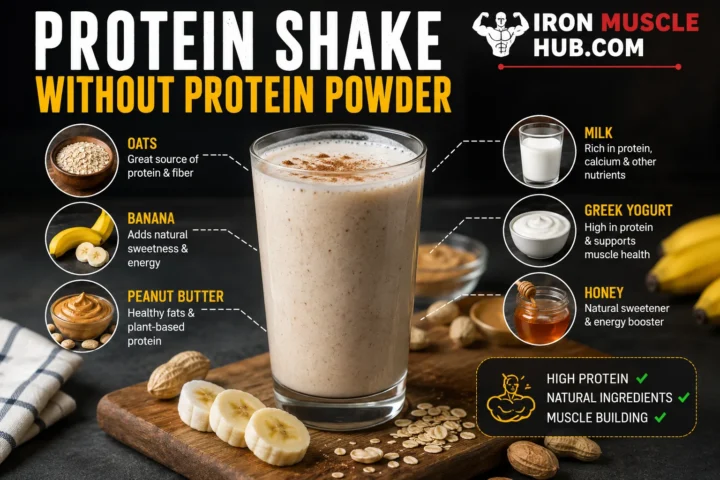
Can I make a high calorie protein shake without protein powder?
Yes. Milk, Greek yogurt, soy products, nuts, seeds and other protein-rich foods can contribute protein without using powder. Protein powder is mainly a convenience option. If you already meet your protein needs through food, there’s no requirement to use a supplement.
Build a Shake That Fits Your Diet
The best high calorie protein shake for muscle gain isn’t necessarily the biggest or most complicated one. Start with a protein source, add carbohydrates such as banana or oats, include a calorie-dense ingredient such as nut butter if needed, and adjust the portions according to your overall diet.
For most people, the bigger goal is consistency: eat enough total food, get adequate protein, and follow a sensible resistance-training routine. A shake simply makes those habits easier on days when another full meal feels like too much.
If you’re trying to gain weight because of unexplained weight loss, poor appetite or a medical condition, speak with a qualified healthcare professional rather than relying on a generic shake recipe.
How to Make Your Shake More Effective for Muscle Gain
A high calorie protein shake works best when it solves a specific problem in your diet. If you’re struggling to eat enough calories, make the shake more energy-dense. If protein is the issue, focus on protein-rich ingredients first.
You don’t need to keep adding ingredients just because they’re associated with bodybuilding.
Start With a Protein Base
Choose one or two protein sources:
- Milk
- Greek yogurt
- Fortified soy milk
- Cottage cheese
- Protein powder
- Nut or seed butter
Using several protein sources can make a shake very protein-heavy, so check your overall daily intake rather than assuming more is always better.
For exercising adults, the International Society of Sports Nutrition cites 1.4–2.0 grams of protein per kilogram of body weight per day as an appropriate general range. (pmc.ncbi.nlm.nih.gov)
Add Carbohydrates for Energy
Carbohydrates can make a shake more substantial and provide an easy way to increase total energy intake.
Good choices include:
- Oats
- Bananas
- Berries
- Dates
- Mango
- Whole-grain cereal
- Other fruits
Oats are particularly convenient because they blend easily and can make a shake considerably more filling.
Add Healthy Fats if You Need More Calories
Fat provides more calories per gram than protein or carbohydrates, so small amounts can increase the energy content without making your shake enormous.
Try:
- Peanut butter
- Almond butter
- Tahini
- Chia seeds
- Ground flaxseed
- Walnuts
If you’re already gaining weight faster than intended, however, this is one of the first areas you may want to reduce.
A Simple High-Calorie Shake Formula
Instead of memorizing one recipe, use this formula:
Protein + carbohydrate + calorie-dense ingredient + liquid + flavor
For example:
Greek yogurt + banana + oats + peanut butter + milk + cinnamon
Or:
Protein powder + oats + frozen berries + nut butter + soy milk
This approach gives you flexibility.
You can also change the recipe based on what you have at home, which makes it easier to maintain over the long term.
What If You Have a Small Appetite?
This is where liquid nutrition can be particularly useful.
A large plate of food can feel difficult to finish, while a blended drink may be easier to consume. NHS guidance for healthy weight gain recommends calorie-containing drinks and nourishing foods as part of a gradual approach to increasing energy intake. (nhs.uk)
Try these adjustments:
- Use milk instead of water.
- Add Greek yogurt for extra nutrition.
- Add nut butter in a moderate portion.
- Blend oats into the drink.
- Use banana or another fruit for natural sweetness.
- Drink the shake between meals if drinking it with meals makes you too full.
You don’t need to force yourself to drink a gigantic shake.
A smaller shake that you can consistently tolerate may be more useful than a massive recipe you abandon after three days.
What If You’re Not Gaining Weight?
First, don’t immediately assume you need more protein.
Muscle gain requires an appropriate training stimulus and sufficient overall energy. If your body weight isn’t increasing despite consistently trying to gain weight, your total calorie intake may need to increase.
One practical approach is to make a small adjustment:
Add a little more oats, milk or nut butter to your existing shake.
Then monitor your progress rather than making a dramatic change overnight.
The NHS gives 300–500 additional calories per day as a general starting point for adults who are trying to gain weight, although individual requirements vary. (nhs.uk)
That number is a general guideline, not a personalized calorie prescription.
What If You’re Gaining Too Much Body Fat?
A calorie surplus can help support weight gain, but more calories don’t automatically mean more muscle.
If your weight is increasing faster than you want, look at the entire diet before blaming the shake.
You might:
- Reduce the amount of nut butter.
- Reduce the oats slightly.
- Use a lower-calorie milk option.
- Make the shake smaller.
- Have it less frequently.
- Reassess whether you actually need additional calories.
Your resistance-training program also matters. The 2026 American College of Sports Medicine position stand found that resistance training supports improvements in muscle size and strength. (pubmed.ncbi.nlm.nih.gov)
High-Calorie Shake vs. Mass Gainer
A homemade shake and a commercial mass-gainer supplement can serve a similar basic purpose: making it easier to consume additional calories and protein.
The major difference is control.
| Homemade shake | Commercial mass gainer |
|---|---|
| You control the ingredients | Formula is predetermined |
| Easy to change calories | Serving size determines calories |
| Can use ordinary foods | Usually relies on powdered ingredients |
| Often easy to customize | Convenient for travel |
| Nutrition varies by recipe | Nutrition varies by product |
Neither option is automatically superior.
If you can comfortably meet your nutritional needs with ordinary foods, there’s no requirement to use a commercial mass gainer.
Can You Use a Protein Shake Every Day?
For many healthy adults, a homemade protein shake can be part of a normal eating pattern.
The important question is what the shake contributes to your overall diet.
If your daily meals already provide enough calories and protein, an additional high-calorie shake may simply push your energy intake higher than intended.
On the other hand, if you’re consistently struggling to eat enough, a shake can be a convenient addition.
Think of it as food in drinkable form, not a special muscle-building product.
A Beginner-Friendly Daily Strategy
If you’re new to trying to gain muscle, keep the plan simple.
Breakfast
Eat a normal balanced breakfast.
Lunch
Have a regular meal containing a protein source, carbohydrate and vegetables or fruit.
Training
Follow a consistent resistance-training program appropriate for your experience level.
After Training or Between Meals
Have your homemade protein shake if it helps you reach your daily nutrition goals.
Dinner
Eat another balanced meal.
Snack
Use a protein-rich or calorie-containing snack if you still need one.
This is usually easier to maintain than building your entire diet around shakes.
The Biggest Mistake: Treating the Shake as a Shortcut
A protein shake can’t compensate for an inconsistent diet and poorly structured training program.
If muscle gain is your goal, focus on the basics first:
- Eat enough total food.
- Get sufficient protein.
- Train your major muscle groups consistently.
- Allow adequate recovery.
- Sleep sufficiently.
- Adjust your food intake based on your progress.
The shake is simply one tool that can make the nutrition side easier.
A Simple Ingredient Swap Guide
You don’t need to use exactly the same ingredients every time.
| If you don’t have… | Try… |
| Milk | Fortified soy milk or another suitable milk alternative |
| Banana | Berries, mango or another fruit |
| Peanut butter | Almond butter or tahini |
| Greek yogurt | Another protein-rich yogurt |
| Oats | Another carbohydrate-rich breakfast grain |
| Protein powder | Milk, yogurt or other protein-rich foods |
Always check the nutrition label for your specific product because calorie and protein values vary between brands.
When a Shake May Not Be the Right Choice
A high-calorie shake isn’t appropriate for every situation.
You may not need one if:
- You’re already meeting your calorie needs comfortably.
- You’re gaining weight faster than intended.
- You dislike liquid meals.
- It regularly causes digestive discomfort.
- You have been advised to follow a specific diet by a healthcare professional.
If you have a medical condition, food allergy, significant digestive symptoms or unexplained changes in weight, get individualized advice from a qualified healthcare professional.
A Better Way to Track Progress
Don’t judge your muscle-gain strategy from one day’s scale reading.
Body weight can fluctuate for many reasons, including food and fluid intake.
Instead, look at your overall trend and consider several signals:
- Are you consistently completing your workouts?
- Are your lifts or repetitions improving?
- Are you eating consistently?
- Is your body weight moving in the direction you intended?
- Are you recovering well?
- Are you comfortable with the rate of change?
This gives you a much clearer picture than deciding that a shake “worked” or “failed” after a few days.
Quick Checklist Before You Blend
Before making your shake, ask:
- Do I need additional calories today?
- Am I getting enough protein from my overall diet?
- Would a smaller or larger shake make more sense?
- What ingredients do I already have?
- Will this fit comfortably between my meals?
That five-second check can prevent you from turning every shake into an unnecessarily huge calorie bomb.
The Bottom Line
A good high calorie protein shake for muscle gain doesn’t need exotic ingredients or an extreme calorie count. A simple combination of milk or fortified soy milk, fruit, oats, Greek yogurt, nut butter and protein powder can provide a convenient mixture of protein, carbohydrates and energy.
The exact recipe should depend on what your overall diet needs.
If you’re struggling to gain weight, gradually increasing your calorie intake may help. If you’re gaining more than intended, reduce the calorie-dense ingredients. And remember that resistance training remains central to building muscle.
Use the shake to support your routine, not replace it.
High Calorie Protein Shake for Muscle Gain: Practical Recipe Ideas
Once you understand the basic formula, you can create several different shakes without buying a long list of specialty ingredients.
The easiest method is to keep a few staples available and change the flavor depending on what you have.
1. Banana Peanut Butter Protein Shake
This is a simple starting point for beginners.
Ingredients:
- Milk or fortified soy milk
- Banana
- Oats
- Peanut butter
- Greek yogurt
- Protein powder, if needed
- Cinnamon
Blend everything until smooth.
The banana adds sweetness and carbohydrate, oats make the drink more substantial, while peanut butter increases its energy density. Milk, yogurt and protein powder can help increase the protein contribution.
2. Berry Oat Protein Shake
If you don’t enjoy banana-based shakes, use berries instead.
Ingredients:
- Milk or fortified soy milk
- Frozen berries
- Oats
- Greek yogurt
- Nut butter
- Protein powder, if required
- Optional cinnamon
Frozen fruit can make the drink cold and thick without requiring much ice.
3. Chocolate Oat Shake
For a chocolate flavor, use unsweetened cocoa powder rather than relying entirely on chocolate syrup.
Ingredients:
- Milk
- Oats
- Greek yogurt
- Banana
- Peanut butter
- Unsweetened cocoa powder
- Protein powder if needed
You can adjust the amount of cocoa to your preferred taste.
How to Calculate Your Shake’s Nutrition
One of the most useful habits is learning to calculate the actual nutrition of your own recipe.
Don’t copy a calorie number from a generic recipe and assume it applies to your ingredients.
Instead:
1. Check each food label.
Write down the calories and protein for the amount you’re actually using.
2. Add the ingredients together.
For example, if your milk contributes one amount of protein, your yogurt another amount, and your protein powder another, add them together.
3. Compare the result with your daily target.
The shake doesn’t need to provide your entire daily protein requirement.
This method also works when you change brands.
Why This Matters
Two products with the same name can have noticeably different nutrition information.
For example, one peanut butter may have a different calorie count per serving than another. The same is true for milk, yogurt and protein powder.
So the nutrition label on your actual product is the most useful number.
How to Make a Shake Without Protein Powder
You can absolutely make a high-calorie protein shake without powdered protein.
Build the drink around foods that naturally contain protein.
Good options include:
- Milk
- Greek yogurt
- Fortified soy milk
- Nut butters
- Seeds
- Other protein-rich dairy or soy foods
A powder can be convenient, but it isn’t a requirement for muscle gain.
Your total daily protein intake is what matters much more than whether the protein came from a tub or a carton.
How to Make a Shake Without Dairy
If dairy doesn’t suit your diet, you can still make a substantial shake.
A simple combination is:
Fortified soy milk + oats + banana + nut butter + fruit + protein powder if desired
Soy milk is particularly useful because it can contribute protein as well as liquid.
Check the nutrition label of any plant-based milk because protein content varies considerably among products.
How to Make Your Shake Easier to Digest
Some people find large shakes uncomfortable.
If that happens, don’t assume you need to quit them completely.
Try changing one variable at a time.
Reduce the portion
A huge shake can simply be too much volume.
Make a smaller version and drink it more slowly.
Reduce the fiber
Large quantities of oats, seeds and certain fruits can make a shake more filling.
If your current recipe contains several high-fiber ingredients, try reducing the amount.
Check dairy tolerance
If milk or yogurt seems to cause problems, consider a suitable lactose-free or plant-based alternative.
Avoid adding everything at once
You don’t need oats, multiple fruits, several seeds, nut butter and multiple dairy products in the same blender.
A simpler recipe can be easier to tolerate and easier to track.
If you have persistent or significant digestive symptoms, speak with a qualified healthcare professional.
Should You Drink a Shake Before Bed?
A protein shake before bed can be convenient if it helps you meet your daily nutrition needs.
However, there’s no requirement that every person trying to build muscle must drink a shake at night.
Your total daily diet is the bigger consideration.
If a bedtime shake makes you too full or disrupts your sleep, move it to another part of the day.
Is a Homemade Shake Better Than a Store-Bought Shake?
Not automatically.
A homemade shake gives you greater control over ingredients and portions. A commercial product may be more convenient when you’re travelling or don’t have access to a blender.
Compare the nutrition label rather than judging a product by its marketing.
Look at:
- Calories per serving
- Protein per serving
- Added sugars
- Serving size
- Ingredients
- Allergens
- Cost per serving
A product that looks high in protein may also come in a very large serving size, so compare products on a like-for-like basis.
How Much Should a Protein Shake Cost?
The cost depends on the ingredients, brands and country you’re shopping in.
You don’t need expensive specialty products to make a useful shake.
A basic homemade version can use ordinary supermarket foods such as:
- Milk
- Bananas
- Oats
- Peanut butter
- Yogurt
Protein powder is optional.
This can also make homemade shakes useful for people who are trying to gain muscle without turning nutrition into an expensive hobby.
A Budget-Friendly Muscle-Gain Approach
If you’re on a tight food budget, prioritize the basics.
Buy versatile foods
Choose ingredients that work in multiple meals.
For example, oats can be used for breakfast, snacks and shakes.
Use seasonal fruit
Fresh fruit can vary in price. Frozen fruit can also be convenient and useful for smoothies.
Compare protein sources
You don’t have to rely on expensive supplements.
Milk, yogurt, eggs, beans, lentils and other ordinary foods can contribute protein to your diet.
Buy only what you’ll actually use
There’s little value in buying ten specialty ingredients that sit in the cupboard.
A simple shake with five or six ingredients can be easier to maintain.
A Simple Weekly Prep Strategy
You can make shake preparation easier by keeping your ingredients organized.
At the start of the week:
- Buy the ingredients you’ll actually use.
- Portion dry ingredients such as oats if that makes preparation easier.
- Keep fruit ready to blend.
- Store yogurt and milk properly.
- Keep your blender accessible.
- Check product labels before changing brands.
Don’t prepare a large batch and assume it will remain safe indefinitely. Follow the storage instructions for your ingredients and prepared drink.
What to Do If You Miss a Shake
Nothing special.
Missing one shake doesn’t erase your progress.
Simply return to your normal eating and training routine.
Muscle gain is based on consistent habits over time, not one perfect day.
If you regularly miss shakes because you’re too busy, consider whether you actually need a shake or whether a simpler snack would work better.
What to Look for in a Protein Powder
If you decide to use protein powder, focus on practical information rather than flashy claims.
Check:
- Protein per serving
- Serving size
- Calories
- Added sugars
- Ingredients
- Allergens
- Cost per serving
- Directions for use
You can also check whether the product has appropriate third-party testing if that is important to you.
Don’t assume a more expensive powder will automatically produce better muscle growth.
Supplements Aren’t a Replacement for Food
Protein powder can be useful because it’s convenient.
But a well-rounded diet contains much more than protein.
Whole foods can provide carbohydrates, fats, vitamins, minerals and other nutrients alongside protein.
That’s why a protein shake works best as one part of your nutrition plan, rather than the foundation of the entire plan.
When to Get Professional Help
A generic recipe isn’t appropriate for every person.
Consider speaking with a doctor or registered dietitian if:
- You’re losing weight without trying.
- You’re struggling to gain weight despite eating more.
- You have persistent digestive symptoms.
- You have a diagnosed medical condition that affects your diet.
- You have significant food allergies or intolerances.
- You’re unsure how much food or protein you personally need.
The NHS specifically recommends seeking medical advice for unexplained or sudden weight loss. (nhs.uk)
Final Takeaway: Keep the Shake Simple
The most useful high calorie protein shake for muscle gain is the one that fits naturally into your daily routine.
Start with a protein source. Add carbohydrate-rich foods such as oats or fruit. Include a calorie-dense ingredient such as nut butter if you need additional energy. Then adjust the recipe based on your appetite and overall progress.
You don’t need a complicated bodybuilding formula.
A simple homemade shake can support a balanced diet, but it won’t replace resistance training, adequate food or recovery. If you’re trying to gain weight, make gradual changes and monitor how your body responds rather than chasing an extreme calorie target.
For most beginners, consistency beats complexity.
Final Thoughts
A high calorie protein shake for muscle gain can be a simple way to add extra energy and protein to your diet, especially if eating larger meals is difficult. You don’t need an expensive supplement or a complicated recipe. Milk or fortified soy milk, Greek yogurt, oats, fruit and nut butter can give you a flexible starting point, while protein powder is optional.
The bigger picture matters more than any single shake. Aim for a balanced diet, enough overall calories, adequate protein and consistent resistance training. If you’re trying to gain weight, make gradual changes and pay attention to how your body responds rather than chasing the biggest possible shake.
A good shake should make your routine easier, not more complicated.