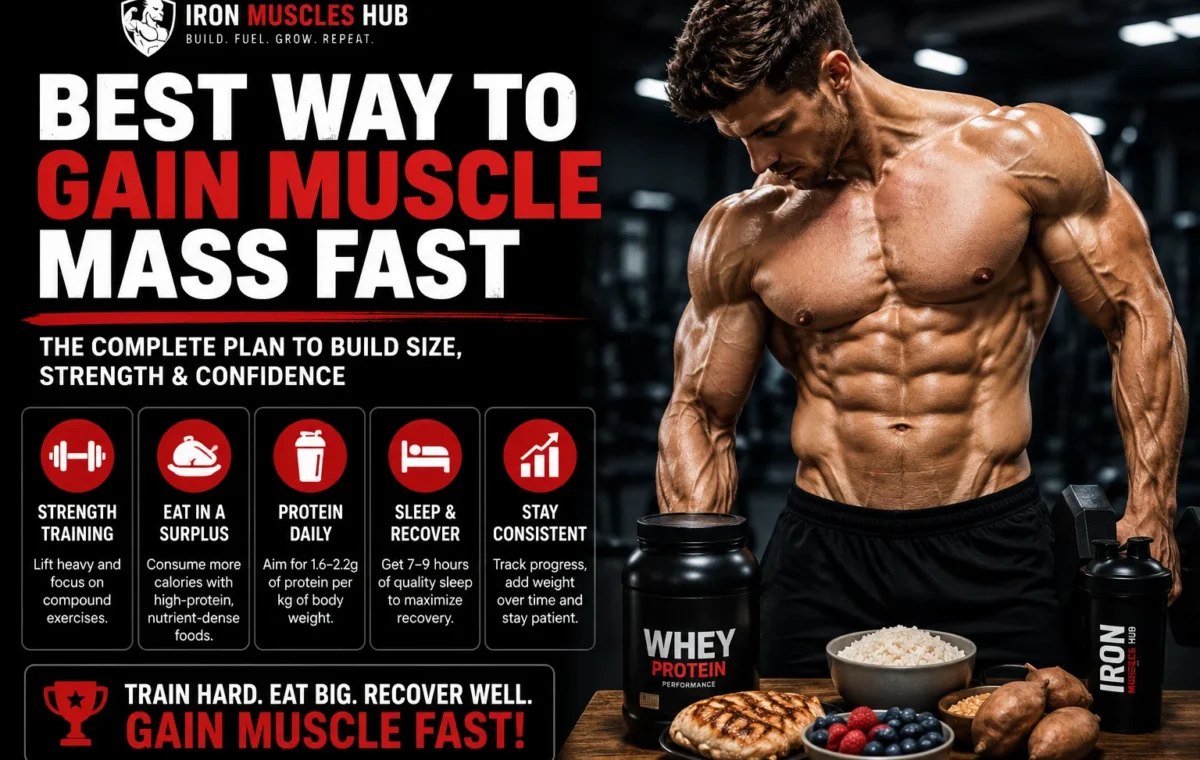
Building muscle doesn’t happen overnight, but you can make impressive progress much faster when you follow the right plan. The best way to gain muscle mass fast is to combine progressive strength training, a small calorie surplus, high-quality protein, enough sleep, and consistency over several months.
- Quick Answer
- Best Compound Exercises
- Train Each Muscle Twice Per Week
- Monday
- Tuesday
- Wednesday
- Thursday
- Friday
- Saturday
- Sunday
- Example
- Why a Small Surplus Works Better
- Best Foods for Muscle Growth
- Protein Sources
- Healthy Carbohydrates
- Healthy Fats
- Protein Matters More Than Most Supplements
- Daily Protein Examples
- Sample High-Protein Meal Plan
- Great Carbohydrate Sources
- Why Sleep Is Essential
- Better Sleep Habits
- Creatine Explained
- 1. Changing Workouts Every Week
- 2. Not Eating Enough
- 3. Ignoring Progressive Overload
- 4. Training Too Much
- 5. Poor Exercise Form
- 6. Skipping Leg Day
- 12-Week Muscle-Gain Checklist
- Advanced Tips to Gain Muscle Mass Faster
- 1. Keep a Workout Log
- 2. Train Close to Failure
- 3. Focus on Compound Movements First
- 4. Don't Skip Warm-Ups
- 5. Be Patient
- Example Push Day
- Protein
- Carbohydrates
- Healthy Fats
- What is the best way to gain muscle mass fast naturally?
- How much protein do I need to build muscle?
- Can I build muscle without supplements?
- How many days per week should I work out?
- Is cardio bad for muscle growth?
- How long does it take to see muscle growth?
Many beginners waste time chasing shortcuts, expensive supplements, or random workout plans. In reality, muscle growth comes from doing the basics extremely well. This guide explains exactly what works, why it works, and how you can start building muscle safely and efficiently. For more insights read here :- how to become buff and muscle building tips over 08.
Quick Answer
| Factor | What You Should Do |
|---|---|
| Strength Training | Train 3–5 days each week using compound exercises |
| Protein | Eat 1.6–2.2 g of protein per kg of body weight daily |
| Calories | Stay in a moderate calorie surplus |
| Sleep | Aim for 7–9 hours every night |
| Progressive Overload | Increase weight or reps gradually |
| Recovery | Rest muscles at least 48 hours before training them again |
| Consistency | Follow the plan for at least 8–12 weeks |
Key Takeaways
- Lift heavier over time using proper form.
- Eat enough calories to support muscle growth.
- Prioritize protein at every meal.
- Sleep is just as important as training.
- Avoid constantly changing your workout program.
Why Building Muscle Takes Time
One of the biggest mistakes beginners make is expecting dramatic changes within a few weeks.
Your muscles grow after your workouts—not during them. Resistance training creates tiny tears in muscle fibers. During recovery, your body repairs these fibers, making them slightly larger and stronger than before.
This process is called muscle protein synthesis, and it depends on three main factors:
- Effective resistance training
- Proper nutrition
- Adequate recovery
Skip any one of these, and your results slow down significantly.
What Is the Best Way to Gain Muscle Mass Fast?
If you only remember one thing from this guide, remember this:
Train hard, eat enough protein, maintain a calorie surplus, recover properly, and stay consistent.
There’s no secret workout or miracle supplement that replaces these fundamentals.
Thousands of successful athletes and beginners alike build muscle using this exact formula because it works.
Step 1: Follow a Structured Strength Training Program
Resistance training is the single most important factor for muscle growth.
Instead of doing random exercises every day, follow a structured routine that trains every major muscle group.
Focus on compound exercises because they recruit multiple muscles simultaneously.
Best Compound Exercises
| Muscle Group | Best Exercises |
|---|---|
| Chest | Bench Press, Incline Dumbbell Press, Push-ups |
| Back | Pull-ups, Lat Pulldowns, Barbell Rows |
| Legs | Squats, Romanian Deadlifts, Leg Press |
| Shoulders | Overhead Press, Dumbbell Shoulder Press |
| Arms | Barbell Curls, Triceps Pushdowns |
| Core | Planks, Hanging Leg Raises |
These exercises provide the highest return on your effort and allow you to lift heavier weights over time.
Train Each Muscle Twice Per Week
Research consistently shows that training each muscle group approximately twice weekly often produces better muscle growth than training it only once.
For example:
Monday
- Chest
- Shoulders
- Triceps
Tuesday
- Back
- Biceps
Wednesday
- Rest
Thursday
- Legs
Friday
- Upper Body
Saturday
- Lower Body
Sunday
- Rest
This schedule gives each muscle enough stimulus while allowing adequate recovery.
Step 2: Master Progressive Overload
Progressive overload simply means asking your muscles to do slightly more work over time.
Without progressive overload, your muscles stop adapting.
You can increase training difficulty by:
- Adding 5–10 pounds to the bar
- Performing one or two extra repetitions
- Increasing total sets
- Improving exercise technique
- Reducing rest periods slightly
Example
Week 1
Bench Press
- 3 sets × 8 reps × 135 lbs
Week 4
Bench Press
- 3 sets × 10 reps × 135 lbs
Week 6
Bench Press
- 3 sets × 8 reps × 145 lbs
Small improvements every week eventually create significant muscle gains.
Step 3: Eat More Calories Than You Burn
Your body needs extra energy to build new muscle tissue.
If you’re not eating enough, muscle growth becomes much slower—even with perfect workouts.
Aim for a moderate calorie surplus rather than overeating.
Why a Small Surplus Works Better
Eating thousands of extra calories won’t build muscle faster.
Instead, it usually leads to unnecessary fat gain.
A controlled surplus provides enough energy for muscle growth while helping you stay leaner.
Best Foods for Muscle Growth
Choose mostly whole foods that provide protein, carbohydrates, healthy fats, vitamins, and minerals.
Protein Sources
- Chicken breast
- Turkey
- Lean beef
- Salmon
- Tuna
- Eggs
- Greek yogurt
- Cottage cheese
- Whey protein
- Tofu
- Tempeh
Healthy Carbohydrates
- Rice
- Oats
- Potatoes
- Sweet potatoes
- Whole grain bread
- Pasta
- Fruit
- Beans
Healthy Fats
- Avocados
- Olive oil
- Almonds
- Walnuts
- Peanut butter
- Chia seeds
- Flaxseeds
A balanced diet fuels your workouts and supports recovery far better than relying on supplements alone.
Protein Matters More Than Most Supplements
Protein provides the amino acids your muscles need to repair and grow after training.
Instead of focusing on expensive products, aim to include a quality protein source with every meal.
Good daily habits consistently outperform fancy supplement stacks.
If you want the best way to gain muscle mass fast, getting enough protein is one of the most important habits you can build.
Protein supplies the amino acids your body needs to repair muscle fibers after strength training. Without enough protein, your workouts won’t deliver the muscle-building results you’re working for.
Most research suggests that people aiming to build muscle benefit from 1.6–2.2 grams of protein per kilogram of body weight per day. If you’re unsure where to start, aim for the middle of that range and adjust based on your progress.
Daily Protein Examples
| Body Weight | Daily Protein Goal |
|---|---|
| 60 kg (132 lbs) | 95–130 g |
| 70 kg (154 lbs) | 110–155 g |
| 80 kg (176 lbs) | 130–175 g |
| 90 kg (198 lbs) | 145–200 g |
| 100 kg (220 lbs) | 160–220 g |
Instead of eating all your protein at dinner, spread it across the day to support muscle recovery.
Sample High-Protein Meal Plan
Here’s a simple example for someone trying to gain muscle.
| Meal | Foods |
|---|---|
| Breakfast | Oatmeal, whey protein, banana, peanut butter |
| Snack | Greek yogurt and berries |
| Lunch | Grilled chicken, rice, vegetables |
| Snack | Cottage cheese with almonds |
| Dinner | Salmon, sweet potato, broccoli |
| Evening Snack | Protein shake or eggs |
This type of meal plan provides plenty of protein while also supplying carbohydrates and healthy fats for energy and recovery.
Step 5: Don’t Fear Carbohydrates
Many beginners mistakenly cut carbs while trying to build muscle.
That’s a mistake.
Carbohydrates are your body’s preferred fuel source during intense resistance training. When your muscles have enough stored glycogen, you can train harder, recover better, and lift heavier weights.
Great Carbohydrate Sources
- Oats
- Rice
- Potatoes
- Sweet potatoes
- Pasta
- Whole-grain bread
- Fruits
- Vegetables
- Beans
- Quinoa
Aim to include carbohydrates before and after your workouts for the best training performance.
Step 6: Healthy Fats Support Muscle Growth
Healthy fats help support hormone production, including hormones involved in muscle development.
Good sources include:
- Olive oil
- Avocados
- Mixed nuts
- Seeds
- Peanut butter
- Natural almond butter
- Fatty fish like salmon
Remember that fats are calorie-dense, so portion sizes still matter.
Step 7: Stay Hydrated
Water is often overlooked in muscle-building programs.
Even mild dehydration can reduce workout performance, strength, and recovery.
Simple hydration tips:
- Drink water throughout the day.
- Drink extra water before workouts.
- Replace fluids lost through sweating.
- Monitor urine color—it should usually be pale yellow.
Hydration supports every stage of muscle growth.
Step 8: Prioritize Recovery
You don’t build muscle while lifting weights.
You build muscle while recovering afterward.
Without adequate recovery, your body cannot fully repair damaged muscle fibers.
Recovery includes:
- Rest days
- Quality nutrition
- Hydration
- Stress management
- Consistent sleep
Skipping recovery often leads to stalled progress.
Why Sleep Is Essential
Sleep is one of the most underrated muscle-building tools.
During deep sleep, your body performs many of the repair processes needed for muscle recovery.
Aim for 7–9 hours of quality sleep each night.
Better Sleep Habits
- Go to bed at the same time every night.
- Keep your bedroom cool and dark.
- Avoid screens shortly before bed.
- Limit caffeine later in the day.
Better sleep often leads to better workouts.
Best Supplements for Building Muscle
Supplements should support a solid nutrition and training plan—not replace it.
Here are the supplements with the strongest evidence for most healthy adults.
| Supplement | Purpose |
|---|---|
| Whey Protein | Helps meet daily protein goals |
| Creatine Monohydrate | Supports strength and high-intensity performance |
| Protein Bars | Convenient protein source when traveling |
| Fish Oil | May support overall health if dietary intake is low |
| Vitamin D | Helpful for people who are deficient (consult a healthcare professional) |
Creatine Explained
Creatine is one of the most researched sports supplements available.
It helps your muscles produce energy during short bursts of intense exercise, allowing many people to train harder over time.
It is not a steroid and does not build muscle without proper training and nutrition.
Common Muscle-Building Mistakes
Many beginners slow their progress by making avoidable mistakes.
1. Changing Workouts Every Week
Consistency beats variety.
Stick with a structured program long enough to measure progress.
2. Not Eating Enough
Many people believe they’re eating plenty until they actually track their meals.
If your weight isn’t gradually increasing and you’re trying to gain muscle, your calorie intake may be too low.
3. Ignoring Progressive Overload
Doing the same workout with the same weight every week gives your muscles little reason to grow.
Challenge yourself gradually.
4. Training Too Much
More isn’t always better.
Muscles need time to recover.
5. Poor Exercise Form
Lifting heavier with poor technique increases injury risk and reduces muscle activation.
Master proper form before adding weight.
6. Skipping Leg Day
Your legs contain some of the largest muscles in your body.
Training them helps build overall strength and supports balanced muscle development.
How Long Does It Take to Gain Muscle?
Everyone progresses differently.
Factors that influence muscle growth include:
- Age
- Genetics
- Training experience
- Nutrition
- Sleep
- Consistency
- Recovery
Beginners often notice strength improvements within a few weeks, while visible muscle growth typically takes longer. Staying consistent over several months usually produces much more noticeable results than searching for shortcuts. Also explore how to put on muscle fast
Track Your Progress
Instead of relying only on the scale, monitor several indicators.
Track:
- Body weight
- Progress photos
- Strength gains
- Body measurements
- Workout performance
- Energy levels
These measurements provide a clearer picture of your progress than weight alone.
12-Week Muscle-Gain Checklist
| Week | Main Goal |
|---|---|
| 1–2 | Learn proper exercise technique |
| 3–4 | Increase workout consistency |
| 5–6 | Add weight or repetitions gradually |
| 7–8 | Improve nutrition habits |
| 9–10 | Focus on recovery and sleep |
| 11–12 | Review progress and adjust your plan |
Following a structured plan like this helps you build habits that support long-term muscle growth.
Advanced Tips to Gain Muscle Mass Faster
Once you’ve mastered the basics, these strategies can help you continue making progress.
1. Keep a Workout Log
Track every workout, including:
- Exercises performed
- Weight lifted
- Sets completed
- Repetitions
- Rest periods
Seeing your progress on paper makes it easier to apply progressive overload consistently.
2. Train Close to Failure
You don’t need to fail every set, but your working sets should feel challenging.
Aim to finish most sets with 1–3 reps left in the tank. This provides enough intensity to stimulate muscle growth while helping you recover for your next workout.
3. Focus on Compound Movements First
Always perform the exercises that require the most energy at the beginning of your workout.
A good order is:
- Squats
- Deadlifts
- Bench Press
- Overhead Press
- Rows
- Isolation exercises
This approach lets you lift heavier weights with better technique.
4. Don’t Skip Warm-Ups
A proper warm-up prepares your muscles and joints for training.
Spend 5–10 minutes doing:
- Light cardio
- Dynamic stretches
- Mobility drills
- Warm-up sets with lighter weights
This can improve performance and reduce the risk of injury.
5. Be Patient
One of the biggest reasons people quit is expecting instant results.
Muscle growth is gradual. Small improvements each week add up over months and years.
The people with the best physiques aren’t necessarily doing secret workouts—they’ve simply stayed consistent for a long time.
Sample 5-Day Beginner Muscle-Building Workout
| Day | Workout |
|---|---|
| Monday | Chest, Shoulders, Triceps |
| Tuesday | Back, Biceps |
| Wednesday | Rest or Light Cardio |
| Thursday | Legs |
| Friday | Upper Body |
| Saturday | Lower Body & Core |
| Sunday | Rest |
Example Push Day
- Bench Press – 4 × 8
- Incline Dumbbell Press – 3 × 10
- Shoulder Press – 3 × 10
- Lateral Raises – 3 × 12
- Triceps Pushdowns – 3 × 12
- Overhead Triceps Extension – 3 × 12
Foods to Keep in Your Kitchen
If you’re serious about building muscle, stock your kitchen with nutrient-dense foods.
Protein
- Chicken breast
- Eggs
- Lean beef
- Turkey
- Tuna
- Salmon
- Cottage cheese
- Greek yogurt
- Whey protein
- Tofu
Carbohydrates
- Rice
- Oats
- Potatoes
- Sweet potatoes
- Pasta
- Whole-grain bread
- Fruit
- Vegetables
Healthy Fats
- Olive oil
- Avocados
- Almonds
- Walnuts
- Peanut butter
- Cashews
- Pumpkin seeds
Keeping these foods on hand makes it much easier to stick to your nutrition plan.
Muscle Gain Checklist
Use this quick checklist every week:
✅ Train 3–5 days
✅ Hit every major muscle group
✅ Increase weight or reps when possible
✅ Eat enough calories
✅ Meet your daily protein goal
✅ Stay hydrated
✅ Sleep 7–9 hours
✅ Take rest days
✅ Track your workouts
✅ Stay consistent
If you can check every box, you’re following the best way to gain muscle mass fast.
Frequently Asked Questions
What is the best way to gain muscle mass fast naturally?
The fastest natural approach combines resistance training, progressive overload, enough calories, high-quality protein, proper sleep, and consistency. There are no legal shortcuts that replace these fundamentals.
How much protein do I need to build muscle?
Most active adults looking to build muscle benefit from 1.6–2.2 grams of protein per kilogram of body weight each day. Spreading protein across several meals can make it easier to reach your target.
Can I build muscle without supplements?
Yes. Supplements are optional. You can build significant muscle through a balanced diet, effective training, and adequate recovery. Protein powder and creatine are convenient for some people but are not required.
How many days per week should I work out?
Most beginners make excellent progress by strength training 3–5 days per week. The key is training consistently while allowing enough recovery between sessions.
Is cardio bad for muscle growth?
No. Moderate cardio supports heart health and overall fitness. Just avoid excessive endurance training if your main goal is gaining muscle, and make sure you’re eating enough to support both activities.
How long does it take to see muscle growth?
Many beginners notice strength gains within the first month. Visible muscle growth usually takes several weeks to a few months, depending on training, nutrition, sleep, and individual factors.
Final Thoughts
The best way to gain muscle mass fast isn’t about finding a magic workout or buying expensive supplements. It’s about following proven habits every week: lifting progressively heavier weights, eating enough nutritious food, prioritizing protein, recovering well, and staying consistent.
Don’t compare your progress with others. Focus on improving a little each week. A stronger squat, an extra repetition, or a healthier meal may seem small today, but those habits lead to impressive results over time.
If you’re just getting started, choose a simple workout plan, prepare your meals in advance, and track your progress. Building muscle is a long-term investment in your health and strength, and consistency will always outperform shortcuts.