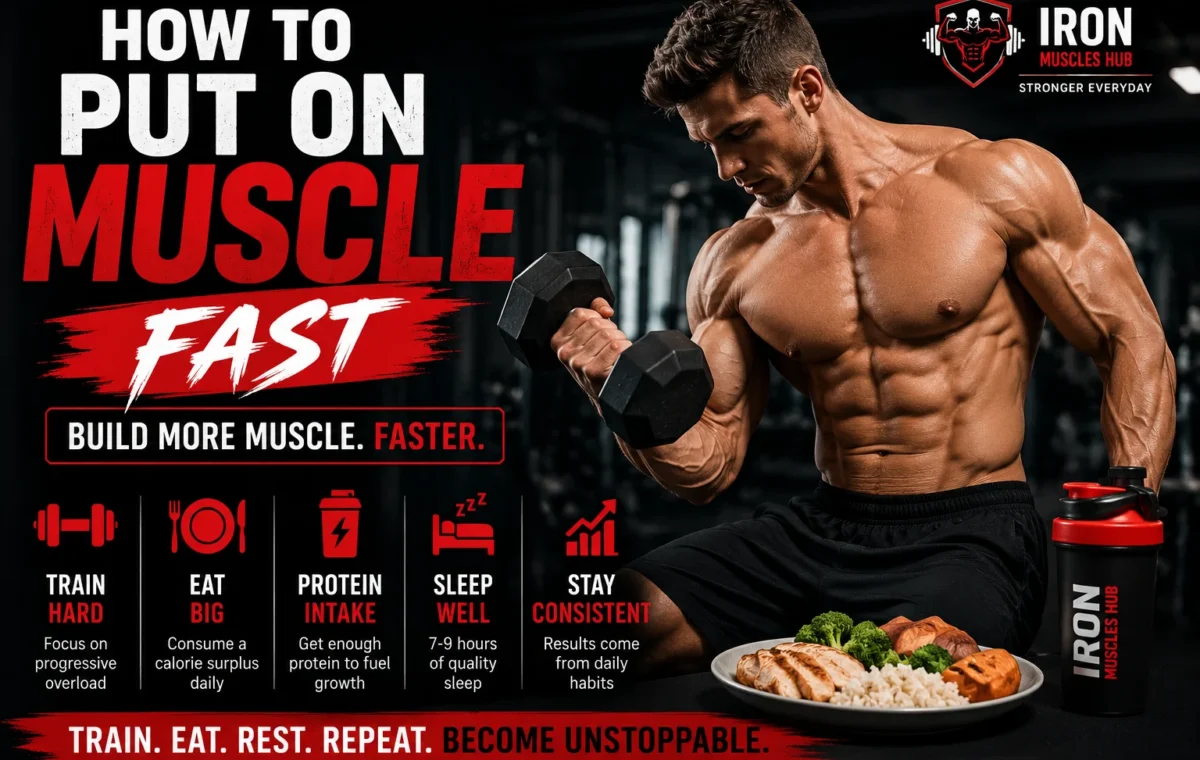
If you’re searching for how to put on muscle fast, the most effective approach is to combine progressive strength training, a protein-rich diet, quality sleep, and consistent recovery. While muscle growth takes time, following the right plan can help you build strength and lean muscle as efficiently as possible.
- Key Takeaways
- Increased Strength
- Faster Metabolism
- Better Posture
- Improved Athletic Performance
- Higher Confidence
- Best Compound Exercises
- Sample Weekly Workout
- Example
- Step 6: Eat Enough to Support Muscle Growth
- High-Protein Foods
- Lean Bulk Approach
- Get Enough Sleep
- Take Rest Days
- 1. Not Eating Enough Calories
- 2. Eating Too Much Junk Food
- 3. Ignoring Protein
- 4. Skipping Meals Often
- How can I put on muscle fast naturally?
- How many days a week should I train to gain muscle?
- What foods help you gain muscle quickly?
- Can skinny people put on muscle fast?
- Do I need protein powder to build muscle?
- Why am I not gaining muscle even though I work out?
- Training
- Nutrition
- Recovery
- Trying to Gain Weight Too Quickly
- Copying Advanced Lifters
- Ignoring Technique
- Measuring Progress Only by Weight
Many beginners think they need expensive supplements or complicated workout programs to gain muscle quickly. The truth is much simpler. Consistently lifting weights, eating enough nutritious food, and allowing your body to recover will produce far better results than chasing shortcuts.
This guide explains exactly how to put on muscle fast naturally, even if you’re completely new to strength training. For more insights read here :-Lean and Muscular and how to get a compact body build .
Quick Answer
| Goal | Best Action |
|---|---|
| Build Muscle Faster | Strength train 3–5 times weekly |
| Gain Lean Size | Eat enough protein and quality calories |
| Increase Strength | Use progressive overload |
| Recover Better | Sleep 7–9 hours each night |
| Minimize Fat Gain | Follow a lean bulk instead of overeating |
| Stay Consistent | Follow your plan for several months |
Key Takeaways
- Lift progressively heavier weights.
- Prioritize compound exercises.
- Eat protein with every meal.
- Get enough sleep every night.
- Stay consistent for long-term muscle growth.
What Does “Putting on Muscle Fast” Really Mean?
Putting on muscle fast doesn’t mean gaining as much body weight as possible.
Instead, it means maximizing your body’s natural ability to build lean muscle tissue while keeping unnecessary fat gain under control.
Healthy muscle growth depends on:
- Resistance training
- Progressive overload
- Proper nutrition
- Recovery
- Consistency
Although social media often promotes overnight transformations, real muscle growth happens gradually through months of disciplined effort.
Benefits of Building Muscle
Building muscle provides more than just physical appearance.
Increased Strength
Everyday activities become easier as your muscles become stronger.
You’ll notice improvements when lifting, carrying, climbing stairs, and participating in sports.
Faster Metabolism
Muscle tissue requires more energy than fat tissue, helping support a healthy metabolism when combined with regular exercise and balanced nutrition.
Better Posture
Strengthening your back, shoulders, and core improves posture and helps reduce muscular imbalances.
Improved Athletic Performance
Building muscle contributes to:
- Greater power
- Better balance
- Improved endurance
- Faster sprinting
- Increased stability
Higher Confidence
Many people feel more confident after becoming stronger and healthier.
Progress inside the gym often carries over into daily life.
Can Beginners Build Muscle Quickly?
Yes.
Beginners often experience faster progress during their first several months of consistent resistance training because their bodies are adapting to a completely new stimulus.
To make the most of this period:
- Follow a structured workout plan.
- Eat nutritious meals consistently.
- Prioritize sleep.
- Train with proper technique.
- Track your progress.
Step 1: Focus on Compound Exercises
Compound exercises train multiple muscle groups at once.
These movements allow you to lift heavier weights and stimulate greater muscle growth than isolation exercises alone.
Best Compound Exercises
| Exercise | Primary Muscles Worked |
|---|---|
| Squat | Legs, glutes, core |
| Deadlift | Back, hamstrings, glutes |
| Bench Press | Chest, shoulders, triceps |
| Pull-Ups | Back, biceps |
| Barbell Row | Upper back |
| Overhead Press | Shoulders, triceps |
| Lunges | Legs and glutes |
Base most of your workouts around these exercises.
Step 2: Train 3–5 Times Each Week
Your muscles need regular training to grow, but they also need enough recovery.
For most beginners, 3–5 strength-training sessions per week provide an excellent balance between muscle growth and recovery.
Sample Weekly Workout
| Day | Workout |
|---|---|
| Monday | Chest & Triceps |
| Tuesday | Back & Biceps |
| Wednesday | Rest or Walking |
| Thursday | Legs |
| Friday | Shoulders & Core |
| Saturday | Full-Body Workout |
| Sunday | Rest |
Following a consistent schedule helps develop every major muscle group evenly.
Step 3: Use Progressive Overload
Progressive overload is one of the most important principles of muscle growth.
It simply means gradually increasing the demands placed on your muscles.
You can do this by:
- Adding more weight
- Performing extra repetitions
- Increasing the number of sets
- Improving exercise technique
- Reducing rest periods slightly
Example
| Week | Bench Press |
|---|---|
| Week 1 | 3 × 8 @ 100 lb |
| Week 3 | 3 × 10 @ 100 lb |
| Week 5 | 3 × 8 @ 110 lb |
Small improvements each week create significant progress over time.
Step 4: Train Every Muscle Group
Avoid focusing only on your chest and arms.
A balanced physique requires developing your:
- Chest
- Back
- Shoulders
- Legs
- Arms
- Core
Training your entire body improves strength, posture, athletic performance, and muscle symmetry.
Step 5: Don’t Skip Cardio
Many people believe cardio prevents muscle growth.
In reality, moderate cardio improves heart health, endurance, and recovery while helping manage body fat.
Good cardio choices include:
- Walking
- Cycling
- Swimming
- Rowing
- Light jogging
Aim for 20–30 minutes, 2–3 times each week, alongside your strength-training program.
Signs You’re Gaining Muscle
Progress isn’t measured only by the scale.
Look for these signs:
- Increased strength
- Better muscle definition
- Clothes fitting differently
- Improved posture
- More workout endurance
- Better recovery between sessions
Taking progress photos every month can help you notice changes that are difficult to see day to day.
Common Beginner Mistakes
Avoid these common errors if you want to put on muscle fast:
- Skipping compound exercises
- Training without a structured plan
- Changing workout programs too often
- Using poor exercise technique
- Ignoring recovery
- Expecting instant results
- Missing workouts regularly
Consistency always produces better results than constantly searching for the “perfect” routine.
Step 6: Eat Enough to Support Muscle Growth
Training breaks down muscle fibers, but food provides the energy and nutrients your body needs to rebuild them stronger.
If you want to learn how to put on muscle fast, your nutrition needs to support your workouts. Many beginners train hard but fail to gain muscle because they simply aren’t eating enough quality food. also explore leaner physique
Your goal should be a controlled calorie surplus, meaning you eat slightly more calories than your body uses while continuing to train consistently.
A smart muscle-building diet focuses on:
- Enough protein
- Quality carbohydrates
- Healthy fats
- Plenty of vitamins and minerals
- Proper hydration
Prioritize Protein for Muscle Growth
Protein is essential for repairing and building muscle tissue.
A practical approach is to include a protein source in every main meal.
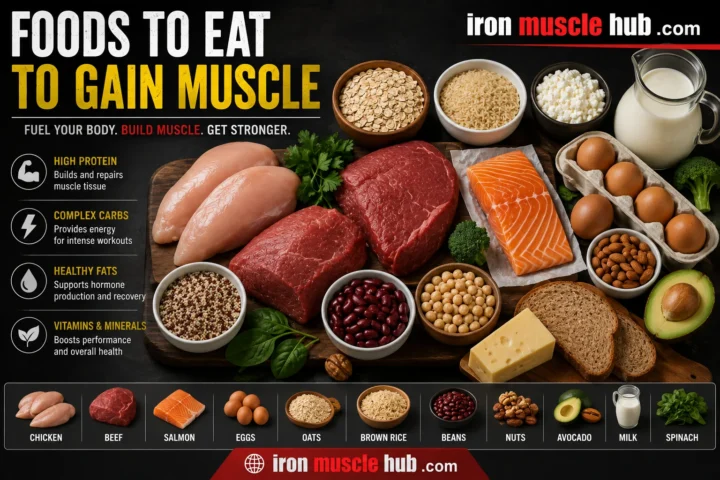
High-Protein Foods
| Food | Why It Helps |
|---|---|
| Chicken breast | Lean source of protein |
| Eggs | Complete protein with nutrients |
| Greek yogurt | Convenient high-protein option |
| Fish | Protein plus healthy fats |
| Lean beef | Protein, iron, and minerals |
| Turkey | Low-fat protein source |
| Cottage cheese | Slow-digesting protein |
| Tofu | Plant-based protein |
| Lentils | Protein and fiber |
| Whey protein | Convenient supplement option |
Eating protein regularly throughout the day makes it easier to support muscle recovery.
Choose Carbohydrates for Training Energy
Many beginners avoid carbohydrates because they think carbs automatically cause fat gain.
That isn’t true.
Carbohydrates provide energy for intense workouts and help your muscles perform better.
Good muscle-building carbohydrate sources include:
- Oats
- Rice
- Potatoes
- Sweet potatoes
- Whole-grain bread
- Fruits
- Vegetables
- Quinoa
A hard workout requires fuel. Eating enough carbohydrates can help you train with more intensity.
Include Healthy Fats
Healthy fats support overall health and provide important calories for people trying to gain muscle.
Good options include:
- Avocados
- Nuts
- Seeds
- Olive oil
- Peanut butter
- Salmon
- Whole eggs
Don’t remove fats completely from your diet. They play an important role in a balanced nutrition plan.
Step 7: Follow a Lean Bulk Strategy
If your goal is to put on muscle fast, gaining weight too quickly is usually not the best approach.
A lean bulk focuses on gaining muscle while limiting unnecessary fat gain.
Lean Bulk Approach
| Goal | Approach |
|---|---|
| Gain muscle | Eat slightly more than you burn |
| Improve strength | Train consistently |
| Limit fat gain | Choose mostly nutritious foods |
| Maintain definition | Monitor progress regularly |
Eating unlimited amounts of junk food may increase your body weight, but much of that gain may come from fat rather than muscle.
Example Muscle-Building Meal Plan
| Meal | Example Foods |
|---|---|
| Breakfast | Oatmeal, eggs, fruit |
| Snack | Greek yogurt with nuts |
| Lunch | Chicken, rice, vegetables |
| Pre-workout | Banana and peanut butter |
| Dinner | Steak or fish, potatoes, salad |
| Evening snack | Cottage cheese or protein shake |
This type of meal structure provides consistent protein and energy throughout the day.
Step 8: Recover Properly for Maximum Growth
Training is only one part of muscle building.
Recovery is when your body repairs muscle tissue and adapts to your workouts.
Get Enough Sleep
Sleep is one of the most overlooked parts of building muscle.
Aim for:
7–9 hours of sleep per night
Good sleep supports:
- Muscle recovery
- Workout performance
- Energy levels
- Training consistency
Poor sleep can make workouts feel harder and slow progress.
Take Rest Days
More workouts do not always mean faster results.
Your muscles need time to recover after challenging sessions.
Include:
- 1–3 rest days each week
- Light walking
- Stretching
- Mobility exercises
Rest days help you return stronger for your next workout.
Step 9: Stay Hydrated
Water supports many important processes involved in exercise performance.
Hydration helps with:
- Muscle function
- Temperature regulation
- Workout endurance
- Recovery
Simple habits:
- Drink water regularly throughout the day.
- Carry a water bottle during workouts.
- Increase fluids during hot weather or intense training.
Supplements: Are They Necessary?
Supplements can be useful, but they are not required for muscle growth.
A strong training plan and proper diet should come first.
Common supplements people use include:
| Supplement | Purpose |
|---|---|
| Whey Protein | Helps increase daily protein intake |
| Creatine Monohydrate | Supports strength and high-intensity exercise |
| Vitamin D | Useful for people with low vitamin D levels |
| Fish Oil | Supports general health |
Always choose quality products and remember supplements support your routine; they don’t replace it.
Common Nutrition Mistakes That Slow Muscle Growth
1. Not Eating Enough Calories
Many beginners train hard but don’t consume enough food to support growth.
If your body doesn’t have enough energy, gaining muscle becomes harder.
2. Eating Too Much Junk Food
A calorie surplus helps muscle growth, but excessive processed foods can lead to unnecessary fat gain.
Focus on quality calories most of the time.
3. Ignoring Protein
Low protein intake can limit your body’s ability to repair and build muscle.
Include protein throughout your day.
4. Skipping Meals Often
Consistent nutrition makes it easier to reach your muscle-building goals.
Planning meals ahead can help you stay on track.
How Long Does It Take to Put on Muscle?
Muscle growth speed depends on:
- Training experience
- Genetics
- Nutrition
- Sleep
- Workout consistency
A realistic timeline:
| Time Period | Possible Progress |
|---|---|
| First Month | Better strength and exercise technique |
| 3 Months | Noticeable improvements in muscle size |
| 6 Months | Visible physique changes |
| 12 Months | Significant muscle development with consistency |
Beginners often progress faster at first, while advanced lifters usually gain muscle more slowly.
Weekly Muscle Growth Checklist
Use this simple checklist:
✅ Strength train 3–5 times weekly
✅ Eat protein with every meal
✅ Increase workout difficulty gradually
✅ Sleep 7–9 hours nightly
✅ Drink enough water
✅ Track your workouts
✅ Stay consistent for months
Building muscle is a process of repeating good habits.
How can I put on muscle fast naturally?
To put on muscle fast naturally, focus on three foundations: progressive strength training, eating enough protein and calories, and recovering properly. There are no safe shortcuts that replace consistent effort. Beginners often see faster early progress because their bodies are adapting to resistance training for the first time.
How many days a week should I train to gain muscle?
Most beginners can build muscle effectively by strength training 3–5 days per week. The best schedule is one you can follow consistently while allowing enough recovery between workouts. Training harder is not always better if your body does not have time to repair and grow.
What foods help you gain muscle quickly?
Foods that support muscle growth include high-quality protein sources, complex carbohydrates, and healthy fats.
Examples include:
- Eggs
- Chicken
- Fish
- Lean beef
- Greek yogurt
- Rice
- Oats
- Potatoes
- Fruits
- Vegetables
- Nuts
A balanced diet provides the nutrients needed for stronger workouts and better recovery.
Can skinny people put on muscle fast?
Yes. People with naturally slim builds can gain muscle through consistent resistance training and proper nutrition. Many beginners with lower muscle mass experience noticeable improvements when they start following a structured workout routine and eating enough calories.
The key is avoiding under-eating and focusing on gradual strength progress.
Do I need protein powder to build muscle?
No. Protein powder is optional.
You can build muscle using whole foods alone if you consume enough protein from sources such as meat, eggs, dairy products, fish, beans, and plant-based foods.
Protein powder can simply make it easier for some people to reach their daily protein goals.
Why am I not gaining muscle even though I work out?
Common reasons include:
- Not eating enough calories
- Not consuming enough protein
- Using the same weights for months
- Poor workout technique
- Lack of sleep
- Changing programs too frequently
- Not training consistently
Muscle growth requires both effective training and proper recovery.
Beginner Muscle Growth Plan
A simple plan is often better than a complicated one.
Training
- Strength train 3–5 times per week
- Focus on compound movements
- Increase weights gradually
- Train all major muscle groups
Nutrition
- Include protein in every meal
- Eat enough calories to support growth
- Choose mostly whole foods
- Stay hydrated
Recovery
- Sleep 7–9 hours
- Take rest days
- Manage stress
- Allow muscles time to repair
Mistakes That Slow Down Muscle Growth
Trying to Gain Weight Too Quickly
Many beginners think more food automatically means more muscle.
Large calorie increases often lead to extra fat gain instead of quality muscle.
A controlled approach usually produces a better-looking physique.
Copying Advanced Lifters
A professional athlete’s routine may not be suitable for a beginner.
Start with the basics:
- Good technique
- Consistent workouts
- Gradual progression
- Proper recovery
Build your foundation before adding complexity.
Ignoring Technique
Using heavier weights with poor form can increase injury risk and reduce muscle stimulation.
Learn proper movement patterns first, then increase the challenge.
Measuring Progress Only by Weight
The scale does not tell the complete story.
Track:
- Strength improvements
- Body measurements
- Progress photos
- Workout performance
- Energy levels
Muscle gain and body composition changes can happen even when your weight changes slowly.
How to Track Your Muscle Growth Progress
A simple tracking system can help you stay motivated.
Record:
| Tracking Method | Why It Helps |
|---|---|
| Workout log | Shows strength improvements |
| Monthly photos | Shows visual changes |
| Body measurements | Tracks physical changes |
| Body weight | Shows overall trends |
| Energy levels | Shows recovery quality |
Check progress every few weeks instead of judging yourself every day.
Final Thoughts
Learning how to put on muscle fast is less about finding a secret technique and more about mastering the basics consistently. A strong muscle-building plan combines challenging workouts, nutritious food, quality sleep, and patience.
Focus on improving a little each week. Add weight when you can, eat meals that support your goals, and give your body enough time to recover.
Building muscle naturally is a long-term process, but the habits you develop along the way create results that last. Stay consistent, track your progress, and remember that steady improvement is what creates a stronger, healthier body.