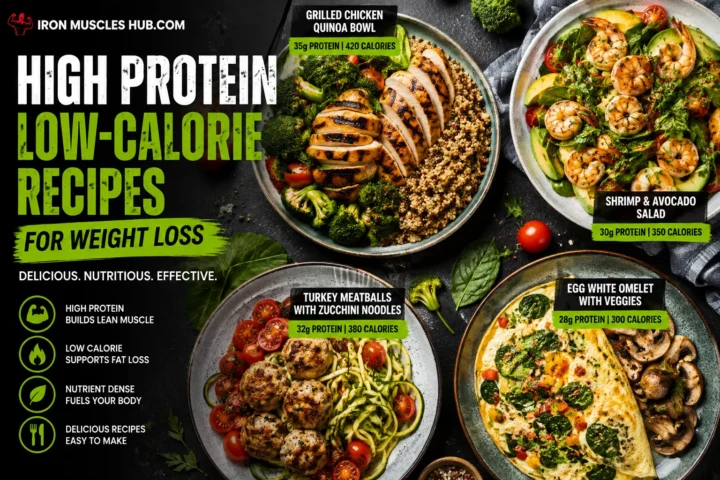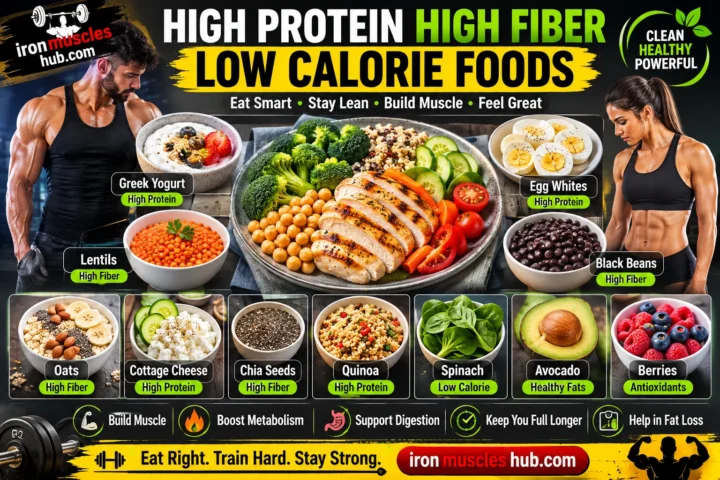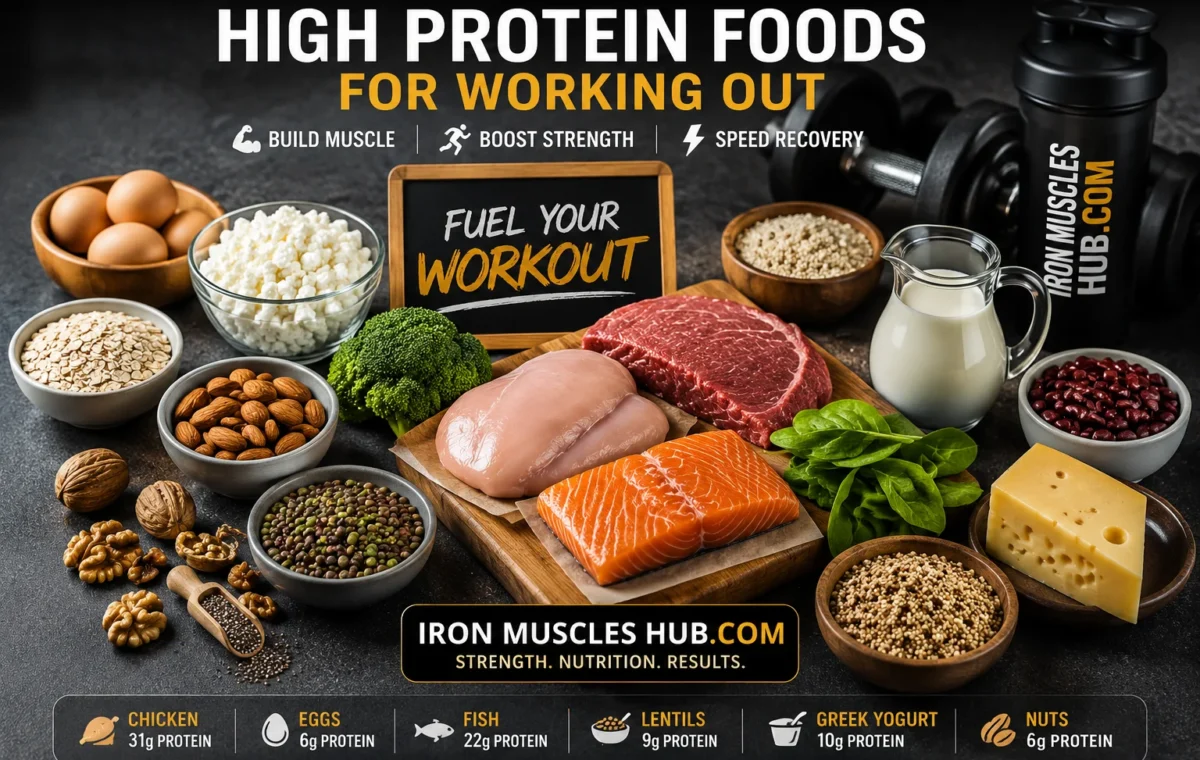
If you’re working out regularly, high protein foods for working out can help you meet the protein your body needs to repair and maintain muscle. The best choices aren’t limited to chicken and protein shakes.
- Quick Answer
- What Are the Best High Protein Foods for Working Out?
- 1. Chicken
- 2. Eggs
- 3. Greek Yogurt
- 4. Cottage Cheese
- 5. Fish
- 6. Lean Beef
- 7. Turkey
- 8. Milk
- 9. Tofu
- 10. Tempeh
- 11. Lentils
- 12. Beans
- 13. Edamame
- 14. Protein-Rich Breakfast Foods
- High Protein Foods for Working Out: Comparison Table
- How Much Protein Do You Need When Working Out?
- Worked Example: 80 kg / 176 lb Beginner
- How Should You Spread Protein Across the Day?
- What Should You Eat Before a Workout?
- If You Have 2–3 Hours
- If You Have 30–90 Minutes
- What Should You Eat After a Workout?
- Mistake 1: Eating Almost All Your Protein at Dinner
- Mistake 2: Thinking Chicken Is the Only Muscle Food
- Mistake 3: Ignoring Carbohydrates
- Mistake 4: Assuming More Protein Always Means More Muscle
- Mistake 5: Depending Completely on Protein Shakes
- Mistake 6: Forgetting Portion Size
- Step 1: Pick a Protein
- Step 2: Add a Carbohydrate
- Step 3: Add Plants
- Step 4: Add Fat as Needed
- Breakfast
- Lunch
- Dinner
- Snacks
- 1. What are the best high protein foods for working out?
- 2. How much protein do I need when working out?
- 3. What should I eat before a workout?
- 4. What should I eat after a workout?
- 5. Can I build muscle with food alone?
Eggs, Greek yogurt, milk, fish, lean meat, cottage cheese, beans, lentils, tofu, tempeh, and other protein-rich foods can all fit into a beginner-friendly diet.
For most exercising adults, a useful evidence-based target is around 1.4–2.0 grams of protein per kilogram of body weight per day, or roughly 0.64–0.91 grams per pound. NIH guidance gives a similar practical range of about 0.5–0.9 g/lb per day for athletes.
The goal isn’t to eat enormous amounts of protein. It’s to consistently get enough from a balanced diet while training properly. For more insights read here :- how to build muscle and lean build .
Quick Answer
- Best high protein foods: chicken, turkey, lean beef, fish, eggs, Greek yogurt, cottage cheese, milk, tofu, tempeh, beans, lentils and edamame.
- Daily protein target: about 1.4–2.0 g/kg (0.64–0.91 g/lb) for most exercising individuals.
- Spread protein across the day instead of trying to eat most of it in one meal. A common research-supported approach is roughly 20–40 g per meal every 3–4 hours, depending on body size and circumstances.
- Pair protein with carbohydrates around training when useful. Protein supports muscle repair, while carbohydrates can help provide training fuel and restore glycogen.
What Are the Best High Protein Foods for Working Out?
The best high protein foods for working out are foods that make it easy to consistently reach your daily protein target while also providing useful nutrients, calories, carbohydrates, fats, vitamins or minerals.
For beginners, I recommend building your meals around a main protein source, then adding vegetables or fruit, a carbohydrate source and an appropriate amount of dietary fat.
You don’t need a complicated meal plan.
You need foods you’ll actually eat repeatedly.
1. Chicken
Chicken is one of the easiest protein foods to build meals around.
Chicken breast is particularly useful if you want a relatively lean protein source. Chicken thighs can also work well if you prefer their flavor and texture.
Try chicken with:
- Rice and vegetables
- Potatoes and salad
- Whole-grain wraps
- Pasta
- Beans
- Stir-fried vegetables
For beginners, meal-prepped chicken can solve one of the biggest problems with eating enough protein: convenience.
2. Eggs
Eggs are an affordable and versatile protein food.
They work particularly well at breakfast, but you can also use them for lunch, dinner or snacks.
Try:
- Scrambled eggs with toast
- Omelet with vegetables
- Boiled eggs with a sandwich
- Eggs with potatoes
- Eggs mixed into a rice-based meal
Eggs also provide other nutrients, so they’re more than simply a way to add protein.
3. Greek Yogurt
Greek yogurt is an easy option when you want protein without cooking.
Choose plain or lower-sugar varieties if that fits your overall diet.
You can combine Greek yogurt with:
- Berries
- Banana
- Oats
- Nuts
- Seeds
- Whole-grain cereal
It can also work as a post-workout snack when you don’t feel like preparing a full meal.
4. Cottage Cheese
Cottage cheese is another convenient dairy protein.
It can be eaten on its own or combined with other foods.
Try it with fruit for a snack, or use it as part of a larger meal.
If you don’t enjoy the texture, blending it into a smoothie or mixing it into another recipe can make it easier to eat.
5. Fish
Fish gives you protein along with other nutrients.
Good options include:
- Salmon
- Tuna
- Sardines
- Cod
- Haddock
- Trout
- Prawns or shrimp
Fatty fish such as salmon and sardines also provide omega-3 fats.
A simple meal of fish, potatoes or rice and vegetables is an excellent beginner-friendly workout meal.
6. Lean Beef
Lean beef can be useful for people who enjoy red meat.
It provides high-quality protein and also contributes nutrients such as iron and vitamin B12.
You can use lean beef in:
- Burgers
- Stir-fries
- Tacos
- Chilli
- Pasta
- Rice bowls
You don’t need to eliminate red meat to eat for muscle growth. Just keep your overall diet varied.
7. Turkey
Turkey is another versatile protein source.
Turkey mince is especially useful because you can turn it into meatballs, chilli, burgers or rice bowls.
A simple turkey wrap with vegetables and a carbohydrate source can make a practical pre- or post-workout meal.
8. Milk
Don’t overlook ordinary milk.
Milk provides protein along with carbohydrates and several micronutrients.
It can be useful when you need a quick addition to breakfast or a snack.
For example:
Oats + milk + banana + Greek yogurt can create a much more protein-rich breakfast than oats cooked only with water.
9. Tofu
Tofu is a useful plant-based protein option.
It works particularly well in stir-fries, curries and rice bowls.
For better flavor, press firm tofu, season it well and cook it until the outside becomes browned.
You can combine tofu with rice, noodles, vegetables and a sauce for a complete meal.
10. Tempeh
Tempeh is another soy-based protein food.
Its firmer texture makes it useful in sandwiches, stir-fries and bowls.
If you’re following a plant-based diet, rotating tofu, tempeh, beans, lentils, edamame and other foods can make it easier to build varied meals.
11. Lentils
Lentils are particularly useful because they provide both protein and carbohydrates, along with fiber.
They’re excellent in:
- Lentil curry
- Daal
- Soups
- Grain bowls
- Salads
For a higher-protein meal, combine lentils with another protein source such as eggs, yogurt, tofu or chicken.
12. Beans
Black beans, kidney beans, chickpeas and other legumes can contribute meaningful protein to your diet.
They aren’t just a side dish.
Use them in:
- Burrito bowls
- Chilli
- Wraps
- Salads
- Curries
- Bean and rice meals
Plant proteins can absolutely be part of a muscle-building diet. NIH notes that animal foods contain all essential amino acids, while combining different plant protein sources can help provide the essential amino acids your body needs.
13. Edamame
Edamame is an easy plant-based protein choice.
You can eat it as a snack or add it to rice, noodles, salads and stir-fries.
Frozen edamame is particularly convenient because it requires very little preparation.
14. Protein-Rich Breakfast Foods
Your first meal doesn’t need to be a traditional “fitness breakfast.”
You could have:
- Eggs and whole-grain toast
- Greek yogurt with oats and fruit
- Cottage cheese and fruit
- Oats with milk and yogurt
- Tofu scramble
- Eggs with potatoes and vegetables
The important part is that your breakfast contributes meaningfully to your daily protein intake.
High Protein Foods for Working Out: Comparison Table
There isn’t one perfect protein food. Your best choice depends on your diet, budget, cooking time, calorie needs and preferences.
| Food | Protein quality | Convenience | Best use |
|---|---|---|---|
| Chicken | High | High | Lunch/dinner |
| Eggs | High | High | Breakfast/snacks |
| Greek yogurt | High | Very high | Breakfast/snack |
| Cottage cheese | High | Very high | Snack/breakfast |
| Salmon | High | Medium | Main meal |
| Tuna | High | Very high | Quick meals |
| Lean beef | High | Medium | Lunch/dinner |
| Turkey | High | High | Meal prep |
| Milk | High | Very high | Breakfast/snacks |
| Tofu | High | High | Plant-based meals |
| Tempeh | High | Medium | Plant-based meals |
| Lentils | Moderate-to-high | High | Curries/soups |
| Beans | Moderate-to-high | Very high | Bowls/chilli |
| Edamame | High | Very high | Snacks/bowls |
Coach’s pick for beginners: don’t choose only one food.
Rotate several sources throughout the week.
That gives you more variety and makes your diet easier to maintain.
How Much Protein Do You Need When Working Out?
For most people who exercise regularly, 1.4–2.0 g/kg/day is a reasonable evidence-based range.
That works out to approximately 0.64–0.91 g/lb/day. The NIH Office of Dietary Supplements also reports approximately 0.5–0.9 g/lb/day for athletes.
You don’t automatically need the top end.
Your actual needs can depend on your training, body size, total calorie intake, age, goals and diet.
For a beginner, I’d start with consistency rather than chasing the highest possible number.
Worked Example: 80 kg / 176 lb Beginner
Suppose you weigh:
80 kg (176 lb)
Using the 1.4–2.0 g/kg range:
- 80 × 1.4 = 112 g/day
- 80 × 2.0 = 160 g/day
So an 80 kg (176 lb) person could use approximately 112–160 g of protein per day as an evidence-based working range.
That’s not a command to eat 160 g every day.
If you’re new to training, you could choose a practical target somewhere within that range and adjust based on your diet, training and professional guidance.
The important point is that protein needs are based partly on body weight, not simply on how many times you go to the gym.
How Should You Spread Protein Across the Day?
You don’t have to eat protein immediately after every set.
The bigger priority is getting enough total protein each day.
Research summarized by the International Society of Sports Nutrition suggests distributing protein doses across the day, with approximately 20–40 g every 3–4 hours being a useful general framework.
For an 80 kg (176 lb) person aiming for around 130 g/day, a simple structure could look like:
| Meal | Example protein target |
|---|---|
| Breakfast | ~30 g |
| Lunch | ~35 g |
| Snack | ~25–30 g |
| Dinner | ~35–40 g |
| Daily total | ~125–135 g |
These are planning numbers, not exact physiological requirements.
You don’t need to hit them perfectly.
A day that gives you 126 g instead of 130 g isn’t a failed day.
Consistency matters much more.
What Should You Eat Before a Workout?
A good pre-workout meal usually combines protein with carbohydrates, particularly when you have enough time to digest a meal before training.
Carbohydrates can provide useful training fuel, while protein contributes amino acids needed for muscle protein synthesis and recovery.
If You Have 2–3 Hours
Try:
- Chicken + rice + vegetables
- Turkey sandwich + fruit
- Greek yogurt + oats + banana
- Eggs + toast + fruit
- Tofu + rice + vegetables
If You Have 30–90 Minutes
Choose something smaller and easier to digest:
- Greek yogurt + banana
- Milk + banana
- Toast + eggs
- Small yogurt and fruit
- A simple smoothie containing milk or yogurt
Large, high-fat meals immediately before training may feel uncomfortable for some people.
Your stomach is part of the equation.
If a meal makes you feel heavy during squats, deadlifts or running, move it earlier or reduce its size.
What Should You Eat After a Workout?
Your post-workout meal doesn’t need to be complicated.
A combination of protein and carbohydrates is a practical choice.
Examples include:
- Chicken + rice
- Salmon + potatoes
- Eggs + toast
- Greek yogurt + oats + fruit
- Lean beef + rice
- Tofu + noodles
- Lentil curry + rice + yogurt
Protein supports muscle repair and adaptation, while carbohydrates can help restore energy stores after training.
There’s also no need to panic if you can’t eat within minutes of finishing your workout.
Research indicates that the anabolic effect of resistance exercise lasts well beyond the workout itself, so your overall daily nutrition remains a major priority.
Common Mistakes → Why → Fix
Mistake 1: Eating Almost All Your Protein at Dinner
Why: You may technically reach your daily number, but you’re making the rest of the day unnecessarily difficult.
Fix: Add a meaningful protein source to breakfast and lunch.
Instead of having a very low-protein breakfast followed by a huge protein-heavy dinner, spread protein across several meals.
Mistake 2: Thinking Chicken Is the Only Muscle Food
Why: Eating the same food every day quickly becomes boring.
Fix: Rotate your sources.
Use chicken one day, fish another, eggs and dairy on another meal, then tofu, lentils or beans elsewhere.
A varied diet is easier to sustain.
Mistake 3: Ignoring Carbohydrates
Why: Some beginners hear “high protein” and accidentally turn every meal into meat plus vegetables.
Fix: Include appropriate carbohydrate sources such as rice, potatoes, oats, pasta, bread, fruit or other grains.
Protein is important, but carbohydrates can also support training performance and recovery.
Mistake 4: Assuming More Protein Always Means More Muscle
Why: Muscle growth isn’t controlled by protein alone.
Fix: Combine adequate protein with progressive resistance training, sufficient energy and recovery.
Eating more protein cannot replace a well-designed training program.
Mistake 5: Depending Completely on Protein Shakes
Why: Shakes are convenient, but they don’t automatically make a diet better.
Fix: Build your normal meals around whole foods first.
Protein powder can be useful when convenience is important, but NIH and sports-nutrition research recognize that active people can obtain protein from ordinary foods.
Mistake 6: Forgetting Portion Size
Why: A food can be nutritious and high in protein but still contribute a lot of calories.
Fix: Match portions to your goal.
Someone trying to gain weight may need larger portions and more energy.
Someone trying to reduce body fat may prefer leaner protein sources and carefully manage overall calorie intake.
How to Build a High-Protein Workout Meal
Use this simple four-part system.
Step 1: Pick a Protein
Choose:
- Chicken
- Fish
- Eggs
- Lean beef
- Turkey
- Greek yogurt
- Cottage cheese
- Tofu
- Tempeh
- Lentils
- Beans
Step 2: Add a Carbohydrate
Examples:
- Rice
- Potatoes
- Oats
- Pasta
- Bread
- Whole grains
- Fruit
Step 3: Add Plants
Use vegetables or fruit for fiber and micronutrients.
Examples:
- Broccoli
- Spinach
- Peppers
- Tomatoes
- Carrots
- Berries
- Bananas
- Apples
Step 4: Add Fat as Needed
Options include:
- Nuts
- Seeds
- Olive oil
- Avocado
- Nut butter
The amount depends on your overall calorie needs.
This approach is much easier than trying to construct every meal around a precise bodybuilding diet.
High Protein Meal Ideas for Beginners
Breakfast
Option 1: Eggs + whole-grain toast + fruit
Option 2: Greek yogurt + oats + berries + nuts
Option 3: Oats cooked with milk + Greek yogurt + banana
Lunch
Option 1: Chicken + rice + vegetables
Option 2: Tuna sandwich + fruit + yogurt
Option 3: Lentil curry + rice + yogurt
Dinner
Option 1: Salmon + potatoes + vegetables
Option 2: Lean beef + rice + mixed vegetables
Option 3: Tofu stir-fry + noodles or rice
Snacks
- Greek yogurt
- Cottage cheese and fruit
- Boiled eggs
- Milk and fruit
- Edamame
- Nuts with yogurt
You don’t need a “perfect” menu.
You need a menu you can repeat.
What About Plant-Based Protein?
You can build a protein-rich workout diet without relying on meat.
Useful choices include:
- Tofu
- Tempeh
- Edamame
- Lentils
- Chickpeas
- Beans
- Peas
- Soy foods
- Whole grains
- Nuts and seeds
Plant foods contain different amino-acid profiles. NIH recommends eating a varied diet containing different plant protein sources so you can obtain the essential amino acids your body needs.
A simple plant-based meal might be:
Tofu + rice + edamame + vegetables
Or:
Lentils + rice + vegetables + yogurt, if dairy fits your diet.
You don’t need to make plant-based eating unnecessarily complicated.
30-Second Protein Decision Rule
Here’s a quick test you can use when planning a meal:
Ask: “Where is the protein?”
If you can’t identify a meaningful protein source, improve the meal.
For example:
Toast + jam
Protein source? Not much.
Improve it:
Toast + eggs + fruit
Now you have a clearer protein source alongside carbohydrates and fruit.
Another example:
Rice + vegetables
Protein source? Relatively limited.
Improve it:
Rice + chicken + vegetables
That’s the kind of simple decision-making beginners can use without tracking every gram of food.
Who Is This Approach Not For?
This general guide is designed for healthy adults who exercise and want practical nutrition information.
It isn’t a personalized diet prescription.
You should get individualized advice from a qualified healthcare professional or registered dietitian if you have kidney disease, liver disease, a medically prescribed diet, significant digestive problems, are pregnant, are recovering from an eating disorder, or have another medical condition that affects nutrition.
Children and teenagers also have different nutritional needs and shouldn’t simply follow an adult high-protein plan.
FAQ
1. What are the best high protein foods for working out?
Some of the most useful choices include chicken, turkey, lean beef, fish, eggs, Greek yogurt, cottage cheese, milk, tofu, tempeh, lentils, beans and edamame. The best food is one that provides useful protein, fits your dietary preferences and is practical enough for you to eat consistently. You don’t need to rely on one particular “muscle-building” food.
2. How much protein do I need when working out?
For most exercising individuals, approximately 1.4–2.0 g/kg (0.64–0.91 g/lb) of protein per day is an evidence-supported range. NIH guidance gives about 0.5–0.9 g/lb/day for athletes. Your ideal intake can vary according to body size, training, calorie intake and goals.
3. What should I eat before a workout?
A practical pre-workout meal often combines protein and carbohydrates. Examples include Greek yogurt with oats and fruit, chicken with rice, eggs with toast, or a turkey sandwich with fruit. The amount and timing depend on how much time you have before training and what your stomach tolerates. If eating shortly before exercise, smaller and easier-to-digest meals may be more comfortable.
4. What should I eat after a workout?
Choose a meal or snack containing protein and, when useful, carbohydrates. Chicken and rice, salmon and potatoes, eggs and toast, Greek yogurt with oats and fruit, or tofu with rice are simple options. You don’t need to consume a protein source within a few minutes of finishing your workout. Total daily protein and overall diet quality remain major priorities.
5. Can I build muscle with food alone?
Protein-rich food provides the raw materials needed to support muscle maintenance and growth, but food alone isn’t enough to create a complete muscle-building program. Resistance training provides the exercise stimulus. Adequate protein, enough overall energy, recovery and a progressive training plan work together. Simply increasing protein while doing no appropriate resistance training won’t replace the training stimulus required for muscle development.
Final Takeaway
The best high protein foods for working out aren’t necessarily expensive or complicated. Start with foods you already enjoy: eggs, chicken, fish, Greek yogurt, milk, lean meat, beans, lentils, tofu and other practical protein sources.
For most exercising adults, 1.4–2.0 g/kg (0.64–0.91 g/lb) per day is a useful evidence-based range. Spread your protein across several meals, include carbohydrates to support training, and keep your overall diet balanced.
Most importantly, don’t turn protein into a numbers competition. Pick foods you can afford, prepare and eat consistently. Then let your training, recovery and patience do their part.
If you’re just starting, build one high-protein meal at a time rather than trying to change your entire diet overnight.