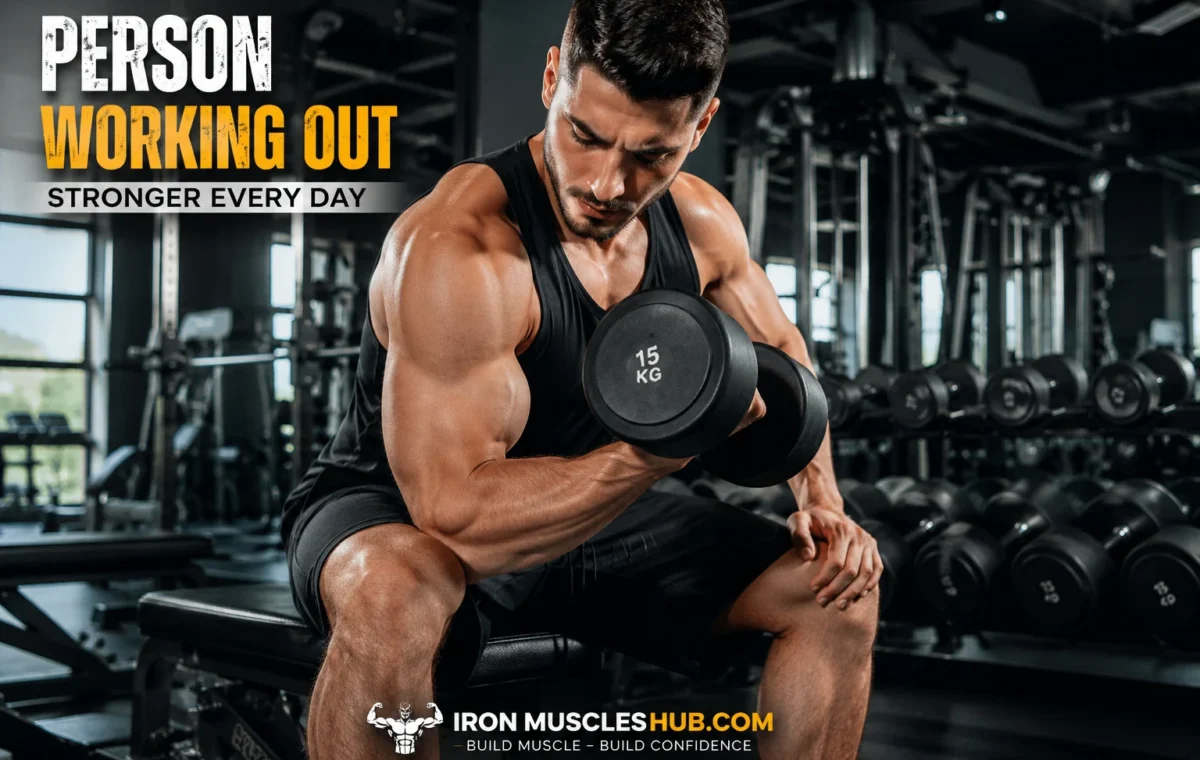
If you’re a person working out for the first time, you don’t need a complicated six-day program or a gym full of expensive equipment. Start with a manageable routine that trains the major muscle groups, uses controlled technique, and gives your body time to recover.
- Quick Answer: What Should a Person Working Out Do?
- Start With the Major Movement Patterns
- 1. Squat
- 2. Hinge
- 3. Push
- 4. Pull
- 5. Core Stability
- How Long Should a Beginner Workout?
- Example Beginner Week
- Worked Example: Progressing a Dumbbell Exercise
- Week 1
- Week 2
- Week 3
- The 30-Second Self-Test
- Mistake 1: Starting Too Heavy
- Mistake 2: Training Hard Every Day
- Mistake 3: Copying an Advanced Workout
- Mistake 4: Changing the Program Every Week
- Mistake 5: Ignoring Technique
- Mistake 6: Treating Soreness as the Goal
- Training performance
- Movement quality
- Consistency
- General fitness
- Rule 1: Improve technique first
- Rule 2: Add small amounts
- Rule 3: Keep a training log
- Rule 4: Don't force progression every workout
- Week 1: Learn
- Week 2: Repeat
- Week 3: Build
- Week 4: Review
- How often should a person work out?
- How long should a person work out?
- Is working out 2 days a week enough?
- Should beginners lift heavy weights?
- Should you work out every day?
For most healthy adults, a useful baseline is regular aerobic activity plus muscle-strengthening work on at least 2 days each week. Beginners can start below their eventual training level and gradually build up.
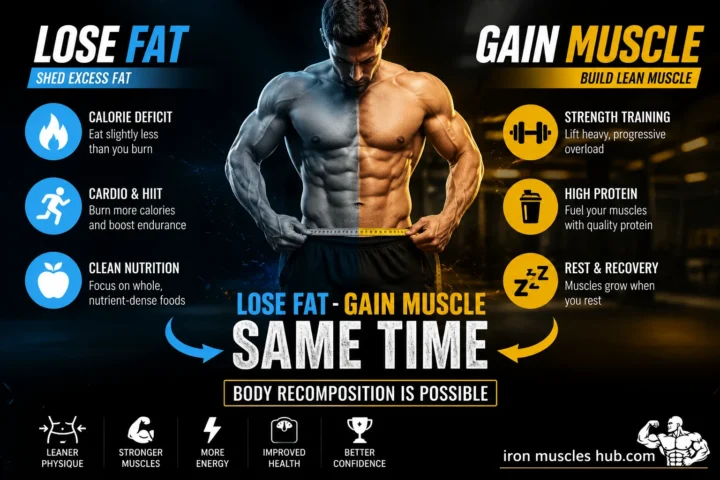
The goal isn’t to make your first week brutal. It’s to build a routine you can repeat. For more insights read here :- lose weight or build muscle and muscle gain fat loss.
Quick Answer: What Should a Person Working Out Do?
- Start with 2–3 strength sessions per week rather than trying to train hard every day.
- Train the major movement patterns: squat, hinge, push, pull and core stability.
- Choose a resistance you can control with good technique.
- Increase resistance gradually as exercises become easier.
- Keep recovery days in your schedule instead of treating rest as wasted time.
Mayo Clinic recommends strength exercises for the major muscle groups at least twice weekly and emphasizes appropriate resistance, controlled technique and gradual progression.
What Does a Person Working Out Actually Need to Do?
A beginner needs consistency before complexity. Your first goal is to learn basic movements, establish a realistic schedule and become comfortable exercising without constantly chasing heavier weights or harder workouts.
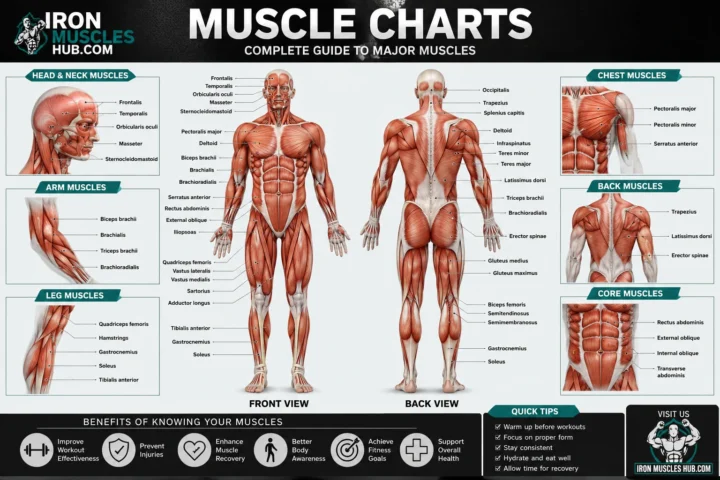
A good beginner session can include a squat pattern, a pushing exercise, a pulling exercise, a hip-hinge movement and a simple core exercise. You can perform these with body weight, resistance bands, dumbbells, machines or other appropriate equipment.
You don’t need a particular type of gym to start.
Mayo Clinic notes that strength training can be performed with free weights, machines, resistance bands or body weight.
Start With the Major Movement Patterns
Think about movements rather than trying to memorize dozens of exercises.
1. Squat
Squat movements train your lower body, particularly the muscles around your hips and thighs.
Beginner options include:
- Bodyweight squat
- Goblet squat
- Box squat
- Leg press
Start with a range of motion you can control comfortably.
2. Hinge
A hinge teaches you to move from your hips while keeping your trunk controlled.
Beginner choices include:
- Hip hinge drill
- Romanian deadlift with light dumbbells
- Kettlebell deadlift
- Glute bridge
The important part isn’t lifting a large weight. It’s learning to control the movement.
3. Push
Pushing exercises train muscles across the chest, shoulders and arms.
Examples include:
- Wall push-up
- Incline push-up
- Dumbbell chest press
- Machine chest press
- Dumbbell shoulder press
Choose the version that lets you maintain good technique.
4. Pull
Pulling exercises train the back and arm muscles.
Good beginner choices include:
- Seated cable row
- Resistance-band row
- Lat pulldown
- Chest-supported dumbbell row
Keep your shoulders controlled instead of jerking the weight toward your body.
5. Core Stability
Your core isn’t just about visible abdominal muscles.
Beginner exercises can include:
- Plank
- Dead bug
- Bird dog
- Side plank
Use controlled breathing rather than holding your breath throughout the entire exercise.
Mayo Clinic’s weight-training guidance also emphasizes breathing, proper technique and training the major muscle groups in a balanced way.
A Simple Beginner Workout for a Person Working Out
You can use the following full-body routine as a starting framework.
| Exercise | Beginner option | Sets | Reps |
|---|---|---|---|
| Squat | Bodyweight or goblet squat | 1–2 | 8–12 |
| Push | Incline push-up | 1–2 | 8–12 |
| Pull | Seated row | 1–2 | 8–12 |
| Hinge | Light Romanian deadlift | 1–2 | 8–12 |
| Core | Plank | 1–2 | 15–30 sec |
| Easy cardio | Walk or cycle | 1 | 10–20 min |
These aren’t mandatory numbers for every beginner. Your starting point should reflect your current fitness, movement skill and ability to recover.
Mayo Clinic advises beginners to use a resistance level that can be controlled for roughly 12–15 repetitions in its general strength-training guidance, while also stressing that technique should determine when you reduce the load.
How Long Should a Beginner Workout?
There isn’t a single workout duration that works for everyone.
A practical beginner session may take 30–45 minutes, including your warm-up, strength work and a short cooldown or easy movement.
If you only have 20 minutes, you can still train. A shorter workout that you actually complete is more useful than a 90-minute program that you constantly skip.
Your weekly activity matters more than making every individual workout extremely long.
For general health, U.S. physical activity guidance recommends adults accumulate 150–300 minutes of moderate-intensity aerobic activity per week, or 75–150 minutes of vigorous activity, along with muscle-strengthening activity on at least 2 days per week.
How Often Should a Person Working Out Exercise?
For a beginner, 2–3 strength sessions per week is a sensible starting structure.
You could train on:
- Monday
- Wednesday
- Friday
Or:
- Tuesday
- Saturday
The exact days don’t matter as much as choosing a schedule you can maintain.
ACSM guidance supports resistance exercise for major muscle groups on 2–3 days per week, while U.S. guidelines recommend muscle-strengthening activity on at least 2 days per week.
If you’re currently inactive, you don’t have to jump immediately to the full weekly guideline.
The Physical Activity Guidelines specifically recognize that beginners can start with lighter activity and gradually increase the number of days and intensity.
Example Beginner Week
| Day | Activity | Goal |
|---|---|---|
| Monday | Full-body strength | Learn movements |
| Tuesday | Easy walk | General activity |
| Wednesday | Rest or easy movement | Recovery |
| Thursday | Full-body strength | Practice |
| Friday | Easy walk | General activity |
| Saturday | Optional strength or activity | Build consistency |
| Sunday | Rest | Recovery |
This isn’t the only correct schedule.
If you can only train twice weekly, that’s still a legitimate starting point.
Choosing the Right Weight
One of the most common beginner questions is: “How much should I lift?”
The answer is not a universal number.
The right starting weight is one you can move with controlled technique while completing your planned repetitions.
For example, suppose you’re learning a dumbbell goblet squat.
You might test a 10 kg (22 lb) dumbbell.
If you can perform your repetitions smoothly and could clearly perform several more controlled repetitions, that load may be manageable.
If your knees, back or trunk position becomes difficult to control halfway through the set, the weight is probably too demanding for your current skill level.
Mayo Clinic advises choosing an appropriate resistance, maintaining good form and reducing the weight or repetitions when technique breaks down.
Worked Example: Progressing a Dumbbell Exercise
Imagine you’re doing a dumbbell Romanian deadlift.
Week 1
- 10 kg (22 lb) per hand
- 10 repetitions
- Controlled tempo
- Good technique
Week 2
You repeat the same weight.
The movement feels easier and your technique remains solid.
Week 3
You may try:
- 12 kg (26 lb) per hand
- 8–10 controlled repetitions
The goal isn’t to add weight every single workout.
The goal is to make the exercise gradually more challenging without sacrificing technique.
That is a much better beginner habit than increasing weight simply because the number on the dumbbell feels too small.
How to Warm Up Before Working Out
A warm-up should prepare you for the movements you’re about to perform.
It doesn’t need to become a second workout.
A simple warm-up could include:
- Easy walking or cycling.
- Gentle movement through the joints you’ll use.
- A few bodyweight repetitions of the first exercise.
- Gradually increasing resistance before your working sets.
For example, before a squat workout:
- 3–5 minutes of easy movement
- 8–10 bodyweight squats
- Several controlled practice repetitions
- Then your first working set
If you’re new to exercise, start carefully and build gradually. Mayo Clinic’s beginner guidance also recommends starting slowly and progressing rather than immediately attempting high workloads.
How Hard Should a Person Working Out Train?
A beginner doesn’t need to make every set an all-out effort.
Your priority should be quality repetitions.
Ask yourself:
Could I repeat this exercise with similar technique?
If the answer is yes, you probably have reasonable control.
If your final repetitions involve swinging, bouncing, shortening the movement dramatically or losing body position, reduce the resistance.
Mayo Clinic recommends lowering the weight or repetitions if you can’t maintain good form.
This approach also makes it easier to learn what normal training effort feels like.
The 30-Second Self-Test
Before increasing your weight, check three things:
1. Control: Can you perform the movement without rushing?
2. Position: Can you maintain the intended body position?
3. Repeatability: Could you perform another repetition without a major technique change?
If all three are yes, consider a small progression when appropriate.
If one is no, stay at the current resistance or make the exercise easier.
Rest Between Workouts Matters
A common beginner mistake is thinking that more workouts automatically mean faster progress.
Training is the stimulus. Recovery gives your body time to adapt.
Mayo Clinic recommends avoiding training the same muscle group on consecutive days and advises giving the muscles recovery time between strength sessions.
That doesn’t mean you need to spend every non-training day on the sofa.
Walking, normal daily activity and other comfortable movement can fit around strength training.
The key is avoiding a pattern where every day becomes a hard training day.
Person Working Out at Home vs. Person Working Out in a Gym
You can build a useful beginner routine in either environment.
| Feature | Home Workout | Gym Workout |
|---|---|---|
| Equipment | Body weight, bands, dumbbells | Machines, cables, free weights |
| Convenience | High | Requires travel |
| Exercise variety | Moderate | High |
| Beginner confidence | Often comfortable | Can feel intimidating |
| Progression | Possible | Usually many load options |
| Cost | Often lower | Membership may be required |
| Coaching access | Limited unless online | Trainers may be available |
Neither option automatically produces better results.
The best environment is the one where you can train consistently and safely.
Mayo Clinic specifically notes that strength training can be performed at home or in a gym, including with body weight and resistance bands.
Common Mistakes → Why → Fix
Mistake 1: Starting Too Heavy
Why: Beginners sometimes judge a workout by how much weight they can move rather than how well they can control it.
Fix: Start with a manageable resistance. Increase it only when your technique remains reliable.
Mayo Clinic recommends gradually increasing resistance while maintaining proper form.
Mistake 2: Training Hard Every Day
Why: Muscles need recovery after demanding strength sessions.
Fix: Begin with 2–3 strength days and use the other days for rest or easier activity.
Mistake 3: Copying an Advanced Workout
Why: An experienced lifter has different movement skill, work capacity and training history.
Fix: Choose fewer exercises and learn them well.
Mistake 4: Changing the Program Every Week
Why: Constantly changing exercises makes it difficult to tell whether you’re improving.
Fix: Keep a simple routine long enough to learn the movements and track your performance.
Mistake 5: Ignoring Technique
Why: Adding resistance to poor movement can make the exercise harder without making it better.
Fix: Reduce the load and practice the movement under control.
Mistake 6: Treating Soreness as the Goal
Why: Muscle soreness isn’t the only measure of a successful workout.
Fix: Judge your training by consistency, technique, performance and recovery.
Who This Is NOT For
This beginner guide isn’t a substitute for medical assessment or individualized rehabilitation.
You should get professional guidance before starting or significantly changing an exercise program if you have an injury, significant medical condition, unexplained pain, or other concerns that could affect exercise safety.
It’s also not designed as an advanced bodybuilding program for someone already training consistently.
A beginner needs a different starting point from an experienced lifter.
What Should You Eat as a Person Working Out?
You don’t need an extreme diet to begin exercising.
Build meals around ordinary nutritious foods that fit your needs and preferences.
Useful categories include:
- Protein-rich foods
- Fruits and vegetables
- Whole grains and other carbohydrate sources
- Healthy fat sources
- Adequate fluids
Your total nutrition needs depend on your body size, activity, goals and other factors, so avoid copying another person’s calorie intake simply because they’re training.
For general health and sustainable habits, NIH guidance emphasizes realistic goals, choosing physical activities you enjoy and building habits that you can maintain.
If muscle gain is your goal, resistance training should be paired with appropriate nutrition and recovery rather than relying on one particular food or supplement.
Do You Need Supplements?
No supplement is required simply because you started working out.
For a beginner, the priority list is much simpler:
- Consistent training
- Appropriate food intake
- Adequate recovery
- Good exercise technique
- Gradual progression
Supplements can have specific uses, but they shouldn’t distract you from the basics.
Avoid products marketed with guaranteed muscle gain, instant fat loss or dramatic transformations.
How to Know You’re Improving
Don’t judge progress only by the bathroom scale.
Track several simple measures.
Training performance
Can you perform more controlled repetitions?
Can you use a slightly heavier resistance while maintaining technique?
Movement quality
Does the exercise feel more natural?
Can you control the full movement more confidently?
Consistency
Are you completing your planned sessions?
A routine you follow for months is more valuable than a perfect routine you abandon after two weeks.
General fitness
Are everyday activities becoming easier?
Can you walk, climb stairs or perform normal tasks with less effort?
The Physical Activity Guidelines report that regular physical activity provides broad health benefits, while ACSM supports combining aerobic and resistance exercise as part of a healthy adult fitness program.
Person Working Out: Beginner Progression Rules
Once your technique is stable, use a simple progression system.
Rule 1: Improve technique first
Don’t add weight if your movement quality is deteriorating.
Rule 2: Add small amounts
You don’t need dramatic increases.
A small increase from 10 kg (22 lb) to 12 kg (26 lb) can be meaningful when it allows you to maintain good technique.
Rule 3: Keep a training log
Record:
- Exercise
- Weight
- Repetitions
- Sets
- Notes about technique
This gives you objective information instead of relying on memory.
Rule 4: Don’t force progression every workout
Some days you’ll perform better than others.
Sleep, stress, previous training and daily energy can all affect how a session feels.
Your program should allow for normal variation.
A 4-Week Beginner Starting Framework
Here’s a simple way to organize your first month.
Week 1: Learn
Perform two full-body sessions.
Focus on:
- Technique
- Comfortable resistance
- Learning exercise setup
- Finishing sessions feeling capable rather than destroyed
Week 2: Repeat
Use the same basic exercises.
Try to make your repetitions slightly more controlled.
Don’t rush to increase every weight.
Week 3: Build
If an exercise feels clearly easier and technique remains good, consider a modest resistance increase.
For example:
10 kg (22 lb) → 12 kg (26 lb)
Only make the change when you’re ready.
Week 4: Review
Look at your training log.
Ask:
- Did I complete most planned sessions?
- Are my movements more controlled?
- Have some exercises become easier?
- Am I recovering adequately?
- Which exercises feel comfortable?
- Which movements still need coaching?
Then adjust the next month based on what you learned.
Frequently Asked Questions
How often should a person work out?
A beginner can start with 2–3 strength-training sessions per week, with recovery between sessions that train the same muscle groups. General U.S. guidelines recommend muscle-strengthening activity on at least 2 days weekly, while ACSM guidance supports resistance exercise on 2–3 days per week. If you’re currently inactive, starting with less and building gradually is reasonable.
How long should a person work out?
There’s no universal minimum workout duration for strength training. A practical beginner session may fit into roughly 30–45 minutes, including warm-up and training, but shorter sessions can still be useful. The more important issue is whether your routine covers the movements you need and whether you can repeat it consistently.
Is working out 2 days a week enough?
Two weekly strength sessions can be a solid starting point for a beginner. U.S. physical activity guidance recommends muscle-strengthening activities on at least 2 days each week, covering the major muscle groups. You can add more activity later if your schedule, goals and recovery support it.
Should beginners lift heavy weights?
Beginners shouldn’t choose weights simply because they’re heavy. Choose resistance that lets you perform the planned movement with good technique. Mayo Clinic recommends using an appropriate resistance and reducing the load or repetitions if proper form cannot be maintained. As your skill and strength improve, gradually increase resistance.
Should you work out every day?
You can be physically active every day, but that doesn’t mean every day should be a hard strength workout. A beginner can combine strength sessions with easier walking or other activity and recovery days. Avoid training the same muscle group hard on consecutive days when it hasn’t recovered.
Final Takeaway
Being a person working out doesn’t mean you need to train like an experienced athlete. Start with a simple routine, learn the basic movement patterns, use manageable resistance and give your body time to recover. Two or three well-planned strength sessions each week can provide a strong foundation, while walking and other aerobic activity can help you work toward general physical-activity recommendations.
Your first target should be consistency. Once the movements become familiar, you can gradually increase resistance, improve your technique and build a routine that fits your life.
For more beginner-friendly training guides, explore the related Iron Muscle Hub articles on muscle anatomy, strength training and protein-rich meals.