How to Build Muscle.Building muscle comes down to three things: consistent strength training, eating enough protein and calories, and allowing your body to recover. You don’t need a complicated workout plan or expensive supplements to get started. Most beginners can make noticeable progress by following a simple routine for several months.
- Quick Answer
- Why Muscles Grow
- Step 1: Follow a Simple Strength Training Plan
- Best Beginner Exercises
- Step 2: How to Build Muscle Use Progressive Overload
- Example
- Step 3: Eat Enough Protein
- Example
- Step 4: Eat Enough Calories
- Worked Example
- Step 5: Prioritize Recovery
- Common Beginner Mistakes
- Changing Workouts Every Week
- Ignoring Leg Training
- Using Poor Form
- Chasing Supplements
- How Long Does It Take to Build Muscle?
- Muscle-Building Checklist
- Frequently Asked Questions
- Can I build muscle without going to a gym?
- Do I need protein powder?
- Should beginners lift heavy?
- How often should I train each muscle?
- Is cardio bad for muscle growth?
- Build Good Habits Before Chasing Big Muscles
If you’ve been overwhelmed by conflicting advice online, this guide breaks the process into practical steps backed by current sports science. You’ll learn exactly what matters, what doesn’t, and how to avoid the mistakes that slow progress. For more insights read here :–
Quick Answer
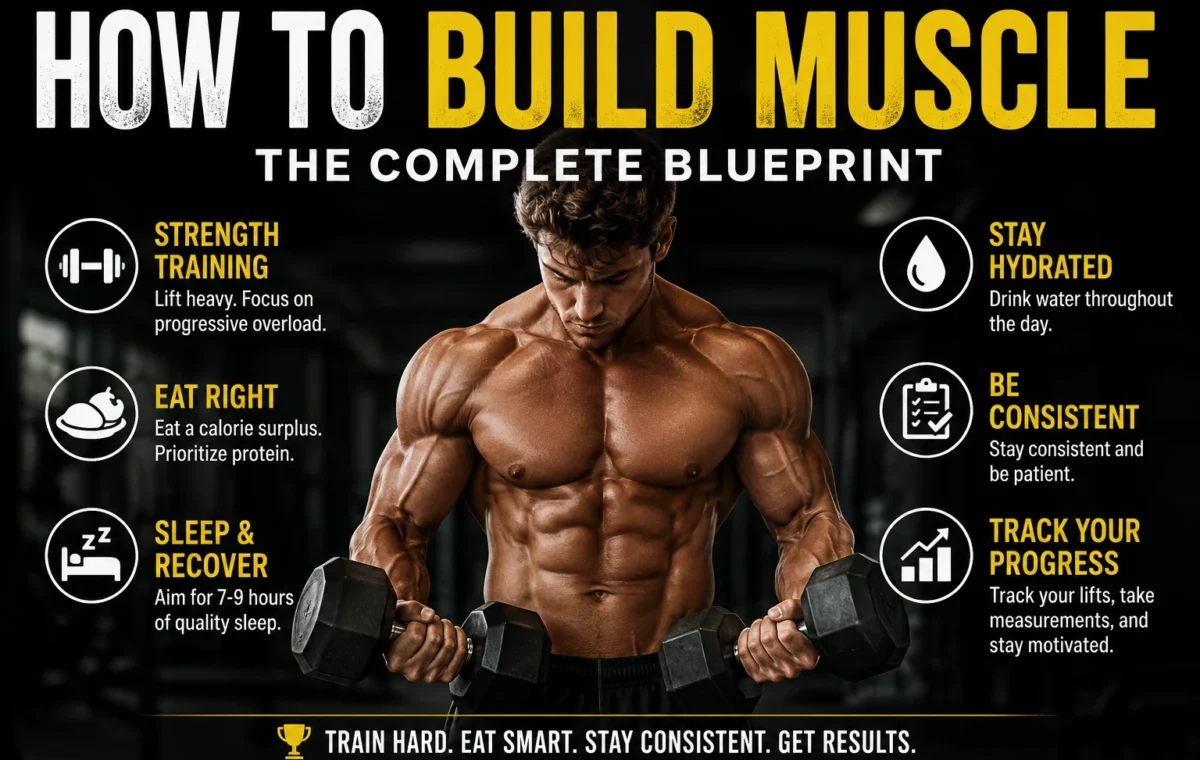
| What matters most | Practical recommendation |
|---|---|
| Strength training | Train each major muscle group with enough weekly volume (around 10 sets per muscle group per week is a good target for many beginners). |
| Progressive overload | Gradually increase weight, reps, or sets over time. |
| Protein | Aim for roughly 1.2–2.0 g of protein per kg of body weight daily, with many muscle-building studies showing benefits around 1.6 g/kg/day. |
| Calories | Eat enough to support muscle growth. A modest calorie surplus helps many people gain muscle more efficiently. |
| Sleep | Aim for 7–9 hours most nights to support recovery. |
| Consistency | The best program is the one you’ll stick with week after week. |
Why Muscles Grow
When you perform resistance training, your muscles experience stress that signals your body to repair and strengthen them. With enough protein, energy, and recovery, your muscles gradually become larger and stronger—a process known as muscle hypertrophy.
According to the 2026 American College of Sports Medicine (ACSM) Position Stand, the biggest improvement comes from moving from no resistance training to consistent resistance training. Fancy workout methods matter far less than showing up regularly.
Step 1: Follow a Simple Strength Training Plan
Beginners don’t need to spend six days a week in the gym.
A practical schedule is:
- 3 full-body workouts per week, or
- 4 upper/lower split workouts per week
Focus on compound exercises that train multiple muscles at once.
Best Beginner Exercises
| Muscle Group | Good Exercises |
|---|---|
| Legs | Squats, Leg Press, Lunges |
| Chest | Bench Press, Push-ups, Dumbbell Press |
| Back | Rows, Lat Pulldowns |
| Shoulders | Overhead Press, Lateral Raises |
| Arms | Bicep Curls, Triceps Pushdowns |
| Core | Planks, Hanging Knee Raises |
For each exercise:
- 2–4 sets
- 6–15 repetitions
- Good technique
- Stop with 1–3 repetitions left before complete failure most of the time
Recent ACSM guidance suggests that muscle growth can occur across a wide range of loads when exercises are performed with sufficient effort, making flexibility possible for beginners.
Step 2: How to Build Muscle Use Progressive Overload
Muscles won’t continue growing if every workout stays exactly the same.
Progressive overload simply means asking your muscles to do a little more over time.
Examples include:
- Add 5 lb (2.5 kg) to the bar.
- Perform one extra repetition.
- Add another set.
- Improve exercise technique and range of motion.
Small improvements every week add up over months.
Example
Week 1:
- Dumbbell Bench Press
- 20 lb dumbbells
- 3 × 10 reps
Week 5:
- 25 lb dumbbells
- 3 × 10 reps
That’s measurable progress without changing your entire workout.
Step 3: Eat Enough Protein
Protein supplies the building blocks your muscles need after training.
Current sports nutrition guidance recommends:
- 1.2–2.0 g/kg/day for people who train regularly.
- Around 1.6 g/kg/day appears to maximize muscle-building benefits for many adults under typical training conditions.
Example
A person weighing 70 kg (154 lb) could aim for approximately:
70 × 1.6 = 112 grams of protein daily
Good protein sources include:
- Chicken
- Turkey
- Fish
- Greek yogurt
- Eggs
- Cottage cheese
- Lean beef
- Tofu
- Tempeh
- Beans
- Lentils
You don’t have to eat all your protein immediately after a workout. Total daily intake matters more than perfect timing when overall nutrition is adequate.
Step 4: Eat Enough Calories
If your goal is building muscle rather than losing weight, eating too little makes progress much harder.
Many beginners benefit from a small calorie surplus, which provides extra energy for muscle growth while helping limit unnecessary fat gain.
Worked Example
Suppose your maintenance intake is approximately:
- 2,300 calories/day
A modest surplus might be:
- 2,500–2,600 calories/day
Track your body weight for several weeks.
If you’re:
- gaining too quickly, reduce calories slightly
- not gaining strength or weight after several weeks, increase calories modestly
Step 5: Prioritize Recovery
Your muscles grow while recovering—not while you’re lifting.
Good recovery habits include:
- Sleep 7–9 hours
- Rest at least one day between training the same muscle group when needed
- Stay hydrated
- Manage stress
- Continue eating enough protein on rest days
Recovery is often the missing piece for beginners who feel they’re working hard without seeing results.
Common Beginner Mistakes
Changing Workouts Every Week
Switching programs constantly makes it difficult to measure progress.
Stick with one routine for at least 8–12 weeks.
Ignoring Leg Training
Training only chest and arms creates muscle imbalances and limits overall strength.
Using Poor Form
Heavier weights don’t help if technique breaks down.
Master movement quality before increasing weight.
Chasing Supplements
Protein powder can help you reach protein goals, but it’s simply a convenient food—not a magic muscle builder.
Creatine monohydrate has strong research supporting improvements in strength and high-intensity exercise performance for many healthy adults, but it works best alongside consistent training and nutrition. Speak with a healthcare professional if you have medical conditions before using supplements.
How Long Does It Take to Build Muscle?
Results vary based on:
- age
- genetics
- training consistency
- nutrition
- sleep
- previous experience
Many beginners notice improved strength within a few weeks. Visible muscle changes often become noticeable after 2–3 months of consistent training, although everyone’s timeline is different.
The key is focusing on monthly progress rather than daily changes.
Muscle-Building Checklist
✓ Train 3–4 times weekly
✓ Use compound exercises
✓ Progress gradually
✓ Eat enough calories
✓ Get enough protein
✓ Sleep well
✓ Stay consistent for months—not days
Frequently Asked Questions
Can I build muscle without going to a gym?
Yes. Bodyweight exercises, resistance bands, adjustable dumbbells, and kettlebells can all stimulate muscle growth if you progressively increase the challenge over time. The principles remain the same: consistent resistance, adequate effort, proper nutrition, and recovery.
Do I need protein powder?
No. Most people can meet their protein needs through whole foods. Protein powder is simply a convenient option if it’s difficult to reach your daily protein target through meals alone.
Should beginners lift heavy?
Not necessarily. Current evidence shows muscle growth can occur across a broad range of weights when exercises are performed with sufficient effort and proper form. Beginners should prioritize learning technique before chasing heavier loads.
How often should I train each muscle?
Many beginners make excellent progress by training each muscle group two times per week, although total weekly training volume is generally more important than exact frequency.
Is cardio bad for muscle growth?
No. Moderate cardio supports heart health and overall fitness. Excessive endurance exercise without adequate nutrition may make muscle gain more difficult, but reasonable amounts of cardio can fit well alongside a muscle-building program.
Build Good Habits Before Chasing Big Muscles
Building muscle doesn’t require secret workouts or expensive supplements. It requires showing up consistently, following a structured strength-training program, eating enough quality food, and allowing your body time to recover. Those basics have stood the test of time, and the latest evidence continues to support them.
Instead of searching for the “perfect” routine, focus on improving a little each week. Add a rep, increase a weight, sleep a bit longer, or eat a more balanced meal. Those small wins compound into meaningful results over months. Stay patient, track your progress, and you’ll give yourself the best chance of building strength and muscle that lasts.