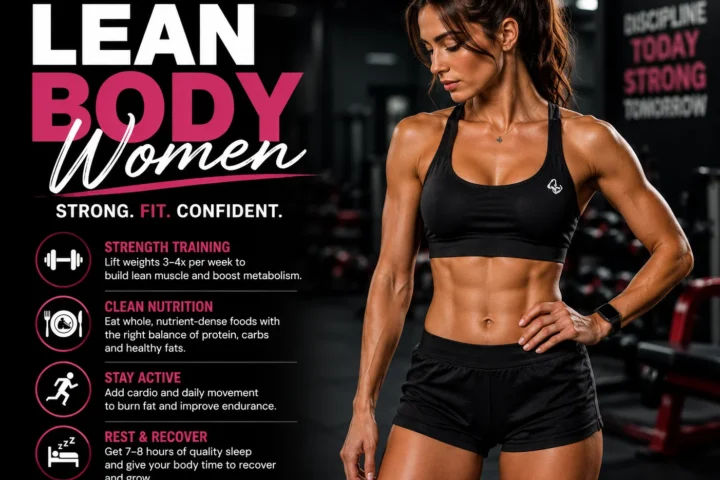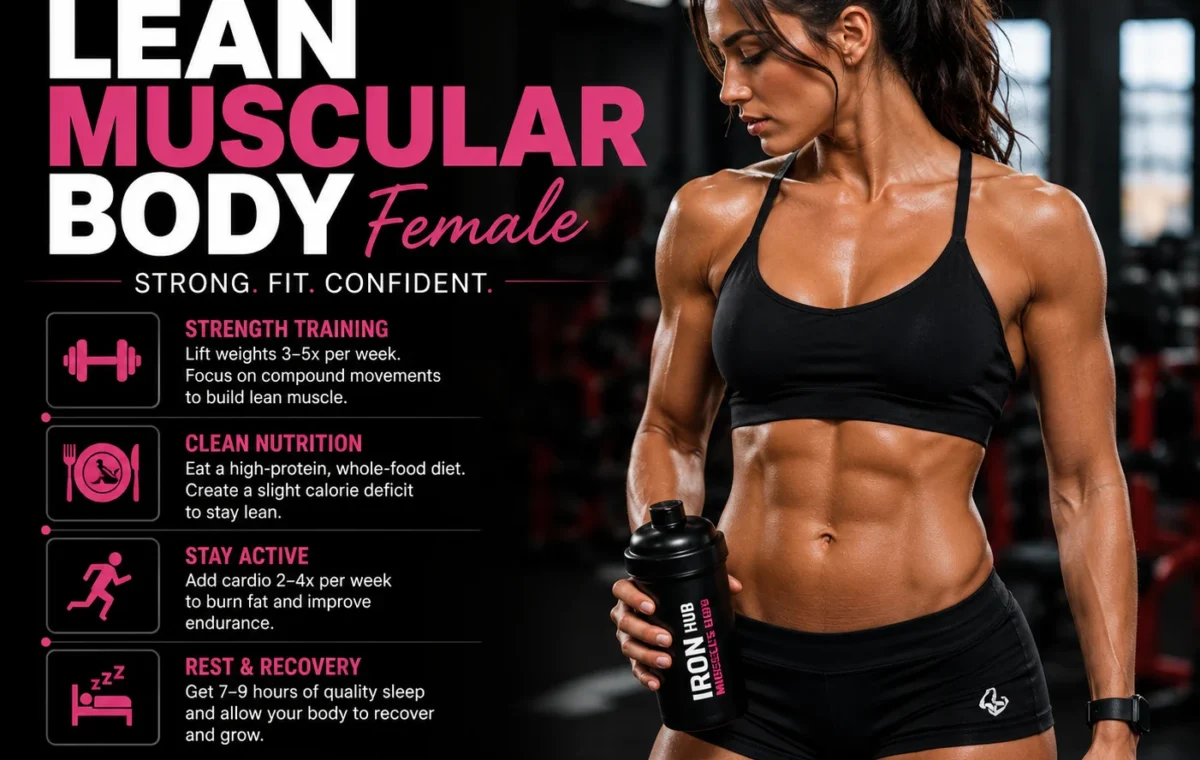
Building a lean muscular body female physique means increasing muscle while keeping body fat at a healthy level. It isn’t about becoming bulky. Instead, you’ll develop a stronger, more defined body through consistent strength training, balanced nutrition, quality sleep, and patience.
- Quick Answer
- Key Takeaways
- Can Women Become Too Muscular?
- Improved Strength
- Faster Metabolism
- Better Posture
- Better Bone Health
- Increased Confidence
- 1. Strength Training
- 2. Nutrition
- 3. Recovery
- 4. Consistency
- Beginner Weekly Workout Schedule
- Lower Body
- Upper Body
- Core
- Example
- Why Protein Matters
- Can women build a lean muscular body without getting bulky?
- How long does it take to get a lean muscular body?
- Should I lose fat before building muscle?
- What foods help women build lean muscle?
- Can I build muscle at home?
- Is cardio bad for muscle growth?
- Do I need protein powder?
- What's the biggest mistake beginners make?
- Week 1–2
- Week 3–6
- Week 7–12
If you’re new to fitness, the good news is that you don’t need extreme diets or endless cardio. A simple, structured plan followed consistently will produce better long-term results than chasing quick fixes.
Whether your goal is toned arms, stronger legs, defined shoulders, or an athletic figure, this guide explains exactly how to get there. For more insights read here :- how to become lean and best way to gain muscle mass fast .
Quick Answer
| Goal | Best Strategy |
|---|---|
| Build lean muscle | Strength train 3–5 days weekly |
| Lose excess body fat | Moderate calorie deficit while eating enough protein |
| Improve muscle definition | Progressive overload and consistent workouts |
| Speed up recovery | Sleep 7–9 hours every night |
| Nutrition | High-protein meals with balanced carbohydrates and healthy fats |
| Time to notice changes | Usually several weeks of consistent training, with larger changes taking months |
Key Takeaways
- Strength training is the foundation of a lean muscular body.
- Women naturally build muscle more slowly than men because of hormonal differences, making “bulking up” much harder than many people think.
- Protein supports muscle repair and growth.
- Cardio is helpful but should support—not replace—strength training.
- Recovery is just as important as workouts.
- Consistency always beats perfection.
Lean Muscular Body Female Mean for Women?
A lean muscular body female physique combines visible muscle definition with a healthy body fat percentage. Instead of simply weighing less, your body composition changes.
This means:
- More muscle tissue
- Less unnecessary body fat
- Better posture
- Increased strength
- Improved athletic performance
- Higher daily calorie expenditure due to greater muscle mass
Many women aim for this look because it creates an athletic appearance rather than simply being “skinny.”
The focus should be on becoming stronger—not chasing a number on the scale.
Why Strength Training Is Essential
One of the biggest myths in fitness is that women should only do cardio to become lean.
In reality, resistance training is what shapes the body.
Benefits include:
- Firmer legs
- Defined shoulders
- Strong glutes
- Better posture
- Improved bone health
- Greater confidence
- Better everyday movement
Without strength training, losing weight often results in losing muscle along with fat, making it harder to achieve a toned appearance.
Can Women Become Too Muscular?
This is one of the most common beginner questions.
For most women, the answer is no.
Building significant muscle requires years of dedicated training, carefully planned nutrition, and often exceptional genetics. Most women naturally develop:
- Lean arms
- Defined shoulders
- Strong legs
- Sculpted glutes
- Visible back muscles
- Improved core definition
Instead of looking bulky, consistent training usually creates a balanced and athletic physique.
Benefits of Building Lean Muscle
A lean muscular body offers far more than appearance.
Improved Strength
Daily activities become easier.
Carrying groceries, climbing stairs, lifting children, moving furniture, or hiking all require less effort.
Faster Metabolism
Muscle tissue requires more energy than fat tissue.
While muscle doesn’t dramatically increase calorie burn on its own, having more lean mass can modestly increase your daily energy needs and support long-term weight management when combined with healthy habits.
Better Posture
Strong back, shoulder, and core muscles help improve posture.
Many people who spend long hours sitting notice reduced discomfort after following a structured strength-training routine.
Better Bone Health
Resistance exercise places healthy stress on bones, encouraging them to remain strong over time. This is especially important for women as they age.
Increased Confidence
Many women report feeling more confident not simply because they look different, but because they become stronger.
Watching yourself lift heavier weights each month can be just as rewarding as seeing physical changes.
The Science Behind Lean Muscle
Muscles grow through a process called muscle protein synthesis.
Here’s a simplified version:
- You perform resistance training.
- Muscle fibers experience tiny amounts of stress.
- Your body repairs those fibers.
- Adequate protein helps rebuild them.
- The repaired fibers become slightly stronger and larger.
Repeating this cycle consistently over months gradually changes your physique.
This process takes time, which is why patience is one of the most valuable fitness habits you can develop. Also explore :-how to become buff
How Long Does It Take to Build a Lean Muscular Body?
Everyone progresses differently.
Your results depend on:
- Training consistency
- Nutrition
- Recovery
- Sleep
- Genetics
- Starting fitness level
- Age
Many beginners notice:
| Timeline | What You May Notice |
|---|---|
| Weeks 1–4 | Better energy, improved workout technique, increased strength |
| Months 2–3 | Slight muscle definition and firmer body shape |
| Months 4–6 | More noticeable changes in muscle tone and body composition |
| 6–12 Months | Significant improvements with consistent effort |
Avoid comparing your progress with social media. Your journey will be unique.
The Four Pillars of Building a Lean Muscular Body
Every successful transformation is built on four key habits.
1. Strength Training
This provides the stimulus for muscle growth.
2. Nutrition
Your body needs enough protein and overall nutrients to repair and build muscle.
3. Recovery
Muscles grow while you recover—not while you’re exercising.
4. Consistency
Missing one workout won’t stop your progress.
Quitting after two weeks will.
Small improvements repeated over months produce impressive results.
Why Crash Diets Don’t Work
Many beginners try eating as little as possible to become lean.
Unfortunately, this often leads to:
- Muscle loss
- Low energy
- Poor workouts
- Slower recovery
- Increased hunger
- Difficulty maintaining results
A balanced eating plan paired with resistance training is a much more sustainable approach.
A balanced workout routine should focus on compound exercises (movements that train several muscles at once) while adding a few isolation exercises to target specific areas.
For beginners, training 3–4 days per week is enough to see excellent progress.
For intermediate lifters, 4–5 sessions each week often works well.
The goal isn’t spending hours in the gym—it’s making each workout productive.
Beginner Weekly Workout Schedule
| Day | Workout |
|---|---|
| Monday | Lower Body + Core |
| Tuesday | Upper Body |
| Wednesday | Rest or Light Walking |
| Thursday | Lower Body |
| Friday | Upper Body + Core |
| Saturday | Optional Cardio or Mobility |
| Sunday | Rest |
This schedule allows each muscle group enough recovery time while keeping training consistent.
Best Exercises for Lean Muscle
Lower Body
Prioritize these movements:
- Barbell Squats
- Goblet Squats
- Romanian Deadlifts
- Hip Thrusts
- Walking Lunges
- Bulgarian Split Squats
- Leg Press
- Step-Ups
- Standing Calf Raises
These exercises strengthen the legs, glutes, and core while improving balance and coordination.
Upper Body
A strong upper body creates balanced muscle definition.
Include:
- Push-Ups
- Dumbbell Bench Press
- Chest Press Machine
- Lat Pulldown
- Seated Cable Row
- Dumbbell Shoulder Press
- Lateral Raises
- Face Pulls
- Dumbbell Biceps Curl
- Triceps Pushdown
Core
Strong abdominal muscles improve stability and posture.
Great beginner exercises include:
- Plank
- Side Plank
- Dead Bug
- Hanging Knee Raise
- Bicycle Crunch
- Cable Wood Chop
- Reverse Crunch
Train your core 2–3 times per week rather than every day.
Progressive Overload: The Secret to Muscle Growth
Many people perform the same workout with the same weights for months and wonder why they stop seeing results.
Your muscles need a reason to adapt.
This is where progressive overload comes in.
You can gradually increase the challenge by:
- Adding more weight
- Performing more repetitions
- Increasing the number of sets
- Improving exercise technique
- Reducing rest time slightly (when appropriate)
Example
Week 1:
- Goblet Squat – 20 lb × 10 reps
Week 4:
- Goblet Squat – 25 lb × 10 reps
Week 8:
- Goblet Squat – 30 lb × 10 reps
Small improvements add up over time.
How Many Sets and Reps?
For most beginners:
| Goal | Sets | Reps |
|---|---|---|
| Muscle Growth | 3–4 | 8–12 |
| Strength | 3–5 | 4–8 |
| Muscular Endurance | 2–3 | 12–15 |
Choose a weight that feels challenging while allowing you to maintain good form.
Nutrition for a Lean Muscular Body
Exercise provides the stimulus, but nutrition supplies the building blocks for muscle growth.
Your meals should include:
- Lean protein
- Complex carbohydrates
- Healthy fats
- Fruits
- Vegetables
- Plenty of water
Avoid thinking of foods as “good” or “bad.” Instead, focus on eating mostly nutrient-dense foods while leaving room for occasional treats.
Why Protein Matters
Protein helps repair muscle tissue after workouts and supports new muscle growth.
Good protein sources include:
- Chicken breast
- Turkey
- Fish
- Eggs
- Greek yogurt
- Cottage cheese
- Tofu
- Tempeh
- Lentils
- Beans
- Protein powder (if needed)
Aim to include a protein source with each main meal.
Healthy Carbohydrates
Carbohydrates provide energy for training.
Good choices include:
- Oats
- Brown rice
- Sweet potatoes
- Whole-grain bread
- Whole-wheat pasta
- Quinoa
- Beans
- Fruit
Don’t fear carbohydrates—they help fuel effective workouts.
Healthy Fats
Healthy fats support hormone production and overall health.
Choose foods like:
- Avocados
- Olive oil
- Nuts
- Seeds
- Peanut butter
- Almond butter
- Salmon
- Sardines
Sample Daily Meal Plan
| Meal | Example |
|---|---|
| Breakfast | Greek yogurt, berries, oats |
| Snack | Apple with peanut butter |
| Lunch | Grilled chicken, brown rice, vegetables |
| Snack | Cottage cheese and almonds |
| Dinner | Salmon, sweet potato, broccoli |
| Evening Snack | Protein smoothie or boiled eggs |
This is only an example. Your portion sizes should match your activity level, goals, and appetite.
Hydration Matters
Water supports:
- Muscle function
- Exercise performance
- Recovery
- Digestion
- Body temperature regulation
Drink water consistently throughout the day, and increase your intake during hot weather or intense exercise.
Should Women Do Cardio?
Absolutely.
Cardio supports heart health, endurance, and overall fitness.
The key is balance.
Good options include:
- Walking
- Cycling
- Swimming
- Jogging
- Rowing
- Hiking
Aim for 2–3 moderate cardio sessions each week alongside strength training.
Too much long-duration cardio without adequate nutrition may make recovery more difficult, especially if you’re trying to build muscle.Recovery Is Where Growth Happens
Your muscles repair and grow between workouts.
To recover well:
- Sleep 7–9 hours each night.
- Take at least one full rest day each week.
- Eat balanced meals after training.
- Stay hydrated.
- Manage stress where possible.
Skipping recovery can slow your progress even if you’re training hard.
Common Mistakes Women Make
| Mistake | Better Approach |
|---|---|
| Only doing cardio | Make strength training your priority. |
| Avoiding weights | Use resistance training to build lean muscle. |
| Eating too little | Fuel your body with balanced meals. |
| Skipping protein | Include protein in every main meal. |
| Changing workouts constantly | Follow a structured plan for several weeks. |
| Comparing yourself to others | Track your own strength and progress. |
| Expecting instant results | Focus on consistency over months, not days. |
Tracking Your Progress
The scale doesn’t tell the whole story.
Also monitor:
- Progress photos every 4–6 weeks
- Body measurements
- Strength improvements
- How your clothes fit
- Energy levels
- Workout performance
These markers often show progress before the scale changes.
Can women build a lean muscular body without getting bulky?
Yes. Most women do not naturally gain large amounts of muscle because they have much lower testosterone levels than men. Regular strength training, a balanced diet, and enough protein usually lead to a lean, athletic appearance rather than a bulky physique.
How long does it take to get a lean muscular body?
It depends on your starting point, consistency, nutrition, sleep, and training program. Many beginners notice improvements in strength within the first month, while visible muscle definition often becomes more noticeable after several months of consistent training.
Should I lose fat before building muscle?
Not necessarily.
If you’re new to strength training, you may be able to build muscle while gradually reducing body fat through a process often called body recomposition. Focus on eating a balanced diet, getting enough protein, and following a structured resistance-training program instead of chasing rapid weight loss.
What foods help women build lean muscle?
Choose mostly whole, nutrient-dense foods such as:
- Chicken breast
- Turkey
- Fish
- Eggs
- Greek yogurt
- Cottage cheese
- Tofu
- Lentils
- Beans
- Brown rice
- Oats
- Sweet potatoes
- Fruits
- Vegetables
- Nuts and seeds
Eating a variety of protein, carbohydrates, and healthy fats supports both performance and recovery.
Can I build muscle at home?
Absolutely.
You don’t need a commercial gym to make progress. Resistance bands, adjustable dumbbells, kettlebells, or even bodyweight exercises like squats, push-ups, lunges, glute bridges, and planks can help build strength and muscle when you gradually increase the challenge over time.
Is cardio bad for muscle growth?
No.
Moderate cardio supports heart health, endurance, and overall fitness. The key is balancing it with resistance training and eating enough to recover. Too much high-volume cardio without adequate nutrition may make muscle growth more difficult.
Do I need protein powder?
No.
Protein powder is a convenient option if you struggle to meet your daily protein needs through food, but it isn’t required. Whole-food protein sources can provide everything many people need.
What’s the biggest mistake beginners make?
The biggest mistake is expecting immediate results.
Many people change workouts every week, skip recovery, or give up after a few weeks. Following a simple plan consistently is far more effective than constantly searching for a “perfect” workout.
Weekly Success Checklist
Use this checklist to stay on track:
| Habit | Goal |
|---|---|
| Strength workouts | 3–5 sessions |
| Cardio | 2–3 sessions |
| Protein with meals | Every day |
| Fruits and vegetables | Daily |
| Water | Stay hydrated throughout the day |
| Sleep | 7–9 hours each night |
| Rest days | At least 1–2 per week |
| Progress tracking | Every 4–6 weeks |
Small, consistent habits are what create lasting results.
Beginner Action Plan
If you’re just starting, keep it simple:
Week 1–2
- Learn proper exercise form.
- Complete three full-body strength workouts each week.
- Add short walks on rest days.
- Prioritize regular meals and hydration.
Week 3–6
- Increase weights gradually while maintaining good technique.
- Include more compound exercises.
- Aim for consistent sleep and recovery.
Week 7–12
- Track your strength gains.
- Continue progressive overload.
- Adjust your workout only if you’ve stopped making progress.
Remember, building a lean physique is a long-term process. Consistency matters much more than perfection.
Myths About a Lean Muscular Body
| Myth | Reality |
|---|---|
| Lifting weights makes women bulky. | Most women build lean, defined muscle rather than large muscle mass. |
| Cardio is enough to get toned. | Strength training is the main driver of muscle definition. |
| You must work out every day. | Recovery days are essential for muscle growth. |
| You need expensive supplements. | A balanced diet and consistent training are more important than supplements. |
| The scale is the best measure of success. | Strength, measurements, progress photos, and how you feel are often better indicators. |
Build Strength First, Results Will Follow
A lean muscular body female goal isn’t about becoming the smallest version of yourself—it’s about becoming a stronger, healthier, and more capable one.
Start with a realistic workout schedule, focus on progressive strength training, eat balanced meals with enough protein, and make recovery part of your routine. You don’t need extreme diets, endless cardio sessions, or expensive supplements to see progress.
There will be weeks when motivation is high and others when it’s low. The people who achieve lasting results are usually the ones who continue showing up, even when progress feels slow. Over time, those consistent efforts lead to increased strength, improved confidence, better fitness, and a leaner, more defined physique.
Focus on building habits you can maintain for years, not weeks. Your future self will benefit from every workout, every balanced meal, and every healthy choice you make today.