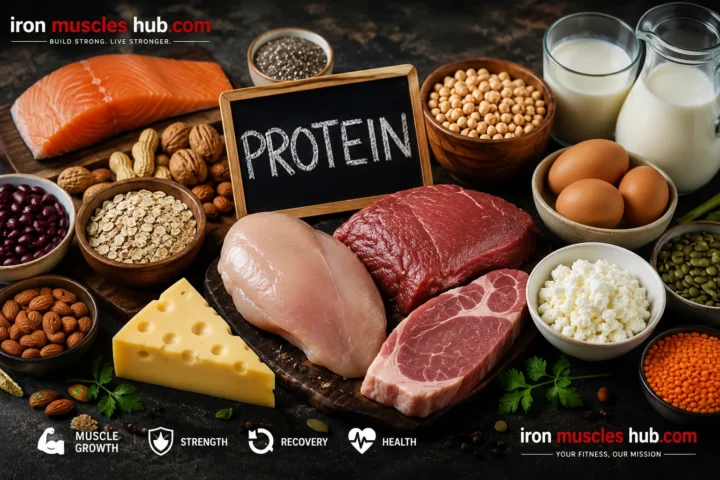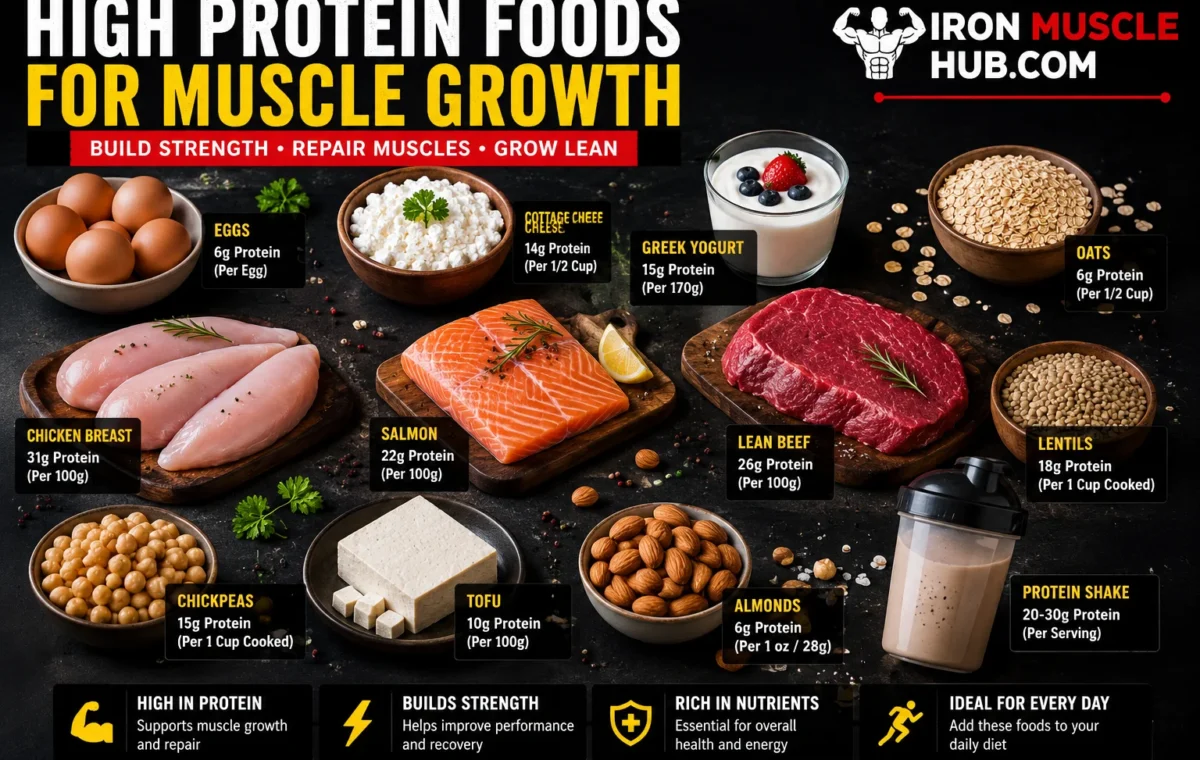
High protein foods for muscle growth include chicken, eggs, fish, lean beef, Greek-style yogurt, cottage cheese, milk, tofu, beans, lentils, and other protein-rich foods. For people who exercise regularly, current evidence commonly supports roughly 1.4–2.0 grams of protein per kilogram of body weight per day, while the 2025–2030 U.S. Dietary Guidelines scientific report gives a general protein target of 1.2–1.6 g/kg/day.
- High Protein Foods for Muscle Growth at a Glance
- How Much Protein Do You Need for Muscle Growth?
- A simple example
- 20 High Protein Foods for Muscle Growth
- 1. Chicken Breast
- 2. Lean Turkey
- 3. Lean Beef
- 4. Salmon
- 5. Tuna
- 6. Eggs
- 7. Greek-Style Yogurt
- 8. Cottage Cheese
- 9. Milk
- 10. Tofu
- 11. Tempeh
- 12. Lentils
- 13. Chickpeas
- 14. Beans
- 15. Edamame
- 16. Peanuts and Peanut Butter
- 17. Almonds and Other Nuts
- 18. Seeds
- 19. Quinoa
- 20. Soy Milk
- How to Build a Muscle-Growth Meal
- A Simple One-Day High-Protein Example
- How to Get More Protein Without Making Your Diet Complicated
- 1. Start with breakfast
- 2. Keep two convenient protein foods available
- 3. Use leftovers
- 4. Mix animal and plant sources
- 5. Read the label instead of guessing
- Common Muscle-Building Protein Mistakes
- Eating huge amounts of protein but barely training
- Thinking more protein always means more muscle
- Relying on processed meat for every meal
- Forgetting carbohydrates and overall calories
- Assuming supplements are required
- How to Choose the Best Protein Foods on a Budget
- What About Protein Powder?
- Internal Link Ideas
- Trusted Nutrition Resources
- Frequently Asked Questions
- What are the best high protein foods for muscle growth?
- How much protein should I eat for muscle growth?
- Can you build muscle with plant-based protein foods?
- What should I eat after a workout for muscle growth?
- Are eggs good for building muscle?
- Do I need protein powder to build muscle?
- Build Your Muscle-Growth Diet Around Foods You Can Repeat
- The Best High Protein Foods for Muscle Growth on a Budget
- Eggs
- Lentils
- Beans
- Milk and Yogurt
- Chicken
- A Simple Protein Grocery List
- How to Spread Protein Through the Day
- High Protein Foods for Muscle Growth If You Don't Eat Meat
- High Protein Breakfast Ideas
- Eggs and Toast
- Yogurt Bowl
- Protein Oats
- Breakfast Wrap
- High Protein Lunch Ideas
- Chicken Rice Bowl
- Tuna Sandwich
- Lentil Curry
- Tofu Stir-Fry
- High Protein Dinner Ideas
- What to Eat Before a Workout
- What to Eat After a Workout
- A Practical Muscle-Building Meal Formula
- Step 1: Pick your protein
- Step 2: Add a carbohydrate
- Step 3: Add vegetables or fruit
- Step 4: Add fats when useful
- Step 5: Adjust portions
- A Common Mistake: Choosing Foods Only by Protein
- High Protein Foods vs. Protein Supplements
- How to Meal Prep High Protein Foods
- How to Know If Your Diet Is Working
- The Bottom Line
- Final Thoughts
The good news is that you don’t need an elaborate diet to support muscle growth. A few affordable protein staples, sensible portions, enough overall food, and consistent resistance training can make your eating plan much easier to follow. For more insights read here :- best way to gain muscle mass fast and leaner physique .
Quick answer: Prioritize protein-rich foods such as poultry, fish, eggs, dairy, soy, beans, lentils, and nuts. Spread protein across your meals instead of trying to eat most of it at dinner, and pair your diet with progressive resistance training.
High Protein Foods for Muscle Growth at a Glance
| Food | Why it’s useful | Easy way to eat it |
|---|---|---|
| Chicken breast | Lean, protein-rich option | Rice bowl, wrap or salad |
| Turkey | Lean poultry choice | Sandwich or mince bowl |
| Lean beef | Protein plus iron and zinc | Stir-fry or chilli |
| Salmon | Protein plus omega-3 fats | Rice and vegetables |
| Tuna | Convenient protein source | Sandwich or pasta |
| Eggs | Versatile complete protein food | Omelette or breakfast |
| Greek-style yogurt | Protein plus calcium | Breakfast or snack |
| Cottage cheese | Protein-rich dairy choice | With fruit or toast |
| Milk | Protein and calcium | Oats, cereal or smoothie |
| Tofu | Plant-based protein | Stir-fry or curry |
| Tempeh | Concentrated soy food | Stir-fry or sandwich |
| Lentils | Protein plus fibre | Dal, soup or curry |
| Chickpeas | Plant protein plus fibre | Curry, salad or hummus |
| Beans | Affordable protein source | Chilli, rice or tacos |
| Edamame | Soy protein and fibre | Side dish or bowl |
| Peanuts | Protein and energy | Peanut butter on toast |
| Almonds | Protein, fats and minerals | Snack or topping |
| Seeds | Convenient plant protein | Oats, yogurt or salad |
| Quinoa | Plant protein plus carbohydrate | Grain bowl |
| Soy milk | Dairy alternative with protein | Cereal or smoothie |
Food choices in this table come from established protein-food categories recognized by USDA MyPlate and UK NHS dietary guidance. Exact protein amounts vary by brand, preparation method and serving size, so check the package label for packaged foods.
How Much Protein Do You Need for Muscle Growth?
There isn’t one perfect protein number for every person.
For healthy adults who exercise, the International Society of Sports Nutrition position stand gives a useful range of 1.4–2.0 g/kg of body weight per day. A large meta-analysis of resistance-training studies found that benefits for fat-free mass generally leveled off around 1.6 g/kg/day.
The 2025–2030 U.S. Dietary Guidelines scientific report recommends 1.2–1.6 g/kg/day as a protein-serving goal within its broader healthy eating framework.
That means you don’t need to chase an extreme protein intake.
A simple example
Suppose someone weighs 70 kg.
Using 1.6 g/kg/day as a practical example:
70 × 1.6 = 112 grams of protein per day.
That’s an example, not a personalized prescription. Your needs can differ based on training, total calorie intake, age, body size and health status.
If you have kidney disease or another condition affected by protein intake, speak with a doctor or registered dietitian before deliberately increasing protein.
20 High Protein Foods for Muscle Growth
1. Chicken Breast
Chicken breast is a simple choice for people who want a protein-rich food without adding large amounts of fat. It works well in rice bowls, wraps, salads and meal-prep containers.
USDA MyPlate specifically lists skinless chicken among lean poultry choices.
2. Lean Turkey
Turkey can fill the same role as chicken while giving you another option for sandwiches, mince-based meals and wraps.
Choose less-processed forms more often, rather than relying heavily on deli meats.
3. Lean Beef
Lean beef supplies protein along with nutrients such as iron and zinc.
You don’t need to eliminate red meat, but variety matters. UK NHS guidance recommends limiting red and processed meat and choosing lean cuts where possible.
4. Salmon
Salmon combines protein with omega-3 fats. It’s especially useful if you want your muscle-building diet to include seafood rather than relying entirely on meat and dairy.
USDA recommends varying seafood choices and highlights salmon and trout among options containing beneficial omega-3 fatty acids.
5. Tuna
Canned tuna is convenient, portable and easy to add to sandwiches, pasta, salads or rice.
Check the label and choose varieties that fit your sodium preferences.
6. Eggs
Eggs are one of the easiest protein foods to use throughout the day. Try scrambled eggs with toast, an omelette with vegetables, or boiled eggs alongside a meal.
USDA counts one egg as an ounce-equivalent within its Protein Foods Group.
7. Greek-Style Yogurt
Greek-style yogurt can make an easy breakfast or snack. Add fruit and oats for carbohydrates, or nuts and seeds for extra energy.
Protein content can vary considerably between products, so compare labels rather than assuming every yogurt contains the same amount.
8. Cottage Cheese
Cottage cheese works well if you want a protein-rich dairy food that requires little preparation.
Try it with fruit for a quick snack or with vegetables and whole-grain toast for a savory meal.
9. Milk
Milk provides protein as well as calcium. NHS guidance identifies milk and dairy foods as useful protein sources, while USDA includes milk and yogurt in its Dairy Group.
If you don’t consume dairy, fortified soy milk can be an alternative.
10. Tofu
Tofu is one of the easiest plant-based protein foods to build meals around. Pan-fry it, bake it or add it to a curry or stir-fry.
USDA recognizes tofu and other soy products as protein foods.
11. Tempeh
Tempeh is another soy-based option with a firm texture that works particularly well in stir-fries, bowls and sandwiches.
It can help add variety if you want fewer animal-based meals.
12. Lentils
Lentils are useful because they bring both protein and fibre to a meal. They’re inexpensive, easy to store and work naturally in soups, curries and dals.
USDA includes lentils among its Protein Foods Group.
13. Chickpeas
Chickpeas can turn a simple meal into something more filling. Add them to salads, curries, wraps or homemade hummus.
They also make a practical option for people trying to increase plant protein without depending on specialty products.
14. Beans
Black beans, kidney beans, pinto beans and other varieties can contribute protein and fibre.
Try beans with rice, in chilli, inside a wrap, or alongside eggs.
15. Edamame
Edamame provides plant-based protein and can be added to rice bowls, salads and stir-fries.
Frozen edamame is particularly convenient because you can keep it available for quick meals.
16. Peanuts and Peanut Butter
Peanuts and peanut butter provide protein, but they are also energy-dense foods because they contain substantial amounts of fat.
That isn’t automatically bad. It simply means portions matter, particularly if you’re trying to control calorie intake.
17. Almonds and Other Nuts
Nuts are another convenient protein-food option. USDA includes nuts and seeds within its Protein Foods Group.
Use them as a topping for yogurt or oats, or as a snack alongside fruit.
18. Seeds
Pumpkin, chia, flax, sunflower and other seeds can add protein and other nutrients to meals.
Sprinkle them over yogurt, porridge, salads or smoothies rather than treating them as your only protein source.
19. Quinoa
Quinoa can be useful in a higher-protein meal, especially when paired with beans, lentils, tofu, eggs or another substantial protein source.
Think of it as part of the meal rather than expecting one grain to supply all the protein you need.
20. Soy Milk
Unsweetened, fortified soy milk can provide protein while also working as a dairy alternative. NHS guidance lists soya drinks among suitable dairy alternatives, and USDA includes fortified soy milk within its dairy-alternative guidance.
Check the nutrition label because protein and added-sugar levels differ between products.
How to Build a Muscle-Growth Meal
A common mistake is thinking every meal needs to be a giant serving of meat.
Instead, build your plate around a reliable protein source and then add the other foods needed to make the meal balanced.
A simple formula is:
Protein + carbohydrate + vegetables/fruit + optional healthy fat
For example:
- Chicken + rice + vegetables
- Eggs + whole-grain toast + fruit
- Greek-style yogurt + oats + berries + nuts
- Lentils + rice + vegetables
- Tofu + noodles + mixed vegetables
- Salmon + potatoes + vegetables
The 2025–2030 Dietary Guidelines emphasize variety across protein foods, including animal and plant sources, rather than relying on one category alone.
A Simple One-Day High-Protein Example
Here’s a practical example for someone trying to spread protein through the day:
Breakfast:
Eggs with whole-grain toast, fruit and milk.
Lunch:
Chicken, rice and mixed vegetables.
Snack:
Greek-style yogurt with berries and a small serving of nuts.
Dinner:
Lentil and vegetable curry with rice, plus tofu or another protein source if needed.
After training:
A normal meal containing protein and carbohydrate. You don’t have to rely on a special “anabolic window” drink to make progress.
The exact protein total depends on serving sizes and the specific products used. Check food labels if you need to track your intake accurately.
How to Get More Protein Without Making Your Diet Complicated
1. Start with breakfast
If your first meal contains little protein, catching up later can become annoying.
Eggs, yogurt, milk, cottage cheese or soy milk can make breakfast more substantial without much preparation.
2. Keep two convenient protein foods available
For example, keep eggs and yogurt in the refrigerator, or canned tuna and beans in the cupboard.
Convenience matters. The best food plan is one you can actually repeat.
3. Use leftovers
Cook extra chicken, lean beef, lentils or tofu at dinner and use the leftovers for lunch.
This can save both preparation time and money.
4. Mix animal and plant sources
You don’t have to choose between an all-meat diet and an entirely plant-based diet.
USDA and NHS guidance both recognize a broad range of protein foods, including meat, seafood, eggs, dairy, beans, pulses, soy, nuts and seeds.
5. Read the label instead of guessing
Protein content varies between brands and serving sizes.
FDA guidance recommends using the grams of protein shown on the Nutrition Facts label when comparing foods.
Common Muscle-Building Protein Mistakes
Eating huge amounts of protein but barely training
Protein supports muscle growth, but resistance training provides the stimulus your muscles need to adapt. Research shows protein intake and resistance exercise work together to support muscle protein synthesis.
Thinking more protein always means more muscle
More isn’t automatically better.
A major meta-analysis found that protein intake above roughly 1.6 g/kg/day did not produce additional gains in fat-free mass during resistance training in its analysis.
Relying on processed meat for every meal
Bacon, sausages and other processed meats may contain protein, but that doesn’t make them ideal staples.
NHS guidance recommends eating less processed meat and choosing leaner protein sources more often.
Forgetting carbohydrates and overall calories
Muscle-building nutrition isn’t just about protein.
Rice, potatoes, oats, pasta, fruit and other carbohydrate foods can help provide energy for training, while vegetables and other whole foods contribute vitamins, minerals and fibre.
Assuming supplements are required
Protein powder can be convenient, but it isn’t mandatory.
If you can comfortably meet your protein needs through ordinary foods, there’s no requirement to add a supplement simply because you’re trying to build muscle.
How to Choose the Best Protein Foods on a Budget
You don’t need expensive “fitness foods.”
Some of the most practical options are ordinary supermarket staples:
- Eggs
- Milk
- Yogurt
- Chicken
- Canned tuna
- Lentils
- Beans
- Chickpeas
- Tofu
- Peanut butter
Compare protein per serving and price per serving, not just the front-of-package marketing.
For example, a large tub of plain yogurt may provide several servings and be more economical than individual flavored protein products. Dried lentils and beans can also be useful budget staples.
What About Protein Powder?
Protein powder can be useful when normal food isn’t convenient, but it should be treated as a convenience rather than a requirement.
The core diet can still be built around meat, seafood, eggs, dairy, beans, lentils, soy, nuts and seeds. USDA and NHS guidance both recognize these foods as legitimate protein sources.
If you use a protein supplement, compare the protein amount, calories, added sugars and ingredients on the label rather than assuming an expensive product is automatically better.
Internal Link Ideas
For [SITE NAME], consider linking this article to:
- How to Build a Simple High-Protein Meal Plan
- Cheap Healthy Foods for a Beginner Grocery Budget
- How to Meal Prep Healthy Meals on a Budget
Trusted Nutrition Resources
For general nutrition guidance, see the USDA MyPlate Protein Foods guidance and the NHS balanced-diet guidance.
Frequently Asked Questions
What are the best high protein foods for muscle growth?
Chicken, turkey, lean beef, fish, eggs, Greek-style yogurt, cottage cheese, milk, tofu, tempeh, lentils, beans and soy foods are all useful choices. The best option is one you enjoy, can afford and can eat consistently. A varied diet can also provide nutrients that a single protein source cannot.
How much protein should I eat for muscle growth?
For people who exercise, research commonly supports around 1.4–2.0 grams of protein per kilogram of body weight per day, while the 2025–2030 U.S. Dietary Guidelines scientific report gives 1.2–1.6 g/kg/day as a general protein target. Individual needs vary, so these numbers should be treated as general guidance rather than personalized medical advice.
Can you build muscle with plant-based protein foods?
Yes. Beans, lentils, chickpeas, tofu, tempeh, edamame, nuts, seeds and other soy foods can contribute protein to a muscle-building diet. The key is eating enough total protein and maintaining a varied diet. USDA specifically includes beans, peas, lentils, nuts, seeds and soy products among its Protein Foods Group.
What should I eat after a workout for muscle growth?
A normal meal containing protein and carbohydrate is a practical choice after training. For example, you could eat chicken with rice, eggs with toast, yogurt with oats, or tofu with noodles. Protein and resistance exercise work together to stimulate muscle protein synthesis, so your overall daily intake matters more than obsessing over one specific post-workout food.
Are eggs good for building muscle?
Yes. Eggs are a convenient protein food that can fit into breakfast, lunch or dinner. They can also be combined with carbohydrate foods and vegetables to create a more complete meal. USDA includes eggs within its Protein Foods Group and counts one egg as an ounce-equivalent.
Do I need protein powder to build muscle?
No. Protein powder can make it easier to consume protein when you’re busy, but it isn’t essential. You can obtain protein from foods such as poultry, fish, eggs, dairy, beans, lentils, tofu, soy foods, nuts and seeds. Choose supplements based on convenience rather than assuming they’re necessary for muscle growth.
Build Your Muscle-Growth Diet Around Foods You Can Repeat
The best high protein foods for muscle growth aren’t necessarily the most expensive or fashionable ones. Chicken, eggs, yogurt, milk, fish, beans, lentils, tofu and other everyday foods can provide a strong foundation.
Start by choosing a few protein foods you genuinely enjoy. Put one into each main meal, add sensible carbohydrate and vegetable choices, and keep convenient options available for snacks. Then focus on consistent resistance training and a diet you can maintain for months rather than chasing extreme protein targets.
Nutrition needs are individual, especially if you have a medical condition or specific dietary requirements. For personalized guidance, speak with a registered dietitian or qualified healthcare professional.
The Best High Protein Foods for Muscle Growth on a Budget
Building muscle doesn’t have to mean buying expensive steak, premium protein bars, or a cabinet full of supplements. Some of the most useful protein foods are everyday groceries that can fit a modest food budget.
Eggs
Eggs are versatile, easy to prepare, and useful at almost any meal. You can make an omelette, add boiled eggs to a sandwich, or serve scrambled eggs with toast and vegetables.
They’re especially handy because one ingredient can work across breakfast, lunch, and dinner.
Lentils
Lentils are one of the most practical plant-based choices for a budget-conscious diet. They’re shelf-stable, work in soups and curries, and can be paired with rice for a filling meal.
Try making a large batch and using it for several meals during the week.
Beans
Kidney beans, black beans, chickpeas, and other pulses can add protein and fibre without requiring expensive ingredients.
A simple bowl of beans, rice, vegetables, and a sauce can become a complete, satisfying meal.
Milk and Yogurt
Milk and plain yogurt can be convenient sources of protein, particularly for breakfast or snacks.
Instead of buying expensive individual protein snacks, you can combine plain yogurt with oats, fruit, and a small amount of nuts.
Chicken
Chicken is a familiar muscle-building staple because it can be prepared in many different ways.
Buy whichever form fits your budget and cooking habits. Using leftovers in wraps, rice bowls, sandwiches, and salads can make one cooking session stretch further.
A Simple Protein Grocery List
If you’re starting from scratch, you don’t need twenty different protein foods.
A practical starter basket could look like this:
| Grocery | Simple use |
|---|---|
| Eggs | Breakfast, sandwiches |
| Chicken | Rice bowls, wraps |
| Canned tuna | Sandwiches, pasta |
| Milk | Breakfast, oats |
| Plain yogurt | Snacks, breakfast |
| Lentils | Curry, soup, dal |
| Beans | Chilli, rice bowls |
| Chickpeas | Curry, salads |
| Tofu | Stir-fries |
| Peanut butter | Toast, oats |
| Frozen edamame | Rice bowls |
| Canned fish | Quick lunches |
Prices vary substantially by country, store, brand, and package size, so compare the current price in your own supermarket rather than relying on an old online price.
How to Spread Protein Through the Day
One common mistake is eating almost all your protein at dinner.
A simpler strategy is to make protein part of each main meal.
For example:
Breakfast:
Eggs + whole-grain toast + fruit
Lunch:
Chicken + rice + vegetables
Snack:
Yogurt + oats + berries
Dinner:
Lentils + rice + vegetables + tofu
This approach can make it easier to reach your daily protein target without forcing yourself to eat an enormous portion at night.
Research on protein distribution suggests that spreading protein across meals can be a useful strategy, although your total daily protein remains an important factor.
High Protein Foods for Muscle Growth If You Don’t Eat Meat
You don’t need meat at every meal to build a protein-rich diet.
Useful options include:
- Tofu
- Tempeh
- Edamame
- Lentils
- Chickpeas
- Beans
- Peas
- Soy milk
- Greek-style yogurt
- Cottage cheese
- Eggs
- Nuts and seeds
If you’re fully plant-based, pay attention to variety and overall food intake rather than relying on one plant protein.
Soy foods such as tofu, tempeh, edamame, and soy milk can be particularly convenient because they provide substantial protein in familiar meal formats.
High Protein Breakfast Ideas
Breakfast doesn’t need to be complicated.
Eggs and Toast
Scramble or boil eggs and serve them with whole-grain toast and fruit.
Yogurt Bowl
Combine plain Greek-style yogurt with oats, fruit, and nuts or seeds.
Protein Oats
Cook oats with milk or fortified soy milk, then add yogurt, peanut butter, or seeds after cooking.
Breakfast Wrap
Fill a whole-grain wrap with eggs, beans, vegetables, and a small amount of cheese.
The goal isn’t to create a perfect “fitness breakfast.” It’s simply to make your first meal contain a useful protein source.
High Protein Lunch Ideas
Chicken Rice Bowl
Combine cooked chicken with rice and vegetables. Add a sauce or seasoning you enjoy so the meal doesn’t become boring.
Tuna Sandwich
Mix canned tuna with your preferred ingredients and place it in whole-grain bread with vegetables.
Lentil Curry
Lentils, vegetables, spices, and rice can make a filling lunch that stores well for meal prep.
Tofu Stir-Fry
Cook tofu with mixed vegetables and serve it with rice or noodles.
These meals can be prepared in batches, which can reduce the temptation to buy expensive convenience food during a busy week.
High Protein Dinner Ideas
Dinner can follow the same basic formula:
Protein + carbohydrate + vegetables.
Some easy combinations include:
- Salmon + potatoes + broccoli
- Chicken + rice + peppers
- Lean beef + potatoes + vegetables
- Tofu + noodles + mixed vegetables
- Lentil curry + rice + vegetables
- Beans + rice + salsa + salad
There’s no single “muscle-building dinner.” What matters is how the meal fits into your overall diet.
What to Eat Before a Workout
A pre-workout meal doesn’t have to be a special bodybuilding recipe.
If you’re eating several hours before training, a meal containing protein and carbohydrate can work well.
Examples include:
- Chicken and rice
- Eggs and toast
- Yogurt and oats
- Tuna sandwich
- Tofu and noodles
If you only have a short time before training, keep the meal smaller and choose foods that you personally digest comfortably.
What to Eat After a Workout
Your post-workout meal can also be straightforward.
Try:
Chicken + rice + vegetables
or
Yogurt + oats + fruit
or
Eggs + toast + fruit
or
Tofu + rice + vegetables
You don’t need to panic if you can’t eat immediately after your final set. Your total daily nutrition and consistent training are more important than treating a narrow time period as a deadline.
A Practical Muscle-Building Meal Formula
Here’s an easy framework you can reuse.
Step 1: Pick your protein
Choose chicken, fish, eggs, dairy, tofu, beans, lentils, or another protein-rich food.
Step 2: Add a carbohydrate
Rice, potatoes, oats, pasta, bread, fruit, or another carbohydrate can provide energy for your daily activity and training.
Step 3: Add vegetables or fruit
This gives your meal more variety and helps you build a balanced eating pattern.
Step 4: Add fats when useful
Nuts, seeds, olive oil, avocado, peanut butter, and other fat-containing foods can add energy and flavor.
Step 5: Adjust portions
If you’re gaining weight too quickly, your overall calorie intake may be higher than you need. If you’re struggling to gain weight or recover from training, you may need more food.
The right amount depends on your individual goals, body size, activity, and circumstances.
A Common Mistake: Choosing Foods Only by Protein
A food can be high in protein and still not be the best choice for every meal.
For example, protein bars and processed meats may contain plenty of protein, but they shouldn’t automatically replace a varied diet.
Think beyond the protein number.
Ask:
- Does this food fit my budget?
- Do I enjoy eating it?
- Does it provide other useful nutrients?
- Can I prepare it regularly?
- Does it fit my overall calorie needs?
- Can I vary it with other foods?
This mindset makes your diet much easier to maintain.
High Protein Foods vs. Protein Supplements
| Option | Main advantage | Potential drawback |
| Eggs | Cheap and versatile | Need refrigeration |
| Chicken | Easy to build meals around | Requires cooking |
| Yogurt | Convenient snack | Protein varies by product |
| Lentils | Affordable and fibre-rich | Lower protein concentration than many animal foods |
| Tofu | Versatile plant protein | Texture isn’t for everyone |
| Protein powder | Very convenient | Costs more than some whole foods |
| Protein bars | Portable | Often more expensive per serving |
Supplements can be useful for convenience, but they’re not a requirement for gaining muscle.
If normal meals already provide enough protein, adding more products may simply increase your grocery bill.
How to Meal Prep High Protein Foods
You don’t need to spend your entire Sunday cooking.
A simple system is enough.
Cook one or two protein foods.
For example, prepare chicken and lentils.
Cook one carbohydrate.
Rice, potatoes, or pasta can cover several meals.
Prepare easy vegetables.
Frozen vegetables can be particularly convenient because they’re quick to cook and easy to store.
Build different combinations.
Use the same ingredients in different meals so your food doesn’t feel repetitive.
For example:
Monday: Chicken + rice + vegetables
Tuesday: Chicken wrap + salad
Wednesday: Chicken rice bowl
The same cooked ingredients can become different meals with changes in seasoning, sauces, and presentation.
How to Know If Your Diet Is Working
Don’t judge your nutrition based on one day.
Look at trends over several weeks.
Useful things to monitor include:
- Training performance
- Body weight trend
- Recovery
- Hunger
- Energy levels
- Strength progression
- How consistently you’re meeting your protein target
If you’re consistently training but not progressing, look at the entire picture instead of immediately buying another supplement.
Your training program, sleep, total food intake, protein intake, and recovery all matter.
The Bottom Line
The best high protein foods for muscle growth are the ones that help you consistently meet your nutritional needs while keeping your overall diet balanced.
Start with simple foods: eggs, chicken, fish, yogurt, milk, beans, lentils, tofu, soy foods, nuts, and seeds. Spread protein across your meals, include carbohydrates and vegetables, and adjust portions according to your goals.
You don’t need an expensive bodybuilding diet. A basic grocery list, a few repeatable meals, and consistent resistance training can give you a much more sustainable foundation for muscle growth.
Final Thoughts
Building muscle doesn’t require a complicated diet or a refrigerator packed with expensive fitness foods. The best high protein foods for muscle growth are often simple staples you can buy, prepare, and enjoy regularly.
Start with a few reliable choices such as eggs, chicken, fish, yogurt, milk, lentils, beans, tofu, and soy foods. Try to include a protein source in each main meal, then round out your plate with carbohydrates, vegetables or fruit, and healthy sources of fat.
Don’t get distracted by the idea that more protein automatically means more muscle. Your results depend on the bigger picture: consistent resistance training, adequate food, sufficient protein, recovery, and time.
If you’re on a budget, keep your grocery list simple. Eggs, lentils, beans, milk, yogurt, chicken, canned fish, and tofu can form the foundation of many affordable meals. Meal prepping a few ingredients each week can also make it easier to stay consistent.
Most importantly, choose an eating pattern you can actually maintain. You don’t need perfection at every meal. Small, repeatable habits tend to be far more useful than an extreme diet you abandon after a few weeks.